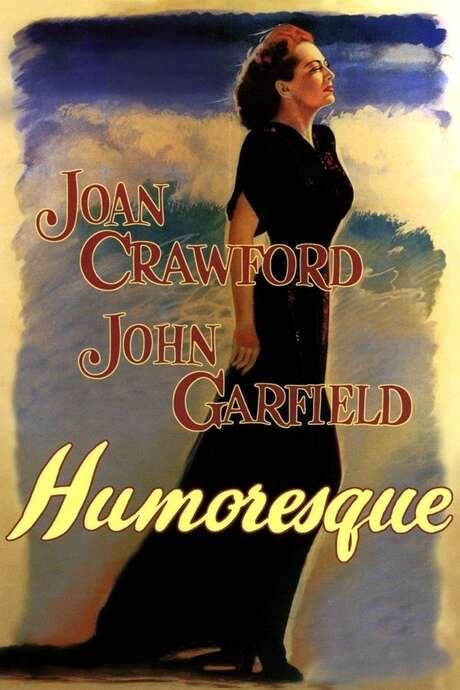
What Is Humoresque About?
The premise of Humoresque in 292 words, with nothing given away. The full story follows below.
In the bustling streets of 1930s New York, a talented violinist rises from a modest household, his fingers already humming with the promise of a life beyond the grocery‑store aisles of his childhood. The city’s symphonic pulse mirrors his own restless ambition, a blend of gritty determination and fragile yearning that defines every practice session and every whispered sonata.
His world is anchored by a close‑knit circle: a steadfast accompanist who knows the language of his pauses, a manager whose sharp eye pushes him toward brilliance, and a mother whose quiet love steadies his restless heart. Together they form a modest support system that balances his growing reputation with the ever‑present reminder of where he came from, and what it means to stay true to the “happy kid” he once was.
Enter a luminous figure from a world of gilded parties and polished façades, a society hostess whose allure is as intoxicating as the chords he plays. She moves through high‑society with a nervous confidence, wielding charm and manipulation to reshape the paths of those around her. Their connection ignites a magnetic tension, drawing the violinist into a realm where wealth, desire, and artistic integrity clash in elegant yet uneasy harmony.
The film sways between the intimate reverie of private rehearsals and the glittering, sometimes unsettling, glare of elite gatherings. It is a study of class divide, of love that both lifts and burdens, and of a musician’s relentless pursuit of mastery in a world that constantly asks whether art can survive the compromises of the heart. As melodies rise and fall, the audience is left to wonder whether his devotion to the music—or to the woman who has entered his life—will ultimately shape the future of his art and his soul.
What Happens in Humoresque?
The complete story of Humoresque, from the first scene to the last, in 947 words (about 4 minutes). Spoilers throughout. Names in the text link to 4 cast member pages.
Spoilers ahead
In New York City, a performance by noted violinist Paul Boray is cancelled, leaving him in a deep emotional trough. His manager, Bauer, is furious, arguing that Paul has misunderstood what performing should feel like and suggesting that music may no longer be part of his life. Paul’s more sympathetic accompanist and friend, Sid Jeffers, asks Bauer to step back, and Paul confesses to him that he has always wanted to do the right thing, yet he has long felt he is on the outside, looking in, and cannot get back to that happy kid he once was.
“on the outside, looking in,” and cannot “get back to that happy kid” he once was.
The story then shifts to a warm memory of his early years. As a boy, Paul wanders into a local variety store to pick a birthday gift and chooses a violin, a choice his father dismisses—partly because the instrument is costly, partly because he suspects it’s just a passing fancy. Esther Boray, his loving mother, buys the modest $8 violin for him, setting the stage for a rapid ascent from hesitant beginner to a gifted young violinist. By 1930, a tense household faces financial strain as Paul overhears his father and his brother discussing money, and he resolves to strike out on his own rather than depend on his family. He lands a job with a locally broadcast orchestra, where he works with Sid Jeffers, the pianist, and begins to build his reputation through steady, disciplined practice and performance.
At a glittering party hosted by Helen Wright, a society hostess who is married to a much older, ineffectual husband, Paul encounters a woman who embodies independence, sensuality, and a willingness to manipulate men for her own ends. Helen is initially brusque and challenging, baffled by Paul’s stubborn integrity, but she is also drawn to his talent and presence. She sends him a gold cigarette case with an apologetic note the next day, and through her connections, she helps him secure a manager, moving Paul into a new orbit. He falls in love with Helen, and the relationship quickly becomes a central force in his life.
On the beach near the Wrights’ Long Island home, Paul reaches out to Helen after a swim, only for her to run away; later, she suffers a fall from a horse, and when he rushes to help, she resists being touched. Her inner conflict begins to reveal itself as she is torn between fear and desire. After a charged moment, she admits she cannot fight him any longer and confesses that she is in love with him. Meanwhile, Esther confronts Paul about missing a date with Gina Romney, his long-time sweetheart, and warns him to consider his future. After Paul’s debut concert, he encounters a skeptical Victor Wright, who dismisses him as a “savage” in his private conversation, hinting at the social resistance Paul faces.
Paul’s career progresses through a several-month American tour, and a lunch with Gina Romney becomes a pivotal scene. Sid arrives with Helen, who becomes consumed by jealousy and flees the moment Paul reconnects with Gina. Paul follows Helen to Teddy’s Bar, where she makes a dramatic scene by smashing her drink against a wall. They later go to her home, where she pleads to be admitted into his life, arguing that life with him is worth the risk. Paul remains steadfast in his love for her, yet the relationship strains every other connection he holds.
Back at his new apartment, Paul displays a wall of photographs of Helen and tells his mother the truth of his love. The emotional tension explodes into a quarrel, and Esther slaps him in a moment of heated concern. Rumors begin to swirl about Helen’s true intentions, and Victor challenges whether Helen can truly reform and be happy with Paul. Helen insists that this is the first time she has known real love.
During a rehearsal, Paul receives a note from Helen claiming good news and asking him to come immediately. He crumples the note and continues with the rehearsal of the Carmen Fantasie, a piece adapted for the film by Franz Waxman from Bizet’s Carmen. Later, at Teddy’s Bar, Helen becomes increasingly intoxicated and cannot tolerate the house pianist’s rendition of “Embraceable You.” Paul arrives to escort her home, reiterating his wish to marry her, while she resists his overtures and clings to the hope that their life together could change.
She makes a visit to Esther to prove that she truly loves Paul, but Esther remains unconvinced and tells her to leave Paul alone. Neither Helen nor Esther attends Boray’s next concert, where he performs a transcription of Wagner’s Liebestod—an intimate, emotionally charged centerpiece of the program. Helen, listening to the broadcast, drinks again and comes to realize the ruin her path has caused. She walks along the shore into the ocean and dies, leaving Paul distraught yet sustained by the unwavering loyalty of Sid Jeffers.
In the film’s opening frame, Paul seeks reassurance from Jeffers that he is not running away from his responsibilities. The closing scene finds him walking down a street toward his family’s grocery store, carrying the weight of his experiences with a quiet strength and unresolved courage.
[Esther Boray], [Paul Boray], [Bauer], [Sid Jeffers], [Helen Wright], [Gina Romney], [Victor Wright], and [Gina Romney] appear as central figures in this dramatic arc, each shaping the trajectory of Paul’s aspirations, loves, and the ultimate price of ambition. The film blends intimate family dynamics with a rising star’s public triumph, balancing tenderness, pride, and tragedy in a way that remains memorable for its emotionally charged performances and its exploration of art, desire, and resilience.
Humoresque Timeline: Every Key Event in Order
14 key events in the order they happen, from “Opening crisis in New York City” to “Closing scene: acceptance and return to ordinary life”. 14 events name a place, across 14 locations.
- 1
Opening crisis in New York City
The film opens with a canceled performance by Paul Boray in New York City, leaving him emotionally wrecked. His manager Bauer storms at him, insisting that Paul is misreading what it means to perform. Sid Jeffers, Paul's loyal accompanist, urges him not to give up and to keep playing the right thing.
When:present Where:New York City
- 2
Childhood decision: violin over family finances
As a boy, Paul rejects his father's cautious outlook and chooses the violin as his instrument. Esther, his mother, buys the $8 violin, supporting his dream. This moment marks the beginning of a lifelong pursuit of musical greatness.
When:childhood Where:variety store
- 3
1930: independence and first professional gig
The family frets about finances, and Paul resolves to stand on his own instead of depending on them. He finds a job with a locally broadcast orchestra, with Sid Jeffers serving as his pianist. This marks the start of his professional career.
When:1930 Where:local broadcast orchestra
- 4
First encounter with Helen Wright
At a party on Long Island, Helen Wright appears as a self-centered patroness who is initially rude to Paul. The next day she sends a gold cigarette case with an apology note, snagging his attention. Through her connections, Paul gains a manager, Bauer.
When:1930s Where:Wrights' Long Island home party
- 5
The romance grows on the Long Island shore
On the beach near the Wrights' Long Island home, Helen warns Paul that love can be dangerous, yet she confesses she cannot fight her feelings. He reciprocates, and they share a kiss. Their attraction marks a turning point in Paul’s life.
When:1930s Where:Long Island beach
- 6
Esther suspects trouble and warns Paul
Waiting at home, Esther confronts Paul about missing a date with Gina, a fellow musician, and suspects the affair with Helen. Paul denies any betrayal, but Esther cautions him to consider his future and family reputation.
When:early career Where:Paul's home
- 7
Debut concert and Victor's contempt
After Paul’s debut concert, Victor sneers at him from the wings, calling him a savage. Esther absorbs the harsh judgment of their social circle and worries about the path Paul has chosen. Paul’s confidence grows from his success even as trouble looms.
When:early career Where:concert hall
- 8
Tour across America; jealousy and Teddy's Bar encounter
Paul tours across America and has lunch with Gina; Sid arrives with Helen, inflaming jealousy. They end up at Teddy’s Bar, where Helen makes a scene before she and Paul retreat to her home, where he declares his love.
When:months after debut Where:Teddy's Bar / Long Island
- 9
Paul’s apartment and family clash
In his new apartment filled with Helen’s photographs, Paul confesses his love to his mother, triggering an argument in which Esther slaps him. Disquieted by rumors, Victor asks Helen for a divorce, testing the couple’s bond.
When:post-tour Where:Paul's apartment
- 10
Helen seeks Esther’s approval
Helen visits Esther to persuade her that she truly loves Paul, insisting she can change. Esther remains skeptical and tells Helen to stay away from Paul, warning that her past won’t be erased. The tension between love and family loyalty deepens.
When:post-apartment Where:Esther's home
Show the other 4 events of Humoresque Hide the last 4 events
- 11
Rehearsal note and Carmen Fantasie
During a rehearsal, Paul receives a note from Helen claiming good news and asking to see him immediately. He crumples the note and keeps playing, continuing the Carmen Fantasie on stage to demonstrate his focus and resolve.
When:before Liebestod Where:rehearsal hall
- 12
Teddy's Bar final confrontation
Back at Teddy’s Bar, Helen grows increasingly drunk and unable to tolerate the house pianist. Paul arrives to take her home, reiterating that he wants to marry her even as she tries to push him away.
When:late Where:Teddy's Bar
- 13
Liebestod performance and Helen’s death
Paul performs his transcription of Wagner’s Liebestod, heard by Helen by radio as she drowns in despair on the beach. Neither Esther nor Helen attend the performance, underscoring the tragedy of their entangled fates.
When:final Where:on radio / the beach
- 14
Closing scene: acceptance and return to ordinary life
In the final moments, Jeffers consoles a distraught Paul, who asks Jeffers to tell Bauer he isn’t running away. The film ends with Paul walking toward his family’s grocery store, choosing to face life with music in a gentler light.
When:ending Where:street by the grocery store
Who Are the Main Characters in Humoresque?
6 characters, among them Paul Boray (John Garfield), Helen Wright (Joan Crawford) and Esther Boray (Ruth Nelson): who each one is and the part they play in the story. Every profile links to the actor’s page.
-
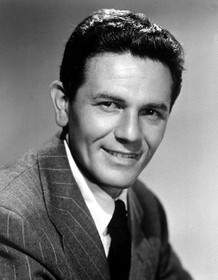
Paul Boray (John Garfield)
Played by John Garfield
An exceptionally gifted violinist who rises from a financially strained family to national prominence. He is driven, sensitive, and determined to do the right thing, yet often feels outside the inner circle. His intense passion for music conflicts with romantic entanglements and family expectations, making him vulnerable to manipulation and heartbreak. His artistry and perseverance define his arc through the film.
- 🎵 Music
- 🏆 Ambition
- 💫 Talent
-

Helen Wright (Joan Crawford)
Played by Joan Crawford
A socialite and patroness trapped in a loveless marriage who uses her charm to influence men and advance her own desires. She is initially aloof and ruthless, but later reveals a capacity for real feeling, complicating her relationship with Paul. Her pursuit of love threatens Paul's career and his mother's trust, culminating in tragedy. Her fate exposes the costs of a life lived for passion and spectacle.
- 💞 Love
- ⚖️ Morality
- 🕊️ Manipulation
- EB
Esther Boray (Ruth Nelson)
Played by Ruth Nelson
Paul's mother, protective and practical, who worries about the family's finances and Paul's career. She distrusts Helen's intentions and confronts Paul, even slapping him when necessary. Her loyalty to the family and insistence on caution anchor the emotional center of the story. She embodies the tension between old-world values and modern romance.
- 👪 Family
- 🛡️ Protection
- 💬 Guidance
- SJ
Sid Jeffers (Oscar Levant)
Played by Oscar Levant
Paul's loyal accompanist and friend, he acts as a steady, moral counterweight to the chaos of Paul’s love life. He intervenes to calm Bauer and defend Paul, embodying quiet devotion. He believes in Paul and keeps faith when the world seems to turn against him. His steadiness provides the emotional anchor of the film.
- 🤝 Friendship
- 🎼 Accompaniment
- 🛡️ Loyalty
- GR
Gina Romney (Joan Chandler)
Played by Joan Chandler
Paul's long-time love interest, a musician who represents a hopeful, stable future. She serves as a foil to Helen’s duplicitous passion and remains a moral compass for Paul. Her presence signals a possible safe harbor amid the drama, but the film centers on Paul’s choice between Helen and Gina.
- 🎶 Love
- 🎤 Music
- 💬 Support
- VW
Victor Wright (Paul Cavanagh)
Played by Paul Cavanagh
Helen's husband, a wealthy, aging patron who challenges Paul’s ambitions and pushes for a divorce when he suspects Helen's true intentions. He embodies the social power dynamics and mercenary attitudes of the era's high society. His role underscores the clash between personal happiness, reputation, and financial security.
- 💼 Patronage
- 🕰️ Status
- 💬 Control
Where and When Is Humoresque Set?
Humoresque is set in New York City and Long Island (1930s). Here is why the time and place matter to the story.
When
1930s
Set in the early 1930s, the film follows Paul Boray as he climbs from a strained family background to national prominence through orchestras and concerts. The era's radio and concert culture provide the backdrop for his rise, with socialites and patrons shaping his career. The time frame emphasizes the collision between dream-chasing artistry and practical life.
Where
New York City, Long Island
The action unfolds across New York City and the Wrights' Long Island home, capturing the social whirl surrounding a rising violinist. NYC provides the stage for a canceled performance and the urban music scene, while Long Island anchors the domestic life and the complex romance with Helen Wright. The settings highlight the clash between artistic ambition and family expectations.
- 🗽 New York City
- 🏖️ Long Island
- 🎶 Music culture
What Are the Themes of Humoresque?
3 ideas the story keeps returning to, among them Ambition and Fame, Love and Morality and Family and Loyalty.
-
01
Ambition and Fame
Paul's talent promises greatness, but fame brings emotional risk and isolation. His pursuit of musical excellence collides with family doubts and a merciless social world. The narrative asks whether artistic passion can coexist with personal happiness, and what a artist must sacrifice to reach the top.
-
02
Love and Morality
Helen's allure and manipulation test Paul's integrity, as he navigates love with Gina while being drawn to Helen's passion. Esther's protective stance and Victor's skepticism frame the moral tension, creating a triangle of desire, betrayal, and consequences. The story questions whether love justifies breaking commitments or hurting others.
-
03
Family and Loyalty
Paul's loyalty to his family and Sid's steadfast friendship contrast with the temptations of Helen and the pressure to succeed. The family grocery-store backdrop and Esther's concern underline the pull between duty and personal dreams. The ending reinforces a commitment to those who support him, despite the cost.
What Kind of Film Is Humoresque?
Melancholic in tone, with steady pacing and a moderate story, going by the plot summary.
- Tone
- Melancholic
- Pacing
- Steady
- Story
- Moderate
- Intensity
- High
- Ending
- Sad
A tragically intense and melancholic romance that follows a gifted violinist's passionate, self-destructive affair with a wealthy socialite, set against the sophisticated backdrop of classical music and high society.
- tragic
- passionate
- tormented
- melancholic
- intense
- dramatic
- ambition and sacrifice
- class divide
- neurotic romance
- art and life
Content notes: suicide, alcohol abuse, emotional manipulation.
Quiz
How well do you remember Humoresque? Test yourself on the story.
Where to Watch Humoresque
Stream it on Vimeo, or rent or buy it from Amazon Video and Apple TV Store. US availability and prices from JustWatch.
Stream 1
 Vimeo
Vimeo 




Streaming availability in the US, powered by