Humoresque 1946

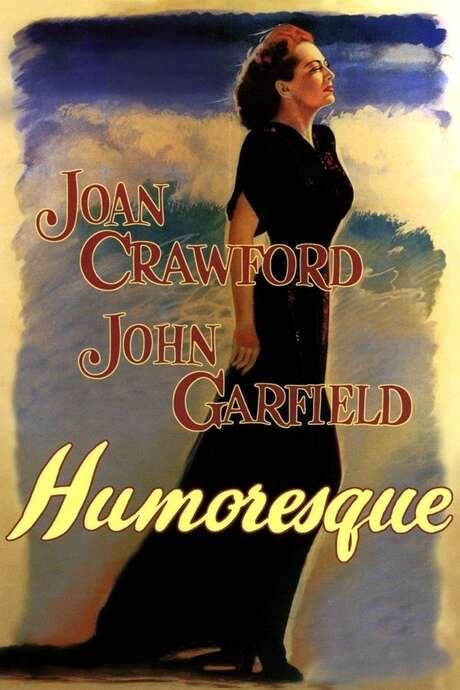
TWO WHO MET AND KISSED AND NEVER SHOULD HAVE MET AGAIN! A classical musician from a working class background is sidetracked by his love for a wealthy, neurotic socialite.


Does Humoresque have end credit scenes?
No!
Humoresque does not have end credit scenes. You can leave when the credits roll.
Where to Watch Humoresque
See current US streaming, rental, and purchase options for Humoresque (1946) via JustWatch.







Meet the Full Cast and Actors of Humoresque
Explore the complete cast of Humoresque, including both lead and supporting actors. Learn who plays each character, discover their past roles and achievements, and find out what makes this ensemble cast stand out in the world of film and television.
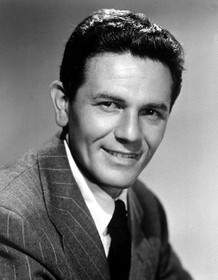
John Garfield
Paul Boray
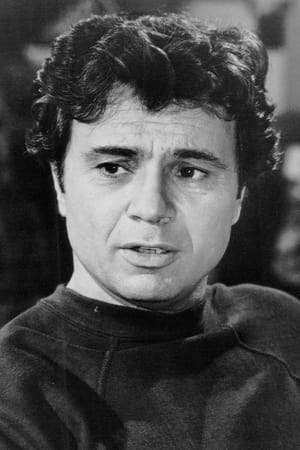
Robert Blake
Paul Boray as a Child
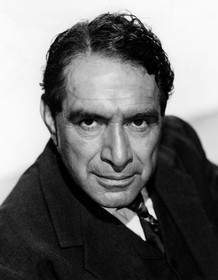
J. Carrol Naish
Rudy Boray

Joan Crawford
Helen Wright

Stuart Hall
Concert Spectator (uncredited)
Nestor Paiva
Orchestra Leader
Craig Stevens
Monte Loeffler
Joan Chandler
Gina Romney
Oscar Levant
Sid Jeffers
John Abbott
Rozner
Peggy Knudsen
Florence Boray
Richard Gaines
Bauer
Paul Cavanagh
Victor Wright
Ruth Nelson
Esther Boray
Fritz Leiber
Hagerstrom
Tom D'Andrea
Phil Boray
Angela Greene
Tipsy Blonde at Wright's Party (uncredited)
Patricia Barry
Fritzie - Bauer's Secretary (uncredited)
Monte Blue
Moving Man (uncredited)
Paul Panzer
Theatre Worker (uncredited)
Richard Walsh
Teddy - at Wright's Party (uncredited)
Max Linder
Party guest (uncredited)
Creighton Hale
Professor (uncredited)
Leah Baird
Professor (uncredited)
Gino Corrado
Concert Spectator (uncredited)
Leota Lorraine
Boray Fan (uncredited)
Janet Barrett
Secretary (uncredited)
James Carlisle
Boray Fan (uncredited)
Tom Ferrandini
Party Guest (uncredited)
Bess Flowers
Party Guest / Concert Attendee (uncredited)
Jane Harker
Party Guest (uncredited)
Harold Miller
Party Guest (uncredited)
Foster H. Phinney
Party Guest (uncredited)
Ramon Ros
Engineer (uncredited)
Florence Wix
Party Guest (uncredited)
King Lockwood
Party Guest (uncredited)
Esther Michelson
Mrs. Klein (uncredited)
Ethelreda Leopold
Party Guest (uncredited)
Oliver Cross
Party Guest (uncredited)
Jack Deery
Party Guest (uncredited)
Fred Rapport
Party Guest (uncredited)
Harlan Briggs
Toy Shop Proprietor (uncredited)
Kenneth Gibson
Party Guest (uncredited)
Don McGuire
Eddie
Monty O'Grady
Party Guest (uncredited)
Marion Gray
Boray Fan (uncredited)
Tommy Cook
Phil Boray as a Child
Don Turner
Man with Dog on Beach (uncredited)
Louis Quince
Radio Producer (uncredited)
Peg La Centra
Night Club Singer
Ann Lawrence
Florence as a Girl (uncredited)
Gary Armstrong
Boy on Street (uncredited)
Sylvia Arslan
Gina as a Girl (uncredited)
John J. Darby
Boray Fan (uncredited)
Eric DeLamarter
Orchestra Conductor (uncredited)
Jean MacMurray
Boray Fan (uncredited)
Edwina Pierse
Violinist in youth orchestra (uncredited)
Leo Wonder
Old Violinist (uncredited)
External Links and Streaming Options
Discover where to watch Humoresque online, including streaming platforms, rental options, and official sources. Compare reviews, ratings, and in-depth movie information across sites like IMDb, TMDb, Wikipedia or JustWatch.







Take the Ultimate Humoresque Movie Quiz
Challenge your knowledge of Humoresque with this fun and interactive movie quiz. Test yourself on key plot points, iconic characters, hidden details, and memorable moments to see how well you really know the film.
Humoresque (1946) Quiz: Test your knowledge of the classic 1946 drama *Humoresque*, its characters, music, and key plot points.
What is the name of the virtuoso violinist at the center of the story?
Full Plot Summary and Ending Explained for Humoresque
Read the complete plot summary of Humoresque, including all major events, twists, and the full ending explained in detail. Explore key characters, themes, hidden meanings, and everything you need to understand the story from beginning to end.
In New York City, a performance by noted violinist Paul Boray is cancelled, leaving him in a deep emotional trough. His manager, Bauer, is furious, arguing that Paul has misunderstood what performing should feel like and suggesting that music may no longer be part of his life. Paul’s more sympathetic accompanist and friend, Sid Jeffers, asks Bauer to step back, and Paul confesses to him that he has always wanted to do the right thing, yet he has long felt he is on the outside, looking in, and cannot get back to that happy kid he once was.
“on the outside, looking in,” and cannot “get back to that happy kid” he once was.
The story then shifts to a warm memory of his early years. As a boy, Paul wanders into a local variety store to pick a birthday gift and chooses a violin, a choice his father dismisses—partly because the instrument is costly, partly because he suspects it’s just a passing fancy. Esther Boray, his loving mother, buys the modest $8 violin for him, setting the stage for a rapid ascent from hesitant beginner to a gifted young violinist. By 1930, a tense household faces financial strain as Paul overhears his father and his brother discussing money, and he resolves to strike out on his own rather than depend on his family. He lands a job with a locally broadcast orchestra, where he works with Sid Jeffers, the pianist, and begins to build his reputation through steady, disciplined practice and performance.
At a glittering party hosted by Helen Wright, a society hostess who is married to a much older, ineffectual husband, Paul encounters a woman who embodies independence, sensuality, and a willingness to manipulate men for her own ends. Helen is initially brusque and challenging, baffled by Paul’s stubborn integrity, but she is also drawn to his talent and presence. She sends him a gold cigarette case with an apologetic note the next day, and through her connections, she helps him secure a manager, moving Paul into a new orbit. He falls in love with Helen, and the relationship quickly becomes a central force in his life.
On the beach near the Wrights’ Long Island home, Paul reaches out to Helen after a swim, only for her to run away; later, she suffers a fall from a horse, and when he rushes to help, she resists being touched. Her inner conflict begins to reveal itself as she is torn between fear and desire. After a charged moment, she admits she cannot fight him any longer and confesses that she is in love with him. Meanwhile, Esther confronts Paul about missing a date with Gina Romney, his long-time sweetheart, and warns him to consider his future. After Paul’s debut concert, he encounters a skeptical Victor Wright, who dismisses him as a “savage” in his private conversation, hinting at the social resistance Paul faces.
Paul’s career progresses through a several-month American tour, and a lunch with Gina Romney becomes a pivotal scene. Sid arrives with Helen, who becomes consumed by jealousy and flees the moment Paul reconnects with Gina. Paul follows Helen to Teddy’s Bar, where she makes a dramatic scene by smashing her drink against a wall. They later go to her home, where she pleads to be admitted into his life, arguing that life with him is worth the risk. Paul remains steadfast in his love for her, yet the relationship strains every other connection he holds.
Back at his new apartment, Paul displays a wall of photographs of Helen and tells his mother the truth of his love. The emotional tension explodes into a quarrel, and Esther slaps him in a moment of heated concern. Rumors begin to swirl about Helen’s true intentions, and Victor challenges whether Helen can truly reform and be happy with Paul. Helen insists that this is the first time she has known real love.
During a rehearsal, Paul receives a note from Helen claiming good news and asking him to come immediately. He crumples the note and continues with the rehearsal of the Carmen Fantasie, a piece adapted for the film by Franz Waxman from Bizet’s Carmen. Later, at Teddy’s Bar, Helen becomes increasingly intoxicated and cannot tolerate the house pianist’s rendition of “Embraceable You.” Paul arrives to escort her home, reiterating his wish to marry her, while she resists his overtures and clings to the hope that their life together could change.
She makes a visit to Esther to prove that she truly loves Paul, but Esther remains unconvinced and tells her to leave Paul alone. Neither Helen nor Esther attends Boray’s next concert, where he performs a transcription of Wagner’s Liebestod—an intimate, emotionally charged centerpiece of the program. Helen, listening to the broadcast, drinks again and comes to realize the ruin her path has caused. She walks along the shore into the ocean and dies, leaving Paul distraught yet sustained by the unwavering loyalty of Sid Jeffers.
In the film’s opening frame, Paul seeks reassurance from Jeffers that he is not running away from his responsibilities. The closing scene finds him walking down a street toward his family’s grocery store, carrying the weight of his experiences with a quiet strength and unresolved courage.
[Esther Boray], [Paul Boray], [Bauer], [Sid Jeffers], [Helen Wright], [Gina Romney], [Victor Wright], and [Gina Romney] appear as central figures in this dramatic arc, each shaping the trajectory of Paul’s aspirations, loves, and the ultimate price of ambition. The film blends intimate family dynamics with a rising star’s public triumph, balancing tenderness, pride, and tragedy in a way that remains memorable for its emotionally charged performances and its exploration of art, desire, and resilience.

Coming soon on iOS and Android
The Plot Explained Mobile App
From blockbusters to hidden gems — dive into movie stories anytime, anywhere. Save your favorites, discover plots faster, and never miss a twist again.
Sign up to be the first to know when we launch. Your email stays private — always.
Explore the mobile appDiscover Film Music Concerts Near You – Live Orchestras Performing Iconic Movie Soundtracks
Immerse yourself in the magic of cinema with live orchestral performances of your favorite film scores. From sweeping Hollywood blockbusters and animated classics to epic fantasy soundtracks, our curated listings connect you to upcoming film music events worldwide.
Explore concert film screenings paired with full orchestra concerts, read detailed event information, and secure your tickets for unforgettable evenings celebrating legendary composers like John Williams, Hans Zimmer, and more.


Cars Featured in Humoresque
Explore all cars featured in Humoresque, including their makes, models, scenes they appear in, and their significance to the plot. A must-read for car enthusiasts and movie buffs alike.
Humoresque Themes and Keywords
Discover the central themes, ideas, and keywords that define the movie’s story, tone, and message. Analyze the film’s deeper meanings, genre influences, and recurring concepts.
Humoresque Other Names and Titles
Explore the various alternative titles, translations, and other names used for Humoresque across different regions and languages. Understand how the film is marketed and recognized worldwide.
Similar Movies To Humoresque You Should Know About
Browse a curated list of movies similar in genre, tone, characters, or story structure. Discover new titles like the one you're watching, perfect for fans of related plots, vibes, or cinematic styles.






Quick Links: Summary, Cast, Ratings, More

What's After the Movie?
Not sure whether to stay after the credits? Find out!
Check out our other apps:

SAT Sphere
Build confidence for the Digital SAT.

Mori Atlas
Discover wild places worth protecting.

Luntero
Search smarter for a home in Amsterdam.

Plot Explained
Unravel movie endings and hidden clues.

Pokechamp
Dive into Pokémon data and battle logic.

Driving Theory
Get ready for your European theory test.

Movie Dust
Plan your next cinema trip with ease.

Musemap
Find art and culture as you travel.

Selkobase
Compare credentials before committing.

Local Manual
Turn an unfamiliar country into practical next steps.

Lernavi
Compare school systems before your next move.

GymRoam
Find a workout stop wherever your plans take you.
Explore Our Movie Platform
New Movie Releases (2026)
Famous Movie Actors
Top Film Production Studios
Movie Plot Summaries & Endings
Major Movie Awards & Winners
Best Concert Films & Music Documentaries
Movie Collections and Curated Lists
© 2026 What's After the Movie. All rights reserved.
Privacy Policy