

What Is Green for Danger About?
The premise of Green for Danger in 312 words, with nothing given away. The full story follows below.
In the summer of 1944 a remote English hospital tries to keep its doors open while the country endures relentless V‑1 bombardments. The building’s stark corridors and cramped operating theatre become a pressure‑cooked stage where the ordinary rhythms of wartime medicine are shattered by an unsettling death on the surgical table. The circumstances feel as mysterious as the whistling of the incoming bombs, and the staff, already stretched thin by duty and fear, find themselves questioning whether the tragedy was a grim accident or something far more deliberate.
The story follows Inspector Cockrill, a Scotland Yard detective dispatched to a rural outpost far from the usual city beats. He arrives with a notebook and a cautious resolve, ready to sift through the tangled testimonies of a community bound together by shared grief. Working alongside him is Detective Sgt. Hendricks, whose steady presence offers a grounded counterpoint to Cockrill’s sharper instincts. Their investigation quickly places the hospital’s core personalities under a quiet lens: Dr. Barnes, the composed anaesthetist whose precise hands hold life and death; Mr. Eden, a local figure whose interactions hint at deeper undercurrents; and Sister Marion Bates, a devoted matron whose determination to uncover the truth imbues the wards with a subtle urgency.
Among the nurses, Esther Sanson moves with a practiced calm that masks personal turmoil, while Freddi Linley juggles a strained engagement and the relentless demands of her shift. Nurse Woods rounds the floors, her steady demeanor providing a reassuring rhythm to the chaotic environment. Together, these characters inhabit a world where the echo of incoming bombs competes with whispered doubts, and every clink of surgical instruments feels like a clue waiting to be heard. The film balances the stark atmosphere of wartime England with a classic whodunit’s intrigue, inviting the audience to wonder, amid the looming darkness, what lies hidden beneath the surface of duty and survival.
What Happens in Green for Danger?
The complete story of Green for Danger, from the first scene to the last, in 962 words (about 4 minutes). Spoilers throughout.
Spoilers ahead
In a tense wartime whodunit set inside a rural hospital, the calm of a memory-haunted operating theater is shattered by a string of tragic events and a killer who works in the shadows.
The country is under the strain of the V-1 offensive, bombs streaking toward home from the continent. Higgins returns to duty as a warden, only to hear a terrifying chorus of mechanical wrath as a doodlebug bombskill rattles the hospital and a radio broadcast—delivered in a moment of eerie serenity by an Englishwoman—speaks in a Nazi voice from the wreckage. Higgins is found unconscious, stripped of identification, his fate tied to a building and a hospital family that cannot quite trust its own echoes of the past.
Within this fragile tapestry, a web of personal tensions emerges. Mr. Eden (/actor/leo-genn) shares a sorrowful moment with Nurse Esther Sanson (/actor/rosamund-john) as the specter of war shadows their lives and the nightmares that haunt the victims of bombing. Nurse Freddi Linley (/actor/sally-gray) tries to navigate her failing engagement to Dr. Barnes (/actor/trevor-howard), an anaesthetist who wields life and death in his careful hands. The atmosphere thickens around Sister Marion Bates (/actor/judy-campbell), who, as the party mood swells at a hospital gathering, reveals she has proofs that Higgins was murdered, even as she moves through the night toward the operating theater to secure her evidence. The already-tense dynamic grows darker as Sister Bates is stabbed, then dressed in a gown and stabbed again—an attempt to hide a motive and mislead the living.
As the hospital reels, Detective Sgt. Hendricks (/actor/george-woodbridge) and Inspector Cockrill begin questioning the core five suspects: Dr. Barnes, Mr. Eden, Nurse Linley, Nurse Sanson, and Nurse Woods (/actor/megs-jenkins). The discovery of Bates’s second, calculated murder sharpens the suspicion, and the clues grow increasingly cryptic when some poison pills vanish from the ward. Barnes presents his side of the medical machinery, and Cockrill recalls that the “vital evidence” may lie just beneath the surface—perhaps literally in the setup of the anesthesia equipment—if someone had paid closer attention.
The investigation deepens as Linley becomes a focal point—suspicions swirl around her, even as she grapples with fear and the weight of the night’s events. A fall down the stairs leaves her with a fractured skull, prompting a critical craniotomy that could unlock the truth about Higgins’s death if she survives. Cockrill asks for a dramatic re-enactment of the operation that killed Higgins, pairing Eden with Mr. Purdy (/actor/henry-edwards) in a test of nerves. Eden’s quick temper flares into a physical confrontation with Barnes, a clash that brings humor and humanity back into a tense inquiry.
A carefully calibrated plan unfolds: Linley is anaesthetized, and Cockrill watches as the medical team attempts a recovery, tracing the subtle but telling signs of distress as she struggles for oxygen. A key change is discovered when the oxygen bottle is swapped for a green-coded carbon dioxide bottle, revealed by Cockrill’s deliberate scratch of the bottle’s surface. The murder weapon, the gown, and a hidden stain align with a new and more precise portrait of the killer’s method. The suspect pool narrows when Sanson’s movements pull her under the inspector’s spotlight, and Eden’s earlier actions are cast in a new light as the room fills with competing motives and the pressure of time.
The final twist hinges on Sanson’s motive and the delicate balance of guilt. Cockrill’s line of questioning intensifies around Sanson, and Eden’s secret intervention—attempting to deliver an antidote to a poison—emerges as a crucial but morally fraught detail. When Cockrill bursts into the next room, he makes a decisive arrest: Sanson is implicated, and Eden’s role becomes central in a revelation that reframes the entire night’s events. The loader of guilt is not a single simple act but a network of choices made under fear and the war’s unyielding pressure. The Inspector’s judgment arrives with a stark turn: Eden is accused of assisting a murderer, and the truth about Sanson—tied to her mother’s death and the air-raid catastrophe—sheds new light on Higgins’s final hours and the hospital’s struggle to protect its own.
In a closing arc that mixes resignation with stubborn duty, Cockrill writes to his superior with a sense of weary honesty. He contemplates resignation, offering it in the hopeful belief that it will not be accepted, a fragile testament to the weight of a man who must decide if his conscience can bear the burden of duty in a hospital overwhelmed by war and the shadow of a killer at work among its wards.
Characters weave in and out of the narrative with the gravitas of actors who bring them to life: Dr. Barnes becomes a center of tension and technical scruple, rivaled by the presence of Mr. Eden and the tense, principled watch of Inspector Cockrill. From the ward’s quiet corners to the operating theater’s bright glare, the mystery unfolds through the intertwined fates of Nurse Linley, Nurse Woods, and Nurse Sanson, all under the critical eye of the hospital’s vigilant staff like Sister Bates and the steady, methodical gaze of the police team led by Detective Sgt. Hendricks. The case resolves not with a single loud confession but with a careful unveiling of a chain of actions and reactions, where the truth about poison, rescue, and remorse exposes a murderer’s calculated plan—and a doctor’s difficult choices in a war-torn world.
Green for Danger Timeline: Every Key Event in Order
14 key events in the order they happen, from “Cockrill opens the report on the August 1944 events” to “Sansom arrested; motive exposed”. 14 events name a place, across 9 locations.
- 1
Cockrill opens the report on the August 1944 events
Inspector Cockrill begins a formal report for Scotland Yard about a cascade of extraordinary events. He notes that the saga starts on 17 August 1944, and identifies postman Joseph Higgins as the first victim. The opening lines set the tone for a murder mystery unfolding within wartime Britain.
When:17 August 1944 Where:Scotland Yard – Inspector's office
- 2
Rural hospital scene introduces the operation and prophecy
We are shown the operating theatre and its staff in a rural hospital. A cryptic line hints that two will be dead and one a murderer, foreshadowing the grief and danger to come. The stage is set for medical drama and murder in close quarters.
Where:Rural hospital operating theatre
- 3
The V-1 attack interrupts life and duty
The V-1 offensive saturates the area around London, and Higgins answers the call to duty as a warden. A doodlebug strike hits the hospital vicinity, and a wireless broadcast carries Nazi propaganda. The chaos of war seeps into the hospital’s halls.
When:During the V-1 barrage, August 1944 Where:London vicinity
- 4
Higgins arrives unconscious, identified by none
Joseph Higgins is brought into the hospital unconscious and without identification. The medical staff worry about his case as the mystery surrounding his death begins to unfold. The arrival marks the start of the central medical mystery.
When:Same day Where:Hospital
- 5
Nurse Sanson and Eden discuss nightmares
Nurse Sanson confides in Dr. Eden about nightmares rooted in her mother's death, implying war trauma and the pressure of caring for bombing victims. There is a sense of guilt and duty shaping their actions. The moment deepens the interpersonal tensions central to the plot.
When:Same day Where:Hospital ward
- 6
Linley breaks engagement; kiss under pressure
Nurse Linley reveals she has broken her engagement to Dr. Barnes. A bomb lands during a tense moment when Linley and Barnes share a kiss under Sister Bates’ watchful gaze. Bates then slips away, fighting back tears.
When:Evening Where:Hospital ward
- 7
Higgins’ recognition triggers distress
Sanson recognizes Higgins and he reminds her of her mother, intensifying the emotional stakes. The connection between the victim and the nurse adds a personal layer to the investigation. The scene foreshadows the deep-seated motives behind the murder.
When:Evening Where:Hospital ward
- 8
Pre-op tension as Woods hears his name
Before surgery, Woods recognizes Higgins’ name, and Higgins becomes distressed upon hearing Woods' voice. The tension hints at an unseen link between the suspects. The medical drama intersects with the mystery plot.
When:Before surgery Where:Operating theatre
- 9
Anaesthesia fails and Higgins dies
Barnes administers anaesthetic; the full oxygen supply proves useless. Cockrill notes the critical failure and that 'Higgins was quite dead,' a turning point that reframes the investigation. The death triggers the shift from medical routine to murder inquiry.
When:During surgery Where:Operating theatre
- 10
Staff party reveals murder evidence; Bates dies
At a large staff party, Bates warns Barnes that Eden is after Linley and proclaims she has proof Higgins was murdered. She leaves to retrieve her proof and is encountered by a masked figure; Linley discovers Bates’ body later that night, deepening the mystery.
When:That night Where:Staff party; hospital corridors
Show the other 4 events of Green for Danger Hide the last 4 events
- 11
Cockrill interrogates suspects; missing poison pills noted
The Inspector questions Barnes, Eden, Linley, Sanson, and Woods, uncovering a tangled web of secrets. He reveals that Bates was stabbed, then re-stabbed after being dressed in a gown, and notes the missing poison pills. The clues tighten the circle around the murderer.
When:Following Bates’ death Where:Hospital
- 12
Re-enactment leads to confrontation; Eden vs Barnes
Cockrill orders a re-enactment of the operation that killed Higgins, with Eden assisting Purdy. The staged procedure prompts a brawl between Eden and Barnes, jolting the room and tipping off the investigation. Sanson tries to flee but is confronted as the inspector closes in.
When:Evening Where:Operating theatre and adjoining rooms
- 13
Oxygen switch and poison-paint reveal killer
Woods installs a new oxygen bottle; Linley is anaesthetized but recovers when the issue is diagnosed as carbon dioxide rather than pure oxygen. Linley notices a hidden black paint stain matching Bates’ gown, and Cockrill traces a similar stain on Woods’ gown, exposing the method and the culprit.
When:Late night Where:Operating theatre
- 14
Sansom arrested; motive exposed
Eden discreetly arms a hypodermic and confronts Sanson, who tries to escape into the next room. Cockrill breaks in, defeats the locked door, and arrests Sanson, bringing the murder to a close. The inspector’s suspicions crystallize as Sanson’s guilt is revealed.
When:Late night Where:Hospital wing; adjacent room
Who Are the Main Characters in Green for Danger?
8 characters, among them Dr. Barnes, Nurse Freddi Linley and Sister Marion Bates: who each one is and the part they play in the story. Every profile links to the actor’s page.
-
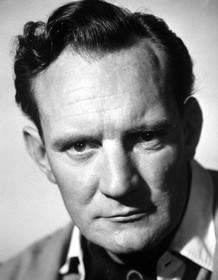
Dr. Barnes
Played by Trevor Howard
A skilled anaesthetist whose handling of the operation becomes a focal point of suspicion and conflict. His professional pride and quick temper create tension in the operating room and staff interactions. He becomes entangled in the murder investigation as the case unfolds.
- 🩺 Doctor
- 💉 Anesthetist
- 🧠 Tension under pressure
- NF
Nurse Freddi Linley
Played by Sally Gray
Engaged to Dr. Barnes, Linley navigates personal relationships while a deadly secret threatens the hospital. Her position as a witness and her connections heighten suspicion and keep her at the center of the investigation. She embodies both care for patients and vulnerability under wartime strain.
- 🧑⚕️ Nurse
- 💔 Romantic entanglement
- 🕵️♀️ Suspicion
- SM
Sister Marion Bates
Played by Judy Campbell
A stern, perceptive nurse who becomes a crime victim; her murder reveals a crucial clue about the killer. Her death raises the stakes for the investigation and underscores the dangers hospital staff face during bombardments. She exemplifies the quiet courage of frontline workers under wartime pressure.
- 🔪 Victim
- 🕵️♀️ Clue carrier
- 🏥 Frontline nurse
- NE
Nurse Esther Sanson
Played by Rosamund John
A grief-stricken nurse tied to the case by a past tragedy and a mother’s loss in an air raid. Suspected and then central to the plot, her emotional vulnerability intertwines with the mounting suspicion around the murder. Her arc demonstrates how wartime trauma can drive desperate actions.
- 🧑⚕️ Nurse
- 🕵️♂️ Suspect
- 🧩 Mystery
- IC
Inspector Cockrill
Played by Alastair Sim
A sharp, wry inspector who orchestrates the investigation with calm authority. He pieces together overlooked evidence, directs a re-enactment, and uses psychological insight to reveal the killer. His conduct under wartime pressure showcases detective acumen and resolve.
- 🕵️ Detective
- 🎯 Strategy
- 🧠 Intelligent
- ME
Mr. Eden
Played by Leo Genn
A doctor whose provocations and rivalries add tension to the plot. He is drawn into lighting up the investigation, prompting others to reveal motives and actions. His behavior reflects the dangerous mix of professionalism and hidden motives in wartime medical life.
- 🧑⚕️ Doctor
- 💥 Conflict
- 🧠 Concealment
- NW
Nurse Woods
Played by Megs Jenkins
An active nurse who helps manage the hospital’s oxygen and equipment logistics. Her actions during the critical moments contribute to uncovering how the patient died. She is a suspect whose conduct is scrutinized amid the investigation.
- 🧑⚕️ Nurse
- 💨 Oxygen
- 🕵️♀️ Suspicion
- DS
Detective Sgt. Hendricks
Played by George Woodbridge
A police detective who collaborates with Cockrill to coordinate the inquiry inside the hospital. His involvement highlights wartime cooperation between medical staff and law enforcement. He helps maintain order as the investigation progresses.
- 🕵️ Detective
- 🤝 Collaboration
- ⚖️ Law
Where and When Is Green for Danger Set?
Green for Danger is set in Rural hospital in England and Operating theatre (August 1944). Here is why the time and place matter to the story.
When
August 1944
Set in August 1944 during the latter part of World War II, the story unfolds as V-1 flying bombs strike and hospital staff cope with casualties. The hospital operates under wartime constraints, and the fear and urgency of that period shape every action and decision. The narrative uses this context to heighten suspense and drive the investigation.
Where
Rural hospital in England, Operating theatre
The primary setting is a rural English hospital where bombing victims from the war are treated. The operating theatre forms the focal point of the drama, with critical anesthesia and surgical decisions unfolding under pressure. Outside, wartime conditions — air raids, blackout, and the constant threat of attack — cast a tense backdrop over staff and patients.
- 🏥 Wartime hospital
- 🧭 English countryside
What Are the Themes of Green for Danger?
3 ideas the story keeps returning to, among them Mystery, Medical Ethics and Truth and Deception.
-
01
Mystery
A murder within a hospital during wartime twists the usual routine of medical work into a tense whodunit. Clues emerge in hospital corridors and operating rooms, forcing characters to question loyalties and motives. The inspector’s quest reveals how secrecy and truth collide when lives depend on fast, accurate reasoning.
-
02
Medical Ethics
The operating theatre and anesthesia setup become battlegrounds for questions of care under pressure. Scarce resources, conflicting loyalties, and the drive to save lives clash with personal agendas. The story probes whether professional duty can justify risky choices when a patient’s life hangs in the balance.
-
03
Truth and Deception
Hidden motives and misdirection propel the investigation as suspects’ alibis unravel under scrutiny. Re-enactments and careful observation lead to critical realizations about what really happened during the fateful surgery. The climax hinges on exposing the concealed evidence that points to the killer.
What Kind of Film Is Green for Danger?
Tense in tone, with steady pacing and a moderate story, going by the plot summary.
- Tone
- Tense
- Pacing
- Steady
- Story
- Moderate
- Intensity
- High
- Ending
- Mixed
A methodical and highly tense wartime murder mystery that creates a palpable sense of claustrophobia and suspicion within a rural hospital, where the constant pressure of war amplifies every emotional fracture and hidden motive.
- tense
- suspenseful
- claustrophobic
- anxious
- methodical
- wartime pressure
- crime investigation
- whodunit
- wartime hospital
- medical ethics
Content notes: murder, suicide, war violence, bombing, attempted murder, stabbing.
Quiz
How well do you remember Green for Danger? Test yourself on the story.


