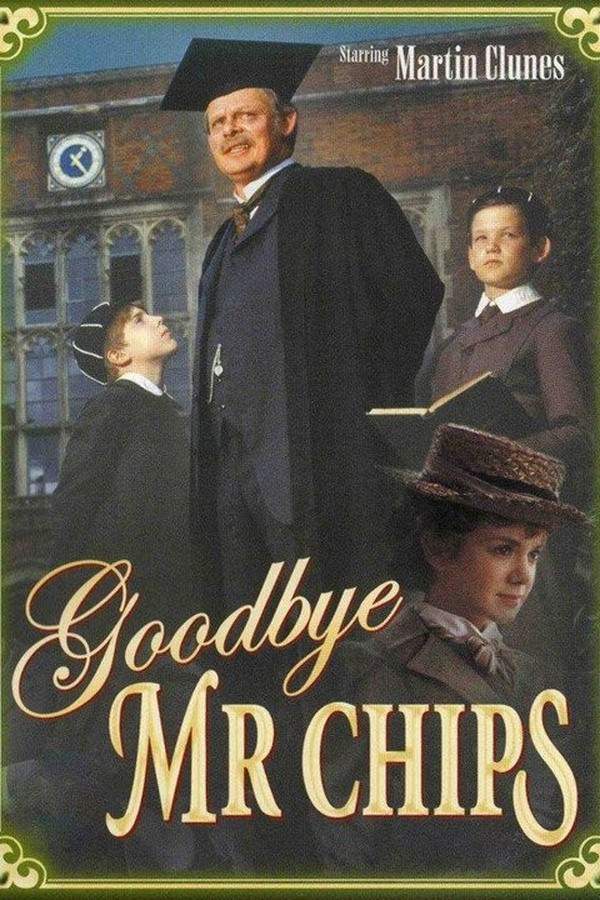
What Is Goodbye, Mr. Chips About?
The premise of Goodbye, Mr. Chips in 330 words, with nothing given away. The full story follows below.
In a venerable British boarding school where echoing corridors and ancient Latin texts mark the passage of time, an aging educator prepares to step away from the chalk‑dusted podium. As retirement looms, the film opens on a quiet afternoon that invites him to look backward, recalling decades of mornings filled with the rustle of uniforms and the low hum of eager voices. The setting feels both timeless and intimate, a world where tradition balances on the edge of modern change, and the air is scented with the lingering perfume of ink and ivy.
The story’s heart beats for Mr. Chips, a shy, dutiful teacher whose early years were defined by a rigid sense of duty. His reserved nature initially earns him a mixture of respect and distance, yet his steadfast commitment to the craft of teaching gradually uncovers a softer, more personable side. The tone is warm and gently nostalgic, inviting the audience to feel the quiet reverence of a life spent shaping young minds while also hinting at the subtle humor that begins to surface as he learns to navigate the school’s social rhythms.
Around him, generations of pupils and fellow staff members create a living tapestry of personalities, each leaving a faint imprint on his days. The camaraderie of the faculty, the playful banter of students, and the unspoken rituals of school life combine to form a vibrant community that both grounds and challenges him. Through whispered conversations in staff rooms and the steady cadence of lessons, he discovers that influence need not be loud to be lasting.
Ultimately, the film presents a lyrical meditation on dedication, memory, and the quiet power of mentorship. It frames the school not merely as a backdrop but as a character in its own right—a place where the echoes of a single teacher’s love for learning ripple outward, suggesting that the true legacy of an educator lives on in the countless lives he touches, even as the world outside continues to evolve.
What Happens in Goodbye, Mr. Chips?
The complete story of Goodbye, Mr. Chips, from the first scene to the last, in 677 words (about 3 minutes). Spoilers throughout. Names in the text link to 3 cast member pages.
Spoilers ahead
Mr. Chips is a quiet, retired public-school teacher who misses Brookfield’s first-day assembly after 58 years. That afternoon, he dozes in his chair, and the film unfolds his long career through a series of telltale flashbacks that reveal how a shy, dutiful man became a beloved institution at the school.
In 1870, a 25-year-old Charles Edward Chipping steps into the Latin classroom and immediately falls under the weight of practical jokes from his pupils. Rather than bend to their mischief, he answers with firm, unyielding discipline. His strict yet fair approach earns him a mix of dislike and respect, and over the next two decades he rises to become the senior master. When a housemaster appointment slips away, a glimmer of hope flickers—until a chance invitation from a new German colleague, Max Staefel, to join a walking holiday in Austria changes everything. The invitation is less about travel and more about life outside the classroom, and it is there that Chipping’s outlook begins to shift.
On a mountain landscape, the reserved teacher meets Kathy Ellis, a spirited English suffragette who is traveling with a friend on a cycling holiday. The encounter is electric and unexpected, and Kathy’s zest for life pulls Chipping out of his shell. Their paths cross again in Vienna, where a dance beside the Blue Danube Waltz seals their bond. The waltz itself becomes a symbolic refrain: for Chipping, the Danube’s blue hue seems to appear only to those who are in love. They marry and return to England, where Kathy settles at Brookfield and wins the affection of the staff and boys with warmth and laughter that had long been missing from the corridor walls.
Tragedy marks their marriage. Kathy dies in childbirth, taking their baby with her, but she leaves Chipping with a new way of teaching. He discovers a talent for Latin puns and a gentler humor that resonates with generations of pupils. He becomes more than a teacher; he is a storyteller, a confidant, and a steady presence who guides boys and, over time, their sons and grandsons, through the school’s ever-shifting currents.
As the years advance into the 20th century, the winds of reform push for a younger, more “modern” head, and in 1909 the pressure to retire grows. Yet the students and the school’s board rise to defend him, declaring that he can stay longer—perhaps until he reaches 100—and teasingly insisting that he pronounce Cicero as SIS-er-ro rather than KEE-kir-ro. The loyal community keeps him at Brookfield, and Chips remains a cherished figure even as the era of change presses in.
In 1914, with World War I looming and teachers in short supply, Chips retires officially at 69 but is soon recalled to serve as interim headmaster. The war’s shadow falls over the school as a German Zeppelin attack tests the pupils’ resolve. He insists that they continue translating Latin, even as destruction rattles the windows, choosing Julius Caesar’s campaigns as a mirror to the era’s brutality. Throughout the struggle, he recites the Roll of Honour every Sunday, honoring former students and teachers who have fallen, and the news of Max Staefel dying on the German side adds a poignant, personal sting to the ceremony.
Chips retires permanently in 1918 but remains a constant presence nearby, guiding with the same quiet authority that had shaped generations. In his final days, as he lies on his deathbed in 1933, he overhears colleagues discussing him. He offers a final, gracious retort to their musings, a truth that defines his life: “I thought I heard you say it was a pity—pity I never had any children. But you’re wrong. I have! Thousands of them, thousands of them…and all…boys.”
Haec olim meminisse iuvabit
Throughout this long life, the school’s corridors tell a story of patience, humor, and the power of education to shelter, transform, and endure across decades of change. Without shouting, Mr. Chips leaves a legacy built not on grand gestures but on steady presence, kindness, and a deep belief in the value of every student who walks through Brookfield’s doors.
Goodbye, Mr. Chips Timeline: Every Key Event in Order
13 key events in the order they happen, from “Chips arrives at Brookfield as Latin teacher” to “1933: death and the final answer to his legacy”. 13 events name a place, across 5 locations.
- 1
Chips arrives at Brookfield as Latin teacher
The twenty-five-year-old Charles Edward Chipping arrives as Latin teacher at Brookfield Public School for the first time. He endures practical jokes on his first day, but his response is a firm display of discipline. Over time he becomes both disliked and respected by students and colleagues.
When:1870 Where:Brookfield Public School, Brookfield
- 2
Becomes senior master; misses housemaster appointment; invited to Austria
Twenty years after his arrival, Chips has become the senior master and still longs for a housemaster post. He is disappointed when such an appointment does not come, and his friend Max Staefel invites him to share a walking holiday to Austria. The trip sets him on a new arc beyond the classroom.
When:circa 1890 Where:Brookfield Public School, Brookfield, England
- 3
Meets Kathy Ellis during mountain-climbing in the Austrian Alps
During a mountain-climbing excursion in the Austrian Alps, Chips encounters Kathy Ellis, a feisty English suffragette on a cycling holiday. Her spirited presence begins to soften his reserve. The chance meeting plants the seed of a profound change in his life.
When:circa 1890 Where:Austrian Alps
- 4
Vienna reunion and the Blue Danube Waltz
In Vienna the couple reunites and Kathy persuades him to dance to the Blue Danube Waltz. The waltz becomes a leitmotif, symbolizing Chips's blossoming love. They discuss life and hopes as their bond deepens.
When:circa 1890-1891 Where:Vienna, Austria
- 5
Kathy and Chips marry and return to England
Kathy and Chips marry and return to England, where she takes up residence at Brookfield and wins over the school's staff and pupils with her warmth. Their home life begins to reshape Chips's approach to teaching. The school community gradually embraces the couple.
When:circa 1891 Where:Brookfield, England
- 6
Tragic death: Kathy dies in childbirth
Kathy's life is cut tragically short when she dies in childbirth along with their baby. Chips is left widowed, yet her influence continues to shape his teaching. He discovers a new gentleness and humor in his approach to students.
When:circa 1900 Where:Brookfield, England
- 7
Chips becomes a beloved part of school life
Over the years Chips cultivates a rapport with generations of pupils, teaching not only Latin but a love of learning. He crafts playful Latin puns and builds lasting connections with the sons and grandsons of his earliest students. He becomes a true institution within Brookfield.
When:1900s Where:Brookfield Public School, Brookfield
- 8
1909: retirement pressure and continued tenure
In 1909 Chips faces pressure to retire from a more modern headmaster, but the students and the board side with him. They declare he can stay on until he is 100 and approve his unique pronunciation of Cicero. The scene affirms his value to the school and its culture.
When:1909 Where:Brookfield Public School, Brookfield
- 9
1914: retires but is recalled as interim headmaster
Chips retires permanently in 1914 at the age of 69, yet a shortage of teachers in World War I brings him back as interim headmaster. He accepts the role with his usual mix of gentleness and quiet authority. He remains a steady center for the school during a time of upheaval.
When:1914 Where:Brookfield Public School, Brookfield
- 10
WWI: Zeppelin attack and classroom resilience
During a German Zeppelin bombing, Chips urges the boys to keep translating Latin, insisting they stay focused on Julius Caesar's campaigns. The act maintains morale and demonstrates his dedication to education under danger. The event cements his role as a source of steadiness for the pupils.
When:1915 Where:Brookfield Public School, Brookfield
Show the other 3 events of Goodbye, Mr. Chips Hide the last 3 events
- 11
Roll of Honour and Staefel's death
As the war drags on, Chips reads aloud the Roll of Honour on Sundays, honoring former pupils and teachers who have died. He learns that Max Staefel has died fighting for the German side and solemnly reads his name in chapel. The moment binds his memory to the complexities of war.
When:1916-1918 Where:Brookfield Public School, Brookfield
- 12
1918: permanent retirement and quiet life nearby
Chips retires permanently in 1918, choosing to live nearby rather than continue at the school. He remains a figure of affection and respect in the community. His decades of service leave a lasting imprint on Brookfield and its alumni.
When:1918 Where:Brookfield, England
- 13
1933: death and the final answer to his legacy
On his deathbed in 1933, he overhears colleagues commenting on his legacy. He declares that he has children—thousands of them—referring to the countless boys he taught over the decades. The remark seals his life as a teacher whose influence outlived him.
When:1933 Where:Brookfield, England
Who Are the Main Characters in Goodbye, Mr. Chips?
3 characters, among them Charles Edward Chipping (Mr. Chips), Kathy Ellis and Max Staefel: who each one is and the part they play in the story. Every profile links to the actor’s page.
-

Charles Edward Chipping (Mr. Chips)
Played by Robert Donat
A Latin teacher at Brookfield Public School who starts off strict and disliked but becomes a beloved, transformative figure over decades. His growth from formal disciplinarian to warm, engaging mentor is sparked by Kathy Ellis and his own introspection, eventually making him a cornerstone of generations of pupils. He endures through two world wars and retires only to be recalled as interim headmaster during wartime, embodying endurance and memory.
- 🏫 Latin teacher
- 🧭 Mentor
- 📚 Discipline
-

Kathy Ellis
Played by Greer Garson
A feisty English suffragette on a cycling holiday who captivates Chips and influences his outlook on life and teaching. She persuades him to dance to the Blue Danube Waltz, catalyzing a transformative romance that helps Chips open up and connect with his students. Her death in childbirth marks a poignant turning point in Chips’ life and the school’s history.
- 💃 Free spirit
- 🎶 Love of life
- 🌟 Catalyst
- MS
Max Staefel
Played by Paul Henreid
A German teacher who befriends Chips and invites him on a walking holiday to Austria, bridging cultural ties within the story. Staefel’s subsequent death while fighting on the German side during the war reveals the far-reaching consequences of the global conflict on the school and its people.
- 🧭 Friend
- 🇩🇪 German connection
- ⚔️ Warrior past
Where and When Is Goodbye, Mr. Chips Set?
Goodbye, Mr. Chips is set in Brookfield Public School, England, Vienna and Austria (1870s to 1918). Here is why the time and place matter to the story.
When
1870s to 1918
The narrative begins in the 1870s when Chips starts as a Latin teacher and spans several decades into World War I, ending around 1918. It moves from late Victorian England through the Edwardian era and into the turmoil of the war years. The time period is marked by school traditions, changing leadership, and the impact of global conflict on a close-knit institution.
Where
Brookfield Public School, England; Vienna, Austria
Brookfield Public School in England is the central setting where Chips builds his reputation as a strict but eventually beloved Latin teacher. The story also takes the characters to Vienna during a walking holiday, highlighting a cultural and romantic interlude. The film contrasts the English public school environment with European travel, emphasizing tradition and personal growth across two nations.
- 🏫 School setting
- 🗺️ Europe
- 🌍 England
- 🇦🇹 Austria
What Are the Themes of Goodbye, Mr. Chips?
3 ideas the story keeps returning to, among them Romance, Tradition and Remembrance.
-
01
Romance
A romance between the aging Chips and the younger Kathy Ellis becomes a catalyst for his personal growth. Kathy's vitality and love draw Chips out of rigid habit and into a more humane, playful approach to teaching. The relationship also frames the idea that love can transform even the most cautious, tradition-bound individuals. The leitmotif of the Blue Danube Waltz underscores how love reshapes perception and memory.
-
02
Tradition
Chips embodies old-school schooling, where discipline and language are learned through ritual and repetition. The school is portrayed as a venerable institution that resists modern reforms, championing long-standing customs and Latin puns. The conflict with a more modern headmaster highlights the tension between tradition and change. Through decades of classroom life, Chips becomes a living archive of the school’s heritage.
-
03
Remembrance
World War I casts a shadow over the school, turning it into a site of collective memory. Chips reads the Roll of Honour each Sunday, honoring former students and teachers who died in the conflict, turning the institution into a memorial. The death of Max Staefel on the German side adds a dramatic note about the war’s reach and the complexities of allegiance. The film uses remembrance to show how a community copes with loss and preserves its history.
What Kind of Film Is Goodbye, Mr. Chips?
Melancholic in tone, with slow pacing and a straightforward story, going by the plot summary.
- Tone
- Melancholic
- Pacing
- Slow
- Story
- Straightforward
- Intensity
- Low
- Ending
- Bittersweet
A gentle, reflective journey through a dedicated teacher's long life, filled with poignant nostalgia, a tragic but transformative romance, and a quiet, deeply moving legacy built on simple kindness.
- nostalgic
- reflective
- heartwarming
- gentle
- bittersweet
- sentimental
- teaching and education
- love and marriage
- coming of age
- grief and loss
Content notes: death in childbirth, war violence (mentioned), death of a spouse.
Quiz
How well do you remember Goodbye, Mr. Chips? Test yourself on the story.