
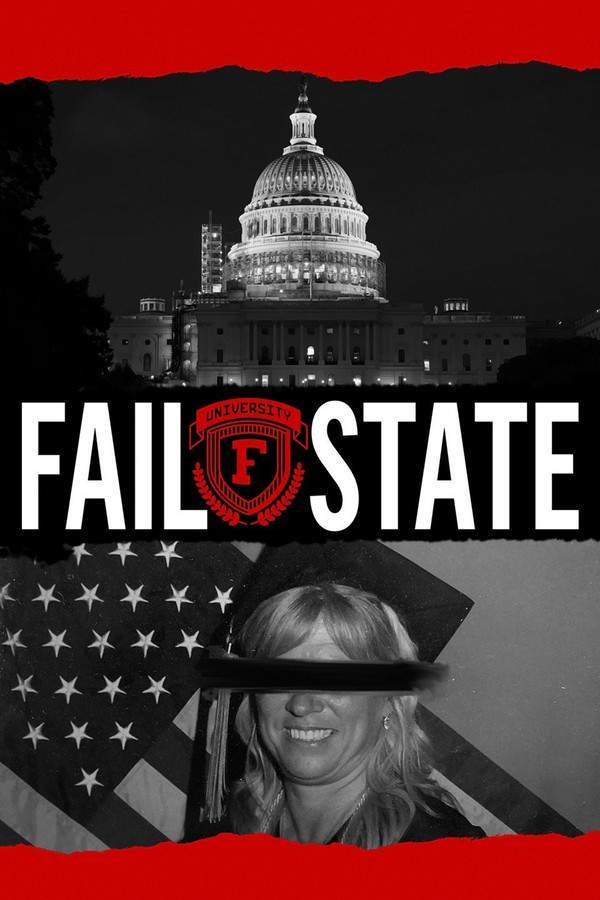
What Is Fail State About?
The premise of Fail State in 329 words, with nothing given away. The full story follows below.
In Fail State, director Alexander Shebanow turns a critical lens on the American higher education system, weaving together the perspectives of experts, former college recruiters, students, and government officials to unravel a deeply troubling story. The documentary sets out to examine how decades of policy decisions have reshaped the landscape of college education in the United States, with a particular focus on the rise of for-profit institutions and the students they serve. From the very beginning, there is a sense of urgency — a recognition that the promises made to young people seeking better futures have not always been kept.
At the heart of the film lies an exploration of vulnerability. Through internal documents and candid interviews, the picture that emerges is one of an industry that learned to identify and pursue isolated individuals, many of them from low-income or minority communities, offering them education in exchange for mounting debt. The tone is investigative and unflinching, yet measured — more concerned with exposing systemic patterns than assigning simple blame. Experts like F. King Alexander and Suzanne Mettler lend academic weight to the inquiry, while former students share the personal toll of choices made under difficult circumstances.
Adding political texture to the narrative, the film draws connections across ideological lines. Liberal voices such as Rep. Maxine Waters and Senator Tom Harkin appear as advocates pushing back against exploitative practices, while the documentary also acknowledges the surprising history of conservatives during the Reagan administration who first raised alarms about for-profit abuses. This bipartisan framing lends the investigation a wider moral scope, suggesting that the consequences of these policies cut across political divides.
Stylistically, the film embraces a classic documentary format — archival footage, talking-head interviews, and case studies — but its emotional core rests in the human stories at its center. The viewer is invited to sit with uncomfortable questions about opportunity, exploitation, and the true cost of education, guided by a filmmaker who treats his subjects with seriousness and compassion.
What Happens in Fail State?
The complete story of Fail State, from the first scene to the last, in 252 words (about 1 minute). Spoilers throughout. Names in the text link to 2 cast member pages.
Spoilers ahead
Fail State is a comprehensive documentary that meticulously examines the evolving economics of higher education and the devastating ripple effects these changes have had on low-income and minority students. Through a series of detailed interviews, the film incorporates perspectives from academic experts, former college recruiters, and both current and former students. It also features insights from government officials, including figures such as Suzanne Mettler and F. King Alexander.
The narrative traces the root of the current crisis back to a pivotal decision made by Congress during the 1970s. During this era, the government shifted its strategy from providing direct financial aid to colleges to instead allocating grants and loans directly to students to cover their tuition. While this move was intended to provide students with more choice, it inadvertently created a market-based system that incentivized aggressive and often predatory recruiting schemes specifically designed to target vulnerable populations.
The film utilizes internal industry documents to expose the cold calculations of for-profit institutions. These records reveal that these schools deliberately sought out individuals who were “isolated” or suffered from “low self-esteem,” making them easier targets for exploitation.
To provide a political context to these failures, the documentary features liberal lawmakers who fought against these harms, such as Congressperson Maxine Waters and Senator Tom Harkin. However, the film also offers a nuanced historical perspective, pointing out that in an earlier period, it was actually conservatives within the Reagan administration who were the first to sound the alarm regarding the abuses perpetrated by for-profit educational institutions.
Fail State Timeline: Every Key Event in Order
12 key events in the order they happen, from “Congress Shifts Higher Education Funding” to “The Film Examines Systemic Mistreatment”.
- 1
Congress Shifts Higher Education Funding
Congress made a pivotal decision to stop providing aid directly to colleges and universities. Instead, the government began allocating grants and loans to individual students to pay tuition at the colleges of their choice. This fundamental policy change in the 1970s restructured American higher education and set the stage for the crisis examined in the film.
When:1970s Where:Washington, D.C.
- 2
A Market-Based System Emerges
The congressional shift contributed to the rise of a market-based system in higher education. While it offered students greater choice in where to enroll, it also rewarded institutions for maximizing recruitment rather than educational quality. This new economic model reshaped the incentives of colleges across the country.
- 3
Recruiting Schemes Target Vulnerable Populations
As the market-based system took hold, institutions began rewarding aggressive recruiting schemes aimed at vulnerable populations. Low-income and minority students became prime targets for enrollment-driven schools. These practices contributed to widespread mistreatment of the very students higher education was meant to serve.
- 4
Reagan Administration Sounds the Alarm
In an earlier era, conservatives within the Reagan administration raised warnings about abuses by for-profit schools. The film highlights this as a striking moment, showing that concern about predatory practices crossed political lines early on. Their alarms foreshadowed the growing scandals in the for-profit education sector.
When:1980s Where:Washington, D.C.
- 5
Internal Documents Expose Predatory Recruitment
Fail State features internal industry documents that reveal the hidden tactics of for-profit schools. The documents show these institutions specifically sought to recruit 'isolated' individuals with 'low self-esteem.' This direct evidence demonstrates how deliberately vulnerable people were targeted for enrollment.
- 6
Liberal Lawmakers Push for Protections
Rep. Maxine Waters and Senator Tom Harkin, both liberals, worked to prevent the harms caused by for-profit schools. Their efforts in Congress sought to rein in recruiting abuses and protect students from predatory institutions. The film contrasts their advocacy with the earlier conservative warnings from the Reagan era.
Where:Washington, D.C.
- 7
Former College Recruiters Come Forward
The documentary interviews former college recruiters who worked inside the for-profit education industry. They describe the pressures and tactics they were expected to use to enroll vulnerable students. Their insider accounts reveal how the recruiting machine operated day to day.
- 8
Students Share Their Stories
Current and former students appear in the film to tell their personal stories. They recount how recruitment promises and financial realities shaped, and often endangered, their educational journeys. These testimonials illustrate the human cost of the broken economics of higher education.
- 9
Government Official F. King Alexander Weighs In
F. King Alexander, a former government official, sits down for an interview in the documentary. He discusses how policy decisions and oversight failures allowed abuses in higher education to persist for decades. His perspective adds institutional weight to the film's argument about accountability.
- 10
Expert Suzanne Mettler Analyzes the Crisis
Political scientist Suzanne Mettler appears among the film's featured experts. She offers analysis of how federal policy choices reshaped higher education and hurt vulnerable students. Her scholarly insights connect the 1970s policy shift to the modern crisis in student outcomes.
- 11
A Coalition of Voices Assembled
The documentary brings together a wide range of interview subjects, including experts, recruiters, students, and government officials, both former and current. This breadth of perspectives allows the film to trace the problem across multiple levels of the system. The varied testimony strengthens the investigative scope of the documentary.
- 12
The Film Examines Systemic Mistreatment
The documentary centers on how the changing economics of higher education contributed to the mistreatment of low-income and minority students. Through its interviews and evidence, it builds a comprehensive picture of systemic failure rather than individual missteps. The film ultimately argues that the pursuit of profit came at the expense of educational justice.
What Kind of Film Is Fail State?
Dark in tone, with steady pacing and a moderate story, going by the plot summary.
- Tone
- Dark
- Pacing
- Steady
- Story
- Moderate
- Intensity
- Medium
- Ending
- Ambiguous
A methodical and sobering investigative documentary that exposes the predatory machinery behind for-profit colleges, tracing how decades of policy failure left vulnerable students buried in debt and disillusionment.
- investigative
- exposé
- outraged
- serious
- thoughtful
- heavy
- education system
- predatory lending
- student debt
- policy failure
Content notes: exploitation of vulnerable people, predatory lending, targeting of psychologically vulnerable individuals, student debt crisis, systemic inequality.
Quiz
How well do you remember Fail State? Test yourself on the story.
