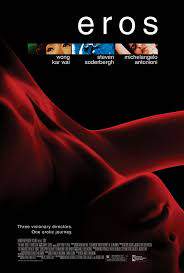
What Is Eros + Massacre About?
The premise of Eros + Massacre in 312 words, with nothing given away. The full story follows below.
In a Japan caught between the turbulence of the early twentieth‑century avant‑garde and the restless intellectual fever of the 1960s, the film opens on a world where ideas of love, politics and rebellion swirl like a living tapestry. The atmosphere shifts from the hushed, grainy cadence of the 1920s—filled with jazz‑laden cafés and clandestine meetings—to the sharper, more experimental soundscape of a later era, each transition echoing the changing social currents that pulse beneath the story.
At its core is Sakae Osugi, a charismatic anarchist whose uncompromising vision of free love draws a constellation of intense relationships. His marriage to Yasuko Hori offers a glimpse of domestic partnership strained by radical ideals, while his affair with Noe Itō paints a portrait of a fiercely independent woman navigating both personal desire and political commitment. The volatile dynamic with Itsuko Masaoka, a militant feminist whose devotion borders on obsession, adds another layer of emotional turbulence, suggesting that love and ideology are inseparable in this turbulent period.
Parallel to this historical tableau, two university students, Eiko Sokutai and Kenji Wada, immerse themselves in Osugi’s writings and the doctrine of free love that he championed. Their academic discussions quickly become a laboratory for imagination, as they stage re‑enactments and debate the relevance of past revolutions to their own lives. The film treats their scholarly curiosity as a bridge, allowing the past to resonate in the present, while also underscoring the timeless allure of radical thought.
Stylistically, the picture balances lyricism with intellectual rigor. The 1920s sequences glide with a languid, almost dream‑like rhythm, contrasted by the brisk, fragmented editing of the 1960s scenes. Music shifts accordingly, reinforcing the emotional tone without ever spelling out fate. Together, the characters and eras interweave, creating a contemplative mood that invites viewers to linger on the fragile beauty of passion, theory, and the ever‑shifting line between study and lived experience.
What Happens in Eros + Massacre?
The complete story of Eros + Massacre, from the first scene to the last, in 269 words (about 1 minute). Spoilers throughout. Names in the text link to 6 cast member pages.
Spoilers ahead
The film centers on Sakae Osugi, Toshiyuki Hosokawa as the title figure, and his intricate relationships with three women: his wife Yasuko Hori, portrayed by Masako Yagi; his third lover Noe Itō, brought to life by Mariko Okada (and linked to her daughter Mako Ito); and his jealous second lover Itsuko Masaoka, played by Yūko Kusunoki, a militant feminist figure.
Parallel to this biographical thread, two students—Eiko Sokutai, depicted by Toshiko Ii, and Kenji Wada, portrayed by Daijirô Harada—delve into the political theories and ideas of free love that Osugi upheld. Their conversations, debates, and occasional re-enactments of lives led by revolutionaries blur the line between study and imagination, grounding the film in both intellect and emotion.
The narrative treats Osugi’s life as a living tapestry, weaving his later years and his death into the same framework explored by the students. The portrayal of Itsuko’s attempts to end his life is revisited multiple times, each version offering a different outcome and leaving the audience to ponder the fragility and intensity of the era’s passions. The 1920s segments progress with a tempo and musical language that contrast with the 1960s sections, creating a deliberate shift in mood and atmosphere that mirrors the changing social currents.
In the climactic moment, Eiko’s lover, a film director, commits suicide by hanging himself with a length of film, a stark and unsettling image that lingers in the viewer’s mind. As a final gesture, Eiko and Wada gather all of the 1920s characters for a group portrait before they leave the building, drawing the intertwined fates of past and present into a single, quiet exhale.
Eros + Massacre Timeline: Every Key Event in Order
12 key events in the order they happen, from “Eiko begins Noe Itō research” to “Leaving the building”. 11 events name a place, across 9 locations.
- 1
Eiko begins Noe Itō research
In the film's present frame, Eiko interviews Mako to learn about Noe Itō's life and influence. She demonstrates a strong belief in Ōsugi's idea of free love. This interview sets the investigative and philosophical tone for the narrative that follows.
When:1960s Where:Mako's home
- 2
Eiko embraces free-love ideals
Eiko expresses a strong belief in Ōsugi's free love ideals and sees them as guiding principles for her life. Her stance reinforces the connection between personal relationships and political ideas. This belief drives how she engages with Noe Itō's legacy.
When:1960s Where:present
- 3
Underground ties and police questioning
Details reveal Eiko is connected to an underground prostitution ring, highlighting how clandestine networks intersect with political inquiry. A police inspector questions her, underscoring the risks faced by those who probe forbidden ideas. The interrogation adds tension to the film's present-day investigations.
When:1960s Where:city
- 4
Philosophical debates and re-enactments
Wada spends time philosophizing with Eiko and they discuss the ideas behind free love. The two of them also begin to stage re-enactments of lives of famous revolutionaries and martyrs. These scenes create a bridge between historical theory and contemporary exploration.
When:1960s Where:study space
- 5
Reenactments of revolutionaries and martyrs
These re-enactments feature figures from revolutionary history and martyrs, as the students attempt to understand the appeal of radical ideas. The performances invite audience reflection on the ethics and consequences of free love. The line between documentary and fiction becomes increasingly blurred.
When:1960s Where:set within film
- 6
Ōsugi's later years and death retold
Parallel to the present narrative, the film retells Ōsugi Sakae's later years and his death. The portrayal emphasizes the turbulent political climate that surrounds him and his ideas. Through this, the audience sees how his relationships shaped his fate.
When:1920s Where:Japan
- 7
Itsuko Masaoka's jealousy and plan
Itsuko Masaoka emerges as a militant feminist who is intensely jealous of Ōsugi's relationships. She hatches a plan to kill him in a tea house in 1916. Her actions reflect the film's tension between personal passion and political ideology.
When:1916 Where:tea house
- 8
The tea-house attempt retold in multiple ways
The tea house assassination attempt is shown several times with different outcomes. Each version reveals alternate consequences and raises questions about fate and responsibility. The device illustrates how memory and narrative shape history.
Where:tea house
- 9
Stylistic shifts between eras
The film contrasts the pace and musicality of the 1920s sequences with the more contemplative rhythm of the 1960s. This stylistic shift deepens the sense of time passing and ideological change. It reinforces the film's exploration of memory and interpretation.
When:1920s and 1960s
- 10
Final scene: the director's suicide
In the closing moment, Eiko's lover, a film director, kills himself by hanging with a length of film. The tragedy underscores the personal costs of pursuing these dangerous ideas. The scene leaves a haunting sense of consequence lingering over the narrative.
When:present Where:present
- 11
Group photo of 1920s characters
At the end, Eiko and Wada gather all the 1920s characters for a group photograph. The moment blends past and present, highlighting the film's central themes. The image captures the convergence of lives shaped by Ōsugi's ideas.
When:present Where:building
- 12
Leaving the building
After the photograph, Eiko and Wada walk out of the building together. They carry with them the echoes of the past and questions about free love and revolution. The film ends with their departure, leaving the narrative open to interpretation.
When:present Where:building exit
Who Are the Main Characters in Eros + Massacre?
7 characters, among them Noe Ito / Mako Ito, Itsuko Masaoka and Yasuko Hori: who each one is and the part they play in the story. Every profile links to the actor’s page.
-
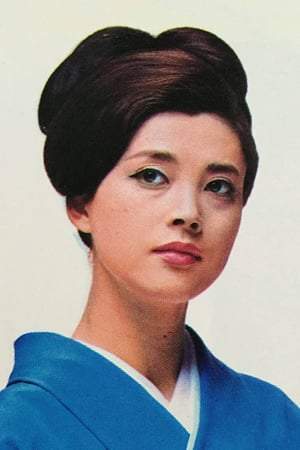
Noe Ito / Mako Ito
Played by Mariko Okada
Ōsugi’s third lover and a conduit for his ideas, whose life and death anchor the historical arc. Her daughter Mako Ito appears as a link to the present, guiding Eiko’s investigation. The character embodies the fusion of personal sacrifice with political conviction in the story.
- ❤️
- 💡
- 🕊️
- IM
Itsuko Masaoka
Played by Yūko Kusunoki
Ōsugi’s second lover, a militant feminist who challenges patriarchal authority and radical politics. She becomes a focal point in the tension surrounding Ōsugi’s safety, illustrating how gender and ideology intersect. Her portrayal probes the costs of passionate political commitment.
- 👁️
- ⚖️
- 🔥
- YH
Yasuko Hori
Played by Masako Yagi
Ōsugi’s wife, whose relationship to him reveals the strain between domestic life and radical belief. The story uses their dynamic to explore loyalty, compromise, and the influence of personal ties on political engagement.
- 💑
- 🧭
- 🗺️
- SO
Sakae Osugi
Played by Toshiyuki Hosokawa
A central anarchist thinker whose revolutionary ideas about love and freedom frame the historical threads. His philosophy underpins the narrative’s exploration of how theory translates into action and danger.
- 🧠
- 🕊️
- 📚
- KW
Kenji Wada
Played by Daijirô Harada
A student who engages in philosophical dialogue with Eiko and participates in reflective, narrative experiments. He acts as a bridge between the historical material and present-day examination.
- 🎓
- 🗣️
- 🔎
- ES
Eiko Sokutai
Played by Toshiko Ii
A student who is convinced by Ōsugi’s principles of free love and becomes entangled with an underground prostitution ring. She is questioned by a police inspector, embodying the clash between idealism and social reality.
- 🧭
- 🔒
- 🧪
- AK
Araya Kimura
Played by Yoshisada Sakaguchi
A figure connected to the intellectual milieu surrounding Ōsugi, who participates in dialogues that weave past and present together. He helps to connect historical theory with contemporary inquiry.
- 💬
- 🧭
- 🗺️
Where and When Is Eros + Massacre Set?
Eros + Massacre is set in Tokyo and Japan (1916–1920s; 1960s). Here is why the time and place matter to the story.
When
1916–1920s; 1960s
The film toggles between the 1910s–1920s, focusing on Ōsugi and his lovers, and the 1960s, following students Eiko and Wada as they research his ideas. The 1920s sequences depict a tense, revolutionary atmosphere, while the 1960s sequences adopt a different pace and musical style to reflect a new era. The plot culminates as past and present intersect and influence one another.
Where
Tokyo, Japan
Set in Japan, the story weaves between early-20th-century political life and modern-day academic investigation. The 1910s–1920s segments unfold in urban Tokyo spaces like tea houses and salons, where radical ideas about love and society take root. Contemporary portions occur in university and city settings, contrasting memory with present-day inquiry.
- 🏙️ Urban
- 🕰️ Historical
- 🗺️ Political
What Are the Themes of Eros + Massacre?
3 ideas the story keeps returning to, among them Love & Jealousy, Politics & Free Love and Memory & Reenactment.
-
01
Love & Jealousy
The film centers on Ōsugi’s complex relationships with Yasuko Hori, Noe Ito, and Itsuko Masaoka. Jealousy and shifting loyalties complicate political commitments, showing how intimate bonds can mirror ideological battles. These personal ties drive pivotal events, including lethal confrontations. The narrative suggests private passions can illuminate or destabilize public ideals.
-
02
Politics & Free Love
Free love is presented as both a personal experiment and a political stance within radical circles. The idea is explored through the present-day students Eiko and Wada as they debate and reenact Ōsugi’s theories. Reenactments of revolutionary lives blur lines between history and present. The film treats intimate relationships as a microcosm of political movements.
-
03
Memory & Reenactment
Past and present repeatedly intersect as characters from different eras meet within the narrative. The film layers 1920s reminiscences with 1960s inquiry, portraying memory as an active act of interpretation. Eiko and Wada’s exploration doubles as a cinematic device to question how history is told. The gathering of 1920s figures at the end emphasizes memory’s persistence beyond death.
What Kind of Film Is Eros + Massacre?
Dark in tone, with variable pacing and a very complex story, going by the plot summary.
- Tone
- Dark
- Pacing
- Variable
- Story
- Very complex
- Intensity
- High
- Ending
- Sad
A complex, fragmented, and intellectually demanding film that juxtaposes historical tragedy with modern existential questioning, creating a tense and melancholic atmosphere.
- disjointed
- philosophical
- melancholic
- political
- anxious
- confrontational
- free love
- political radicalism
- historical biography
- nonlinear narrative
Content notes: suicide, murder, political violence, nudity, prostitution.