What Is Drowning by Numbers About?
The premise of Drowning by Numbers in 265 words, with nothing given away. The full story follows below.
In a windswept corner of Suffolk, the seaside town of Southwold glistens with a blend of quaint charm and quiet mystery. Victorian water towers loom over the estuary, the lighthouse sweeps its beam across the tide, and everywhere numbers—sometimes etched on cattle, whispered in conversation, or counted by a child with a rope—pulse like an unseen metronome. The setting feels both timeless and meticulously ordered, a place where daily routines are stitched together by an almost ritualistic rhythm that hints at something larger beneath the surface.
At the heart of this world are three women, each bearing the name Cissie Colpitts, spanning a grandmother, her daughter, and a young niece. Their lives intersect in a bond of shared purpose that feels both intimate and oddly communal, a solidarity that draws them into a quiet game of mirrors and repetitions. Watching their interactions is the town’s coroner, Madgett, whose professional detachment is continually tested by the gentle pressure of the Cissies’ unspoken pact, inviting him into a delicate dance of complicity and curiosity.
The film’s tone moves like a folk tale told in circles, echoing the cadence of a children’s counting game while a Michael Nyman score weaves through every scene with a playful, almost mathematical precision. Repeated motifs—games with invented rules, the steady climb from one to a hundred, and the mirrored structure of each generation’s story—create a layered tapestry that feels both whimsical and uneasy. The audience is left to wonder what whispers lie behind the numbers and how the quiet solidarity of the three women might ripple through the orderly world around them.
What Happens in Drowning by Numbers?
The complete story of Drowning by Numbers, from the first scene to the last, in 625 words (about 3 minutes). Spoilers throughout. Names in the text link to 3 cast member pages.
Spoilers ahead
The film opens with a small girl skipping rope, counting stars up to a hundred, a quiet image that seeds the story’s fascination with numbers and ritual and sets a steady, almost hypnotic pace for what follows.
Centered on three married women — a grandmother, her daughter, and her niece — each named Cissie Colpitts. The trio of Cissies is brought to life by a procession of strong performances, while Madgett the coroner is drawn into quietly complicity as he becomes entangled in covering up their crimes.
From the outset, the film feels like a modern fairy tale in three acts, a structure that nods to folklore and fables even as it tracks a chilling, methodical sequence of events. The sense of ritual grows as Madgett moves from one Cissie to the next, each encounter underscored by a moral economy in which he is promised larger rewards for increasingly audacious decisions. This push-and-pull gives the tale a rhythmic, almost operatic tension, where consequence is delayed even as it feels inexorable.
The plot observes a stark, almost clinical pattern: the same core setup recurs with different players, a pattern that invites comparisons to a cautionary folk tale. At the heart of this repetition is Smut, the coroner’s son, who tallies the rules of various peculiar games that the characters treat as if they were ancient rites. Smut serves as a sly chorus, reciting the rules as if mapping out a coded tradition whose meaning thickens with each retelling. Many of these games feel invented for the film, lending a sense of otherworldly ceremony to the everyday motions of marriage, jealousy, and secrecy.
One of the most striking formal devices is the relentless counting that threads the entire film. Across scenes and silhouettes, the numbers 1 through 100 appear—often in sequence—embodied in the background on signs or cattle, spoken by characters, or glimpsed in the environment. This numerical motif creates a strange, hypnotic texture that fuses with the narrative’s moral arithmetic, making the viewer feel as though the story itself is ticking toward an inevitable conclusion.
The score reinforces this sense of compulsion. The soundtrack, built from repeated motifs, feels almost clinical in its precision, while still evoking a carriage of emotion that is alternately dryly comic and unsettlingly somber. The music and the imagery together render each act as a compact, self-contained unit that nevertheless contributes to a larger, cumulative mosaic.
The film is anchored in its sense of place. It was shot in and around Southwold, Suffolk, and the landscape—its shoreline, the estuary, and local landmarks like the Victorian water tower and the Southwold Lighthouse—throughout remains legible and tangible. These locations provide a tangible counterpoint to the fable-like structure, grounding the tale in a real-world texture that heightens the tension between myth and reality.
Throughout, the tone stays deliberately restrained: dark, sly, and quietly comic, as if balancing on the edge of a moral parable while watching three generations of a family inhabit the same name. The repeated narration, the calculated games, and the inexorable counting all converge toward a vision of domestic life that is at once familiar and disquieting.
In the end, the film leaves a lingering sense of ritual and inevitability, a reminder that the ordinary surfaces of marriage, memory, and loss can conceal something older, more mythic, and more inexorable than they appear. It is a deliberatelyesda, formally experimental work that uses repetition, folklore echoes, and a precise musical cadence to explore how desire and guilt circulate within a family, while never losing sight of the human beings at its center.
Note: For accessibility, the principal Cissie Colpitts is represented by Cissie Colpitts in the cast, and the coroner Madgett is portrayed by Madgett; Smut is brought to life by Smut.
Drowning by Numbers Timeline: Every Key Event in Order
13 key events in the order they happen, from “Opening scene establishes counting motif” to “Cycle closes with ritualized cadence”. 7 events name a place, across 6 locations.
- 1
Opening scene establishes counting motif
The film opens with a little girl skipping rope and counting stars to a hundred, establishing its obsession with numbers. This initial image foreshadows the mathematical rhythm that underpins the story. The opening sets a fairy-tale tone that pervades the rest of the film.
When:Opening
- 2
Three Cissie Colpitts introduced
The plot centers on three married women who share the name Cissie Colpitts—a grandmother, her daughter, and her niece. The film establishes their intertwined lives and sets each woman up to be the focus of a forthcoming tragedy. The setup hints at a cyclical, fairy-tale structure.
When:Early
- 3
First drowning occurs
The grandmother Cissie drowns her husband, beginning the deadly pattern. The coroner, Madgett, is drawn into the case and begins to consider covering up the murder. The event marks the start of the ritualized concealment that drives the rest of the story.
When:Early Where:Grandmother's home
- 4
Coroner enticed to cover up
Madgett is cajoled into covering up the first murder, and he is promised greater rewards if he helps with the others. This moral compromise becomes the engine of the three-crime cycle. The arrangement deepens the game-like dynamic between killer, survivor, and investigator.
When:After first murder Where:Coroner's office
- 5
Second drowning occurs
The daughter Cissie drowns her husband, continuing the deadly pattern. Madgett again conceals the crime, maintaining the ritual of concealment. The repeated cycle reinforces the film’s fairy-tale cadence and its obsession with rules.
When:Later Where:Second couple's home
- 6
Smut recites game rules
Madgett’s son Smut recites the rules of various unusual games as if they were ancient traditions. These interludes frame the events as part of a larger coded system. The game-like rhetoric deepens the film’s ritualized, fairy-tale atmosphere.
When:Midpoint
- 7
Third drowning occurs
The niece Cissie drowns her husband, completing the triple crime at the center of the plot. Madgett again conceals the murder, extending the same pattern to its conclusion. The three tales mirror each other in structure and motive.
When:Later Where:Niece's home
- 8
Fairy-tale framing and folklore reference
The film frames the three stories as a fairy-tale loop, echoing The Billy Goats Gruff as a structural touchstone. The repetition reinforces the idea that the crimes and cover-ups unfold like a cautionary tale. This framing gives the narrative a timeless, folklore-like cadence.
When:Throughout
- 9
Counting and numbers as a structural device
Throughout the film, each number from 1 to 100 appears in various forms, linking the murders into a ritual sequence. Numbers appear in the background, on cattle, and in dialogue, underscoring the pattern’s inevitability. The numerology acts as a spine for the narrative’s design.
When:Throughout
- 10
Michael Nyman score reinforces the rhythm
The repetitive, obsessive motif of the film is echoed in Michael Nyman's score, which heightens the ceremonial feel of the events. The music amplifies the counting and ritualistic cadence that underpins the three stories. It serves as an audible guide to the film’s cadence.
When:Throughout
Show the other 3 events of Drowning by Numbers Hide the last 3 events
- 11
Southwold setting anchors the action
The film is set and shot in and around Southwold, Suffolk, with landmarks like the Victorian water tower, Southwold Lighthouse, and the Blyth estuary clearly identifiable. The coastal setting gives the events a folkloric mood and grounds the fairy-tale atmosphere. The landscape itself becomes a character in the story.
When:Throughout Where:Southwold, Suffolk, England
- 12
Coroner's ongoing complicity
Madgett continues to function as the cover-up’s gatekeeper, navigating ethical boundaries as the trio of murders persists. The dynamic between Madgett and the Cissies reflects a grim bargaining for rewards. The film uses this relationship to critique ritualized crime and collective complicity.
When:Mid to end Where:Coroner's office
- 13
Cycle closes with ritualized cadence
The triple narrative resolves with the same ritualistic cadence that opened the story, closing the loop on the game-like cycle. The counting motif and folklore framing leave a sense of cyclical inevitability. The film ends with the lingering atmosphere of Southwold.
When:End Where:Southwold
Who Are the Main Characters in Drowning by Numbers?
8 characters, among them Cissie Colpitts (Joan Plowright), Cissie Colpitts (Juliet Stevenson) and Cissie Colpitts (Joely Richardson): who each one is and the part they play in the story. Every profile links to the actor’s page.
-
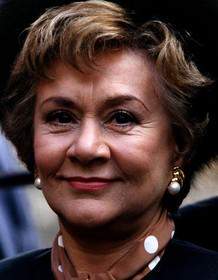
Cissie Colpitts (Joan Plowright)
Played by Joan Plowright
An elderly grandmother who outwardly upholds propriety while orchestrating a murder to secure a family legacy. She embodies calm restraint that hides a cold resolve, making her capable of lethal action when pressed by circumstance.
- 🔪 Murderer
- 👵 Elderly
- 🕊️ Tragic
- CC
Cissie Colpitts (Juliet Stevenson)
Played by Juliet Stevenson
The middle generation in the trio, a daughter whose social grace masks a ruthless determination. She participates in the deadly pattern, bending circumstances to her advantage while maintaining a composed, alluring exterior.
- 🔪 Murderer
- 👩👧👧 Daughter
- 🪞 Calculating
-

Cissie Colpitts (Joely Richardson)
Played by Joely Richardson
The youngest Cissie, a wife whose actions contribute to the trio's cycle of murder. She embodies a fierce, unresolved intensity that complements the others' artistry in the ritual.
- 🔪 Murderer
- 👩🎤 Subversive
- 🫶 Devoted
- M
Madgett
Played by Bernard Hill
The coroner who is lured into covering up the three crimes. His appetite for rewards grows as he negotiates with each Cissie, blurring lines between truth and obligation.
- 🕵️ Corrupt official
- 🗳️ Complicit
- 🧠 Schemer
- S
Smut
Played by Jason Edwards
Madgett's son, who recites the rules of the invented games as if they are ancient laws. His fascination with rules reinforces the ritual atmosphere surrounding the murders.
- 👶 Child
- 🔢 Rule-set
- 🌀 Prophecy
- TS
The Skipping Girl
Played by Natalie Morse
A girl who embodies the film’s recurring motif of counting and rhythm, her actions echoing the ritual tone of the tale.
- 🧒 Child
- 🌀 Rhythm
- 🫧 Mystery
- TS
The Skipping Girl's Mother
Played by Jose Berg
The mother of the Skipping Girl, tied to the film’s recurring family dynamics and secrets.
- 👩 Mother
- 🕯️ Secret
- 🕊️ Fragility
- TH
The Hare
Played by Vanni Corbellini
A surreal, folkloric presence that contributes to the dreamlike, ritual atmosphere of the film.
- 🐇 Folklore
- 🕯️ Surreal
- 🗝️ Symbol
Where and When Is Drowning by Numbers Set?
Drowning by Numbers is set in Southwold, Suffolk and England. Here is why the place matters to the story.
Where
Southwold, Suffolk, England
Southwold is a seaside town on the Suffolk coast in England. The film is set in and around this locale, featuring landmarks such as the Victorian water tower, Southwold Lighthouse, and the estuary of the River Blyth. The setting provides a calm, weathered backdrop that contrasts with the film’s dark, fairy-tale atmosphere.
- 🌊 Coastal town
- 🗺️ English coast
- 🏰 Landmarks
What Are the Themes of Drowning by Numbers?
4 ideas the story keeps returning to, among them Number motif, Repetition and Fairy tale.
-
01
Number motif
Numbers from 1 to 100 appear throughout the film, giving the story a strict, rhythmic framework. Counting appears in visuals and dialogue, reinforcing the sense of ritual and order. The numeric motif ties the three tales into a single, obsessive structure that mirrors folklore games.
-
02
Repetition
Three nearly identical narratives unfold in sequence, each centering on a marriage-ending crime. The repetition mirrors a fairy-tale cadence, with the coroner enticed by promises of reward after each case. This cyclical pattern emphasizes ritual over chance, sharpening the film’s eerie mood.
-
03
Fairy tale
The film adopts a fairy-tale mood, echoing The Billy Goats Gruff through its triptych structure and ritual rules. Counting, games, and a mythic moral code lend the story a timeless, fable-like quality set in a contemporary world. Characters recite invented games as if they are ancient laws.
-
04
Cover-up
The coroner Madgett is drawn into concealing the murders, trading truth for rewards. The narrative probes how authority and institutions can shelter wrongdoing through complicity. The tension between fact and concealment drives the suspense and moral ambiguity.
What Kind of Film Is Drowning by Numbers?
Whimsical in tone, with steady pacing and a complex story, going by the plot summary.
- Tone
- Whimsical
- Pacing
- Steady
- Story
- Complex
- Intensity
- Medium
- Ending
- Ambiguous
A surreal and darkly whimsical black comedy that follows a repetitive, mathematical structure as three generations of women conspire in a series of copycat murders with deadpan humor.
- surreal
- quirky
- darkly humorous
- mathematical
- repetitive
- folklore-inspired
- dysfunctional marriage
- murder cover-up
- female solidarity
- repetitive structure
Content notes: murder, dysfunctional relationships.