What Is Batwara About?
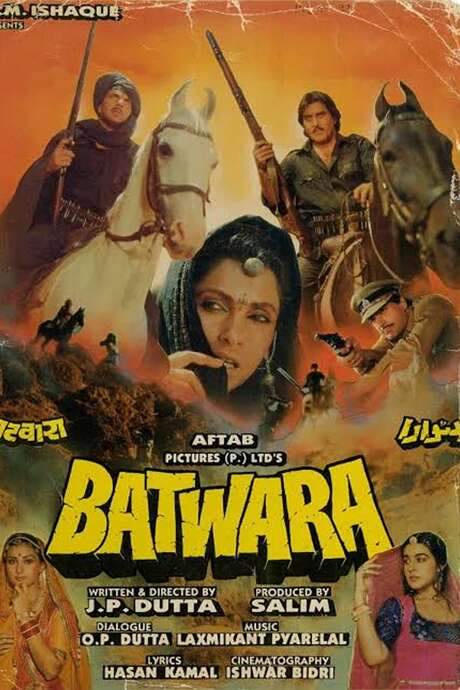
The premise of Batwara in 268 words, with nothing given away. The full story follows below.
In the waning days of British rule, the Indian subcontinent is a patchwork of fading princely states and restless new laws that promise to reshape the countryside. A sweeping land‑reform decree limits how much acreage a single family can retain, threatening the centuries‑old grip of the landed elite while offering hope to the tillers of the soil. Against this backdrop of political uncertainty and rural upheaval, the film breathes an uneasy, dust‑laden atmosphere where loyalty to tradition clashes with the promise of a different future.
Sumer and Vikram have been inseparable since childhood, their friendship a quiet legend in the village that bridges two worlds. Sumer serves as a police constable, his modest upbringing grounding him in the everyday struggles of the peasant community. Vikram belongs to the aristocratic Thakur family, poised to inherit vast tracts of land and the weight of ancestral authority. Their relationship, forged in shared memories and mutual respect, now sits at the fragile intersection of duty, class, and the simmering tensions that the new land‑sealing law has ignited.
When a personal loss tears through Vikram’s family, grief gives way to a fierce yearning for retribution, pulling both men onto divergent paths. The tragedy forces each to weigh the bonds of friendship against the stark realities of a nation in transition, where questions of justice, honor, and belonging are as tangled as the fields that surround them. The story unfolds with a brooding, slow‑burning intensity, inviting the audience to feel the weight of history pressing on two souls who must decide whether their shared past can survive the harsh demands of a changing world.
What Happens in Batwara?
The complete story of Batwara, from the first scene to the last, in 777 words (about 3 minutes). Spoilers throughout. Names in the text link to 2 cast member pages.
Spoilers ahead
Sumer and Vikram are two close friends whose bond is well known in the village. Sumer serves as a cop, while Vikram belongs to the landowning class. The film unfolds in a post-independence setting, where a new land sealing law restricts how much land a person can own. This is a drastic blow to the powerful Thakur family, who own vast acres of land. The rule says the excess land must be surrendered to the government and redistributed to farmers, a change that threatens their grip on power.
In this tense climate, Deven plans a scheme to keep the land within the family by backdating transactions and forging signatures or thumb impressions from the farmers who till the land (which is mortgaged to the Thakurs). The village Sarpanch Lakhiya—the Sarpanch Lakhiya—stands with them, agreeing to help manipulate records and persuade farmers to approve the changes.
During a crowded meeting, the farmers stand firm in their resolve to keep their land. Anger erupts, and Deven panics and fires his rifle, killing one villager. The mob, enraged by the act, lynches him on the spot. Grief-stricken, Vikram returns to his village to perform the last rites of his brother and cannot bear the sight of the carnage. Fueled by rage, he travels to the farmers’ dwellings with his rifle, mows down several farmers, and sets their homes ablaze. He slips into the ravines and joins a band of outlaws, forming a gang of his own. In return, the bandits gain money and protection from the influential Thakur family.
Meanwhile, Vikram’s youngest brother, Rajendra Singh, who is also a cop, comes back to the village. He is appalled by the turn of events and refuses to aid the Thakurs in crushing the rebellion. His father urges him to shield Vikram and punish the villagers who defied their supremacy, but Rajendra stays true to his oath as a lawman.
When Sumer returns, the weight of what has happened tears at him. He cannot reconcile his friendship with Vikram and ends up marrying his beloved Jina, who is orphaned after her brother’s death at Vikram’s hands. Sumer confronts Vikram and declares that their friendship is over. Bade Thakur, Vikram’s father, then brings in Hanumant Thakur—Hanumant Thakur to suppress the rebellion led by Sumer, while Rajendra’s junior ally finds his own ways to control the situation. Hanumant’s arrival brings a harsh reign of terror; he even assaults pregnant Jina, causing a miscarriage, which inflames Sumer and leads him to assault the police station, killing many officers before escaping with some of the stolen arsenal, distributing weapons to villagers and turning his own gang into a rival force to Vikram’s.
What follows is a high-stakes game of cat and mouse. Sumer and Vikram each raid the others’ strongholds—Sumer plundering the Thakurs’ granary and Vikram lifting money earned from selling produce. In retaliation, Sumer strikes at the Thakurs’ Haveli (mansion). The police eventually regain control as Rajendra is restored to leadership, but Vikram plans to burn the entire village. He learns of a police trap laid for him by a rival gang, but escapes, though many of his men are killed. Sumer escalates by raiding the Haveli again, and soon the two gangs stand on opposite sides of a massive showdown.
Rajendra investigates the rebellion and uncovers the brutalities inflicted by Hanumant. He contemplates suspending Hanumant and his accomplices, while Hanumant plots to eliminate Rajendra in the looming confrontation. A cop overhears the plan and passes the information to Vikram. At a critical moment, the two women in their lives—Sumer’s wife and Vikram’s wife—step forward. They reveal how the gang leaders are betraying them for money, and their words help to unite the two former rivals.
Deciding to end the bloodshed, Sumer and Vikram join forces, first taking out the leaders of their respective gangs and then heading to the designated showdown point, where the police have already laid a trap. They pretend to surrender, only to kidnap Hanumant. In a quiet moment that harkens back to their childhood, they remember earlier times and kill Hanumant, a deadly echo of a long-forgotten memory. As the battle erupts around them, bullets rain down like a cold hail, and the two friends, now mortal enemies turned unlikely allies, are mortally wounded in the struggle, their fates sealed as their memories of youth collide with the brutal realities of their present.
This sweeping tale blends personal loyalty, betrayal, and the corrosive thirst for power against a backdrop of rural upheaval, where two former friends must confront the consequences of a social order bent on control, and where the lines between justice and vengeance blur until the very end.
Batwara Timeline: Every Key Event in Order
14 key events in the order they happen, from “Post-independence land reform looms” to “The climactic shootout and deaths”. 14 events name a place, across 11 locations.
- 1
Post-independence land reform looms
After independence, a new land sealing law threatens the Thakurs' vast holdings. The law requires land above a fixed limit to be surrendered to the government for redistribution to farmers. Sumer, a cop, and Vikram, from the landowning class, watch the changes with dread as their world is upended.
When:Early post-independence era Where:Village
- 2
Deven's backdating plan and collusion
Deven hatches a scheme to distribute land among relatives by backdating transactions and forging signatures. The Sarpanch, aligned with the Thakurs, agrees to manipulate records and sway farmers. The plan hinges on fabricating farmer consent to grab the land before the reform takes effect.
When:Day of planning Where:Village meeting
- 3
The farmers' meeting turns deadly
At the farmers' meeting, opposition to the backdating plan hardens into a standoff. Deven loses his nerve and fires his rifle, killing a villager. The enraged crowd lynches him, ending his plot in a brutal vigil.
When:That day Where:Village meeting site
- 4
Vikram retaliates and becomes a bandit
Grief-stricken by Deven’s death, Vikram rushes back to his village with a rifle. He indiscriminately kills numerous farmers and sets fires to their homes. He then escapes into the ravines and joins a band of outlaws who receive money and protection from the powerful Thakur family.
When:In the immediate aftermath of Deven's death Where:Village and ravines
- 5
Rajendra returns as a cop, conflict with Vikram
Vikram's younger brother Rajendra, a cop, returns to the village to assess the rebellion. Their father urges him to protect Vikram and avenge the villagers, but Rajendra refuses to abandon the law. The family tension foreshadows the coming clash between duty and loyalty.
When:Shortly after Vikram turns bandit Where:Village
- 6
Sumer's return and marriage to Jina
Sumer returns to his village, deeply anguished by the turn of events, and marries his love Jina to seek solace. Jina's brother had been killed by Vikram, making the union bittersweet. The personal losses deepen the cast of feuding families.
When:Soon after the tragedy Where:Village
- 7
Bade Thakur enlists Hanumant to suppress rebellion
Bade Thakur summons Hanumant Thakur, a junior cop, to crush the rebellion led by Sumer. Hanumant claims his hands are tied by Rajendra but agrees to take charge after a transfer is arranged. A ruthless crackdown on dissent begins, escalating the conflict.
When:After Hanumant's appointment Where:Village police office
- 8
Hanumant's brutality and Jina's miscarriage
Hanumant's brutality intensifies when he kicks pregnant Jina, causing a miscarriage. Sumer, furious over the loss, attacks the police station, kills the cops, and loots the arsenal. He joins a rival gang and becomes a more dangerous threat.
When:During crackdown Where:Village police station; Jina's home
- 9
Gangs clash in a game of cat and mouse
Sumer's and Vikram's gangs escalate their conflict, raiding the granary and the Thakurs' money after selling produce. The cat-and-mouse war heats up as each side strikes the other's assets. The village is pulled into a cycle of raids and retaliation.
When:Rising confrontation period Where:Granary, Market, Haveli
- 10
Rajendra regains command and targets Hanumant
Rajendra is restored to command and begins a campaign to curb the rebellion, planning to suspend Hanumant from the force. He uncovers brutalities committed by Hanumant and moves to remove him. The power struggle tightens around the police leadership.
When:Power shift Where:Village police HQ
Show the other 4 events of Batwara Hide the last 4 events
- 11
Revelations by the wives
Two women—Sumer's wife and Vikram's wife—intervene and reveal that their own gang leaders are betraying them for money. The revelation undercuts the illusion of control and forces both sides to rethink their loyalties. The revelation accelerates the move toward a final confrontation.
When:Climax build Where:Haveli / village homes
- 12
Sumer and Vikram unite for the final showdown
Sumer and Vikram decide to join forces to eliminate their respective gang leaders and reach the designated showdown point. They plan to co-opt the police presence rather than fight head-on. The uneasy alliance signals the endgame of the long-standing feud.
When:Approach to final confrontation Where:Designated showdown location
- 13
Feigned surrender and kidnapping of Hanumant
From there, they feign surrender and kidnap Hanumant, unsettling the police. They reminisce about their childhood and reaffirm their own code of brotherhood amid the chaos. The moment sets the stage for the climactic confrontation.
When:Final moments Where:Showdown site
- 14
The climactic shootout and deaths
At the showdown, bullets rain as if recalling their childhood memory of a hunt. They kill Hanumant but are themselves riddled with bullets and die. The saga ends in a brutal, fateful memory that seals their fates together.
When:Climax Where:Showdown site
Who Are the Main Characters in Batwara?
7 characters, among them Sumer, Vikram and Deven: who each one is and the part they play in the story.
- S
Sumer
Sumer is a village cop whose deep bond with Vikram is a well-known fixture in the community. He faces a moral dilemma when events pull the two friends into opposing paths. After marrying Jina, he is forced to reconcile duty with family loyalties and the changing village dynamics. His evolution from ally to skeptic highlights the cost of the feud.
- 🛡️ Duty
- 💔 Family
- 🤝 Loyalty
- V
Vikram
Vikram is the son of a powerful landlord who turns bandit after the land reform threatens his family's wealth. His rage and grief after Deven's killing triggers a spiral into outlaw life and creates a rival faction to Sumer's.
- ⚔️ Power
- 🌀 Revenge
- 🏹 Banditry
- D
Deven
Deven is Bade Thakur's eldest son who schemes to backdate land transfers to keep control of their vast estate. His rash act of shooting a villager sparks mob fury and his own downfall.
- 🗡️ Betrayal
- 💰 Greed
- 🧭 Corruption
- R
Rajendra
Rajendra is Vikram's younger brother and a dedicated cop who returns to the village and refuses to shield the Thakurs. He upholds the law even as violence erupts, trying to balance family ties with duty.
- ⚖️ Law
- 🛡️ Duty
- 🕊️ Hope
- H
Hanumant
Hanumant is the junior cop who indulges brutality in support of the Thakur patriarchy, but whose actions inflame the rebellion, including the miscarriage of Jina.
- 🔥 Brutality
- 🏛️ Authority
- 💥 Power
- J
Jina
Jina is Sumer's beloved who becomes a focal point of tragedy; an orphaned figure whose life is tumultuously bound to the violence around her.
- 💗 Love
- 💔 Loss
- 🌧️ Tragedy
- BT
Bade Thakur
Bade Thakur is the patriarchal estate owner whose wealth and influence drive the conflict; his attempts to maintain control lead to violent consequences for the village.
- 🏰 Feudal Power
- 💰 Wealth
- 🗳️ Power Politics
Where and When Is Batwara Set?
Batwara is set in Rural Indian village (Post-independence India). Here is why the time and place matter to the story.
When
Post-independence India
Taking place after India gained independence in 1947, the film centers on land reform policies and the redistribution of land. The government introduces a sealing law that caps land ownership, threatening the estates of the Thakur families. This policy triggers economic and social upheaval in rural communities, fueling violent confrontations. The setting captures the tension between constitutional reform and feudal privilege.
Where
Rural Indian village
Set in a rural Indian village, the story unfolds around a feudal estate and the village head's influence. The landscape features haveli mansions, sprawling fields, and ravines that become stages for clashes between landowners and peasants. The social fabric is strained as new land reform policies threaten centuries-old power structures. The village becomes a battleground where loyalties shift and violence becomes the default response.
- 🌾 Rural life
- 🏰 Feudal power
- 🗳️ Village politics
What Are the Themes of Batwara?
3 ideas the story keeps returning to, among them Power Struggle, Betrayal and Revenge.
-
01
Power Struggle
Feudal landlords clash with farmers when a new land-sealing law threatens centuries of privilege. Wealth and influence become tools to manipulate records, control communities, and crush dissent. The struggle exposes how power is preserved through fear, violence, and political maneuvering. The film uses this clash to examine the fragility of law in a society built on tradition.
-
02
Betrayal
Loyalties fracture as family ties are exploited for gain. Sumer's duty as a cop collides with his hometown ties, while Deven's scheme betrays both farmers and kin. Trust erodes as leaders sell outcomes to the highest bidder. The narrative portrays betrayal as a corrosive force that fuels the cycle of revenge.
-
03
Revenge
Vikram and Sumer chase revenge as their personal wounds widen the conflict. The quest for vengeance drives banditry, raids, and escalating violence that threatens the entire village. Alliances blur as former friends become rivals, then reluctantly collaborate to survive. The climactic showdown tests whether revenge can yield any justice.
What Kind of Film Is Batwara?
Dark in tone, with fast pacing and a moderate story, going by the plot summary.
- Tone
- Dark
- Pacing
- Fast
- Story
- Moderate
- Intensity
- High
- Ending
- Bittersweet
A fast-paced and brutally intense drama of a friendship shattered by class warfare and vengeance, culminating in a tragic but redemptive final confrontation.
- vengeful
- oppressive
- tragic
- brutal
- gripping
- somber
- friendship torn apart
- revenge
- class conflict
- rural upheaval
Content notes: graphic violence, murder, lynching, assault on a pregnant woman, miscarriage.
Quiz
How well do you remember Batwara? Test yourself on the story.
Where to Watch Batwara
Rent or buy it from Amazon Video. US availability and prices from JustWatch.
Rent or buy 1

Streaming availability in the US, powered by