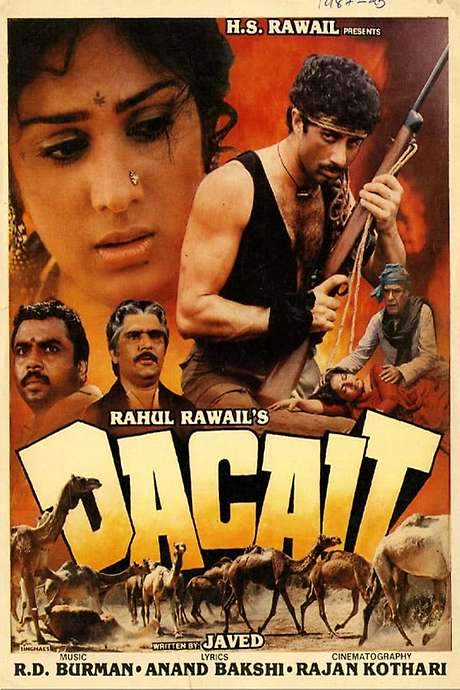
Dacait 1987

Directed by

Rahul Rawail
Made by

Rahul Theatres International
Where to Watch Dacait
See current US streaming, rental, and purchase options for Dacait (1987) via JustWatch.

Streaming availability powered by 
Dacait Plot Summary
Read the complete plot summary and ending explained for Dacait (1987). From turning points to emotional moments, uncover what really happened and why it matters.
Arjun Yadav, Sunny Deol returns to his village after finishing his studies in the city, carrying a quiet faith in justice and peace. He is in love with Javli, a fisherwoman, Meenakshi Sheshadri, whose simple life stands in contrast to the town’s growing turmoil. The village, though, is under the iron grip of a ruthless landlord, Thakur Bhanwar Singh, Raza Murad, and a corrupt police officer, Thanedar Vishnu Pandey, Paresh Rawal. The pair use force, manipulation, and the weight of the law to seize land, intimidate families, and keep farmers in a state of fear.
Arjun’s efforts to resolve conflicts through dialogue and lawful channels repeatedly crumble against the Thakur’s deceit. The Thakur pretends to seek a peaceful solution, only to betray that promise and unleash a brutal assault on the village during a festival. This brutal night changes everything: Arjun witnesses the murder of his elder brother Amritlal Yadav, Suresh Oberoi, and the savage beating and death of his young sister Shanta Yadav, Urmila Matondkar. The violence shatters his faith in the system and pushes his mother, Devi Chaudhrain, Rakhee Gulzar, into a deep, lifelong shock that colors the family’s fate.
Left with nothing and driven to the edge, Arjun is rescued by fellow villagers who have also suffered under the Thakur’s regime. They take him to the Chambal ravines, a harsh landscape that becomes a new home for his healing and reckoning. There, he rekindles a bond with his childhood friend Badri Singh, now a dacoit, Dan Dhanoa, whose own choices mirror the violence that has consumed their world. The encounter with Badri Singh marks a pivotal turn: a pacifist heart, worn down by injustice, decides that peaceful means no longer suffice, and violence becomes a weapon of last resort.
Adopting the name and role of a Dacait, Arjun channels his pain into a relentless pursuit of retribution against the forces that ruined his family. The film follows his daring raids, calculated confrontations, and the growing legend of a man who once believed in law and order but now operates in the shadows to restore a rough, wounded sense of justice. The transformation is not glamorized; it is presented as the consequence of systemic oppression that breeds desperation and rage in ordinary people who were left with no other options.
As the body count rises and the cycle of violence deepens, the movie paints a stark, unflinching portrait of rural India’s power structures. It asks hard questions about who defines justice and at what cost, showing that the line between protector and aggressor can blur when those in power use fear and brutality to maintain control. The story carries a clear social message: dacoits are not born, but made, shaped by the brutal realities of oppression, poverty, and corrupted authority.
In the end, the film remains a gripping, sobering revenge saga that never loses sight of its larger purpose: to reveal how a compassionate, educated man can be pushed to the edge, how a village’s suffering can provoke a violent response, and how a society’s flaws—above all, its corruption and exploitation—can drive people to extraordinary, tragic acts. The cast’s performances—anchored by the steadfast Arjun and the potent antagonists—give the narrative its raw, gritty humanity, making the tale feel both epic and intimately personal.
Dacait Timeline
Follow the complete movie timeline of Dacait (1987) with every major event in chronological order. Great for understanding complex plots and story progression.
Arjun returns home after education
Arjun Yadav returns to his village after completing his education in the city, bringing with him ideals of peace and justice. He reconnects with his community and with Chavli, a fisherwoman he loves. This homecoming sets the stage for the clash between his values and the village’s dark realities.
Arjun falls in love with Chavli
He forms a loving bond with Chavli, a fisherwoman whose life on the shore complements his hopes for a just society. Their relationship represents a personal beacon of hope amid mounting oppression. The romance grounds his resolve to protect the vulnerable around him.
Oppression by Thakur and the police
The Thakur Bhanwar Singh and the corrupt Thanedar Vishnu Pandey tighten their grip on the village, seizing land and terrorizing families. The local farmers suffer under sporadic violence and intimidation that go unchecked by the authorities. Arjun watches the system that should protect them fail in brutal fashion.
Arjun seeks a peaceful resolution
Arjun attempts to resolve the conflict through dialogue and lawful means, hoping to restore peace without bloodshed. The Thakur pretends to agree, only to lull the villagers into a false sense of security. The surface peace quickly unravels as the oppressors reveal their true intentions.
Festival attack and personal tragedy
During a festival the Thakur launches a brutal attack on the village. Arjun witnesses the murder of his elder brother Amritlal and the brutal assault and death of his sister Shanta, while his mother Devi Chaudhrain loses her mind in shock. The violence shatters his faith in justice and safety.
Arjun is beaten and left for dead; rescue
Arjun is beaten and left for dead, his world collapsing around him. A group of wronged villagers rescue him and carry him away from the carnage, seeking a path to survival and retribution. The attack marks the end of his innocent pacifism.
Escape to the Chambal ravines
The villagers take Arjun to the Chambal ravines, a harsh refuge where the oppressed gather. He reconnects with a childhood friend who has already become a dacoit due to similar circumstances. The ravines become the crucible for his transformation.
Arjun embraces the Dacait identity
In the ravines, Arjun realizes that peaceful methods have failed against organized oppression. He sheds his pacifist persona and adopts the identity of a dacoit, committing to fight back as a force of retribution. His initial compassion drives a more ruthless resolve.
Beginning of the revenge campaign
Now known as the dreaded Dacait, Arjun begins his revenge against Thakur Bhanwar Singh and Thanedar Vishnu Pandey. He launches raids and confrontations that strike at the heart of the oppressive power structure. The village and its people become witnesses to a brutal cycle of retribution.
The social critique of oppression
The film uses Arjun's arc to highlight systemic corruption and oppression in rural India. It emphasizes that the path to violence is seeded in injustice and that dacoits are products of their circumstances rather than inherently criminal. The message is as much about society as about individual vengeance.
Dacoit legend and impact on the village
As Arjun's legend grows, the villagers react in different ways—some rally to his cause, others fear his notoriety, and many endure the ongoing violence. The narrative threads a tension between justice and cruelty, showing how fear translates into actions.
Conclusion: tragedy, not triumph
The story closes on a somber note that reinforces the idea: dacoits are born from circumstance, not birthright. Arjun's journey from peaceful reformer to avenger serves as a critique of the social order and a call to address the roots of oppression. The ending invites reflection on justice, revenge, and humanity.
Dacait Characters
Explore all characters from Dacait (1987). Get detailed profiles with their roles, arcs, and key relationships explained.
Arjun Yadav (Sunny Deol)
An educated, pacifist villager who returns from the city seeking justice through peaceful means. After the Thakur’s brutalities and the deaths of his loved ones, he becomes the dacoit known as Dacait, choosing violence to avenge his family and expose systemic corruption. His arc explores how oppression can push a good man toward crime when formal justice fails.
Thakur Bhanwar Singh (Raza Murad)
A ruthless landlord who rules the village with fear and leverages the police to crush resistance. He pretends to seek peaceful resolutions while orchestrating brutal attacks on peasants. His tyranny catalyzes Arjun’s transformation and embodies the corrupt power at the heart of the story.
Vishnu Pandey (Paresh Rawal)
A corrupt police officer aligned with the Thakur, enforcing the landlord’s will and silencing dissent. He embodies the collusion between authorities and oppressors that prevents justice from prevailing. His actions escalate the villagers’ sense of injustice and drive the cycle of violence.
Amritlal Yadav (Suresh Oberoi)
Arjun's elder brother, a farmer whose murder during a festival becomes a pivotal turning point. His death exposes the fragility of family and community under oppressive rule. He serves as the catalyst that shatters Arjun’s faith in peaceful avenues of justice.
Javli (Meenakshi Sheshadri)
A fisherwoman in love with Arjun, representing resilience and the everyday people's bonds threatened by oppression. Her presence humanizes the struggle and anchors the community’s compassion amid violence. She embodies hope and steadfastness in difficult times.
Shanta Yadav (Urmila Matondkar)
Arjun's sister who becomes a victim of the Thakur’s brutality, with her assault and death highlighting the personal costs of oppression. Her tragedy intensifies the community’s grief and fuels the drive for retribution. She symbolizes innocence lost to an unjust world.
Devi Chaudhrain (Rakhee Gulzar)
Arjun's mother who is shattered by the violence around her, eventually losing her sanity. Her breakdown underscores the emotional toll of oppression on families. She represents the enduring but fragile strength of the community’s matriarchs.
Dr. Geeta (Anita Kanwar)
A doctor who stands for humane, scientific care within the village. She provides a counterpoint to brutality, offering healing and rationality in a landscape ruled by fear. Her presence suggests a glimmer of hope amid turmoil.
S.P. Srivastava (Shafi Inamdar)
The station house officer who embodies the law and order apparatus—and often its failures. He navigates corruption and legitimacy, highlighting the complexities of upholding justice in a compromised system. His role intensifies the tension between formal law and mob violence.
Badri Singh (Dan Dhanoa)
One of the Thakur’s men who enforces oppressive measures through violence and intimidation. His presence illustrates how coercive violence sustains the landlord’s grip on power. He embodies the brutal reality of the thuggish enforcers in the village.
Ahmed (Satyajeet Puri)
A member of the village community whose actions reflect collective resilience and solidarity. He helps reveal the strength of communal bonds in the face of oppression. His presence reinforces the theme that unity matters in dark times.
Dilshaad
Amritlal's wife, whose life is upended by the violence and loss around her. She embodies the domestic impact of political and social turmoil. Her experiences highlight how conflict disrupts family life and security.
Dacait Settings
Learn where and when Dacait (1987) takes place. Explore the film’s settings, era, and how they shape the narrative.
Location
Chambal ravines, rural village
The story unfolds in a small village in the Chambal region, a harsh landscape where fields meet river ravines. The community is dominated by a tyrannical landlord and a corrupt police force, where fear governs daily life. The Chambal ravines become a stark backdrop for violence and revenge, shaping the fate of the characters.
Dacait Themes
Discover the main themes in Dacait (1987). Analyze the deeper meanings, emotional layers, and social commentary behind the film.
🔥
Revenge
A peaceful man driven to violence by the brutal oppression around him, the narrative centers on the cost and cycle of revenge. Arjun's transformation from a hopeful reformer to a dacoit underscores how personal tragedy can erode faith in justice. The film uses this arc to question whether violence can ever resolve systemic injustice.
⚖️
Oppression
Oppression by landlords and a complicit police force is the engine of the story. The villagers live under constant threat of land grabs, beatings, and public humiliation, revealing a social order built on fear. The film portrays how institutions can become instruments of cruelty rather than justice.
🌾
Rural Hardship
The setting highlights the precariousness of rural life under rent-seeking elites and indifferent authorities. Farmers struggle to protect their land and families while violence often replaces dialogue. The harsh landscape mirrors the characters' desperation and the fragility of ordinary lives.

Coming soon on iOS and Android
The Plot Explained Mobile App
From blockbusters to hidden gems — dive into movie stories anytime, anywhere. Save your favorites, discover plots faster, and never miss a twist again.
Sign up to be the first to know when we launch. Your email stays private — always.
Explore the mobile appDacait Spoiler-Free Summary
Discover the spoiler-free summary of Dacait (1987). Get a concise overview without any spoilers.
In the dusty heart of rural India, a young scholar returns home, hoping that his education will bring a quiet hope to a community caught between tradition and change. Arjun Yadav arrives to the familiar sounds of fields and riverbanks, where the simple grace of his love, the fisherwoman Javli, offers a gentle counterpoint to the simmering unease that hangs over the villages. The landscape is painted with sweeping plains, bustling markets, and a palpable sense that the land itself bears the weight of generations of struggle.
Home is a tapestry of familiar faces: his steadfast mother, Devi Chaudhrai, whose devotion anchors the family; his elder brother, Amrit, a man of fiery loyalty; and his younger sister, Shanta, whose innocence reflects the village’s fragile future. Yet beneath the surface, the community is divided by a bitter feud that pits local families against the powerful grip of the regional landlord, Thakur Bhanwar Singh. Arjun steps forward, intent on smoothing the rift through dialogue, only to find his ideals tested by an atmosphere thick with intimidation and old grievances.
When the fragile peace shatters, the village’s collective anguish forces Arjun onto a path he never imagined. Rescued by neighbors who share his loss, he retreats to the stark, jagged ravines that border the fields, where his childhood friend, Makan Malla, waits. The wilderness becomes both sanctuary and crucible, shaping his resolve to confront the forces that have hollowed out his world. In this stark environment, the line between protector and avenger blurs, and a new, harsher identity begins to take shape.
The film moves with a gritty, unflinching tone, melding sweeping vistas with intimate moments of raw emotion. Its world is one where ordinary lives are squeezed by corruption and oppression, and where a man’s transformation from hopeful scholar to a shadowed fighter feels both inevitable and tragic. Through atmospheric cinematography and resonant performances, the story invites the audience to linger on the uneasy beauty of a land that births both hope and rebellion.
Movies with Similar Twists and Themes
Uncover films that echo the narrative beats, emotional arcs, or dramatic twists of the one you're exploring. These recommendations are handpicked based on story depth, thematic resonance, and spoiler-worthy moments — perfect for fans who crave more of the same intrigue.
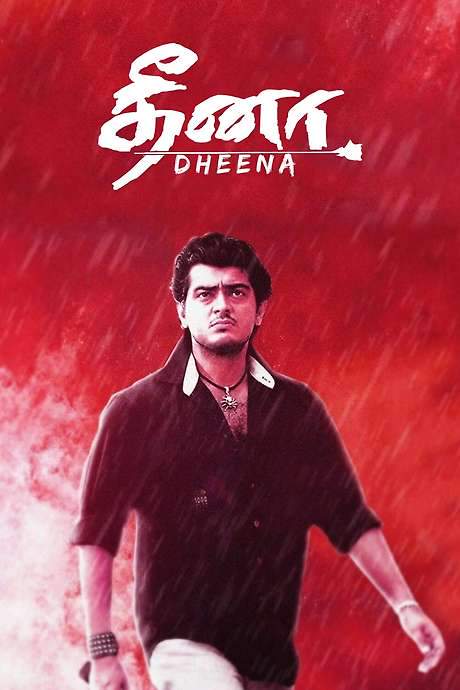
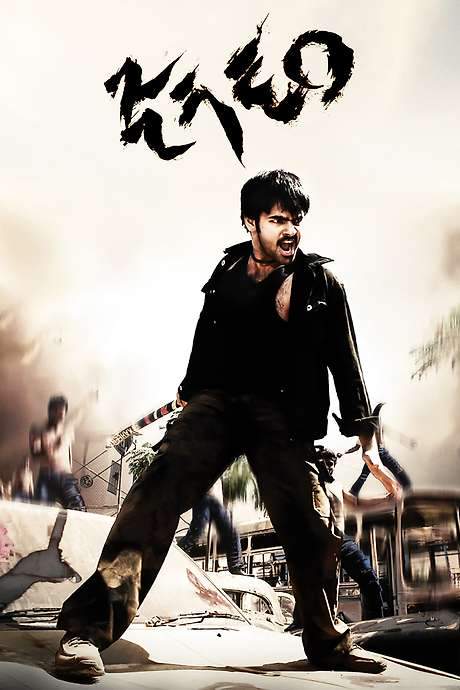


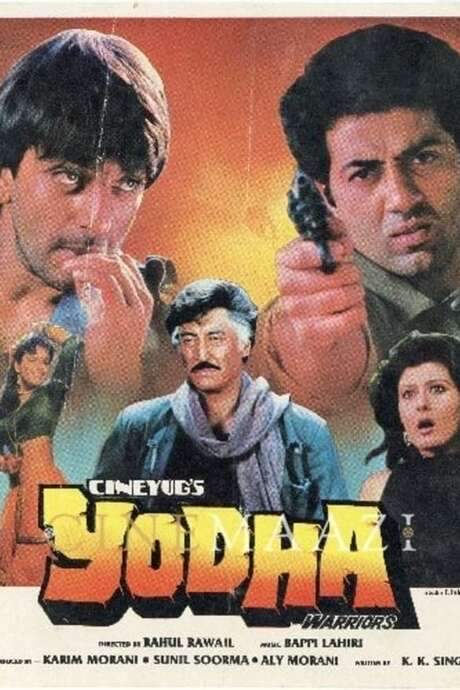





Featured on this page

What's After the Movie?
Not sure whether to stay after the credits? Find out!
Check out our other apps:

SAT Sphere
Build confidence for the Digital SAT.

Mori Atlas
Discover wild places worth protecting.

Luntero
Search smarter for a home in Amsterdam.

Plot Explained
Unravel movie endings and hidden clues.

Pokechamp
Dive into Pokémon data and battle logic.

Driving Theory
Get ready for your European theory test.

Movie Dust
Plan your next cinema trip with ease.

Musemap
Find art and culture as you travel.

Selkobase
Compare credentials before committing.

Local Manual
Turn an unfamiliar country into practical next steps.

Lernavi
Compare school systems before your next move.

GymRoam
Find a workout stop wherever your plans take you.
Explore Our Movie Platform
New Movie Releases (2026)
Famous Movie Actors
Top Film Production Studios
Movie Plot Summaries & Endings
Major Movie Awards & Winners
Best Concert Films & Music Documentaries
Movie Collections and Curated Lists
© 2026 What's After the Movie. All rights reserved.
Privacy Policy