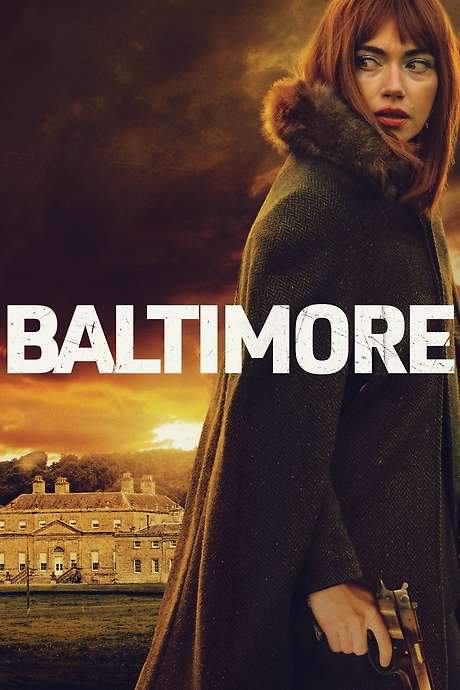
Baltimore 2023

Directed by

Christine Molloy
Made by

Desperate Optimists Productions
Baltimore Plot Summary
Read the complete plot summary and ending explained for Baltimore (2023). From turning points to emotional moments, uncover what really happened and why it matters.
Rose Dugdale, Imogen Poots, is introduced as an English heiress who finds her university years opening a door to Irish republicanism, challenging the life of privilege she was raised in. She forms a student club to spark radical reforms in British society and to question how Ireland is treated by her country. A pivotal moment comes when she witnesses news footage of British soldiers assaulting an unarmed civil rights protest, and she bluntly tells her classmates that only “action” will bring about lasting change.
only “action” will bring about lasting change
As graduation approaches, Dugdale rejects a planned government career, sells her expensive home, donates every penny to the poor, and renounces her family name. She moves to Northern Ireland and becomes a committed pro-Irish activist, a shift that tests loyalties and deepens her resolve. Her mother, Carrie Crowley, looms as a reminder of the life she leaves behind, adding emotional weight to her bold new path.
Through her steadfast activism, Dugdale is drawn into the orbit of the Provisional Irish Republican Army (IRA). She is invited to join their ranks and undergoes extensive training in weapons, explosives, and spycraft. Her determination pays off when she takes part in the bombing of a police station, quickly earning a leadership role within the organization.
In April 1974, a dramatic plan unfolds: Dugdale aims a raid on Russborough House, the home of Sir Alfred Beit, John Kavanagh portraying the Beit patriarch. Disguised with a blond wig and a French accent, she and her team break into the estate, restraining Sir Alfred Beit, and his wife, Lady Beit Andrea Irvine, subjecting them to harsh verbal and physical abuse. The sequence is tense and meticulously staged, highlighting Dugdale’s evolving strategic mind and willingness to take big risks.
Yet the raid reveals Dugdale’s deeper fixation on the Beit art collection, not Beit himself. The team targets a priceless Vermeer—one of only two copies remaining in the world—carefully extracting the paintings and moving them to a rural property Dugdale rents under an alias. From there, she contacts the authorities in a bold gambit: demand the release of IRA prisoners and issue a ransom, threatening to destroy the paintings if her terms aren’t met.
The search for the missing artworks triggers a wide-reaching manhunt. Police close in as investigators trace the lease back to Dugdale, forcing a raid on the rural property before the team can complete their plan. Dugdale is arrested and convicted of both the art theft and her prior involvement in the station bombing. The film ends with a defiant moment as she raises a fist to the court while being led away to serve her sentence.
Baltimore Timeline
Follow the complete movie timeline of Baltimore (2023) with every major event in chronological order. Great for understanding complex plots and story progression.
Awakening to activism during university studies
Rose Dugdale, an English heiress, grows uncomfortable with privilege and begins radical politics on campus. She forms a student club to push for social and British-Ireland policy changes. A news footage of British soldiers attacking a peaceful protest hardens her resolve toward 'action' as the only path to change.
Renouncing privilege and wealth after graduation
After graduation she abandons a planned government career, sells her expensive home, and gives all her money to the poor. She renounces her family name and begins a new life away from aristocratic ties. Her transformation marks a permanent shift toward anti-British activism.
Move to Northern Ireland and activism
She relocates to Northern Ireland and becomes a pro-Irish activist. In this new environment she finds like-minded comrades and channels her frustrations into political action. Her commitment deepens as she meets members of the IRA.
Introduction to the Provisional IRA and training
Dugdale is introduced to the Provisional IRA and is invited to join their ranks. She undergoes extensive training in weapons, explosives, and spycraft, building the skills that will underpin later operations. Her quick grasp of the craft earns her a leadership role.
Bombing of a police station
After proving herself, she participates in an attack on a police station. The bombing demonstrates her commitment and marks her rise within the organization. The operation also signals the shift from symbolic acts to high-risk, real-world actions.
Rise to leadership within the IRA
Dugdale's performance earns her a quick ascent to a leadership position. She becomes a prominent figure within the group and is trusted with planning and directing operations. Her ascent underscores the fervor and intensity of the period.
Planning the Russborough House raid
In April 1974, Dugdale plans a raid on Russborough House, home of Sir Alfred Beit. She conceals her hair under a red wig and adopts a French accent to disguise her identity. The operation is aimed at seizing valuable assets and sending a message to authorities.
The raid at Russborough House
Dugdale and her team break in, restrain Sir Beit and his wife, and subject them to verbal and physical abuse. The action is shocking in its audacity and the level of intrusion on a private home. The assault reveals the single-mindedness of her mission.
Discovery of the paintings and extraction plan
Her real aim is the Beit art collection, including a rare Vermeer. The team carefully extracts the paintings and moves them to a rural property under Dugdale's alias. The plan hinges on a ransom and political demands to secure prisoners' release.
Ransom demand and police threat
Dugdale contacts authorities using her French accent and demands the release of IRA prisoners along with a ransom for the paintings' return. She threatens destruction if her demands are not met. The-scale threats escalate the police manhunt.
Police pursuit and property raid
A wide police hunt tracks the paintings and eventually leads to a raid on the rural property. The lease Dugdale signed is uncovered, tying the operation to her. The investigation tightens and closes in on her team.
Arrest, conviction, and sentencing
Dugdale is arrested and convicted for both the art theft and her earlier role in the station bombing. The legal process culminates in a sentencing that marks the end of her public anti-authority activities. She defies the court by raising a fist as she is led away.
Defiant courtroom moment
In sentencing, Dugdale defiantly raises a fist to the court, a symbolic gesture of resistance. The moment cements her as a controversial figure in the period's struggle. Her actions remain a stark example of militant activism crossing into crime.
Baltimore Characters
Explore all characters from Baltimore (2023). Get detailed profiles with their roles, arcs, and key relationships explained.
Rose Dugdale (Imogen Poots)
A privileged English heiress who becomes a radical activist. Her transformation from comfort to confrontation is driven by exposure to violence against civil rights protesters. She displays fierce determination but faces moral conflicts and legal consequences.
Sir Alfred Beit (John Kavanagh)
Wealthy owner of the Beit estate and the target of the raid. He and his wife are restrained during the assault, illustrating the clash between aristocratic privilege and revolutionary action. The scene positions him as a symbol of elites caught in a political upheaval.
Lady Beit (Andrea Irvine)
Sir Alfred Beit's wife who endures the raid and its verbal abuse. Her reaction highlights the vulnerability of the aristocracy when confronted by violent political acts. Her presence marks the human cost of the confrontation.
Rose's Mother (Carrie Crowley)
Rose's mother whose life is upended as her daughter's radical choices unfold. She embodies the tension between family loyalty and political upheaval. Her stance reflects concern and pride in her daughter's actions, even as they diverge from her own world.
Comrade (Ella Cannon)
A comrade within the IRA circle who participates in planning and executing the raid. She represents the doers behind the movement and shares the risks and camaraderie of the operation. Her role underscores the collective nature of the act.
Baltimore Settings
Learn where and when Baltimore (2023) takes place. Explore the film’s settings, era, and how they shape the narrative.
Time period
Early 1970s
Set in the early 1970s, the narrative tracks Rose's evolution from a privileged student to a radical activist. The period is marked by civil rights protests, violent crackdowns, and escalating IRA activity, culminating in the April 1974 Russborough raid. The era's tension drives the choices and consequences faced by the characters.
Location
Northern Ireland, Russborough House (County Wicklow, Ireland)
The story is set against the backdrop of the Troubles in Northern Ireland, focusing on a politically charged atmosphere of activism and conflict. Russborough House serves as the high-profile target of the art theft, illustrating the clash between wealth and political extremism. The locations highlight contrasts between privileged life and political violence.
Baltimore Themes
Discover the main themes in Baltimore (2023). Analyze the deeper meanings, emotional layers, and social commentary behind the film.
🧨
Radicalization
Rose's transition from privilege to activist radicalism is the central arc, driven by political injustice and propaganda. The film portrays how exposure to violence can push individuals toward action over dialogue. It also probes the moral costs of such radicalization on relationships, loyalty, and personal safety. The narrative examines whether drastic acts can truly achieve lasting change or merely provoke retaliation.
🎭
Identity and Class
Rose abandons her aristocratic identity, selling her home and renouncing her family name to immerse herself in IRA activity. The disguise of a French-accented persona and a red wig marks a deliberate erasure of her former self. The theme explores how class privilege can be leveraged or rejected in political struggle. The film questions whether personal identity should be a currency in a political cause.
🎨
Art and Politics
Art becomes both object of desire and political leverage in the Russborough raid. The team targets a Vermeer among Beit's collection, using art as bargaining power for prisoners and political demands. The plan raises ethical questions about theft as a tactic and its impact on cultural heritage. The ensuing manhunt demonstrates that art, wealth, and power are entangled with political violence.

Coming soon on iOS and Android
The Plot Explained Mobile App
From blockbusters to hidden gems — dive into movie stories anytime, anywhere. Save your favorites, discover plots faster, and never miss a twist again.
Sign up to be the first to know when we launch. Your email stays private — always.
Explore the mobile appBaltimore Ending Explained
Unravel the ending of Baltimore (2023) with our detailed explanation. Understand the final scenes, character fates, and unresolved questions.
In the film’s last minutes Rose sits in a car by a mist‑shrouded lake, clutching the stolen Vermeer—Lady Writing a Letter with her Maid. She envisions the boat’s engine roaring to life, the water parting as she and the priceless painting speed toward an IRA safe‑house in Baltimore. In that imagined flash she finally reaches the freedom she has chased all her life, promising her unborn son a peaceful future far from the aristocratic cage of her birth. The camera then pulls back, the engine sputters, police flashlights converge, and Rose is handcuffed, her escape dissolving into reality. The courtroom that follows mirrors the true story: she pleads guilty, receives a nine‑year sentence, and watches the world she tried to reshape slip beyond her grasp.
The closing shot is more than a thwarted getaway—it crystallises Rose’s inner divide. The Vermeer painting, which first awakened her rebellion, becomes a mirror for her own role: the maid who watches, writes, and longs to be seen. While the world judges her as an English heiress‑turned‑revolutionary, the vision she clings to reveals a woman yearning to shed every imposed identity and simply be a mother. The abrupt return to police lights reminds us that personal liberation cannot be won by violent revolt alone; the very act that should have set her free instead cements her as a prisoner of the very system she fought against, underscoring the film’s bleak meditation on privilege, protest, and the elusive nature of true freedom.
Baltimore Spoiler-Free Summary
Discover the spoiler-free summary of Baltimore (2023). Get a concise overview without any spoilers.
In a restless 1970s landscape where political upheaval shadows everyday life, the film opens on a world split between entrenched privilege and a simmering demand for change. The stark contrast between lush country estates and the gritty streets of Belfast creates a backdrop that feels both timeless and urgently contemporary, underscored by a mood of quiet tension and inevitable confrontation.
At the heart of this turmoil is Rose Dugdale, a former English debutante whose university years become a crucible for radical ideas. Raised amid wealth and expectation, she watches the world around her fracture and chooses to abandon the safety of her lineage, seeking purpose in a cause that challenges every assumption she once held. Her relationship with her mother, Carrie Crowley, adds a personal layer of grief and longing, highlighting the painful sacrifices that come with breaking away from one’s roots.
The narrative gathers momentum as Dugdale and three close comrades conceive a daring plan that could tip the scales of their struggle. Their resolve leads them to a historic house, where the promise of a bold raid looms large, offering a chance to fund the larger fight they champion. After the operation, Dugdale retreats to a remote cottage, a stark and isolated hideaway that becomes a crucible for reflection as the repercussions of their actions begin to close in.
Through its measured pacing and atmospheric tension, the film explores themes of identity, loyalty, and the cost of conviction. The stark juxtaposition of opulent settings and austere hideaways mirrors the internal conflict of a woman torn between the world she left behind and the revolutionary path she now walks, inviting the audience to linger on the uneasy beauty of a life lived on the edge of history.
Movies with Similar Twists and Themes
Uncover films that echo the narrative beats, emotional arcs, or dramatic twists of the one you're exploring. These recommendations are handpicked based on story depth, thematic resonance, and spoiler-worthy moments — perfect for fans who crave more of the same intrigue.







Featured on this page

What's After the Movie?
Not sure whether to stay after the credits? Find out!
Check out our other apps:

SAT Sphere
Build confidence for the Digital SAT.

Mori Atlas
Discover wild places worth protecting.

Luntero
Search smarter for a home in Amsterdam.

Plot Explained
Unravel movie endings and hidden clues.

Pokechamp
Dive into Pokémon data and battle logic.

Driving Theory
Get ready for your European theory test.

Movie Dust
Plan your next cinema trip with ease.

Musemap
Find art and culture as you travel.

Selkobase
Compare credentials before committing.

Local Manual
Turn an unfamiliar country into practical next steps.

Lernavi
Compare school systems before your next move.

GymRoam
Find a workout stop wherever your plans take you.
Explore Our Movie Platform
New Movie Releases (2026)
Famous Movie Actors
Top Film Production Studios
Movie Plot Summaries & Endings
Major Movie Awards & Winners
Best Concert Films & Music Documentaries
Movie Collections and Curated Lists
© 2026 What's After the Movie. All rights reserved.
Privacy Policy