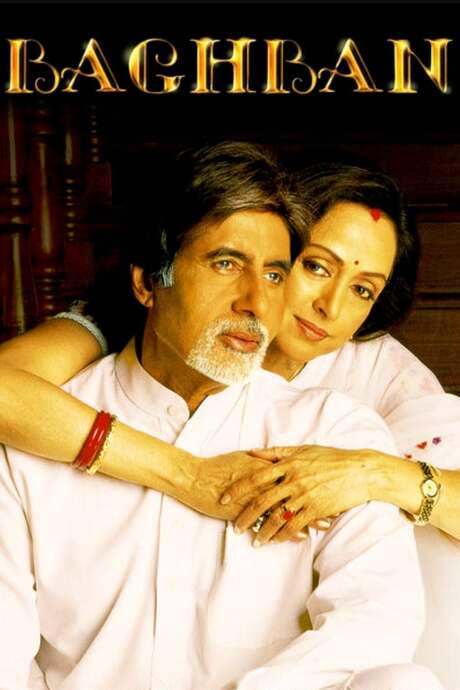
Baghban 2003


Directed by

Ravi Chopra
Made by

B.R. Films
Where to Watch Baghban
See current US streaming, rental, and purchase options for Baghban (2003) via JustWatch.



Streaming availability powered by 
Baghban Plot Summary
Read the complete plot summary and ending explained for Baghban (2003). From turning points to emotional moments, uncover what really happened and why it matters.
Raj Malhotra, Amitabh Bachchan, and his wife Pooja Malhotra, Hema Malini, have spent four decades together and raised a large, loving family. They are proud parents to four sons—Ajay Malhotra, Aman Verma; Sanjay Malhotra, Samir Soni; Rohit Malhotra, Saahil Chadha; and Karan Malhotra, Nasirr Khan—and they also adopt Alok Raj Malhotra, Salman Khan. Alok’s devotion to his adoptive father deepens after he falls in love with Arpita Raj, Mahima Chaudhry. Raj’s generosity shapes Alok’s sense of loyalty, and when Raj retires, the couple face a new challenge: their grown children are unable or unwilling to support them in their old age.
The shift in circumstances drives a dramatic decision. The children propose a jarring plan to the aging couple: they will split their parents up, with each parent living for the next six months with one of the sons. The parents accept the arrangement, hoping that their endurance and dignity will speak for themselves, even as they fear the emotional toll this separation will take. The order of the rotations is clear: Raj will stay first with Sanjay Malhotra and then with Rohit Malhotra, while Pooja will stay first with Ajay Malhotra and then with Karan Malhotra. This forced separation reveals the fragility of family bonds, as the elder couple navigates unfamiliar living spaces and the new rhythms of a life that no longer centers around their own home.
During Raj’s time with Sanjay, the warmth of family life is scarce except for one bright exception: his grandson Rahul provides a rare moment of affection in an otherwise strained episode. The estrangement weighs heavily on Raj, who begins to reflect in his writings on how he spent his life trying to fulfill his children’s dreams and how painful the current separation feels in light of the love he and Pooja share.
Meanwhile, Pooja endures harsh treatment at the hands of Ajay, along with his wife Kiran and their daughter Payal. The cruelty is heavy, but Payal’s attitude shifts after a defining moment: Pooja helps save her from a rape attempt by Payal’s boyfriend, and Payal slowly comes to show genuine love and gratitude for her grandmother. This complicated web of affection and abuse adds layers of tension to the family’s complicated dynamics.
After six months, Pooja and Raj reunite in Vijaynagar. There they encounter Alok, who brings them into his home and treats them with a level of care and respect they had not found with their own sons. The emotional rewards of this reunion are reinforced when Raj learns that his writings have been published as a novel called Baghban, thanks to Hemant — a café owner he befriended during his stay with Sanjay — along with two teenagers, Kapil and Nilli. The novel’s success provides the money Raj and Pooja need to support themselves, a turn of fortune that does not go unnoticed by their children.
As the book’s popularity grows, the four sons and their wives decide to attend the book’s ceremony to seek forgiveness. Yet not everyone can bring themselves to forgive: Rahul and Payal stay away, choosing not to participate in a ceremony that feels, to them, like a performance for money rather than true reconciliation. The remaining family members arrive to face Raj and Pooja’s demand for genuine accountability, and when the air clears, Raj and Pooja refuse to grant the forgiveness demanded by those who caused them so much pain.
In the end, the story circles back to the enduring bond between Raj and Pooja. Their decision to disown those who hurt them is not a triumphant proclamation but a measured, dignified stance that preserves the integrity of their own relationship. The film closes with Raj and Pooja reuniting with Payal and Rahul, reaffirming that, despite the fractures within the family, a stubborn, stubbornly hopeful love can endure and outlast even the hardest trials.
Baghban Timeline
Follow the complete movie timeline of Baghban (2003) with every major event in chronological order. Great for understanding complex plots and story progression.
Long marriage, adopted son Alok
Raj and Pooja have four sons and an adopted son, Alok. Alok falls in love with Arpita and owes his success to Raj's support, including money and education. Alok venerates Raj for giving him a chance at a better life.
Retirement sparks a drastic plan
Upon retiring, Raj and Pooja realize they cannot support themselves. They decide to leave their home and ask their children to let them live with them. The children propose a six-month rotation, with Raj and Pooja living with each son.
First phase of the separation
The parents begin the plan with Raj staying at Sanjay's home while Pooja goes to Ajay's. The separation begins as the family tests its bonds. They hope their children will recognize their sacrifices.
Raj's loneliness and a grandson's warmth
In Sanjay's home, Raj finds little warmth from his sons; the only affection comes from his grandson Rahul. He writes about fulfilling his children's dreams and his love for Pooja, as well as the pain of separation. The diary becomes a quiet witness to a family's fracture and resilience.
Pooja endures abuse at Ajay's home
Pooja endures abuse at Ajay's home from his wife Kiran and granddaughter Payal. The mistreatment tests her endurance and dignity. She clings to the hope that their love will still be acknowledged.
Payal's repentance after Pooja's act of saving
Payal's cruelty gives way to remorse when Pooja saves her from a rape attempt by Payal's boyfriend. Payal begins to show genuine affection toward Pooja, hinting at the possibility of forgiveness within the family. This moment reveals a potential path to healing.
Six months pass; a brief reunion in Vijaynagar
After six months, Raj and Pooja change trains and spend a period together in Vijaynagar. The journey underscores the persistence of love despite the physical distance from their sons. They search for small joys amid ongoing separation.
Alok offers care and a home
In Vijaynagar, Alok encounters his adoptive parents again and brings them to his own home, where he cares for them far better than their sons had. He provides warmth, support, and practical help. This contrast deepens the sense of chosen family.
Raj's manuscript becomes Baghban
During his stay with Sanjay, Raj befriends Hemant, a cafe owner, and learns that his writings have been published as a novel titled Baghban. Hemant, along with two teenagers Kapil and Nilli, helps bring the book to life. The publication marks a turning point in Raj's life.
Baghban brings financial security
The novel's success provides Raj with money to support himself and Pooja. The newfound stability allows them to face the future with some security. The book's popularity also sheds new light on their family history.
Sons seek forgiveness at the book ceremony
News of the book ceremony prompts all four sons and their wives to plan a visit, hoping to seek forgiveness from their parents. The event is framed as a chance for reconciliation, though motives seem mixed. Family pride and money expectations hover over the gathering.
Rahul and Payal skip the ceremony
Rahul and Payal choose not to attend, convinced that genuine forgiveness is unlikely and that their brothers are after money. Their absence adds tension to the ceremony. The others proceed with the attempt at reconciliation despite doubts.
The sons' plea and the parents' boundary
The four sons ask for forgiveness, but Raj and Pooja refuse and disown them for causing such pain. They insist that trust must be rebuilt, not demanded. The moment marks a hard-won boundary in their relationship.
Reunion with Payal and Rahul
In the end, Raj and Pooja reunite with Payal and Rahul, acknowledging that love persists beyond years of hurt. The reconciliation offers a fragile peace and redefines family bonds through chosen connections. The couple stays hopeful for a more honoring future.
Baghban Characters
Explore all characters from Baghban (2003). Get detailed profiles with their roles, arcs, and key relationships explained.
Raj Malhotra (Amitabh Bachchan)
A compassionate patriarch who embodies generosity and resilience. Retired yet capable, he endures neglect from his children with quiet dignity and channels his experiences into a published memoir. His enduring love for Pooja anchors the family through hardship.
Pooja Malhotra (Hema Malini)
A devoted wife and mother who bears mistreatment with grace. She protects her family’s fragile harmony and ultimately catalyzes reconciliation by standing with Raj. Her strength under pressure defines the emotional core of the story.
Alok Raj Malhotra (Salman Khan)
Adopted son who treats Raj and Pooja with genuine care when their own children fail them. He embodies loyalty and acts as a bridge between generations, demonstrating the power of chosen family. He loves Arpita and supports his parents through their trials.
Arpita Raj (Mahima Chaudhry)
Arlo's love interest who represents a modern Indian woman navigating tradition and independence. Her relationship with Arpita reveals compassion and personal agency within the broader family drama.
Hemant Patel (Paresh Rawal)
Café owner who befriends Raj, becomes a confidant, and helps publish the memoir. He acts as a connector between the aging parents and the younger generation, enabling a transformative opportunity.
Nilli (Sanjeeda Sheikh)
A teenage friend who befriends Raj during his stay with Sanjay and aids in the memoir’s journey to publication. Her presence marks a hopeful thread of intergenerational support.
Sanjay Malhotra (Samir Soni)
One of Raj and Pooja’s sons, whose neglect contributes to the family strain. His actions highlight the consequences of prioritizing status over aging parents.
Payal Malhotra (Rimi Sen)
Granddaughter who initially embodies the family tension, but repents and shows love after Pooja’s protective intervention.
Rahul Malhotra (Yash Pathak)
Raj and Pooja’s grandson who gravitates toward affection with his grandparents, becoming a poignant reminder of the family’s enduring bonds.
Kiran Malhotra (Suman Ranganathan)
Daughter-in-law who participates in the mistreatment of Pooja, representing a harsher side of in-law relationships within the family.
Rohit Malhotra (Saahil Chadha)
One of Raj and Pooja’s sons who is part of the central split, illustrating the broader theme of generational conflict.
Karan Malhotra (Nasirr Khan)
Another son whose actions contribute to the household fracture, highlighting the film’s critique of self-centered family dynamics.
Ajay Malhotra
One of Raj and Pooja’s four sons; participates in the family rift and is part of the later forgiveness arc.
Shanti Patel (Lillete Dubey)
A relative who embodies warmth and support within the extended family network during the crisis.
Baghban Settings
Learn where and when Baghban (2003) takes place. Explore the film’s settings, era, and how they shape the narrative.
Time period
Early 2000s
The story unfolds across decades of a long marriage, moving from retirement to the painful separation and back to a hopeful reunion. It includes a modern urban backdrop as the family and friends navigate changing social norms. The publishing of a bestselling novel later anchors a contemporary, post-retirement arc.
Location
Vijaynagar, India; Raj's family home
Vijaynagar is the setting where Raj and Pooja’s family life unfolds. The film focuses on a traditional Indian home and neighborhood, highlighting the close yet often demanding dynamics of a multi-generational family. It juxtaposes a comfortable domestic space with the strain of neglect when the children separate the parents.
Baghban Themes
Discover the main themes in Baghban (2003). Analyze the deeper meanings, emotional layers, and social commentary behind the film.
👨👩👦
Family Duty
Aging parents rely on their children for care, but the film shows how even loving families can fail under pressure. The six-month splits across the sons’ homes reveal a clash between affection and obligation. Raj and Pooja’s endurance reframes sacrifice as a central family value, not weakness.
🧓
Aging & Respect
The film centers on the dignity of elders and the pain of neglect by one’s own kin. It contrasts disrespectful behavior with acts of kindness from Alok and others. It emphasizes that elders deserve to be treated with care, especially within the family unit.
🤝
Forgiveness & Reconciliation
The parents’ decision to disown their sons for their mistreatment marks a harsh boundary. The book’s success creates a pathway to truth and, for some, a chance at forgiveness. Ultimately, Raj and Pooja reunite with those who showed love, while the rift with others remains.
📚
Literary Legacy
The publication of Baghban becomes a lifeline, funding the couple’s future and turning personal history into a shared legacy. Hemant, Nilli, and Kapil help bring the novel to life, turning pain into storytelling. The story suggests that memories and stories can outlast hurt and redefine family bonds.

Coming soon on iOS and Android
The Plot Explained Mobile App
From blockbusters to hidden gems — dive into movie stories anytime, anywhere. Save your favorites, discover plots faster, and never miss a twist again.
Sign up to be the first to know when we launch. Your email stays private — always.
Explore the mobile appBaghban Spoiler-Free Summary
Discover the spoiler-free summary of Baghban (2003). Get a concise overview without any spoilers.
In a quiet Indian suburb, an elderly couple who have devoted four decades to raising a large, loving family find themselves confronting an unsettling new reality after retirement. Raj Malhotra and Pooja Malhotra have built a life around caring for their children, but the passage of time leaves them without a home of their own, and the very family they nurtured now appears uncertain about how to support them.
Their four grown sons—Ajay, Sanjay, Rohit and Karan—along with an adopted son who remains deeply attached to his father, Alok, propose a radical solution: the parents will be divided, each spending six months living with a different child. The arrangement is intended to test the limits of familial duty and the couple’s own resilience, setting the stage for a story that balances tender affection with the quiet ache of expectation.
Raj carries a reflective side, a habit of chronicling his thoughts that hints at an inner world shaped by years of self‑less effort. Pooja radiates steadfast strength, her composure suggesting a deep well of patience and love that has held the family together. Their bond, forged through shared sacrifices, becomes the emotional anchor of the tale, offering a contrast to the uncertain dynamics they now navigate with each of their children’s households.
The film’s tone is both contemplative and hopeful, inviting viewers to glimpse the delicate dance between tradition and modernity, duty and desire. As the couple moves from one home to another, the narrative gently explores how love endures amid shifting circumstances, leaving an open question about what true belonging means when the very foundations of family are re‑examined.
Movies with Similar Twists and Themes
Uncover films that echo the narrative beats, emotional arcs, or dramatic twists of the one you're exploring. These recommendations are handpicked based on story depth, thematic resonance, and spoiler-worthy moments — perfect for fans who crave more of the same intrigue.








Featured on this page

What's After the Movie?
Not sure whether to stay after the credits? Find out!
Check out our other apps:

SAT Sphere
Build confidence for the Digital SAT.

Mori Atlas
Discover wild places worth protecting.

Luntero
Search smarter for a home in Amsterdam.

Plot Explained
Unravel movie endings and hidden clues.

Pokechamp
Dive into Pokémon data and battle logic.

Driving Theory
Get ready for your European theory test.

Movie Dust
Plan your next cinema trip with ease.

Musemap
Find art and culture as you travel.

Selkobase
Compare credentials before committing.

Local Manual
Turn an unfamiliar country into practical next steps.

Lernavi
Compare school systems before your next move.

GymRoam
Find a workout stop wherever your plans take you.
Explore Our Movie Platform
New Movie Releases (2026)
Famous Movie Actors
Top Film Production Studios
Movie Plot Summaries & Endings
Major Movie Awards & Winners
Best Concert Films & Music Documentaries
Movie Collections and Curated Lists
© 2026 What's After the Movie. All rights reserved.
Privacy Policy