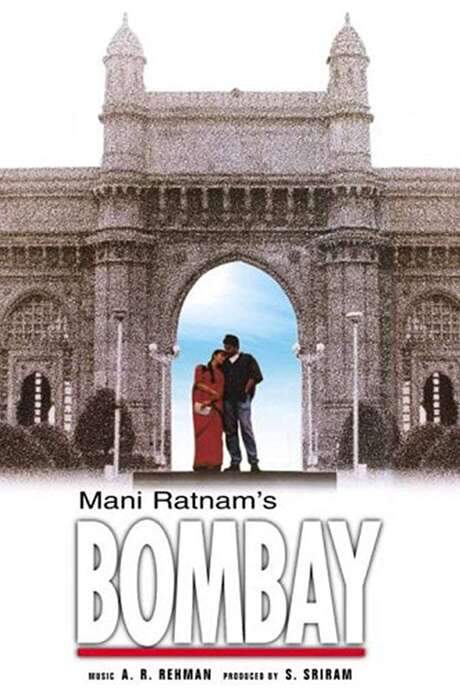
What Is Bombay About?
The premise of Bombay in 259 words, with nothing given away. The full story follows below.
In a verdant Tamil Nadu village, Shekhar—a thoughtful journalism student—finds his world shifted by an unexpected connection with Shaila, a bright Muslim schoolgirl whose family lives just beyond his own doorstep. Their budding affection blossoms into a determined choice to marry, despite the deep‑seated faith differences that loom over both households. The decision sets them on a path that leads away from the pastoral rhythms of their hometown toward the sprawling, humming metropolis of Bombay, where the promise of a shared future feels both daring and fragile.
Bombay itself is more than a backdrop; it is a living tapestry of cultures, languages, and ceaseless energy, where the streets pulse with optimism and underlying unease. Within this vibrant urban sprawl, Shekhar and Shaila carve out a home that balances their distinct traditions—celebrating festivals side by side, weaving together cuisines, and raising twins who embody both heritages. Their daily lives are marked by a gentle, steady rhythm of love, work, and parenting, offering a quiet testimony to the possibilities of unity in a city that often feels divided.
Yet the city’s larger currents are never far from the doorstep. Whispered headlines, neighborhood debates, and the ever‑present buzz of communal discourse create a subtle pressure that tests the couple’s resolve. As societal tensions rise, the family finds themselves navigating a delicate dance between personal devotion and the external expectations of a world still learning to accept difference. Their story is a portrait of hope measured against uncertainty, inviting viewers to contemplate how love can endure when the surrounding world trembles with discord.
What Happens in Bombay?
The complete story of Bombay, from the first scene to the last, in 749 words (about 3 minutes). Spoilers throughout. Names in the text link to 5 cast member pages.
Spoilers ahead
Shekhar Narayanan Pillai, a journalism student from Bombay, returns to his coastal Tamil Nadu village and finds himself drawn to a Muslim schoolgirl named Shaila Banu Pillai, who happens to be his sister’s friend. Shaila is initially wary and tries to keep her distance, but after a string of chance encounters and steady pursuit, a mutual attraction grows. What starts as a shy spark of love soon becomes a firm bond, and the two decide that they want to marry, despite the chasm of religious difference that separates their families.
When Basheer, Shaila’s father, learns of the young couple’s plans, he refuses to bless the match, rooted in a clash of faiths. The confrontation spills into the home of Shekhar’s own father, who reacts with anger, and the heated debate lays bare the deep, intimate rifts between two generations. Left with a painful sense of rejection from both sides, Shekhar returns to Bombay to pursue his career and his life there. Yet the bond with Shaila lingers, and a friend of Shaila becomes a bridge between the two worlds. Shekhar dispatches a letter and a travel ticket to Bombay with the hope that distance might not extinguish their dream.
Driven by love, Shaila takes the chance and travels to Bombay. The two eventually wed and begin a life that feels like a quiet triumph, a rare blend of two cultures finding common ground. Their happiness deepens when Shaila conceives and gives birth to twin boys who carry the names Kabir Narayan and Kamal Basheer. The twins grow up in a home that honors both religions, with Shekhar continuing his work as a journalist and Shaila managing the household. The family settles into a rhythm that feels secure and hopeful, a testament to the resilience of love across boundaries that life around them challenges but never quite breaks.
Dark clouds gather when the Babri Masjid is demolished on 6 December 1992, igniting riots in Bombay. In the chaos, the twins—Kabir and Kamal—are out shopping for groceries and find themselves swept up in the violence. Shekhar and Shaila fight their way through the chaos to reach home with their children, a terrifying test of their resolve. Narayana Pillai, the elder father figure who has learned of his son’s life across religious lines, rushes to Bombay after hearing the news and finds his family. He reconciles with his son and stays, bringing a sense of elder gravity and warmth to the crowded, fragile household. Basheer and his wife soon join them, and for a brief period, the extended family experiences a fragile, hopeful harmony as they attempt to guide the twins through a world that is growing more complex by the day, urging them toward their dual identities with care and patience.
But just a few weeks later, on 5 January 1993, a new wave of sectarian violence erupts in Bombay. The riots intensify, and hundreds of lives are lost on both sides as communities clash in the streets. Fire and smoke engulf the apartment where Shekhar and Shaila live, and the family fights to evacuate in the confusion. In the pandemonium, Narayana Pillai, Basheer, and Basheer’s wife fail to escape in time and are killed in a devastating explosion. The two boys are separated from their parents in the ensuing chaos: Kamal is sheltered and cared for by a transgender woman who protects him, while Kabir wanders in search of his brother, his father, and a way back to safety.
What follows is a harrowing odyssey of search and sorrow. Shekhar and Shaila join the frantic efforts to locate their children, combing morgues and hospitals, and their love is tested by pain, memory, and doubt. The couple will not abandon hope, and Shekhar throws himself into a movement with other moderate religious leaders to stop the spiral of violence. The narrative shifts between grief and resolve as the family fights to stay together in a world that seems determined to pull them apart along religious lines.
When the dust finally settles, the family is brought back to a fragile unity. The streets that once burned with hatred and fear begin to echo with a different sound: people of all ages and faiths come together, hand in hand, symbolizing the possibility of peace amid chaos. In the end, Shekhar, Shaila, and their children face a future shaped by their shared history—a testament to love, endurance, and the stubborn hope that life, even after unspeakable tragedy, can move toward reconciliation and mutual respect.
Bombay Timeline: Every Key Event in Order
12 key events in the order they happen, from “Shekhar falls in love with Shaila in Tamil Nadu” to “Movement to stop the riots and eventual reunification”. 12 events name a place, across 4 locations.
- 1
Shekhar falls in love with Shaila in Tamil Nadu
During a visit to his coastal Tamil Nadu village, Shekhar notices Shaila Banu and is drawn to her. The two begin to know each other, and Shekhar's affection for Shaila grows into a quiet romance. The budding relationship sets the stage for tensions with their families due to religious differences.
When:During his visit to the village Where:Coastal village, Tamil Nadu
- 2
Religious differences trigger family objections
Shaila's father Basheer rejects the match, citing religious differences. Narayana Pillai, Shekhar's orthodox father, confronts Basheer and the two exchange a heated argument. The opposition from both sides fractures the prospects of an easy union.
When:Early in the romance Where:Village, Tamil Nadu
- 3
Shekhar returns to Bombay; letters and a ticket are sent to Shaila
Upset by the rejections, Shekhar returns to Bombay. Through a friend, he sends Shaila a letter along with a ticket to travel to Bombay. The plan plants the seeds for a long-distance approach to the relationship.
Where:Bombay
- 4
Shaila decides to travel to Bombay
Basheer learns of Shaila's regular letters from Shekhar and tries to arrange a marriage for her to prevent the relationship from growing. Facing limited options, Shaila eventually leaves the village with the ticket and travels to Bombay. She reaches the city seeking a new life with Shekhar.
Where:Village to Bombay
- 5
Shaila and Shekhar marry in Bombay
Shaila arrives in Bombay and the couple marries, beginning a happy life together. Shekhar continues his work as a journalist while Shaila takes care of the home. The union blends their lives despite the earlier family opposition.
Where:Bombay
- 6
Birth of twins Kabir and Kamal
Within a year of their marriage, Shaila conceives and gives birth to twins Kabir Narayan and Kamal Basheer. The twins are raised in both Hindu and Muslim cultures, reflecting their parents' intercultural life. The family settles into a balanced routine among work, home, and communal harmony.
When:Within a year after marriage Where:Bombay
- 7
Family settles into life together
Six years into their marriage, Shekhar and Shaila enjoy a stable home with their children. Narayana Pillai and Basheer occasionally visit and share in the grandchildren's upbringing. The two families begin to imagine a future of coexistence beyond old religious divides.
When:Six years after marriage Where:Bombay
- 8
Babri Masjid demolition triggers riots in Bombay
On 6 December 1992, the Babri Masjid demolition sparks violent riots across Bombay. The children go out to buy groceries and become separated from their parents in the chaos. The family fights to stay together as violence erupts across the city.
When:6 December 1992 Where:Bombay
- 9
Relief and reconciliation as relatives arrive
Narayana Pillai rushes to Bombay to be with his son and family, and reconciles with them. Basheer and his wife soon join them, and the extended family tries to weather the turmoil together. For a few days, they share safety and solidarity amid the upheaval.
Where:Bombay
- 10
January riots erupt; the family is torn apart
On 5 January 1993, another wave of communal killings erupts, sparking a fresh round of Hindu-Muslim clashes. The family's apartment is set on fire as they scramble to evacuate. Kamal and Kabir become separated from their parents amid the chaos.
When:5 January 1993 Where:Bombay
- 11
Kamal saved and Kabir searches; the parents search too
Kamal is rescued by a transgender woman, and Kabir roams the city in search of his brother. Shekhar and Shaila search through morgues and hospitals, grieving and hoping for news of their children. The couple's determination becomes the emotional core of the film's tragedy and resilience.
Where:Bombay
- 12
Movement to stop the riots and eventual reunification
Despite the chaos, Shekhar joins other moderate religious leaders in a movement to end the riots. His efforts, alongside those of community leaders, help to bring calm and eventually an end to the violence. The family is reunited with their children when the clashes subside, and people join hands regardless of faith.
Where:Bombay
Who Are the Main Characters in Bombay?
6 characters, among them Shekhar Narayanan Pillai (Arvind Swamy), Shaila Banu Pillai (Manisha Koirala) and Basheer (Kitty): who each one is and the part they play in the story. Every profile links to the actor’s page.
- SN
Shekhar Narayanan Pillai (Arvind Swamy)
Played by Arvind Swamy
A determined journalism student who returns from Bombay to his Tamil Nadu home. He pursues Shaila despite family opposition, showing persistence and idealism. He becomes a bridge between Hindu and Muslim families while continuing his work as a journalist and upholding his love.
- ❤️ Protagonist
- 🧭 Journalist
- 🌉 Bridge-builder
- SB
Shaila Banu Pillai (Manisha Koirala)
Played by Manisha Koirala
A Muslim schoolgirl who falls in love with Shekhar, initially shy and cautious. She defies parental pressure to pursue their relationship and travels to Bombay; she marries and raises twins, balancing tradition with new possibilities. Her resilience anchors the family’s hopes for coexistence.
- 🕌 Muslim
- ❤️ Lover
- 🌸 Resilient
- B(
Basheer (Kitty)
Played by Kitty
Shaila's father, an orthodox patriarch who resists the union due to religious differences. He engages in tense exchanges with Shekhar’s family and embodies the challenges of maintaining tradition. His eventual presence within the broader family signifies a reluctant, evolving acceptance.
- 🕌 Father
- ⚖️ Orthodox
- 🗣️ Traditionalist
-
Narayanan Pillai (Nassar)
Played by Nassar
Shekhar's elder father, initially angered by the interfaith match and the disruption to family norms. He represents rooted tradition, yet his role evolves as he witnesses the consequences of communal strife. His arrival to Bombay later in the story helps anchor the family’s reconciliation.
- 🧔 Elder
- 💬 Traditionalist
- 🏛️ Father figure
- KN
Kabir Narayan (Master Harsha)
Played by Master Harsha
The twin son raised across two religions, embodying curiosity and adaptability. He experiences the strain of growing up in a mixed-faith environment and is separated from his brother during the riots. His journey reflects resilience and the cross-cultural upbringing of the family.
- 👶 Twin
- 🧭 Open-minded
- 🧬 Multi-faith upbringing
- KB
Kamal Basheer (Master Hridhay)
Played by Master Hridhay
The twin boy who endures separation from his brother amid the chaos. He is cared for by a transgender woman and continues to navigate life within a shared Hindu-Muslim upbringing. His story intersects with the search for family and belonging in a divided city.
- 👶 Twin
- 🧭 Open-minded
- 🕊️ Shared upbringing
Where and When Is Bombay Set?
Bombay is set in Tamil Nadu coastal village and Bombay (Mumbai) (1992–1993). Here is why the time and place matter to the story.
When
1992–1993
The late 1992 to early 1993 period is marked by the Babri Masjid demolition and the ensuing communal riots in Bombay. The narrative places the central family within the social climate of rising religious tension. These historical moments frame the personal joys and tragedies that unfold for the protagonists.
Where
Tamil Nadu coastal village, Bombay (Mumbai)
Set in a coastal village in Tamil Nadu, the film centers on a traditional Hindu-Narayana Pillai family. The village embodies orthodox values and close-knit bonds. Later, the story moves to Mumbai, a bustling, multi-religious city.
- ❄️ Coastal village
- 🕌 Interfaith
- 🎭 Family drama
What Are the Themes of Bombay?
3 ideas the story keeps returning to, among them Interfaith Love, Civil Unrest and Family and Reconciliation.
-
01
Interfaith Love
Shekhar's romance with Shaila crosses religious boundaries and challenges family expectations. Their union tests the tolerance and openness of both communities. The couple's life together, including raising twins across faiths, shows love as a bridging force. The theme centers on resilience of personal bonds amid social divisions.
-
02
Civil Unrest
The demolition of the Babri Masjid precipitates a wave of communal violence in Bombay. The film portrays fear, mob mentality, and the fragility of urban coexistence. Families scramble to protect loved ones as neighborhoods fracture along religious lines. The unrest becomes a catalyst for loss, discord, and ultimately a call for restraint.
-
03
Family and Reconciliation
Despite deep religious differences, the family strives to stay united in the face of catastrophe. Elder generations arrive and attempt to bridge gaps with gradual acceptance. The story culminates in a tearful reunion and a renewed sense of harmony among the relatives. The theme underscores forgiveness and unity beyond faith.
What Kind of Film Is Bombay?
Tense in tone, with variable pacing and a moderate story, going by the plot summary.
- Tone
- Tense
- Pacing
- Variable
- Story
- Moderate
- Intensity
- High
- Ending
- Happy
A powerful and emotionally draining romantic drama that builds from a hopeful love story into a tense and heartbreaking survival tale amidst violent riots, ultimately finding a path toward reconciliation.
- tense
- romantic
- anxious
- heartbreaking
- hopeful
- urgent
- interfaith romance
- communal violence
- family conflict
- forced separation
Content notes: communal violence, riots, death of family members, child endangerment, dead bodies.
Quiz
How well do you remember Bombay? Test yourself on the story.