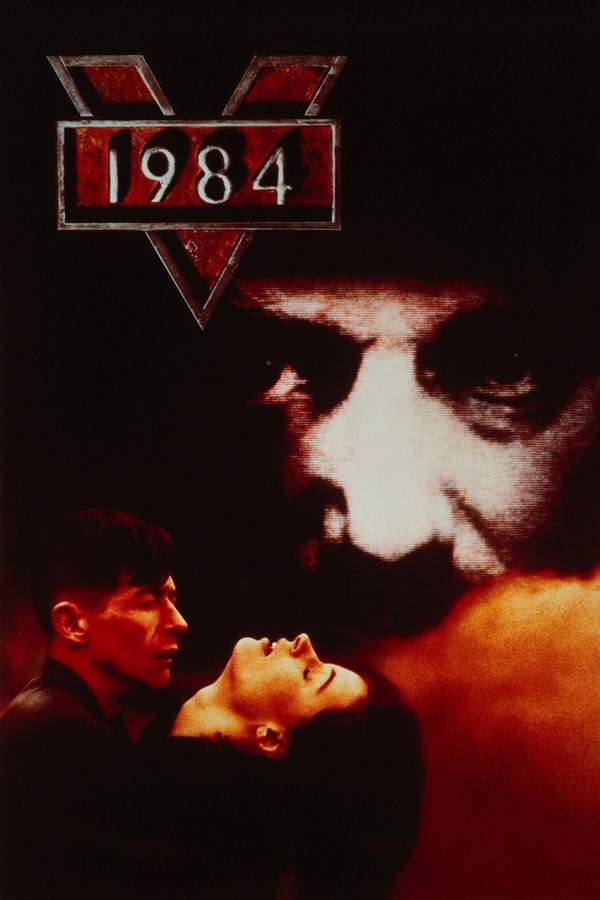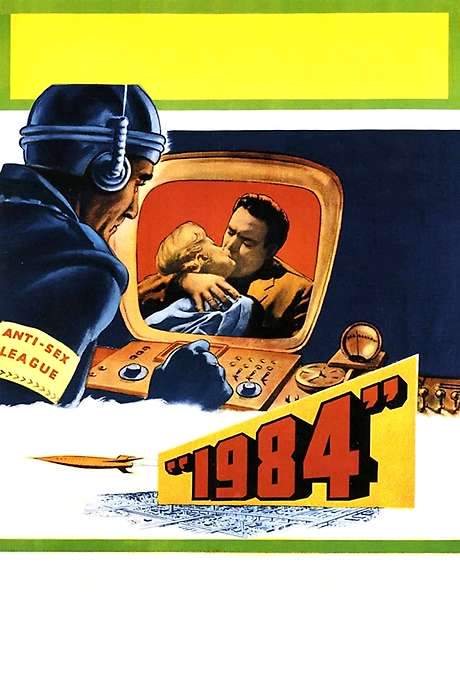
What Is 1984 About?
The premise of 1984 in 270 words, with nothing given away. The full story follows below.
In a bleak, post‑war future the world is divided into three ever‑watching superstates, and the capital of Oceania—London, now called Airstrip One— pulses under the relentless eye of the Party. Massive concrete walls, omnipresent telescreens, and a language that reshapes reality combine to create a society where even a private thought can feel dangerous. The atmosphere is cold and clinical, yet the relentless hum of propaganda is threaded with a lingering, almost forgotten yearning for truth and intimacy.
Winston Smith is a mid‑level functionary in the Ministry of Truth, tasked with rewriting the past to match the Party’s present narrative. Beneath his outward conformity, a quiet disquiet grows, hinting at a mind that remembers something beyond the sanctioned version of events. He moves through a world of endless corridors and fluorescent light, his every action measured against the invisible standards of an all‑seeing authority known only as Big Brother.
Amid the sterile uniformity, Julia appears as a subtle, defiant spark—a fellow Party member whose brief gestures suggest a shared awareness of the emptiness that surrounds them. Their connection offers a glimpse of a forbidden humanity, a promise that love might be the only true rebellion against a regime built on surveillance and control.
The film’s tone balances stark, dystopian visual design with an undercurrent of restless hope. It invites viewers to feel the tension between the crushing weight of an omnipotent system and the fragile, persistent desire for personal freedom. As Winston navigates the labyrinth of his daily duties, the audience is left wondering whether the smallest act of intimacy can illuminate a path through the endless night of oppression.
What Happens in 1984?
The complete story of 1984, from the first scene to the last, in 962 words (about 4 minutes). Spoilers throughout. Names in the text link to 5 cast member pages.
Spoilers ahead
In the mid-1960s, a nuclear war has reshaped the globe into three vast superstates—Oceania, Eurasia, and Eastasia—where the remnants of civilization are watched over by a totalitarian regime. By 1984, London sits behind bomb-proof defenses and serves as the capital of Airstrip One, a province of Oceania ruled by a single, all-powerful Party led by the figurehead Big Brother, John Vernon. In this harsh world, information is manufactured, memory is manipulated, and private thoughts are dangerous. Into this climate of fear steps Winston Smith, Edmond O’Brien a member of the semi-elite Outer Party who begins to sense the cracks in the party line and the price of dissent.
Winston’s private rebellion starts with a small act of rebellion: a diary hidden from the ever-present surveillance. He writes down subversive thoughts and records memories of a past he believes is being erased. His sense of unease deepens when Selina Parsons, Carol Wolveridge, a little neighbor girl, enters his apartment to practice denouncing him as a traitor, highlighting just how permeated every moment of life is by loyalty tests and fear. The fragility of safety becomes clearer when Winston encounters Julia, Jan Sterling, a woman who seems to share a dangerous, unspoken understanding with him, and a clandestine spark of connection quickly grows between them.
At his office in the Records Department of the Ministry of Truth, Winston’s suspicious mind is further stirred by the sight of a photo that might prove Rutherford and Jones innocent. His supervisor, O’Connor, Michael Redgrave, orders him to destroy it, underscoring the brutal efficiency with which the regime edits the past and enforces conformity. That same night, at a political rally, Julia slips a note into Winston’s hand proclaiming love—a tiny act of rebellion that becomes a bridge to two souls seeking warmth in a world designed to extinguish it. They agree to meet away from the omnipresent mikes and monitors, choosing a meadow beyond the city’s edge as a sanctuary where they can be themselves.
Their clandestine bond leads them to the junk shop where they hope for a safe space, a place less surveilled by the Party. There, Julia enters the shop, Jan Sterling, and their secret affair intensifies as they dream of a broader resistance. Winston returns to the shop with plans to join the Underground, a vision he believes might offer a path toward freedom. The romance and the danger feed off each other as they begin to entertain the possibility that O’Connor may be part of a larger resistance network, though trust remains fragile in a world designed to betray.
A fateful note arrives in O’Connor’s handwriting that reads “down with Big Brother.” Convinced that this official could be their key to the Underground, Winston and Julia confront him with their vow to resist. O’Connor instructs Winston to carry an empty briefcase as a symbol of a future alliance and, perhaps, a genuine conduit for change. During the rally that signals the start of Hate Week, a staged moment of chaos—an exchange of briefcases—leads Winston to a copy of a treatise attributed to the Underground’s leadership. This discovery seems to confirm their belief that a hidden network exists and that the dream of overthrowing Big Brother is not merely a fantasy.
Back at their hidden room, Julia insists that only love can defeat the Party, a claim that is suddenly exposed to brutality when a telescreen behind a mirror brands their sentiments as crimes of thought. The Thought Police burst in, and both Winston and Julia are arrested. In the Ministry of Love, Winston is confined in a pit-like room while Parsons is dragged away after his daughter betrays him for muttering “Down with Big Brother” in his sleep. The undercover operation uncovered by O’Connor comes to life as he reveals himself to be a covert agent of the state and begins a brutal brainwashing campaign.
Even under the pressure of electroshock, Winston clings to the possibility of an inner truth that cannot be extinguished. He submits to the regime’s nightmare, yet his defiance surfaces in a final, stubborn core. The regime intensifies its assault, culminating in a moment of terror where Winston fears the rats that threaten to devour him, begging the system to spare Julia. Release comes, but it is not freedom; it is a carefully manufactured reintegration into a society that now views him as a model citizen. In the street, Winston stumbles through a world that seems to have broken his will, and the image of Julia fades as Big Brother’s broadcasts herald a victory that is, to him, both hollow and complete.
Yet even within this bleak arc, there is a glimmer of possibility—the existence of an alternate ending. In that version, Winston rebels against his brainwashing and shouts “Down with Big Brother!” only to be shot down, with Julia rushing to his side and meeting the same fate. The film’s closing image remains a stark meditation on power, memory, and the human desire for connection in a world designed to erase both.
Long Live Big Brother!
Down with Big Brother!
In this haunting reflection on surveillance, loyalty, and the resilience of personal feeling, the story follows Winston and Julia as they navigate a labyrinth of loyalty tests, betrayals, and the illusion of safety, all while the regime relentlessly rewrites reality to suit its needs. The cast’s theatric weight anchors the narrative: Winston Smith, Edmond O’Brien against the omnipresent machinery; Big Brother, John Vernon as the emblem of authority; Julia, Jan Sterling as the beacon of forbidden love; and O’Connor, Michael Redgrave as the entwined ally and instrument of state control. The result is a meticulous, uncompromising meditation on power, memory, and the fragile spark of humanity that endures even under a regime that seeks to extinguish it.
1984 Timeline: Every Key Event in Order
13 key events in the order they happen, from “Winston starts a diary in a surveillance state” to “Alternate ending (shooting) contemplated”. 13 events name a place, across 11 locations.
- 1
Winston starts a diary in a surveillance state
In the spring of 1984, Winston secretly begins writing in a diary after smuggling it past the Eye. He hopes to record his forbidden thoughts and question Big Brother, despite constant surveillance. This small act marks the first concrete step in his personal rebellion.
When:Spring 1984 Where:Winston's apartment
- 2
Selina Parsons denounces Winston
Selina Parsons, the neighbor girl, enters Winston's apartment to practice denouncing him as a traitor. The scene shows how even a child is manipulated to police others by the state. Winston is briefly questioned by the police as he contemplates his next move.
When:Spring 1984 Where:Winston's apartment
- 3
At the Chestnut Tree Café, suspicion grows
At the cafe, Winston and Parsons spot Rutherford and Jones, two Outer Party traitors rehabilitated by the Ministry of Love. The encounter reveals how the Party uses public displays to control truth and memory. Winston's sense of danger and mistrust deepens.
When:Next day Where:Chestnut Tree Café
- 4
A photograph proves a dangerous truth, and is destroyed
Winston discovers a photo that could prove Jones and Rutherford innocent, but O'Connor orders him to destroy it. The incident exposes the regime's complete control over history and information. Winston realizes the stakes of dissent within the Ministry of Truth.
When:The next day Where:Ministry of Truth, Records Department
- 5
Julia declares love and plans a secret meeting
That evening, Julia passes Winston a note professing her love, challenging the Party's prohibitions. They arrange to meet Sunday in a meadow outside London, away from the prying microphones. The moment marks a dangerous personal alliance against Big Brother.
When:That evening Where:London rally
- 6
Forbidden romance deepens in private quarters
Two weeks later, Winston proposes renting a room at the junk shop to escape monitors. In their private space, Winston confides that he believes O'Connor may be part of the Underground. Their relationship deepens as they seek physical and intellectual freedom.
When:Two weeks later Where:Junk shop room
- 7
A note reveals a potential ally and a plan
One night, Winston finds a note written in O'Connor's handwriting that reads 'down with Big Brother.' Convinced O'Connor is a possible ally, Winston and Julia declare they want to join the Underground. O'Connor instructs Winston to carry an empty briefcase as a sign of membership.
When:A few days later Where:O'Connor's apartment
- 8
Hate Week rally and the underground’s first proof
During a rally to launch Hate Week, a man switches Winston's briefcase with another. When Winston opens it, he finds a copy of a treatise by the Underground's leader. The discovery confirms the Underground's existence and raises the stakes for both him and Julia.
When:During Hate Week Where:London rally
- 9
The arrest and betrayal of the couple
Back in their secret room, Julia laments that love may be the only force left against Big Brother. A telescreen hidden behind a mirror condemns their sentiments, and the Thought Police burst in to arrest them. Their dream of rebellion is crushed in an instant.
When:That night Where:Secret room above junk shop
- 10
Winston is interrogated and revealed as an ally of the state
At the Ministry of Love, Winston is confined and paraded as Parsons's daughter denounces him. O'Connor reveals himself as a covert state agent and subjects Winston to a brutal brainwashing campaign. The process demonstrates the regime's power to reshape loyalty and memory.
When:After arrest Where:Ministry of Love
Show the other 3 events of 1984 Hide the last 3 events
- 11
Torture and the breaking point
Winston endures electroshock and a fear of rats as O'Connor pushes him toward ideological compliance. He finally breaks, renouncing Julia and pledging allegiance to the Party. The torture exposes the fragility of individual autonomy under totalitarian control.
When:During interrogation Where:Ministry of Love torture room
- 12
Release and the triumph of Big Brother
Winston is released into the streets and discovers Julia is gone; Big Brother announces battlefield victories to maintain morale. In the final shot, he encounters a cold, indifferent Julia and, brainwashed, cheers 'Long Live Big Brother.' The regime has erased his resistance.
When:After release Where:London streets
- 13
Alternate ending (shooting) contemplated
An alternate ending was shot where Winston rebels and shouts 'Down with Big Brother' before being shot. Julia attempts to help him but shares the same fate; the scene presents a stark counterpoint to the canonical ending.
When:Alternate ending Where:City streets
Who Are the Main Characters in 1984?
10 characters, among them Winston Smith (Edmond O'Brien), Julia (Jan Sterling) and O'Connor (Michael Redgrave): who each one is and the part they play in the story. Every profile links to the actor’s page.
-
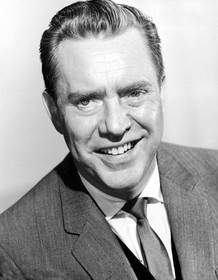
Winston Smith (Edmond O'Brien)
Played by Edmond O'Brien
A member of the Outer Party who quietly doubts Big Brother and keeps a forbidden diary. He navigates a world of censorship and propaganda, seeking truth amid manipulation. His relationship with Julia marks a dangerous turn toward personal rebellion within the Party’s surveillance labyrinth.
- 📝 Diary
- 🕵️ Surveillance
- 💭 Rebellion
- J(
Julia (Jan Sterling)
Played by Jan Sterling
A fellow Outer Party member who shares Winston’s distrust of the regime and a craving for personal freedom. She helps initiate a clandestine romance and the possibility of resistance, even as both protect themselves from discovery. Her actions reveal how intimate acts can become political declarations.
- ❤️ Love
- 🕊 Rebellion
- O(
O'Connor (Michael Redgrave)
Played by Michael Redgrave
A high-ranking Inner Party figure who appears to be an ally but is revealed as a covert agent guiding dissenters toward the regime’s traps. He manipulates information and oversees the brainwashing process, embodying the regime’s calculated control over truth and loyalty.
- 🧠 Mind Games
- 🗝 Deception
-
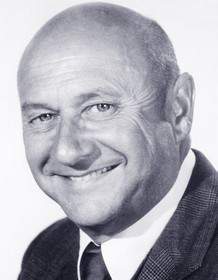
R. Parsons (Donald Pleasence)
Played by Donald Pleasence
A semi-elite Outer Party member and Selina’s father who participates in the social life of the regime. He represents ordinary loyalty to the Party and the everyday climate in which dissent must survive, even as the state’s control tightens around him and those around him.
- 🗳 Propaganda
- 🧭 Loyalty
- 🧠 Brainwashing
- SP
Selina Parsons (Carol Wolveridge)
Played by Carol Wolveridge
The little girl who denounces Winston as part of the regime’s indoctrination of youth. She exemplifies how children are taught to participate in surveillance and denunciation, blurring the line between innocence and complicity.
- 👶 Innocence
- 🧠 Indoctrination
- R(
Rutherford (Ronan O'Casey)
Played by Ronan O'Casey
An Outer Party traitor who has been rehabilitated by the Ministry of Love. His appearance with Jones demonstrates the regime’s ability to manipulate loyalty and memory, presenting a supposedly 'return to order' that masks true control.
- 🗳 Reeducation
- 🪖 Propaganda
- J(
Jones (Mervyn Johns)
Played by Mervyn Johns
Another rehabilitated Outer Party figure, presented as a converted dissenter. His presence with Rutherford underscores how the Party fabricates legitimacy for loyalty and erases dissent through 'restoration'.
- 🗳 Reeducation
- 🧭 Loyalty
- C(
Charrington (David Kossoff)
Played by David Kossoff
The junk shop owner who appears as a benign neighbor and a doorway to Winston and Julia’s private space. His shop serves as a temporal refuge, a place where remnants of past life clash with the present watchfulness of the Regime.
- 🗝 Secret
- 🧭 Ambiguity
- S(
Syme (Bartlett Mullins)
Played by Bartlett Mullins
A diligent party member whose existence underscores the regime’s emphasis on linguistic and bureaucratic efficiency. He represents the constant air of conformity in the Party’s language and thought control.
- 🗣 Language
- 🧭 Bureaucracy
- T(
Telescreen (Anthony Jacobs)
Played by Anthony Jacobs
The voice of the telescreen, an ever-present device that broadcasts propaganda and tracks citizens. It is a symbol of the regime’s reach into private spaces and the coercive power of public surveillance.
- 🖥 Surveillance
- 🗺 Propaganda
Where and When Is 1984 Set?
1984 is set in London and Airstrip One (1984). Here is why the time and place matter to the story.
When
1984
Set in a near-future Britain after a nuclear war, the world is divided into three superstates: Oceania, Eurasia, and Eastasia. London functions under a totalitarian regime where telescreens, memory erasure, and public rallies reinforce obedience. The narrative centers on the year 1984, a time of intensified control and ideological conformity.
Where
London, Airstrip One
London is the capital of Airstrip One, a province of Oceania ruled by a single Party. The city is shaped by constant surveillance and propaganda, with bomb-proof ministries watching over every public space. It embodies a world where privacy has vanished and loyalty to Big Brother is mandatory.
- 🌆 London
- 🕵️ Surveillance
- ⚖️ Totalitarianism
What Are the Themes of 1984?
3 ideas the story keeps returning to, among them Surveillance, Brainwashing and Love.
-
01
Surveillance
The state constantly monitors citizens through omnipresent telescreens and public displays of allegiance. Individual thought is policed as a crime, and even private spaces can be invaded by the Eye. Winston’s diary becomes an act of quiet rebellion in a system that normalizes surveillance.
-
02
Brainwashing
The regime uses coercive methods to reshape minds, including coercion, propaganda, and controlled 'rehabilitation.' The Ministry of Love orchestrates brainwashing to crush dissent, while public demonstrations show loyalty as a performative necessity. The Underground movement is framed as a dangerous fantasy maintained by state manipulation.
-
03
Love
Winston and Julia’s relationship becomes a personal revolt against a loveless, controlled society. Their bond offers a fragile refuge from constant monitoring and the state's suppression of intimacy. Yet love is weaponized by the Party to test loyalty and endurance, revealing the cost of rebellion.
What Kind of Film Is 1984?
Bleak in tone, with steady pacing and a moderate story, going by the plot summary.
- Tone
- Bleak
- Pacing
- Steady
- Story
- Moderate
- Intensity
- High
- Ending
- Bleak
An oppressive and steadily paced descent into a totalitarian dystopia, where a flicker of forbidden love and rebellion is systematically crushed by overwhelming psychological terror, leaving a profound sense of futility.
- oppressive
- anxious
- claustrophobic
- somber
- defiant
- futile
- totalitarianism
- surveillance state
- forbidden love
- psychological manipulation
Content notes: psychological torture, brainwashing, constant surveillance, betrayal, forced confession.
Quiz
How well do you remember 1984? Test yourself on the story.
Where to Watch 1984
Stream it on Mometu and Plex. US availability and prices from JustWatch.
 Mometu
  Plex
Plex  Plex Channel
 Streaming availability in the US, powered by