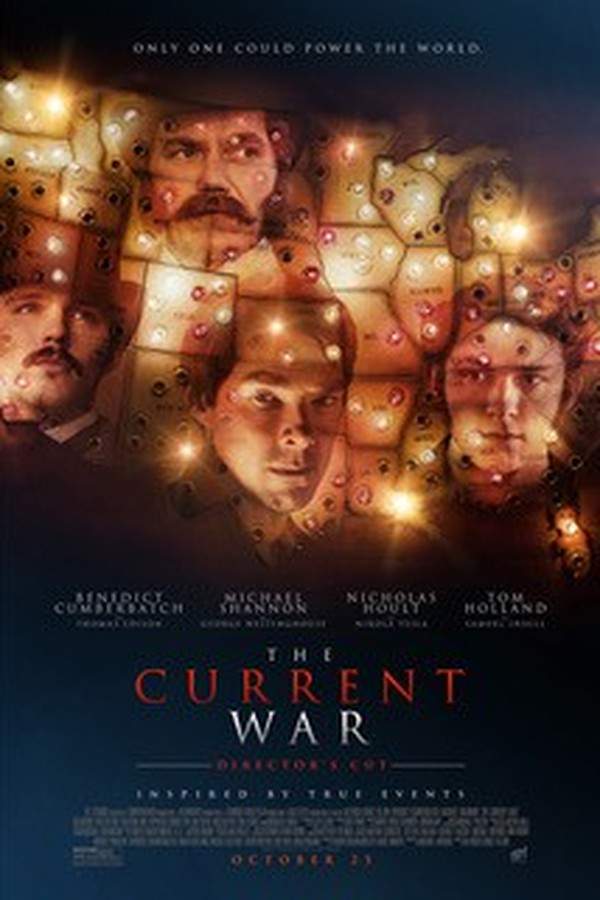
The Current War 2017


Power changes everything Electricity titans Thomas Edison and George Westinghouse compete to create a sustainable system and market it to the American people.



Does The Current War have end credit scenes?
No!
The Current War does not have end credit scenes. You can leave when the credits roll.
Where to Watch The Current War
See current US streaming, rental, and purchase options for The Current War (2017) via JustWatch.

Streaming availability powered by 
Meet the Full Cast and Actors of The Current War
Explore the complete cast of The Current War, including both lead and supporting actors. Learn who plays each character, discover their past roles and achievements, and find out what makes this ensemble cast stand out in the world of film and television.

Michael Yates
Stock Enchange Gent

Tom Sweet
Boy

Benedict Cumberbatch
Thomas Edison

Tom Holland
Samuel Insull

Michael Shannon
George Westinghouse

Nicholas Hoult
Nikola Tesla

Simon Manyonda
Lewis Latimer

Katherine Waterston
Marguerite Westinghouse
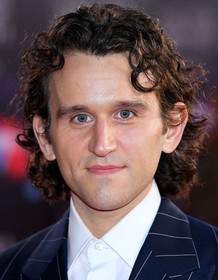
Harry Melling
Benjamin Vale

Woody Norman
Dash Edison
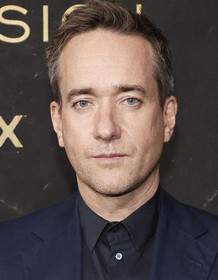
Matthew Macfadyen
J.P. Morgan

Tuppence Middleton
Mary Edison

Louis Ashbourne Serkis
Older Dash

Celyn Jones
Sherman Quincy
Adam Lazarus
Wabco Worker
Nigel Whitmey
Doctor Grandoff
Martyn Mayger
Lawyer
John Schwab
Rudolph Young

Conor MacNeill
William Kemmler
Tom Bell
Reverend Vincent
Abigail Johns
Emily Faulk
Benjamin Schnau
George Westinghouse's Secretary (uncredited)
Damien Molony
Bourke Cockran
David Morley Hale
Frederick Worthington
Liza Ross
Beti
Nancy Crane
Gladys
Oliver Powell
Leo
Stanley Townsend
Franklin Pope
Tim Steed
Maurice Manesburg
Colin Stinton
Daniel Burnham
Sophia Ally
Dotty Edison
Joseph Balderrama
Horace Kaden
Kevin Millington
Henry Walsh
Toby Williams
Fort Worth Investment Banker
Jason Matthewson
Stock Broker
Iain McKee
Reporter
Phil Hodges
City Gent
Simon Connolly
Sioux City
Faye Ormston
Party Guest
Ekow Quartey
Journalist 1
Steven I. Dillard
NYSE member
Christopher McMullen
New York Stockbroker
Jeremy Oliver
Mr. Westinghouse's Secretary
James Chalmers
South Dakota Delegate
Steve Carroll
Cinema Goer
Will Irvine
Reporter 1
Adam Pearce
New Orleans Investment Banker
Ben Mars
Francis Upton
Greg Haiste
South Dakota Delegate
Katy Poulter
Hannah
Jed Aukin
Westinghouse Secretary
John Kinory
Scientist
Andy Cockell
City Gent
Giacomo Joshua Brunelli
WABCO Worker
Nigel Wilcock
J.P. Morgan Lawyer
Jay William Whittington Barrette
Wabco Worker
Thor Janke
Policeman
Andrew Okello
Footman
Pamela Betsy Cooper
Hotel Guest (uncredited)
John Pierce Jones
President Glover Cleveland
External Links and Streaming Options
Discover where to watch The Current War online, including streaming platforms, rental options, and official sources. Compare reviews, ratings, and in-depth movie information across sites like IMDb, TMDb, Wikipedia or JustWatch.






Take the Ultimate The Current War Movie Quiz
Challenge your knowledge of The Current War with this fun and interactive movie quiz. Test yourself on key plot points, iconic characters, hidden details, and memorable moments to see how well you really know the film.
The Current War Quiz: A diverse quiz exploring the key events, characters, and technological debates in the story of Edison and Westinghouse's rivalry.
Who is portrayed as the inventor applying for a patent for the lightbulb in the film?
Full Plot Summary and Ending Explained for The Current War
Read the complete plot summary of The Current War, including all major events, twists, and the full ending explained in detail. Explore key characters, themes, hidden meanings, and everything you need to understand the story from beginning to end.
In the year 1880, the story begins with Benedict Cumberbatch as Thomas Edison, passionately applying for a patent for his revolutionary electric lightbulb. In his detailed presentation, Edison explains the design and purpose of his invention to an eager audience. As he demonstrates his vision, a crowd of men gathers in the woods, drawn by the promise of fortune. They approach to find a sprawling field illuminated by thousands of glowing lightbulbs—an awe-inspiring sight that symbolizes Edison’s dream of illuminating the world. Edison has gathered these investors to bankroll his venture, though he still requires additional funding to fully realize his ambitions.
Meanwhile, Edison is traveling on a train to meet influential figures such as Matthew Macfayden’s J.P. Morgan, a powerful financier, along with the President and his wife, Mary Edison (played by Tuppence Middleton), and their children, affectionately nicknamed Dot and Dash for Morse code signaling. During this journey, Edison discusses his latest inventions, including the phonograph, with his trusted secretary, Tom Holland’s Samuel Insull, as they prepare for future meetings. The next stop involves a crucial dinner with Michael Shannon’s George Westinghouse, an inventor and industrialist with competing plans for electrical systems.
Before the dinner, Edison attempts to secure funding in the city, setting up an office in Manhattan that will serve as the hub for his expanding electrical empire. However, he abruptly decides to return home, exhausted from the whirlwind of negotiations, and is greeted at the station by Katherine Waterston’s Marguerite Westinghouse. The Westinghouse family visit is canceled unexpectedly, but their acquaintance remains strong. During the visit, Franklin Pope notes Edison’s eccentric personality, giving Westinghouse insight into Edison’s intense work ethic and obsession with innovation.
Back at home, Edison’s wife Mary expresses concern about his relentless work schedule. She speaks into their phonograph, recording her voice and her desire for him to build a fence in their yard—an ordinary wish that highlights her longing for normalcy amidst his scientific pursuits. Sadly, Mary’s health begins to decline, though Edison remains fixated on his work, dismissing her illnesses as minor. When she collapses, a doctor diagnoses her with a serious condition, prompting Edison to ask for delays on bills to care for her.
Despite personal tragedy, Edison’s business accelerates. Morgan invests half a million dollars in Edison’s projects, fueling hopes of lighting up Manhattan. Edison’s team works tirelessly, successfully illuminating several buildings, capturing public attention and solidifying his reputation. However, Nicholas Hoult’s Nikola Tesla, a brilliant inventor, watches with curiosity and skepticism from the crowd, as Tesla is recruited to work for Edison Electric. Tesla demonstrates that Alternating Current (AC) is far more efficient than Edison’s Direct Current (DC) system, but Edison—confident in his DC technology—resists switching.
Westinghouse, meanwhile, advocates for AC, proposing the use of transformers to transmit electricity over much greater distances at lower costs. He plans a demonstration to prove that AC can be a superior system, capable of powering entire cities more efficiently. Edison attempts to discredit AC by publicly illustrating its dangers—most notoriously by electrocuting a horse with AC current, calling it “Westinghouse, the horse,” in a controversial and ethically questionable stunt designed to sway public opinion.
As tensions escalate, Tesla explains the advantages of AC, yet Edison remains committed to his DC system. The rivalry spills into the press, with accusations flying and patent disputes intensifying. Edison fears losing his dominance and accuses Westinghouse of using stolen designs—the same ones Edison has patented—prompting legal battles and a bitter public feud. Amidst the chaos, Simon Manyonda’s Lewis Latimer and Tesla attempt to develop improvements, but Tesla is eventually fired after disagreements with his new partners.
While personal tragedies deepen, with Mary’s health worsening, Edison’s focus remains on his inventions. He dedicates himself to improving the phonograph and secretly records her voice, seeking solace in her words. Meanwhile, J.P. Morgan proposes merging Edison’s company with others to consolidate power under the newly forming General Electric, a move Edison fiercely opposes, feeling betrayed and overshadowed. Morgan’s plan leaves Edison with only a symbolic position and a seat on the board.
The race to light the 1893 World’s Columbian Exposition in Chicago reaches its climax. Both Edison and Westinghouse bid for the contract, with Edison’s team concerned about the safety of AC and its potential dangers to the public. To prove the dangers, Edison orchestrates a demonstration where he uses AC to electrocute a horse, further fueling fear. Ultimately, Westinghouse wins the bid, and his lighting system dazzles visitors at the fair, showcasing the potential of electric lighting without harming anyone—marking a historic milestone.
Throughout the event, Edison’s creation of the electric chair is brought to light, as he is approached by a man interested in its humane application for executions. Edison, opposed to the idea of taking life, is reluctant but is pressured into participating in a demonstration. The electric chair proves problematic, highlighting the ethical dilemmas intertwined with technological progress. In court, Westinghouse counters Edison’s claims about AC’s lethality by exposing confidential letters, revealing Edison’s efforts to discredit AC and strengthen his own position.
Amid legal battles and corporate maneuvers, Westinghouse shows his shrewdness and resilience, recalling civil war days when he successfully tricked a drunken soldier, illustrating that he’s no fool. Edison, confronted with these conflicts, receives a call from Westinghouse, who warns him not to threaten his reputation further—telling him he’s about to publish damaging letters.
In the final stages, Tesla and Westinghouse form an alliance, working together to develop revolutionary motors and power systems for the upcoming fair. Meanwhile, Tom Holland’s Samuel Insull promotes Edison’s phonographs worldwide, boosting revenue. Despite the setbacks, Edison accepts that Westinghouse’s system will illuminate the future’s brightest moments.
At the famous 1893 World’s Fair, Westinghouse’s lighting captivates the public, all while Edison graciously acknowledges that his own inventions have changed the world forever, even if his company lost the contract. In a reflective moment, Edison admits that his next project—the kinetograph, or motion picture camera—is so groundbreaking that it will eventually eclipse his work with electricity. As they part ways, Edison and Westinghouse share a mutual respect rooted in their extraordinary contributions to technology, understanding that both their visions have forever altered the course of history.

Coming soon on iOS and Android
The Plot Explained Mobile App
From blockbusters to hidden gems — dive into movie stories anytime, anywhere. Save your favorites, discover plots faster, and never miss a twist again.
Sign up to be the first to know when we launch. Your email stays private — always.
Explore the mobile appWatch Trailers, Clips & Behind-the-Scenes for The Current War
Watch official trailers, exclusive clips, cast interviews, and behind-the-scenes footage from The Current War. Dive deeper into the making of the film, its standout moments, and key production insights.
The Current War Themes and Keywords
Discover the central themes, ideas, and keywords that define the movie’s story, tone, and message. Analyze the film’s deeper meanings, genre influences, and recurring concepts.
The Current War Other Names and Titles
Explore the various alternative titles, translations, and other names used for The Current War across different regions and languages. Understand how the film is marketed and recognized worldwide.
Similar Movies To The Current War You Should Know About
Browse a curated list of movies similar in genre, tone, characters, or story structure. Discover new titles like the one you're watching, perfect for fans of related plots, vibes, or cinematic styles.


Quick Links: Summary, Cast, Ratings, More

What's After the Movie?
Not sure whether to stay after the credits? Find out!
Check out our other apps:

SAT Sphere
Build confidence for the Digital SAT.

Mori Atlas
Discover wild places worth protecting.

Luntero
Search smarter for a home in Amsterdam.

Plot Explained
Unravel movie endings and hidden clues.

Pokechamp
Dive into Pokémon data and battle logic.

Driving Theory
Get ready for your European theory test.

Movie Dust
Plan your next cinema trip with ease.

Musemap
Find art and culture as you travel.

Selkobase
Compare credentials before committing.

Local Manual
Turn an unfamiliar country into practical next steps.

Lernavi
Compare school systems before your next move.

GymRoam
Find a workout stop wherever your plans take you.
Explore Our Movie Platform
New Movie Releases (2026)
Famous Movie Actors
Top Film Production Studios
Movie Plot Summaries & Endings
Major Movie Awards & Winners
Best Concert Films & Music Documentaries
Movie Collections and Curated Lists
© 2026 What's After the Movie. All rights reserved.
Privacy Policy