Takeshis’ 2005

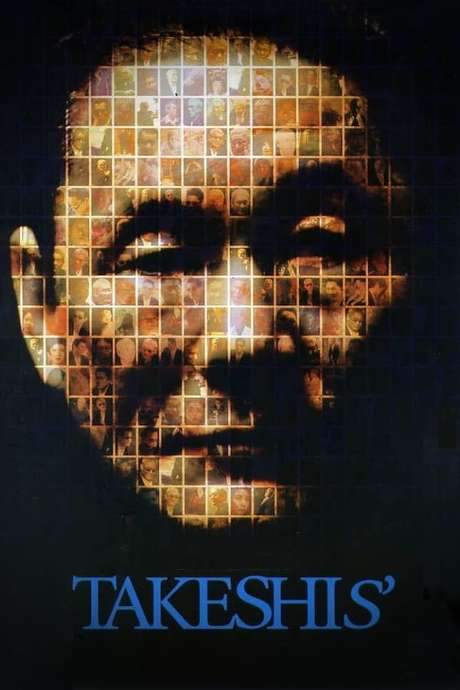
Beat Takeshi leads a hectic, often surreal career as a top show‑business star. One day he encounters a blond doppelgänger, Kitano, a shy convenience‑store clerk and aspiring actor desperate for his big break. As their lives intersect, Kitano begins to experience vivid hallucinations, believing he is becoming Beat himself.

Does Takeshis’ have end credit scenes?
No!
Takeshis’ does not have end credit scenes. You can leave when the credits roll.
Meet the Full Cast and Actors of Takeshis’
Explore the complete cast of Takeshis’, including both lead and supporting actors. Learn who plays each character, discover their past roles and achievements, and find out what makes this ensemble cast stand out in the world of film and television.

Susumu Terajima
Takeshi's Friend / Kitano's Yakuza Neighbor

Tetsu Watanabe
TV Wardrobe Master / Noodle Cook / Audition Actor

Takeshi Kitano
Beat Takeshi / Mr. Kitano

Kanji Tsuda
Film Director

Tadanobu Asano

Mari Hayashida

Taichi Saotome
Young Man
Toshi
Kayoko Kishimoto
Mahjong Parlor Woman / Audition Producer / Costumer
Makoto Ashikawa
Assistant at Audition
Tamotsu Ishibashi
Takashi Nishina
Naomasa Musaka
Film Studios Tattooist
Yoshiyuki Morishita
Light Man in Film Crew / Audition Juror / Client at Bank
Koichi Ueda
Film Crew Member close to the Director
Ren Osugi
Takeshi's Manager / Taxi Driver
Akihiro Miwa
Self
Kotomi Kyōno
Takeshi's Girlfriend / Kitano's Female Neighbor
Shûji Ôtsuki
Gambino Kobayashi
Akira Kubo
Junichi Kikawa
Takayuki Katô
Taigi Kobayashi
Masahiro Sumiyoshi
Beat Kiyoshi
Takagi Junya
Self
Jonathan Legg
American Soldier
Jinta Nishizawa
External Links and Streaming Options
Discover where to watch Takeshis’ online, including streaming platforms, rental options, and official sources. Compare reviews, ratings, and in-depth movie information across sites like IMDb, TMDb, Wikipedia or Rotten Tomatoes.






Take the Ultimate Takeshis’ Movie Quiz
Challenge your knowledge of Takeshis’ with this fun and interactive movie quiz. Test yourself on key plot points, iconic characters, hidden details, and memorable moments to see how well you really know the film.
Takeshis' (2005) Quiz: Test your knowledge of the surreal, dual‑protagonist film Takeshis' directed by Takeshi Kitano, covering its characters, motifs, and key plot points.
Who plays both main characters, Beat Takeshi and Mr. Kitano, in the film?
Full Plot Summary and Ending Explained for Takeshis’
Read the complete plot summary of Takeshis’, including all major events, twists, and the full ending explained in detail. Explore key characters, themes, hidden meanings, and everything you need to understand the story from beginning to end.
Two intertwined stories unfold around two versions of the same man: Beat Takeshi and his look‑alike, Mr. Kitano, both brought to life by Takeshi Kitano. The film follows these two figures as they drift through a shared, paranoid cinema of dreams and reality, where the lines between actor and persona, dream and deed, become increasingly blurred.
In the world of film and television, Beat Takeshi stands as a towering showbiz figure, surrounded by a recurring troupe who inhabit his life in double roles. His girlfriend Kotomi Kyōno appears beside him, his manager Ren Osugi keeps the wheels turning, and his former stand‑up partner lingers in memory and performance, a constant echo of who he used to be. The film also briefly revisits the tense, bromantic bond with Susumu Terajima, grounding the meta‑narrative in real faces that feed the dreamlike sequence.
Kitano’s other half enters the frame in a clown’s garb among the TV crew, a plain man who longs for the aura and charisma of the movie star. This version of Kitano longs for validation and finds himself autograph-seeking from the very idol he admires, a moment that cements their strange proximity. The two Strands collide as the ordinary man—who works as a convenience-store clerk and moonlights as a taxi driver—begins to blur the borders between his own life and the movie world he imagines. Nightmares bleed into daylight as surreal imagery flashes through his days: looming figures, dead bodies in roadside scenes, almost ritualized repetitions that threaten to become his reality.
A cascade of violent fantasy erupts when the ordinary man reaches for a gun amid a neighborhood quarrel, setting off a chain of killings that ripple through his world. The film segues into a dizzying, dreamlike sequence where underground nightclubs, shadowy gun battles, and a feverish sense of lawless adventure push him toward an alternate, almost island‑paradise epoch—evoking the mood of the director’s tougher, kinetic frames. Throughout this fever dream, the visual motifs recur: the odd caterpillar in a bouquet, a Taishū engeki female impersonator, tap dancers in a rehearsal space, a transvestite chanson singer, a pair of fat twins, and scenes in a ramen shop that loop and reappear in ever‑shifting contexts. Taichi Saotome and Akihiro Miwa anchor these recurring images with their own iconic touches, adding layers to the spectacle.
As the daydream intensifies, the boundary between the two Takeshis dissolves and the two halves of Kitano’s world collide more directly. The “Beat” persona seems to claim a rising heartthrob charisma, while the ordinary man acts out in ways that mirror a movie star’s legend. The fantasy collapses back into the ordinary life—until a stark trigger cuts through the reverie: the autograph greeting, “Hello Mr. Clown!” This moment shivers through the film and appears to seal the fate of the Beat Takeshi figure, even as the camera lingers on him in a close‑up that suggests the entire sequence might be a dream inside a dream.
The ending circles back to the bookends of the narrative—those opening images of an American soldier and the gun battle that began it all—leaving the audience with a lingering, unresolved question: is what we’ve witnessed a vivid dream of Beat Takeshi, or a dangerous, self‑made reality for Mr. Kitano? The film closes on a hypnotic note, inviting viewers to piece together what is real, what is performative, and what remains forever out of reach in the murky, glittering world of Takeshis’.

Coming soon on iOS and Android
The Plot Explained Mobile App
From blockbusters to hidden gems — dive into movie stories anytime, anywhere. Save your favorites, discover plots faster, and never miss a twist again.
Sign up to be the first to know when we launch. Your email stays private — always.
Explore the mobile appWatch Trailers, Clips & Behind-the-Scenes for Takeshis’
Watch official trailers, exclusive clips, cast interviews, and behind-the-scenes footage from Takeshis’. Dive deeper into the making of the film, its standout moments, and key production insights.
Takeshis’ Themes and Keywords
Discover the central themes, ideas, and keywords that define the movie’s story, tone, and message. Analyze the film’s deeper meanings, genre influences, and recurring concepts.
Takeshis’ Other Names and Titles
Explore the various alternative titles, translations, and other names used for Takeshis’ across different regions and languages. Understand how the film is marketed and recognized worldwide.
Similar Movies To Takeshis’ You Should Know About
Browse a curated list of movies similar in genre, tone, characters, or story structure. Discover new titles like the one you're watching, perfect for fans of related plots, vibes, or cinematic styles.








Quick Links: Summary, Cast, Ratings, More

What's After the Movie?
Not sure whether to stay after the credits? Find out!
Check out our other apps:

SAT Sphere
Build confidence for the Digital SAT.

Mori Atlas
Discover wild places worth protecting.

Luntero
Search smarter for a home in Amsterdam.

Plot Explained
Unravel movie endings and hidden clues.

Pokechamp
Dive into Pokémon data and battle logic.

Driving Theory
Get ready for your European theory test.

Movie Dust
Plan your next cinema trip with ease.

Musemap
Find art and culture as you travel.

Selkobase
Compare credentials before committing.

Local Manual
Turn an unfamiliar country into practical next steps.

Lernavi
Compare school systems before your next move.

GymRoam
Find a workout stop wherever your plans take you.
Explore Our Movie Platform
New Movie Releases (2026)
Famous Movie Actors
Top Film Production Studios
Movie Plot Summaries & Endings
Major Movie Awards & Winners
Best Concert Films & Music Documentaries
Movie Collections and Curated Lists
© 2026 What's After the Movie. All rights reserved.
Privacy Policy