Nymphomaniac 2014


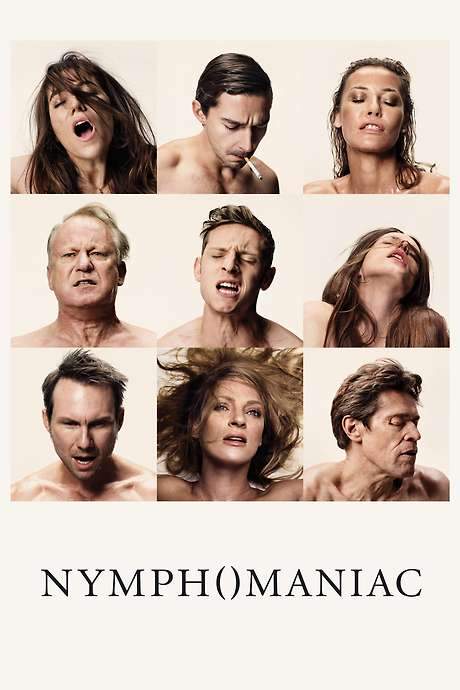
After rescuing a faint, wounded woman from an alley, Seligman brings her to his modest home. She calls herself Joe, a self‑confessed nymphomaniac, and recounts her sexual experiences with countless men since her teenage years. Seligman shares his passions—fly‑fishing, Fibonacci, and organ music—forming a dialogue on desire and philosophy.


Does Nymphomaniac have end credit scenes?
No!
Nymphomaniac does not have end credit scenes. You can leave when the credits roll.
Where to Watch Nymphomaniac
See current US streaming, rental, and purchase options for Nymphomaniac (2014) via JustWatch.

Philo
HD
Hoopla
SD
Kanopy
HD
Apple TV Store
HD
Fandango At Home
SD
FlixFling
SD Streaming availability powered by 
Meet the Full Cast and Actors of Nymphomaniac
Explore the complete cast of Nymphomaniac, including both lead and supporting actors. Learn who plays each character, discover their past roles and achievements, and find out what makes this ensemble cast stand out in the world of film and television.
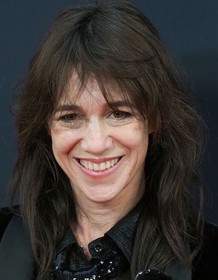
Charlotte Gainsbourg
Joe

Shia LaBeouf
Jerôme
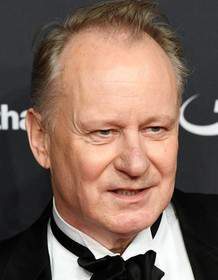
Stellan Skarsgård
Seligman

Willem Dafoe
L

Connie Nielsen
Joe's Mother

Mia Goth
P
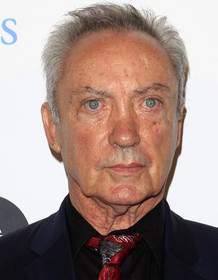
Udo Kier
Waiter

Jamie Bell
K

Christian Slater
Joe's Father

Lawrence Sheldon
Man 1 in Car

Uma Thurman
Mrs. H
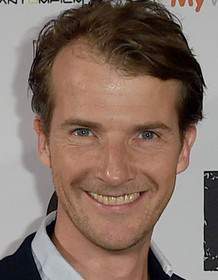
Jeff Burrell
Man on Train 1
Omar Shargawi
Thug 1
Jonathan Sawdon
Man 3 in Car
Tomas Spencer
Conductor on Train

Stacy Martin
Young Joe
Kate Ashfield
Therapist
Jens Albinus
S
Clayton Nemrow
Married Man on Train
Anders Hove
Odin
Nicolas Bro
F

Caroline Goodall
Psychologist
Jesper Christensen
Jerôme's Uncle
Shanti Roney
Interpreter
James Northcote
Young Lad 1 on Train
Marcus Jakovljevic
Thug 2
Saskia Reeves
Nurse
Hugo Speer
Mr. H
Jean-Marc Barr
Debtor Gentleman
Sami Loris
Doctor 2
Laura Christensen
Babysitter
Jacob Levin-Christensen
Marcel - 3 Years
Ivan Pecnik
Man 2 in Car
Michaël Pas
Older Jerôme
Sophie Kennedy Clark
B
Severin von Hoensbroech
Debtor in Greenhouse
Johannes Kienast
Man Who Cannot Touch Joe
Christoph Schechinger
Man B Having Sex
Markus Tomczyk
Young Man in Hospital
Christopher Craig
Man 4 in Car
Christine Urspruch
Little My
Lien Van De Kelder
Clerk in Horse Shop
Peter Gilbert Cotton
Doctor 1
Cyron Melville
A
Simon Böer
Man Uninterested
Ronja Rissmann
Joe - 2 Years
Maja Arsovic
Joe - 7 Years
Sofie Kasten
B - 7 Years
Ananya Berg
Joe - 10 Years
Charlie Hawkins
Young Lad 2 on Train
Andreas Grötzinger
Man 2 on Train
Jesse Inman
Man A Having Sex
David Halina
Man C Having Sex
Jonas Baeck
Man D Having Sex
Katharina Rübertus
Joe's Girlfriend - 18 Years
Inga Behring
Joe's Girlfriend - 18 Years
Lisa Matschke
Joe's Girlfriend - 18 Years
Moritz Tellmann
Doctor Performing Abortion
Felicity Gilbert
Liz (Secretary)
Frankie Dawson
H's Boy 1
George Dawson
H's Boy 2
Harry Dawson
H's Boy 3
Christoph Jöde
Man in Window
Christian Gade Bjerrum
G
Morgan Hartley
B - 12 Years
Andrea Thomsen
Joe's Girlfriend - 12 Years
Tine Burn
Joe's Girlfriend - 12 Years
Tabea Tarbiat
Valeria Messalina
Janine Romanowski
The Whore of Babylon
Kookie Ryan
N - Black Man
Papou
Black Man 2
Nicole Sandweg
Madame
Sarah Soetaert
Boss
Tania Carlin
Renee
Daniela Lebang
Brunhelda
Conny Dachs
Debtor Gets Whipped
External Links and Streaming Options
Discover where to watch Nymphomaniac online, including streaming platforms, rental options, and official sources. Compare reviews, ratings, and in-depth movie information across sites like IMDb, TMDb, Wikipedia or Rotten Tomatoes.









Full Plot Summary and Ending Explained for Nymphomaniac
Read the complete plot summary of Nymphomaniac, including all major events, twists, and the full ending explained in detail. Explore key characters, themes, hidden meanings, and everything you need to understand the story from beginning to end.
The film opens in a shadowy, rain-drenched quiet where a relentless mechanical thump fills the darkness. What seems to be a roadside ritual is actually the sound of machinery hammered by downpours, leading to a quiet, unsettling image—a motionless hand resting on a pavement. A distant, almost soothing wind and rain give way to a surge of heavy metal on the soundtrack as we enter a living space where a man—Stellan Skarsgård—wraps a scarf around his neck and steps into the world outside. He buys bait at a tackle shop, returns home, and stumbles upon a battered, unconscious woman on the ground. The woman is Charlotte Gainsbourg and she is badly beaten. He rouses her, promises to fetch help, but she resists, insisting that if he calls an ambulance or the police she will leave before he can return. He notes her injuries, offers tea, and, against her wishes, invites her inside.
In the dim light of the room, their uneasy truce begins. He suggests washing her clothes; she protests, asking him not to wash the coat. He asks what happened; she speaks of her own culpability—“it’s my fault because I’m a bad human being”—and she slowly opens up, revealing a need to talk about it. He invites her to tell her story, and she accedes, noticing a fly caught on a wall-mounted fishhook and using it as a narrative touchstone. He speaks of fly-fishing as a metaphor: the fly is light, the line heavy, and the lure must be matched to the fish’s hunger. She asks about his own fishing, and he admits he doesn’t catch much anymore. He shares a childhood memory from a “Complete Angler” book—romantic, almost sacred to him—before inviting her to begin at the start of her own story.
In this telling, the film pivots into a dramatic, multi-layered confession. The woman recounts her earliest experiences and how she discovers the “bait” in the adult world. The story pivots to a painful, intimate history: a two-year-old girl discovering her body, a young girl with a mother who is distant, and a father who shapes the child’s imagination with stories and science. The man listens, interjecting with gentle questions, while the woman traces how a sense of sin—taken not as a doctrine but as a personal burden—shapes her view of herself. In her telling, she makes it clear that she did not claim all of humanity to be sinful; she speaks of her own temptations and the way in which she has learned to read the world through the lens of longing and consequence.
As the story unfolds, the child grows into a girl who absorbs stories from her father, a doctor whose tales enchant her even as they hint at danger. The father’s stories about the ash tree—its beauty and its winter-dark buds—become a recurring motif that the woman recalls with a blend of affection and estrangement. The present-day man notes that the fly on the wall is called a nymph, the larval stage of a greater creature, and he uses their discussion to pivot toward the idea of education—an education that is not formal but experiential, a way of understanding desire, power, and consequence.
The narrative then shifts to the character we come to know as Joe, the adult version of the girl, played by Stacy Martin. In this section, Joe is seen as she and her friend B—played by Sophie Kennedy Clark—embark on a journey that begins with a ritualized contest: who can seduce the most men on a train, in a bid to win a tangible prize. The two move through the compartments with a practiced, almost strategic ease—counting, calculating, and learning the rhythms of attraction. The storyteller notes the river’s changing currents, the way fish gather, tease, and bite; the metaphor becomes a map of human behavior: timing, visibility, and the art of choosing when to strike.
In this chapter, the film is unflinching about adult encounters, yet it remains careful about how it presents them. Joe’s early sexual awakenings unfold in a sequence of candid, but non-graphic, moments that establish the power she wields and the costs she pays. Among these memories is a pivotal first sexual encounter with a young man—an event that is later reframed in terms of the broader arc of her life. The train sequence also puts into relief Joe’s growing sense that desire can be both a tool and a burden, capable of untying knots and creating new ones. A key moment in this section is a conversation where a married man becomes entangled in a moment of shared risk and consequence, a moment that Joe later discusses with a calm, clinical clarity that juxtaposes against the storm of her feelings.
On the journey through memory, a number of figures emerge through the archive of Joe’s life. The adult Shia LaBeouf appears as Jerôme, a man from Joe’s past who begins as a quiet, uncomfortable, almost predatory presence but gradually becomes a focal point of longing and conflict. The transition from a respectful memory to a complicated attraction is rendered in a way that mixes humor and tension, and it is here that the film begins to widen its lens beyond mere sexual appetite toward questions of love, obligation, and memory. When Joe enters the office world, she encounters Jerôme again, this time in a professional setting where the power dynamics shift and the boundary between personal history and present day work becomes central to her experience. A tense elevator scene and a tour through Jerôme’s private space become symbolic waypoints in their evolving relationship.
The film’s frame narrative continues to host a meditation on love, attachment, and the price of desire. When Jerôme becomes a recurring figure in Joe’s life, the sense of history—how the past informs the present—reaches a new depth. A sequence in which Joe begins to explore her feelings more openly, even as she navigates power, control, and gendered expectations, shows how her identity is shaped by both the men who cross her path and the inner critics she has internalized. A later encounter in which Joe’s professional life intersects with her personal history—when she provocatively asserts her independence in the face of Jerôme’s assumed authority—highlights a turning point: the need to define herself not by the men she encounters but by the boundaries she sets and the autonomy she forges.
In a later chapter, Joe’s life becomes a mosaic of long relationships and more casual, combustible encounters, and the woman is forced to face the consequences of living with a life defined by hunger and repetition. The “Mrs. H” chapter centers on a complicated ménage with a woman who becomes a mirror for loss, memory, and the stubbornness of desire. Uma Thurman appears as Mrs. H, a wife who enters Joe’s life with a quiet, unnerving presence and leaves behind a cascade of emotional ripples that challenge Joe to confront what it means to destroy and to be destroyed in return. The scene with Mrs. H is less a showdown than a confrontation with the limits of control—how the past leaks into the present, and how the body can be both shelter and wound.
The narrative then shifts into a darker, more meditative register: Delirium. A stark, black-and-white sequence takes us into the hospital wards where Joe’s father, a doctor, is confronted with illness, fear, and the fragility of life. The sequence is intimate and harrowing, filled with intimate acts that aim to fill a void and an enduring sense of loneliness that lingers even after death. Christian Slater, who portrays Joe’s father, returns to the screen in these scenes, offering a counterpoint to Joe’s own self-fashioning. The doctor’s perspective—devoted, exhausted, resilient—frames Joe’s later reflections on mortality, guilt, and the complicated ways people cope with loss. The doctor’s bedside presence, the emotional tremor of delirium tremens, and the chasm between memory and reality all feed into Joe’s ongoing inquiry into who she is when she is most exposed.
Throughout these interwoven chapters, the film uses music as a living counterpoint to narrative. Seligman, a patient, piercing intellectual figure, introduces Joe to Bach and the concept of polyphony—the idea that multiple independent melodies can coexist harmoniously. He crafts a parallel between the polyphonic organ’s three voices and Joe’s own life: the bass of one lover, the melody of another, and a third voice that completes the relational chord. The conversation about a cantus firmus—an anchored melodic line—becomes a way to describe Joe’s own approach to love, memory, and the art of living with one’s desires. The film even places a bold, carefully staged quotation from their dialogue, inviting the viewer to consider poetry and mathematics as ways of understanding human behavior.
As the narrative reaches its fifth movement, Joe divides her life into three core relationships—the three voices that compose her “Little Organ School.” The bass, denoted by a man with a red car, is predictable, devoted, and patient, a steady rhythm that gives structure to her days. The second voice, a more predatory, Jaguar-like presence, tests boundaries and challenges her control. The third, a close confidant and partner, becomes a catalyst for a deeper, more intimate fusion—the moment when desire becomes a shared, almost sacred space. The parallel montage pairs Joe in her intimate scenes with the organ’s pedals and pipes, visually weaving sex, music, and memory into a single, complex fabric. The moment when Joe finally consummates a significant relationship with Jerôme is rendered as a climactic, multi-voiced sequence that culminates in a quiet, overwhelming vulnerability. The trio of lovers—F, Jerôme, and G—are represented in a three-way split-screen, mirroring the three voices on the organ, before the scene cuts away with a sense of suspended consequence.
The end of this installment sits at a raw, unresolved edge. Joe, exhausted and overwhelmed, confesses that she cannot feel the same intensity as before and asks for the possibility of feeling again. The confession is intimate, incomplete, and deeply human, ending on an open note: to be continued. The closing credits tease forthcoming glimpses of what lies ahead in Nymphomaniac: Vol. II, leaving the viewer with a dual pull of curiosity and unease about where Joe’s story will travel next.
Fill all my holes.
Love is blind. The erotic is about saying yes; love, in contrast, can distort or demand more than a person can bear.

Coming soon on iOS and Android
The Plot Explained Mobile App
From blockbusters to hidden gems — dive into movie stories anytime, anywhere. Save your favorites, discover plots faster, and never miss a twist again.
Sign up to be the first to know when we launch. Your email stays private — always.
Explore the mobile appDiscover Film Music Concerts Near You – Live Orchestras Performing Iconic Movie Soundtracks
Immerse yourself in the magic of cinema with live orchestral performances of your favorite film scores. From sweeping Hollywood blockbusters and animated classics to epic fantasy soundtracks, our curated listings connect you to upcoming film music events worldwide.
Explore concert film screenings paired with full orchestra concerts, read detailed event information, and secure your tickets for unforgettable evenings celebrating legendary composers like John Williams, Hans Zimmer, and more.


Cars Featured in Nymphomaniac
Explore all cars featured in Nymphomaniac, including their makes, models, scenes they appear in, and their significance to the plot. A must-read for car enthusiasts and movie buffs alike.
Nymphomaniac Other Names and Titles
Explore the various alternative titles, translations, and other names used for Nymphomaniac across different regions and languages. Understand how the film is marketed and recognized worldwide.
Quick Links: Summary, Cast, Ratings, More

What's After the Movie?
Not sure whether to stay after the credits? Find out!
Check out our other apps:

SAT Sphere
Build confidence for the Digital SAT.

Mori Atlas
Discover wild places worth protecting.

Luntero
Search smarter for a home in Amsterdam.

Plot Explained
Unravel movie endings and hidden clues.

Pokechamp
Dive into Pokémon data and battle logic.

Driving Theory
Get ready for your European theory test.

Movie Dust
Plan your next cinema trip with ease.

Musemap
Find art and culture as you travel.

Selkobase
Compare credentials before committing.

Local Manual
Turn an unfamiliar country into practical next steps.

Lernavi
Compare school systems before your next move.

GymRoam
Find a workout stop wherever your plans take you.
Explore Our Movie Platform
New Movie Releases (2026)
Famous Movie Actors
Top Film Production Studios
Movie Plot Summaries & Endings
Major Movie Awards & Winners
Best Concert Films & Music Documentaries
Movie Collections and Curated Lists
© 2026 What's After the Movie. All rights reserved.
Privacy Policy