Last Train to Christmas 2021


A successful nightclub manager named Tony Towers finds himself on a magical train at Christmas. Each carriage represents a different point in his life, and his actions within one carriage impact his future. As he journeys through his past, Tony must confront his choices and attempt to improve not only his own life but also the lives of those he cares about. But will his efforts lead to a better outcome, or will he inadvertently make things worse?


Does Last Train to Christmas have end credit scenes?
No!
Last Train to Christmas does not have end credit scenes. You can leave when the credits roll.
Meet the Full Cast and Actors of Last Train to Christmas
Explore the complete cast of Last Train to Christmas, including both lead and supporting actors. Learn who plays each character, discover their past roles and achievements, and find out what makes this ensemble cast stand out in the world of film and television.

Nathalie Emmanuel
Sue

Michael Sheen
Tony Towers

Katherine Kelly
Paula
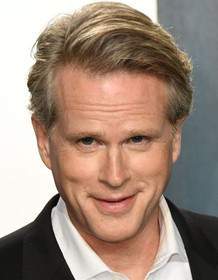
Cary Elwes
Roger Towers

Dave Chapman
Wetherby
Natalie Mitson
Valerie
Phyllis Logan
Auntie Vi

Hayley Mills
Mum
Ebony Aboagye
Jan
Sophie Simnett
Jenny
Edward Harrison
Dad / Arthur
Danny Ashok
Morris
Sianad Gregory
Mum / Celia
John Thomson
Vic
Robin Askwith
Tristan
Thomas Law
Tony (25)
Laura Evelyn
Pam
Matthew Lee
Train Passenger
Richard Tate
Mr. Pastry
Mia McKenna-Bruce
Linda
Anna Lundberg
Astrid
George Hannigan
Nick
Philippa Cole
Uptight Passenger
Harry Giubileo
Tony (15)
Jack Christou
Roger (20)
Robyn Ashwood
Rita
External Links and Streaming Options
Discover where to watch Last Train to Christmas online, including streaming platforms, rental options, and official sources. Compare reviews, ratings, and in-depth movie information across sites like IMDb, TMDb, Wikipedia or Rotten Tomatoes.






Ratings and Reviews for Last Train to Christmas
See how Last Train to Christmas is rated across major platforms like IMDb, Metacritic, and TMDb. Compare audience scores and critic reviews to understand where Last Train to Christmas stands among top-rated movies in its genre.

The Movie Echo Score
Overall, the film delivers solid craft and standout performances, particularly from Michael Sheen, while its period‑specific production design and cinematography receive consistent praise. However, reviewers repeatedly note a convoluted narrative structure, unclear time‑travel mechanics, and an ambiguous ending that diminish cohesion. The holiday atmosphere is present but not dominant, leading to a mixed reception that balances the film’s technical merits against its storytelling flaws.
The Movie Echo Score Breakdown for Last Train to Christmas

Art & Craft
Direction and production design succeed in evoking distinct decades, with the train set serving as a convincing temporal backdrop. Reviewers commend the cinematography for its crisp lighting and seamless visual shifts between eras, and note attentive period details such as costumes and props. The low‑budget aesthetic is mentioned, yet the overall craftsmanship is regarded as commendably polished.

Character & Emotion
Michael Sheen’s performance anchors the film, delivering nuance across multiple temporal versions of his character, while Cary Elwes and Nathalie Emmanuel provide strong complementary portrayals. Reviewers emphasize the chemistry among the leads and commend the actors’ ability to convey regional accents authentically. The supporting cast, including cameo appearances, also receives positive notes, contributing to a generally high‑quality ensemble.

Story & Flow
The narrative hinges on a time‑travel premise that intertwines personal choice with alternate histories, a concept praised for originality. Nevertheless, many reviewers find the plot execution muddled, citing frequent jumps across five decades that blur continuity and a finale that leaves key motivations unresolved. Pacing falters as the film shifts tone from light comedy to darker drama, weakening overall cohesion.

Sensory Experience
The film’s sensory palette shifts with each era, employing distinct colour grading, lighting schemes and period‑appropriate set dressings that reinforce temporal transitions. Reviewers highlight the cinematography’s clarity and the effective use of music, including a notable Simon Aldred song, to underscore emotional beats. Sound design receives limited comment, suggesting it supports rather than detracts from the visual experience.

Rewatch Factor
While the time‑travel concept and strong lead performance invite curiosity, the confusing chronology and unsatisfying conclusion limit repeat viewings. Some viewers appreciate the nostalgic period details and thematic exploration of destiny, which may reward a second look. Overall, the film offers modest rewatch value, appealing mainly to fans of Sheen or genre‑bending holiday dramas.
Take the Ultimate Last Train to Christmas Movie Quiz
Challenge your knowledge of Last Train to Christmas with this fun and interactive movie quiz. Test yourself on key plot points, iconic characters, hidden details, and memorable moments to see how well you really know the film.
Last Train to Christmas Quiz: Test your knowledge of the 2021 film "Last Train to Christmas" with these 10 questions ranging from easy to challenging.
What year does Tony first arrive in after stepping into the next carriage?
Full Plot Summary and Ending Explained for Last Train to Christmas
Read the complete plot summary of Last Train to Christmas, including all major events, twists, and the full ending explained in detail. Explore key characters, themes, hidden meanings, and everything you need to understand the story from beginning to end.
On Christmas Eve 1985, Tony Towers, Michael Sheen a successful nightclub manager, is traveling from London to Nottingham for a family reunion with his younger brother Roger, Cary Elwes, while he is engaged to his girlfriend Sue Taylor, Nathalie Emmanuel. He is also estranged from his wife Linda, [Mia McKenna-Bruce](/actor/mia-mckenna-bruce], and his relationship with Roger is strained, adding a quiet tension to the trip.
When Tony steps into the next carriage ahead, the world brightens with a shifting horizon of time: he is instantly transported to 1995 and discovers that he has lost almost everything he once valued. This is no ordinary journey, but a time warp that unfolds through the train’s carriages, with every forward move catapulting him ten years ahead and every backward step pulling him ten years back.
Beyond mere travel, Tony learns something astonishing: he can influence the past and alter the futures of the people aboard the train by revisiting key decisions in his life. Among the possibilities, he even contemplates having a daughter instead of a son. Yet no matter how he adjusts the course of events, the outcomes repeatedly tilt toward desperate endings, underscoring the fragile, often cruel nature of consequence.
A pivotal moment occurs when Tony encounters his depressed Auntie Vi, Phyllis Logan, who hints that his marriage to Sue had frayed under the glare of his celebrity life. This revelation adds a personal layer to the already tangled web of choices and their repercussions, prompting Tony to rethink what truly matters.
In a dramatic twist of fate, Tony travels back to 1955, where a cascade of revelations forces his parents to disclose a surprising truth: Roger is actually their nephew, and Auntie Vi is Roger’s mother. In this alternate timeline, Roger grows bitter over being abandoned as a child and spirals into a life marked by trouble—arrest in 1975, alcoholism in 1995, and a death in 2005—painting a stark portrait of what could have been.
Moving again through the timelines, Tony returns to an alternate 1985 where he reunites with Sue. This renewal is bittersweet, as he urges her to live the life she deserves even if it means parting ways. The journey then takes him further back to 1945 during his own childhood, where he resolves to stop Auntie Vi from abandoning baby Roger, altering the course of their family history.
Finally, Tony travels deeper into the train and reaches 2015. He steps off in Nottingham to a quiet, hopeful scene: an unseen figure, implied to be Roger, sits at a piano, playing an original song that the two of them had written in youth. The moment hints at a lasting bond and the possibility of reconciliation, even after decades of missed chances.
This odyssey of time carves out a portrait of ambition, love, and consequence, where Tony’s efforts to fix the past illuminate how deeply intertwined destinies can be—sometimes with a relief that the connections we fear to lose endure in some form, even if not in the exact way we imagined.

Coming soon on iOS and Android
The Plot Explained Mobile App
From blockbusters to hidden gems — dive into movie stories anytime, anywhere. Save your favorites, discover plots faster, and never miss a twist again.
Sign up to be the first to know when we launch. Your email stays private — always.
Explore the mobile appWatch Trailers, Clips & Behind-the-Scenes for Last Train to Christmas
Watch official trailers, exclusive clips, cast interviews, and behind-the-scenes footage from Last Train to Christmas. Dive deeper into the making of the film, its standout moments, and key production insights.
Last Train to Christmas Themes and Keywords
Discover the central themes, ideas, and keywords that define the movie’s story, tone, and message. Analyze the film’s deeper meanings, genre influences, and recurring concepts.
Last Train to Christmas Other Names and Titles
Explore the various alternative titles, translations, and other names used for Last Train to Christmas across different regions and languages. Understand how the film is marketed and recognized worldwide.
Similar Movies To Last Train to Christmas You Should Know About
Browse a curated list of movies similar in genre, tone, characters, or story structure. Discover new titles like the one you're watching, perfect for fans of related plots, vibes, or cinematic styles.


Quick Links: Summary, Cast, Ratings, More

What's After the Movie?
Not sure whether to stay after the credits? Find out!
Check out our other apps:

SAT Sphere
Build confidence for the Digital SAT.

Mori Atlas
Discover wild places worth protecting.

Luntero
Search smarter for a home in Amsterdam.

Plot Explained
Unravel movie endings and hidden clues.

Pokechamp
Dive into Pokémon data and battle logic.

Driving Theory
Get ready for your European theory test.

Movie Dust
Plan your next cinema trip with ease.

Musemap
Find art and culture as you travel.

Selkobase
Compare credentials before committing.

Local Manual
Turn an unfamiliar country into practical next steps.

Lernavi
Compare school systems before your next move.

GymRoam
Find a workout stop wherever your plans take you.
Explore Our Movie Platform
New Movie Releases (2026)
Famous Movie Actors
Top Film Production Studios
Movie Plot Summaries & Endings
Major Movie Awards & Winners
Best Concert Films & Music Documentaries
Movie Collections and Curated Lists
© 2026 What's After the Movie. All rights reserved.
Privacy Policy