What's After the Blog?
Opinions • Reception
28 Years Later: The Bone Temple (2026) Review, Critics' Opinions & Audience Reception – In-Depth Analysis
Explore fan reactions and critic reviews of 28 Years Later: The Bone Temple (2026), examining performances, storytelling, and its place within the franchise as survivors confront a new insidious threat. We break down the strengths, weaknesses, and overall reception across major platforms.
January 21, 2026

Movies mentioned in this article
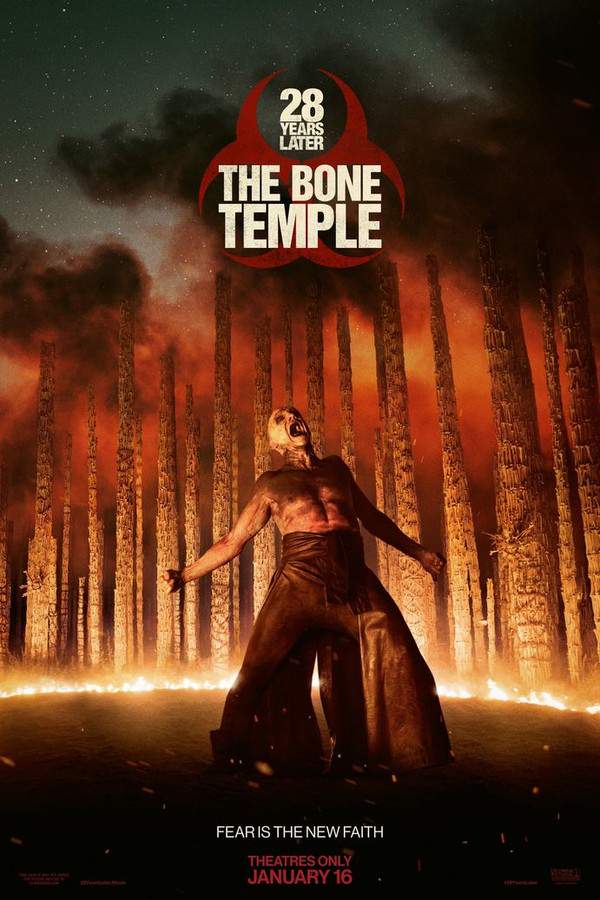
28 Years Later: The Bone Temple Reviews and Opinions – A Critical & Fan Consensus for 2026
As the curator of What’s After the Movie, a site dedicated to deep dives into film details, from comprehensive movie summaries to tracking box office performance and awards, we are always excited to analyze the reception of a highly anticipated sequel. The release of 28 Years Later: The Bone Temple has sparked a fascinating division of opinions, creating a rich tapestry of critical and fan reactions that begs for a closer look. This blog post will dissect the reviews to give you a clear picture of the critical consensus, the fan debate, and what these reactions mean for the future of the franchise. If you haven’t seen the film yet, you can check out our official 28 Years Later: The Bone Temple movie page for more information.
The initial wave of feedback reveals a sequel that many see as a significant improvement over its predecessor, yet one that firmly plants itself as a bridge within a larger narrative. Directed by Nia DaCosta and written by Alex Garland, the film has been praised for its strong character work and thematic ambition, even as some critics and viewers question its reliance on human villains over zombie-centric horror. Let’s break down the reception from every angle.
Critical Acclaim for 28 Years Later: The Bone Temple – A Deeper, More Poetic Horror Sequel
The critical response to 28 Years Later: The Bone Temple has been overwhelmingly positive, with many major outlets highlighting it as a return to form for the franchise. The consensus suggests that director Nia DaCosta successfully steered the series into more nuanced territory, focusing on character and theme over relentless action. The Wall Street Journal, awarding a stellar 90/100, calls the film “a rare treat and one of the finest zombie movies I’ve seen,” noting its “quirky touches, dry wit and first-rate characterizations.” This sentiment is echoed by The Observer (UK), which describes DaCosta’s film as “a macabre morality tale about the best and worst of human nature,” concluding that it is “utterly brutal, and one of the most compelling so far.”
A common thread among positive reviews is the appreciation for the film’s surprising depth. The Chicago Tribune (88/100) identifies this duality, noting that while the film is “shockingly violent and bloody,” it also contains “profoundly poetic moments and images that pop up like wildflowers in a field.” This indicates a maturity in the storytelling that elevates it beyond a simple creature feature. The critical analysis suggests that The Bone Temple is not just a horror movie; it’s a film about humanity’s capacity for both cruelty and empathy, a theme that resonates deeply in our current climate. For those who enjoy exploring the deeper meaning behind films, our movie wiki at What’s After the Movie is a great resource.
The critical reception also heavily praises the performances, particularly Ralph Fiennes as Dr. Ian Kelson. Radio Times (80/100) observes that the actors “imbue events with personality, bringing rich textures to the story that have been largely missing since 28 Days Later.” This focus on character-driven drama seems to be the film’s greatest strength, setting it apart from many other entries in the genre. While the previous film, 28 Years Later, was tasked with re-establishing the world, critics largely agree that The Bone Temple gives the new trilogy its emotional core, making it a more satisfying experience for fans craving substance with their scares. You can explore more about the cast on our profiles page.
Contrasting Critical Views and Key Quotes
While the majority of critics responded favorably, some offered more measured praise. ReelViews (75/100) points out a crucial aspect of the film’s structure, stating, “The Bone Temple doesn’t work entirely well as a stand-alone, but as part of a larger whole, it is a very good continuation of the ongoing tale.” This highlights the film’s nature as a middle chapter, a fact that impacts its self-contained narrative satisfaction. Similarly, the publication i (60/100) expressed some skepticism about the film’s violent content, writing, “I’m not convinced that the heavy violence is entirely warranted, but the whole thing is at least unfailingly kitsch.”
One of the most interesting critical takeaways comes from The Reveal (80/100), which applauds the film’s unpredictable nature: “It’s not a subtle movie, but it’s not a predictable one, either, opening several obvious avenues for its plot to travel down then closing them off and letting the elements collide in less obvious patterns.” This analysis suggests that the film successfully subverts genre expectations, keeping audiences on edge even when the immediate zombie threat takes a back seat to human conflict. For fans who love to debate plot twists and narrative structure, our movie quizzes and games section offers a fun way to test your knowledge.
Fan Reactions to 28 Years Later: The Bone Temple – A Divisive but Hopeful Consensus
The user reviews for 28 Years Later: The Bone Temple present a more varied and passionately divided landscape than the critical consensus. While many fans celebrated the film as a massive improvement, others felt it strayed too far from the franchise’s roots. This divergence of opinion makes the fan reception a fascinating area of analysis for anyone trying to gauge whether this sequel will satisfy their personal taste.
A significant portion of the audience, represented by users like SpringChick (9/10), hailed the film as “A huge improvement over its predecessor! They nailed the pacing and the character development in this one.” This sentiment is echoed by ismacinefilo (7/10), who admitted, “It was a big surprise coming from the previous one… but seeing where they’re want us to go, i’m totally sold.” For these viewers, the film successfully corrected the perceived flaws of 28 Years Later and set a compelling course for the trilogy’s conclusion. The positive reactions often focus on the successful character arcs, especially for Spike and Dr. Ian, and the more focused, intimate scale of the story. Discover more about how this film fits into the larger series on our movie collections page.
However, a vocal segment of the fanbase expressed disappointment with the film’s direction. User mike453 (4/10) argued that the film is “Not really a zombie film, more of a post apocalyptic gangster politics film. Writers have lost the plot.” This perspective highlights a key point of contention: the shift from zombies as the primary threat to human antagonists. For viewers who come to the 28 Days Later franchise for the relentless, fast-paced horror of the infected, the greater focus on the “Jimmy Gang” and cult dynamics felt like a betrayal of the core premise. This debate is central to understanding the divided fan reception and is a common topic in our community movie lists where fans rank their favorite horror elements.
In-Depth Fan Analysis and Spoiler-Conscious Discussions
Some of the most detailed user reviews provide a nuanced analysis that rivals professional criticism. User MovieWarfare (8/10) delivered a comprehensive breakdown, acknowledging initial concerns about Nia DaCosta’s direction but concluding that the film was a “worthy sequel.” The review praises the film for making the Jimmy Gang “feel genuinely disturbing and threatening” and highlights the “surprisingly heartwarming” relationship between Dr. Ian and the Alpha Zombie, Samson. This kind of detailed analysis shows that many fans are engaging with the film on a deep level, appreciating its thematic juxtaposition of “humanity’s cruelty” and “humanity’s empathy.”
Another exceptionally detailed review from karankhosla (8/10) rates the film a “75/100 – Strong, memorable, and better than expected, without crossing into greatness.” This review offers a balanced perspective, praising Ralph Fiennes’ “standout performance” and the film’s “sustained tension” while also critiquing the “shaky” internal logic of the infected and the sometimes “broadly insane” human villains. This kind of measured opinion is invaluable for potential viewers, as it clearly outlines both the film’s strengths and its potential drawbacks. For fans who love to dig into the specifics of plot and character, our summary page for 28 Years Later: The Bone Temple provides a detailed recap and analysis.
It’s also important to note the overwhelmingly enthusiastic, if hyperbolic, review from DavidManning (10/10), which describes the film as “the greatest horror sequel ever unleashed on the modern world.” While this is clearly an extreme opinion, it captures the sheer excitement and fulfillment that the film delivered for a segment of the dedicated fanbase, particularly those who have been following the series since its inception nearly three decades ago.
Nia DaCosta’s Direction in The Bone Temple – A New Vision for the Franchise
A major point of discussion in both critical and fan reviews of 28 Years Later: The Bone Temple is the impact of director Nia DaCosta. Taking over from Danny Boyle, DaCosta faced the daunting task of imprinting her own style on a beloved franchise while honoring its legacy. The reception indicates that she largely succeeded, with many reviews praising her confident direction and focus on character.
User Nerdcall (7/10) specifically addressed the initial skepticism surrounding her hiring, noting that DaCosta turned “fear into surprise.” The review concludes, “Against all expectations, Nia DaCosta establishes herself here as one of today’s most interesting directors, showing that, when given creative freedom, she knows how to conduct complex narratives without losing impact.” This suggests that the film served as a powerful showcase for her talents, distancing her from the mixed reception of her previous work on The Marvels. Critics also noted her stylistic choices; for instance, MovieWarfare pointed out that her “decision to shoot on digital cameras rather than iPhones is noticeable. Visually, the film looks far better, with cleaner, clearer shots throughout.”
However, some fans noted a trade-off. While praising DaCosta’s work, MovieWarfare also commented that the film lacks “much of the energetic flair that defined Danny Boyle’s style. There are no especially dynamic visuals, rapid editing, or surreal flourishes, which makes this entry feel more visually standard.” This highlights a conscious directorial choice: DaCosta opted for a more grounded, classical approach that prioritizes emotional resonance and tense atmosphere over visual pyrotechnics. For audiences, this means The Bone Temple feels less like a frantic sprint and more like a tense, character-driven thriller—a shift that has been largely praised for adding depth to the franchise. You can explore the film’s technical achievements further on our awards page, where we track its recognition in categories like cinematography and direction.
The Bone Temple’s Thematic Reception – Humanity as the Real Monster
A dominant theme in the reviews for 28 Years Later: The Bone Temple is the film’s exploration of humanity’s nature in an apocalyptic setting. A significant number of critics and fans alike have pointed out that the movie uses the zombie apocalypse as a backdrop to examine the “real monster”: human beings themselves. This thematic depth is frequently cited as one of the film’s greatest strengths.
The Chicago Tribune’s mention of “profoundly poetic moments” and The Observer (UK)‘s labeling of the film as a “macabre morality tale” directly speak to this thematic ambition. The narrative deliberately contrasts two paths: the savage cruelty of the Jimmy Gang and the empathetic curiosity of Dr. Ian. User bertobellamy (9/10) beautifully articulates this, writing that the film explores “the nature of evil in a world where, despite everything, there is still room for redemption and salvation through knowledge and empathy.” This philosophical underpinning elevates the film, providing a rich layer of meaning for viewers who seek more than just scares.
User MovieWarfare’s review provides a clear example of this theme in action, noting the “effective” juxtaposition of “humanity’s cruelty through the Jimmy Gang and humanity’s empathy through Dr. Ian.” The character of Sir Jimmy, played by Jack O’Connell, is repeatedly mentioned as a truly disturbing human villain, making the threat of other survivors feel more tangible and terrifying than the mindless infected. This shift in focus has been a point of debate—as seen in mike453’s critique that it’s not a true zombie film—but for many, it’s a logical and compelling evolution for a franchise that has always had a strong sociological component. For more analysis on the themes of post-apocalyptic cinema, check out our curated movie lists on the subject.
Conclusion: The Final Verdict on 28 Years Later: The Bone Temple’s Reviews
The collective critical and fan reception for 28 Years Later: The Bone Temple paints a clear picture: this is a sequel that boldly charts its own course. It is widely regarded as a substantial improvement over 28 Years Later, with praise centered on its strong character development, powerful performances (especially from Ralph Fiennes), and thoughtful thematic exploration of humanity’s dual capacity for cruelty and compassion. Director Nia DaCosta has been widely commended for bringing a confident, character-focused vision to the franchise.
However, the film is not without its detractors. The primary criticism revolves around its shift away from zombie-centric action towards a narrative dominated by human antagonists, which left some fans feeling that the franchise lost its core identity. Additionally, its function as a middle chapter in a trilogy means it feels less like a complete, stand-alone story and more like a bridge to a grander conclusion.
Ultimately, the consensus suggests that your enjoyment of The Bone Temple will heavily depend on what you value most in the franchise. If you are seeking the high-octane zombie horror of the original films, you may find the pacing and focus unsatisfying. But if you appreciate character-driven stories with moral complexity and a more meditative pace, then the critical and fan praise is well-founded. The film has successfully reignited excitement for the trilogy’s conclusion, promising an epic finale that brings all these narrative threads together. For the latest updates on the franchise’s performance, including box office numbers and future release dates, keep an eye on What’s After the Movie.
Where to Find More Information and Reviews
For those looking to delve deeper into the specifics of 28 Years Later: The Bone Temple, we recommend checking out the reviews on the following platforms. Here at What’s After the Movie, we provide links to all major outlets to help you get a full picture of a film’s reception.
| Source | Link |
|---|---|
| The Movie Database (TMDB) | TMDB |
| Rotten Tomatoes | Rotten Tomatoes |
| Metacritic | Metacritic |
| JustWatch | JustWatch |
| Box Office Mojo | Box Office Mojo |
| Letterboxd | Letterboxd |
Continue reading


What's After the Movie?
Not sure whether to stay after the credits? Find out!
Check out our other apps:

SAT Sphere
Build confidence for the Digital SAT.

Mori Atlas
Discover wild places worth protecting.

Luntero
Search smarter for a home in Amsterdam.

Plot Explained
Unravel movie endings and hidden clues.

Pokechamp
Dive into Pokémon data and battle logic.

Driving Theory
Get ready for your European theory test.

Movie Dust
Plan your next cinema trip with ease.

Musemap
Find art and culture as you travel.

Selkobase
Compare credentials before committing.

Local Manual
Turn an unfamiliar country into practical next steps.

Lernavi
Compare school systems before your next move.

GymRoam
Find a workout stop wherever your plans take you.
Explore Our Movie Platform
New Movie Releases (2026)
Famous Movie Actors
Top Film Production Studios
Movie Plot Summaries & Endings
Major Movie Awards & Winners
Best Concert Films & Music Documentaries
Movie Collections and Curated Lists
© 2026 What's After the Movie. All rights reserved.
Privacy Policy