What Is Wetherby About?
The premise of Wetherby in 296 words, with nothing given away. The full story follows below.
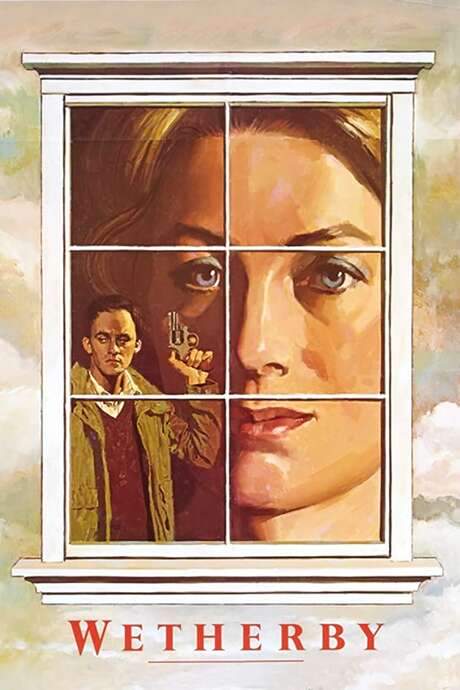
In the quiet, wind‑swept suburb of Wetherby, West Yorkshire, daily life moves beneath a surface of restrained habit. The town feels both intimate and isolated, its streets echoing the broader social shifts of Thatcher‑era Britain while still clinging to the slower rhythms of a close‑knit community. A modest domesticity pervades—tea at the kitchen table, weekend gatherings, the soft hum of local gossip—but beneath that lies a current of unspoken longing and concealed histories that the film lets the viewer sense rather than name.
At the heart of this world is Jean Travers, a middle‑aged spinster who teaches at the local school. Her modest cottage becomes a modest stage for the town’s undercurrents, especially when she opens her home to a small circle of married friends for an evening dinner. Jean carries the weight of her own unfulfilled possibilities, a quiet resolve that both steadies and subtly isolates her. Her interactions are marked by an understated sharpness, revealing how personal regrets can ripple through ordinary moments.
The arrival of John Morgan, a young man whose presence is as enigmatic as it is brief, upsets the delicate balance. His sudden, inexplicable death the following morning sends shockwaves through the community, prompting whispered speculation and bringing long‑dormant desires to the surface. Into this unsettled atmosphere steps Karen Creasy, a volatile, emotionally guarded young woman who appears shortly after the funeral. Her arrival adds a new tension, challenging Jean’s perceptions and stirring the hidden dynamics among the town’s residents.
The film’s tone is deliberately measured, weaving together present‑day observations with fragmentary recollections that flicker like old photographs. Through interlocking flashbacks and quiet conversations, Wetherby is painted as a place where the ordinary and the mysterious coexist, leaving the audience to wonder what lies beneath the polite façade of suburban life.
What Happens in Wetherby?
The complete story of Wetherby, from the first scene to the last, in 656 words (about 3 minutes). Spoilers throughout. Names in the text link to 12 cast member pages.
Spoilers ahead
Set in the town of Wetherby in West Yorkshire, the film centers on Jean Travers, Vanessa Redgrave, a middle-aged spinster schoolteacher. One evening, she invites married friends for a dinner party, only to have some terrible repressions and past traumas dredged up when guest John Morgan, Tim McInnerny, expresses his emotional pain. The strange young man arrives at Jean’s cottage the next morning with a gift of pheasants. While waiting for tea, he puts the barrel of a gun in his mouth and kills himself.
From this point onward, the film’s story unfolds as chronologically discrete, interlocking flashbacks, presenting events from multiple viewpoints and layering the recent past with memories long gone. The central mystery of Morgan’s suicide sits at the fulcrum of the narrative, which behaves like a jigsaw puzzle and often seems to be missing crucial pieces, in keeping with Hare’s distinctive approach to exposition. The dinner party scenes braid together with police investigations into the tragedy, gradually revealing that Morgan was not an invited guest—he wandered in with others who assumed he was an acquaintance of Jean’s, while Jean herself assumed her friends had brought him along.
A volatile young woman, Karen Creasy, Suzanna Hamilton, enters Jean’s life after the funeral and insinuates herself into the household. Delivered from the funeral to Jean’s doorstep by Mike Langdon, Stuart Wilson, Karen remains remote, testy, and emotionally unavailable. For weeks she lingers, embittered and uninterested in Morgan’s death, yet her presence unsettles Jean. Flashbacks reveal that Morgan had become obsessed with Karen when they were students at the University of Essex, a desire Karen rejected outright, a rejection that may have contributed to his decision to move to Yorkshire and end his life. When Jean hints that Karen may bear some responsibility for Morgan’s actions, Karen flatly denies provoking anything, and she eventually leaves town, taunting Jean by suggesting she wonders what role the spinster might have played if the suicide was not an accident.
The narrative also travels back to Jean’s youth, with teenage Jean and her lifelong friend Marcia, Judi Dench as Marcia Pilborough, seen in 1953. Jean’s engagement to airman Jim Mortimer, Robert Hines, is shown as he departs for Southeast Asia. He is later revealed to have met a brutal end in a gambling den amid uprisings in British Malaya, a fate that echoingly frames Jean’s later life. These memories intersect with the present, gradually illuminating the dull resentment and lonely despair that can drive someone to despair, and offering insight into the restlessness of the younger generation as well.
As the past and present criss-cross, Jean begins to recognize the emotional weather of her era and the priorities that defined Thatcher-era Britain. She discusses these concerns with Stanley Pilborough, Ian Holm (her sister’s husband and the town solicitor), who tends to be inebriated and sardonic. The film also sketches the fragile, fractured marriages of middle-aged couples such as Roger Braithwaite and Verity Braithwaite, with Verity’s discontent echoing through the town. Even Mike Langdon confesses his own failed relationship with his mistress Chrissie, Penny Downie, who ultimately returns to her sheep-farming husband.
Alongside these threads run portraits of other local figures—Arthur, Christopher Fulford; Derek (Chrissie’s husband), Patrick Blackwell; and the landlady, Brenda Hall—who populate Jean’s world with quiet, everyday tensions. And amid the archival footage of a TV commentator, Alan Rickman, the film emphasizes how media, memory, and rumor entwine to shape perception of a single, devastating act.
By the end, Jean seems to have shifted from mourning a life she might have led to embracing the imperfect life she has now. The suicide, viewed from numerous angles, becomes less a crime of passion and more a revelation of what loneliness and unspoken regrets can do to a community over decades. Jean resolves to make the best of the present, even as the echoes of the past persist, reminding the audience that the road not taken often casts the longest shadow.
Wetherby Timeline: Every Key Event in Order
14 key events in the order they happen, from “Jean and Marcia as teenagers (1953)” to “Jean's acceptance of her life (final)”. 14 events name a place, across 8 locations.
- 1
Jean and Marcia as teenagers (1953)
Jean Travers and her lifelong friend Marcia are shown as teenagers in 1953, their bond hinting at quiet hopes beyond the town's expectations. The scene hints at the longing and limits that will shape Jean's later choices. It establishes memory, perception, and the gap between wish and reality.
When:1953 Where:Essex, England
- 2
Engagement to Jim Mortimer (1953)
Jean becomes engaged to airman Jim Mortimer, envisioning a stable future. The engagement embodies a hopeful path, even as distance and duty press in. This moment anchors Jean's early capacity to hope for companionship.
When:1953 Where:Essex, England
- 3
Jim Mortimer leaves for active service (1953)
Jim Mortimer leaves for active service in Southeast Asia, pulling Jean into a long-distance longing. The separation sows hope and uncertainty about their future together. The departure foreshadows the fragility of dreams in a changing world.
When:1953 Where:Essex, England
- 4
Jim Mortimer's murder in Malaya (1950s)
Jim Mortimer is murdered in a gambling den during anti-imperial uprisings in British Malaya. The brutal death ends Jean's dreams of a conventional life and becomes a memory that haunts her. The event anchors the film's exploration of lost possibilities and guilt.
When:1950s Where:British Malaya
- 5
Dinner party at Jean's cottage (present day)
Jean hosts a dinner with married friends, seeking sociability while masking her own loneliness. The room becomes charged as repressed feelings surface and old traumas begin to surface. John Morgan's unexpected arrival unsettles the table and the conversation.
When:present day Where:Jean's cottage, Wetherby
- 6
Morgan's suicide in the kitchen (present day)
The next morning, Morgan places a gun in his mouth and shoots himself at the kitchen table. The intimate space becomes a threshold to deep secrets, propelling the narrative into interwoven past and present. The act launches the central mystery of his motive.
When:the morning after the dinner party Where:Jean's cottage kitchen
- 7
Police inquest into Morgan's death (present day)
Police investigate Morgan's death and reveal he was not an invited guest, raising questions about how he arrived there. The inquest unveils hidden relationships and unspoken grievances that the narrative will later dissect. It establishes the puzzle-like structure of the story.
When:present day Where:Wetherby, West Yorkshire
- 8
Karen Creasy arrives from the funeral (present day)
Karen Creasy, a peculiar former acquaintance of Morgan, is delivered from the funeral to Jean's doorstep by Mike Langdon. She insinuates herself into Jean's life, staying for weeks and unsettles the household with her aloofness. Her presence reframes the investigation from a distance.
When:present day Where:Jean's cottage, Wetherby
- 9
Karen resists emotional involvement (present day)
Karen declares she hates emotional entanglements and resents Jean's attempts to get close. She remains aloof and hostile to Morgan's memory, underscoring the film's theme of emotional boundaries. Her attitude fuels tension and secrecy around the suicide.
When:present day Where:Jean's cottage
- 10
Morgan's Essex years and obsession (past)
Flashbacks reveal Morgan's obsession with Karen during their student years at the University of Essex. He pursues a relationship she rebuffs, hinting at the origins of his fixation and possible motive for his later suicide. These fragments illuminate the emotional currents behind the present tragedy.
When:1960s-1970s Where:University of Essex
Show the other 4 events of Wetherby Hide the last 4 events
- 11
Karen taunts Jean and departs (present day)
Karen taunts Jean by suggesting there may be a link between Morgan's suicide and Jean's actions, then quits Wetherby. The moment leaves Jean with unresolved guilt and questions about responsibility. It crystallizes the film's tension between appearance and hidden truth.
When:present day Where:Jean's cottage, Wetherby
- 12
Thatcherism and social malaise (present day)
Jean discusses the country under Thatcherism with Stanley Pilborough, reflecting on unhappy marriages and dwindling hope. The conversation places personal heartbreak within a broader political and social climate. It deepens the sense of desolation that threads through the story.
When:present day Where:Jean's cottage, Wetherby
- 13
Mike Langdon's confession about Chrissie (present day)
Mike Langdon confesses that his relationship with his mistress Chrissie has failed and that she returns to her husband. The confession underscores a town-wide restlessness and echoes the film's recurring theme of fragile relationships. It adds another personal strand to the inquest’s web.
When:present day Where:Jean's cottage / local police
- 14
Jean's acceptance of her life (final)
Jean accepts she cannot reclaim the life she might have had, but resolves to make the best of what she has in the here and now. The narrative resolves with a quiet, guarded dignity, choosing presence over longing. It marks a personal triumph over despair within the film's puzzle-like memory structure.
When:present day Where:Jean's cottage
Who Are the Main Characters in Wetherby?
7 characters, among them Jean Travers — Vanessa Redgrave, John Morgan — Tim McInnerny and Karen Creasy — Suzanna Hamilton: who each one is and the part they play in the story. Every profile links to the actor’s page.
-

Jean Travers — Vanessa Redgrave
Played by Vanessa Redgrave
A middle-aged spinster schoolteacher whose orderly life masks profound loneliness and grief over a fiancé's death in Malaya. Her careful observations of others gradually reveal the emotional undercurrents that lead to Morgan's suicide.
- ❄️ Reserved
- 🎭 Drama
- 🏛️ Observant
-

John Morgan — Tim McInnerny
Played by Tim McInnerny
A peculiar, intense young man who crashes Jean's dinner party and later takes his own life. His intrusion unsettles the gathering and triggers a cascade of memories and accusations about past relationships.
- 🎭 Drama
- 🧠 Complex
- KC
Karen Creasy — Suzanna Hamilton
Played by Suzanna Hamilton
An aloof, self-centered former acquaintance who becomes entangled with Jean's life after Morgan's death. She resents close emotional involvement and taunts Jean, exposing how indifference can wound and manipulate.
- 💔 Cold
- 🧭 Self-reliant
-

Marcia Pilborough — Judi Dench
Played by Judi Dench
Jean's lifelong friend and a steadying presence in a changing Britain. Her relationship with her husband and her sense of duty highlight the tension between personal happiness and social expectations.
- 🤝 Friendship
- 🕰️ Wise
-

Roger Braithwaite — Tom Wilkinson
Played by Tom Wilkinson
A middle-aged husband trapped in an unhappy marriage, representing the era's domestic strains. His interactions with Verity reveal how long-standing relationships can become brittle under pressure.
- 💔 Marriage
- 🗣️ Tense
- ML
Mike Langdon — Stuart Wilson
Played by Stuart Wilson
A policeman conducting the inquest who mirrors the era's social discontent. His involvement exposes the external pressures and private disappointments of Jean's circle.
- 🕵️♂️ Investigation
- 🧭 Conflict
- JM
Jim Mortimer — Robert Hines
Played by Robert Hines
Jean's fiancé who goes to Malaya and dies, a central memory that fuels her present regrets. His absence shapes the emotional landscape of the story and the choices that follow.
- 💔 Lost love
- 🛫 War memory
Where and When Is Wetherby Set?
Wetherby is set in Wetherby and West Yorkshire (1980s). Here is why the time and place matter to the story.
When
1980s
The present-day portions unfold during the Thatcher era in 1980s Britain, a period of social upheaval and economic change. Interwoven are flashbacks to the early 1950s, revealing Jean's youth and the trauma of her fiancé's death in Malaya. The film uses these time shifts to explore how memories endure and shape current perceptions.
Where
Wetherby, West Yorkshire
Wetherby is a quiet market town in West Yorkshire, known for its historic streets and riverside charm. Much of the action centers around Jean Travers' cottage and its kitchen, where the dinner party exposes hidden tensions beneath polite conversation. The town's restrained, provincial mood acts as a backdrop to the social and emotional undercurrents driving the characters.
- ❄️ Small town
- 🏘️ Suburban atmosphere
- 🌫️ Quiet streets
What Are the Themes of Wetherby?
3 ideas the story keeps returning to, among them Memory, Time and Loneliness.
-
01
Memory
The story unfolds as a mosaic of overlapping memories from different characters, each with its own version of events. The puzzle-like structure invites viewers to question whose memory reflects the truth. Secrets accumulate, altering interpretations of the suicide and the relationships involved.
-
02
Time
Past and present collide as flashbacks interlock with the present-day investigation. The backdrop of Thatcherite Britain intensifies feelings of isolation and unfulfilled potential. Time reveals how opportunities missed in youth echo through adulthood and influence current choices.
-
03
Loneliness
Across generations, characters conceal deep loneliness behind polite façades. Unspoken resentments and failed loves surface under pressure, turning a dinner party into a crucible of emotional tension. The film portrays how isolation can drive destructive impulses and wary detachment.
What Kind of Film Is Wetherby?
Melancholic in tone, with slow pacing and a complex story, going by the plot summary.
- Tone
- Melancholic
- Pacing
- Slow
- Story
- Complex
- Intensity
- Medium
- Ending
- Bittersweet
A slow, melancholic mystery drama that explores the reverberations of a shocking suicide through a quiet English town, layering past and present to uncover a deep undercurrent of loneliness and regret with a somber, reflective atmosphere.
- lonely
- somber
- meditative
- unsettling
- reflective
- suicide
- loneliness
- repressed emotions
- unsolved mystery
- past trauma
Content notes: suicide, blood, gun violence, brutal death.
Quiz
How well do you remember Wetherby? Test yourself on the story.
Where to Watch Wetherby
Stream it on Fawesome and Plex, or rent or buy it from Amazon Video. US availability and prices from JustWatch.
Stream 6
 Fawesome
  Plex
Plex  Plex Channel
  Shout! Factory Amazon Channel
  The Roku Channel
  Tubi TV
 Rent or buy 1

Streaming availability in the US, powered by