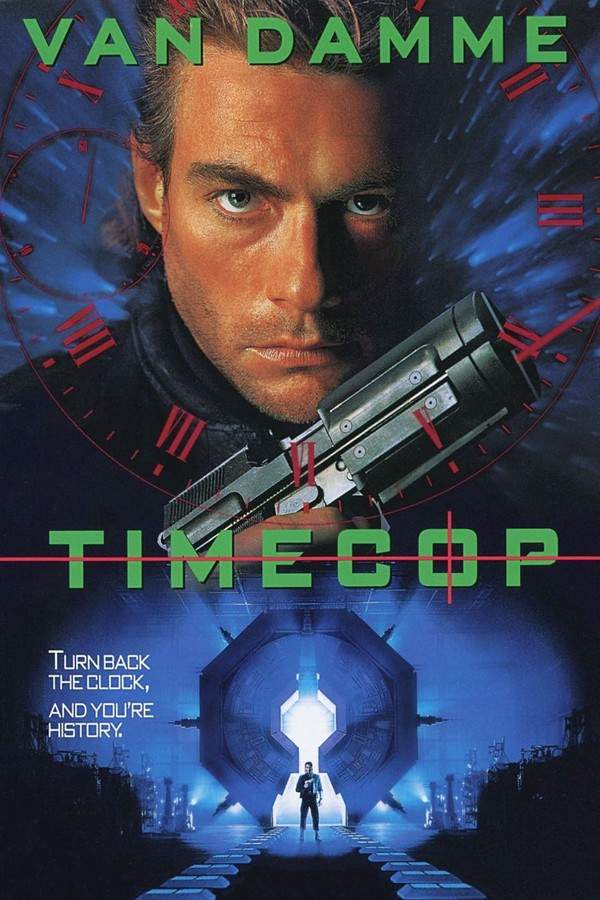
What Is Timecop 2: The Berlin Decision About?
The premise of Timecop 2: The Berlin Decision in 306 words, with nothing given away. The full story follows below.
In a near‑future where time‑travel technology has become a regulated reality, the Time Enforcement Commission (TEC) patrols the fragile tapestry of history, ensuring that the past remains untouched. Opposite the agency, the Society for Historical Authenticity (SHA) watches with equal vigilance, tasked with preventing any unauthorized alterations. The world feels sleek yet tense, a blend of high‑tech control rooms and the ever‑present hum of temporal paradoxes, setting a tone that balances cerebral intrigue with the pulse of an action‑driven thriller.
Brandon Miller is a seasoned TEC operative whose long‑standing service has given him an intimate view of the agency’s limits. Over two decades, his convictions have hardened into a belief that the power to rewrite history is a responsibility that should be wielded for a better future. Quietly, he begins to question the moral cost of strict preservation, hinting at a daring vision that could reshape the world if it were ever pursued.
Across the divide, Ryan Chan embodies the traditional guardian of the timeline, a dedicated agent who anchors the commission’s purpose with disciplined resolve. He respects the delicate balance of cause and effect and is wary of any impulse to tamper with events long set in stone. Their professional partnership is strained by divergent philosophies, and personal ties only deepen the undercurrent of conflict, turning a routine assignment into an ideological showdown.
The film’s atmosphere is one of sleek suspense, where every echo of the past carries weight and every decision reverberates across centuries. Themes of ethical responsibility, the allure of altering fate, and the personal toll of protecting a fragile chronicle weave together, offering a thought‑provoking backdrop for the clash between two compelling protagonists. The story invites viewers to ponder whether the temptation to fix history outweighs the peril of unraveling it, all while keeping the stakes intimate and the tone consistently charged.
What Happens in Timecop 2: The Berlin Decision?
The complete story of Timecop 2: The Berlin Decision, from the first scene to the last, in 763 words (about 3 minutes). Spoilers throughout. Names in the text link to 1 cast member page.
Spoilers ahead
In 2025, time travel technology has advanced, and the Time Enforcement Commission (TEC) continues to keep the past safe. A parallel group, the Society for Historical Authenticity (SHA), is formed to ensure TEC personnel don’t alter history. At the helm of the SHA is Brandon Miller, who believes he has a moral obligation to right the wrongs of the past. He hatches a plan to travel back to Berlin in 1940 to kill Adolf Hitler, a move that could upend the course of history. TEC agent Ryan Chan, Jason Scott Lee, is dispatched to stop him, and the clash spirals into tragedy when Miller’s wife Sasha, an SHA member, is killed. Miller ends up imprisoned in the World Penitentiary for attempting to alter history, while Ryan begins arresting Miller’s close associates, trying to cut the threat at its source.
In Atlantic City in 1895, Ryan prevents SHA member Frank Knight from robbing industrial magnate Andrew Carnegie. Knight accuses the TEC of murder when he is executed, casting a shadow over Ryan and the agency as he is haunted by memories of events outside the present. The emotional core of the story follows Ryan’s grief for his father, Josh, who died of a brain aneurysm in 2002 while lecturing about time travel at the University of Southern California and debating the ethics of altering history.
A wrench is thrown when TEC agent Douglas illegally makes contact with his younger self; the two merge and the older agent winks out of existence. That merge creates a paradoxical opening: without Douglas, a key Miller associate isn’t arrested, allowing Miller to slip out on a technicality. With the timeline in jeopardy, Miller embarks on a ruthless plan to erase TEC’s existence by traveling back to kill ancestors, effectively erasing the agency’s people from history. Ryan finds himself increasingly isolated as the last active TEC operative tasked with stopping Miller’s changes.
As Ryan fights his way through rioters at the World Penitentiary, he encounters heavy personal cost and physical danger. He traverses a shifting web of timelines to piece together what Miller has done and to halt him before history can be rewritten beyond repair. Back in the altered present, the world has shifted: Doc finds her husband killed in the war, O’Rourke wears an eye patch, and events have unfolded in starkly different ways. The changes escalate, and Ryan is forced to accept the escalating risk to everything—and everyone—he cares about.
To track Miller, Ryan is given a tracker that follows the wake of the time jumps. He jumps to 1881 to prevent Miller from killing an ancestor named Jason in Springfield, Texas, then to 1929 where he intervenes in a Chinese restaurant to save a woman named Frances. In a nightclub in 1988, Ryan is startled to see his own parents dancing, and he works to pull Miller away from them. Miller shoots Ryan, but the bullet is stopped by the pocket watch his father left him, a reminder of family and fate. When Ryan returns to 2025, he discovers that Miller was never there in the first place, changing the world in unintended ways and threatening his own existence.
Barely surviving another time jump, Ryan makes his way to the University of Southern California on May 7, 2002. There, the older Miller and the younger Miller clash with Ryan and his younger self, while Ryan’s mother Sasha and others observe. Josh, the father who had debated ethics years earlier, is killed by one of Miller’s weapons that induces brain aneurysms. The older Ryan intervenes, threatening to erase Miller’s existence by killing his younger self. The younger Miller’s stance is tested as Ryan challenges him: the two fight, watched by the younger Miller, his mother, and Sasha. Ryan makes a pivotal appeal: “it doesn’t have to be this way. You can change all this.” The moment shifts the trajectory, and the two disappear, suggesting the younger Miller has chosen a different path.
In the aftermath, the timeline begins to stabilize, though memories remain. In 2025, the colleagues who were erased by Miller start to return, and while Doc remains wary of dating Timecops, Ryan appears to retain some memories of the changes Miller imposed. The fate of the timeline rests on the fragile balance between intervention and fate, with Ryan navigating a web of histories that could collapse at any moment. The film ends on a note of cautious hope, emphasizing the moral complexity of changing history and the lingering cost of those decisions.
it doesn’t have to be this way. You can change all this.
Timecop 2: The Berlin Decision Timeline: Every Key Event in Order
12 key events in the order they happen, from “Miller's first attempt to erase a TEC ancestor” to “Final confrontation hints at a changed path”. 12 events name a place, across 9 locations.
- 1
Miller's first attempt to erase a TEC ancestor
In 1881, Brandon Miller plans to kill an ancestor named Jason in Springfield, Texas, to wipe out TEC's lineage. Ryan Chang intervenes and stops the murder, foiling Miller's first bid to rewrite history. The intervention seeds the ongoing time-travel conflict between Miller and TEC.
When:1881 Where:Springfield, Texas
- 2
Atlantic City confrontation and Knight's accusation
In 1895, Ryan prevents SHA member Frank Knight from robbing Andrew Carnegie in Atlantic City. Knight is later executed and accuses the TEC of murder, highlighting the moral cost of their mission. The event demonstrates how far Miller’s network could influence history.
When:1895 Where:Atlantic City
- 3
Frances saved in 1929 at a Chinese restaurant
Miller and Ryan travel to 1929, where Ryan manages to protect a person named Frances in a Chinese restaurant. The encounter shows the far reach of their time-hopping conflict into early 20th-century life. It also underscores the personal stakes involved in altering history.
When:1929 Where:Chinese restaurant, unspecified city
- 4
Miller's Berlin mission and Sasha's death
Brandon Miller arrives in 1940 Berlin with the intent to kill Adolf Hitler. Sasha, Miller's wife and SHA member, dies during the confrontation. As a consequence, Miller is imprisoned in the World Penitentiary for attempting to alter history.
When:1940 Where:Berlin, Germany
- 5
Miller's SHA crackdown and Miller's imprisonment
With Miller behind bars, Ryan begins arresting Miller's close Society allies to dismantle the organization. The TEC aims to prevent Miller from reassembling a time-breaking network. The World Penitentiary becomes the focal point of their struggle over history's safety.
When:1940s Where:World Penitentiary
- 6
1988 nightclub disruption and near-miss with fate
In a nightclub in 1988, Ryan is unsettled by scenes of his young parents dancing. He lures Miller away from them, hoping to disrupt a later tragedy. Miller shoots Ryan, but the bullet is stopped by a pocket watch his father left to him.
When:1988 Where:Nightclub
- 7
Josh Chang's death and time-travel ethics debate
In 2002, Josh Chang dies of a brain aneurysm during a public lecture at the University of Southern California, which centers on the ethics of altering history. The loss haunts Ryan and complicates his views on time travel. The event marks a turning point in the film's moral landscape.
When:2002 Where:University of Southern California
- 8
USC confrontation at the 7 May 2002 timeline
On May 7, 2002 at USC, the older Miller confronts Ryan’s younger self in a tense encounter. The older Ryan intervenes, threatening to erase Miller’s existence by killing his younger self. The fight is witnessed by the younger Miller, younger Ryan, and their mother Sasha, and culminates in a revelation that changes Miller’s course.
When:7 May 2002 Where:University of Southern California
- 9
The present-day changes to history in 2025
Back in 2025, Ryan discovers that Miller's interference has left the world altered: his parents are dead in war, Doc has been executed for attempts to save her husband, and O'Rourke wears an eye patch and barely recalls Hitler. The TEC agency itself seems reshaped by the ripple effects of time travel.
When:2025 Where:Present day
- 10
Tracker and the wake of time jumps
Ryan is issued a tracker that allows him to follow Miller by jumping into the wakes of Miller’s time leaps. This tool gives him a route through the fractured timelines as he continues the pursuit. It marks a new phase in TEC's pursuit strategy.
When:2025 Where:Present day
- 11
Return to 1881 via the tracker
Guided by the tracker, Ryan is sent to 1881 again and prevents Miller from killing Jason in Springfield, Texas. This loop reopens a fresh opportunity to steer history away from Miller’s worst plans. The intervention shows the persistent, recursive nature of their conflict.
When:1881 Where:Springfield, Texas
- 12
Final confrontation hints at a changed path
In the climactic moment aboard the USC setting, the older Miller taunts Ryan about changing history, prompting a final confrontation where Ryan tries to persuade the younger Miller that history can be rewritten for the better. The scene ends with the sense that the younger Miller may choose a different path, and the timeline stabilizes in broad strokes. In 2025, the erased colleagues return, and while Doc remains resistant to dating Timecops, memories of the changes persist.
When:Unknown (climactic moment after 2002) Where:USC and surrounding timelines
Who Are the Main Characters in Timecop 2: The Berlin Decision?
4 characters, among them Ryan Chan (Jason Scott Lee), Brandon Miller (Thomas Ian Griffith) and Doc (Mary Page Keller): who each one is and the part they play in the story. Every profile links to the actor’s page.
-

Ryan Chan (Jason Scott Lee)
Played by Jason Scott Lee
A dedicated TEC agent who pursues Brandon Miller across time, Ryan is resolute and resourceful but haunted by personal losses. He fights to protect history while confronting the costs of changing fate, and he remains morally grounded even as the past shifts around him.
- 🧭 Time-traveler
- 🛡️ Determined
- 🧩 Loyal
- BM
Brandon Miller (Thomas Ian Griffith)
Played by Thomas Ian Griffith
SHA leader who believes a moral obligation justifies rewriting history. He manipulates time to remove TEC rivals and pursue a world aligned with his vision, often displaying calculated charm and ruthless pragmatism.
- 🧭 Manipulative
- 🧠 Ideologue
- 🗺️ Ambitious
- D(
Doc (Mary Page Keller)
Played by Mary Page Keller
A TEC scientist whose personal losses harden her; she becomes wary of romance with Timecops and is willing to take drastic measures to safeguard loved ones, even at great personal risk.
- 🧪 Scientist
- 🛡️ Pragmatic
- 🧨 Independent
-

O'Rourke (John Beck)
Played by John Beck
A seasoned TEC operative who navigates shifting loyalties and timelines. He appears altered in the new reality, wearing an eye patch and continuing to support Ryan as best as he can within the chaotic time stream.
- 🧭 Veteran
- 🗡️ Steady
- 🧩 Adaptable
Where and When Is Timecop 2: The Berlin Decision Set?
Timecop 2: The Berlin Decision is set in Berlin, Atlantic City, Springfield (Texas), World Penitentiary and University…. Here is why the place matters to the story.
When
The narrative unfolds across multiple eras rather than a single period, spanning from the late 19th century and early 20th century to the contemporary 2020s. Major jumps occur in 1881, 1895, 1929, 1940 Berlin, 1988, 2002, and back to 2025, showing how every leap reshapes characters and history. The film emphasizes how even a single alteration can cascade into altered memories, relationships, and social structures.
Where
Berlin, Atlantic City, Springfield (Texas), World Penitentiary, University of Southern California
Time leaps take the story across several iconic locations. Key scenes unfold in 1940 Berlin during World War II, in 1895 Atlantic City, in 1881 Springfield, Texas, and within the World Penitentiary. The film also returns to modern settings such as the University of Southern California, illustrating how past and present collide through time travel.
- 🗺️ Time travel settings
- 🕰️ Historical eras
What Are the Themes of Timecop 2: The Berlin Decision?
3 ideas the story keeps returning to, among them Ethics, Identity and Consequences.
-
01
Ethics
Time travel is framed as a moral battleground where changing the past can seem noble yet may erase people and transform lives. The characters wrestle with who has the right to alter history and at what personal cost. The moral stakes are raised by the parallel timelines and the collateral damage of each leap.
-
02
Identity
The shifting timelines force characters to confront who they are when their memories, relationships, and even family lines are rewritten. Ryan’s sense of self is tested as he encounters alternate versions of loved ones. The movie suggests identity is inseparable from history and memory.
-
03
Consequences
Actions in one era ripple into others, creating a web of cause and effect that undermines simple victories. The pursuit of altering history creates paradoxes that threaten the existence of TEC personnel and the people they care about. The narrative underscores that every choice carries a price in time.
What Kind of Film Is Timecop 2: The Berlin Decision?
Tense in tone, with fast pacing and a complex story, going by the plot summary.
- Tone
- Tense
- Pacing
- Fast
- Story
- Complex
- Intensity
- High
- Ending
- Ambiguous
A high-stakes, tense action thriller that follows a desperate race through a collapsing timeline, burdened by grief and the heavy consequences of meddling with history.
- tense
- anxious
- paranoid
- grieving
- urgent
- melancholic
- time travel
- ethical dilemma
- fate vs free will
- grief and loss
Content notes: murder, assassination attempt, war violence, imprisonment, execution, threatened genocide.
Quiz
How well do you remember Timecop 2: The Berlin Decision? Test yourself on the story.