

Three Christs 2017

Directed by
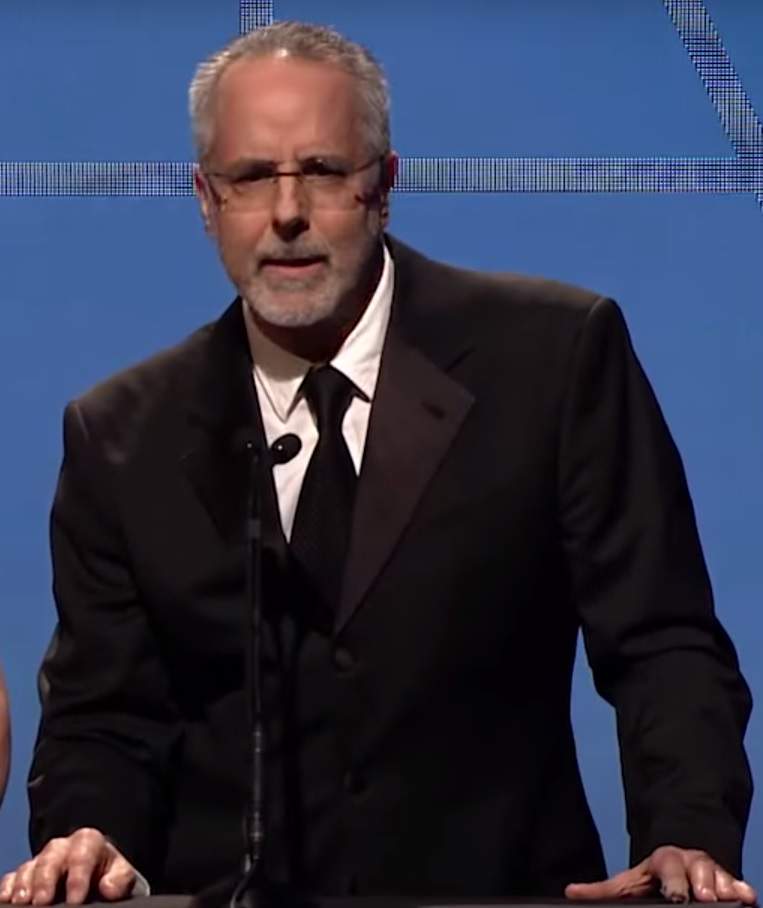
Jon Avnet
Made by

Brooklyn Films
Three Christs Plot Summary
Read the complete plot summary and ending explained for Three Christs (2017). From turning points to emotional moments, uncover what really happened and why it matters.
Dr. Alan Stone, [Richard Gere], a progressive psychologist who left New York University in 1954 to work directly with patients at the Ypsilanti State Mental Asylum, becomes a central figure in a tense era for mental health care. Stone specializes in schizophrenic patients and is widely seen as a critic of the system, which in the 1950s relied heavily on institutionalization and sedation. Insulin shock therapy and electric shocks were common tools, while true talk therapy remained a marginal practice.
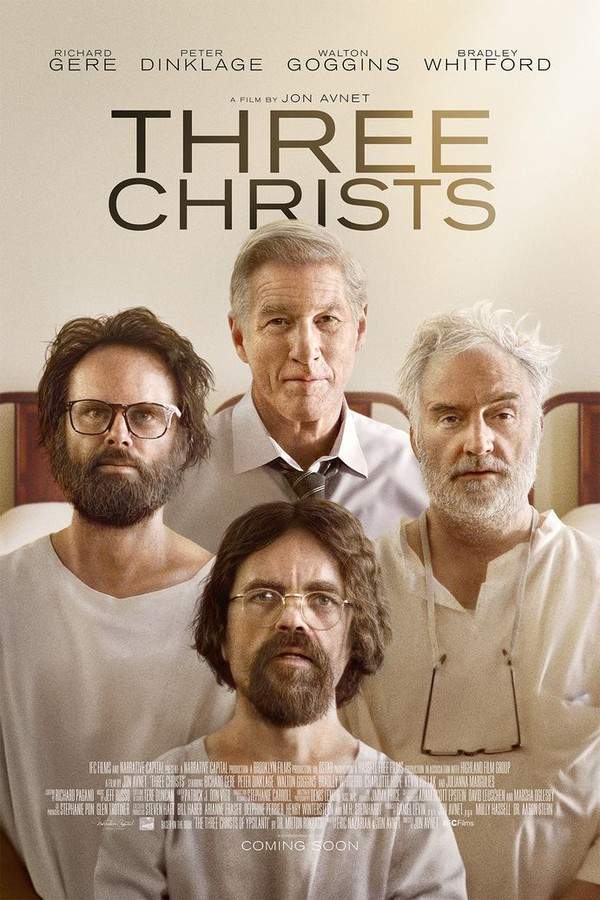
At Ypsilanti, Stone encounters two patients who each believe they are Jesus Christ: the intellectually sharp Joseph Cassell [Peter Dinklage] and the rough, emotionally scarred Clyde Benson [Bradley Whitford]. From this odd convergence, Stone designs a new format of group talk therapy aimed at better understanding their minds. He then brings in a third patient, Leon Gabor [Walton Goggins], who also claims Christ-like status, to observe how such beliefs play out in a shared setting. Stone quickly learns that their troubles are not the same in origin or expression: Gabor’s struggles stem from a deeply religious mother and a past marked by trauma during service; Benson is haunted by the death of his wife following an abortion; Cassell is prone to sudden, violent anger. The institutional routine had previously relied on electrical sedation for Cassell, which contributed to his fear of losing his sanity.
Stone’s approach challenges conventional methods and draws skepticism, even from the head of the asylum, Dr. Orbus [Kevin Pollak]. Rather than resort to punishment, Stone seeks to connect through conversation and letter-writing, hoping to reach the patients on a human level. His method gains recognition when a professional journal features his ideas on the cover, fueling Orbus’s envy and his desire to share in the prestige and in the treatment itself. As Stone remains cautious and principled, Orbus sidesteps him, arranging a private interview with Cassell. It is revealed that Stone authored Cassell’s letters to Orbus on Orbus’s behalf after the latter originally refused the task. Cassell feels betrayed and becomes wary that his chances of leaving the clinic are fading. Although he behaves well for a time, the old pattern resurges, and Orbus orders renewed electric shocks. Stone rushes to intervene, but the damage is done; a confrontation with another doctor leaves Stone injured and leads to his expulsion from the institution.
With Stone removed, Orbus assumes control over his former patients, including Cassell. Cassell, recognizing Stone’s sacrifice and sensing his own dwindling prospects, turns away from Orbus and clings to a vision of enduring suffering. The tension culminates in a conversation in the chapel’s bell tower, where Cassell, feeling betrayed and cornered, ends his life. In the subsequent hearing, Stone accuses Orbus of harmful, negligent decisions. He also interprets Cassell’s last words as a rebuke of Orbus’s sins, echoing the idea of Jesus bearing mankind’s wrongs. The hearing ends with Stone being fired, yet he is granted permission and funds to continue his study, including the two remaining patients in New York. Orbus, meanwhile, remains formally in his post but deprived of real decision-making power until retirement. The film closes with a stark, almost ceremonial image: Stone sits in Cassell’s seat and plays cards with the two Jesuses, a quiet, enduring reminder of what the therapy sought to achieve, even if the method proved uncertain and controversial.
Three Christs Timeline
Follow the complete movie timeline of Three Christs (2017) with every major event in chronological order. Great for understanding complex plots and story progression.
Stone leaves NYU to work at Ypsilanti State Mental Asylum
Dr. Alan Stone leaves NYU in 1954 to work directly with patients at Ypsilanti State Mental Asylum. He focuses on schizophrenic patients and challenges the era's heavy reliance on sedation, insulin shock, and electroshock therapies. This marks the beginning of his controversial, talk-centered approach to treatment.
Stone meets two Jesus-believing patients
At Ypsilanti, Stone meets two patients who insist they are Jesus: Joseph Cassell and Clyde Benson. He begins observing their interactions and the dynamics of the ward, recognizing that their beliefs reveal deeper psychological issues. He starts shaping a new format of group talk therapy to study their behavior together.
Gabor joins the group to form a trio
Stone adds Leon Gabor, another Christ-believer, to the group, forming a trio for close study. He sees that each man's problems stem from different traumas and temperaments. The exercise exposes how religious delusion can manifest in distinct ways within an asylum setting.
Stone rejects physical punishment
Stone discards the era's punitive methods and resists the use of electroshocks as a routine treatment. He relies on conversation, reflective letters, and direct engagement to reach the patients. His humane approach contrasts sharply with colleagues who rely on shocks and sedation.
Stone gains professional attention
Stone's progress earns him a feature on the cover of a professional journal. The exposure triggers envy from Dr. Orbus, the asylum's head, who seeks credit and influence. The rivalry foreshadows conflicts over authority and treatment philosophy.
Orbus schemes to take control
Orbus moves to bypass Stone and gets involved by interviewing Cassell alone. It is revealed that Stone wrote the letters to Cassell on Orbus's behalf after Orbus initially declined the task, straining trust. The manipulation signals growing tension between the two clinicians.
Cassell betrays trust; shocks renewed
Cassell feels betrayed and begins to slip back into abusive behavior. Orbus orders renewed electric shocks for him, escalating the coercive cycle. Stone rushes to intervene but cannot prevent the procedure, and a confrontation with another doctor ensues, injuring both.
Stone is expelled from the institution
After the violent incident, Stone is expelled from the institution, and Orbus regains control over his former patients. The asylum's governance consolidates around Orbus, marginalizing Stone's methods. The episode highlights the institutional resistance to humane reform.
Cassell dies in the chapel bell tower
Cassell, feeling powerless and despairing, encounters Orbus in the chapel's bell tower and leaps to his death. The tragedy underscores the human costs of the power struggle and Stone's unfinished mission. Orbus's manipulation and the roar of the system contribute to the fatal outcome.
Hearing verdict: Stone fired but allowed to continue study
In a formal hearing, Stone accuses Orbus of negligent decisions and interprets Cassell's last words as a critique of Orbus's sins. The hearing ends with Stone being fired, but he is granted permission and funding to continue his studies with the two remaining patients in New York. The outcome preserves his ideas while ending his tenure at Ypsilanti.
Orbus remains in name; final scene in New York
Orbus remains formally in charge but without decision-making powers until retirement. Stone and the remaining two patients in New York press on with the study. The film closes with Stone taking Cassell's seat and playing cards with the two Jesuses, signaling a somber, symbolic end to the experiment.
Final reflection on therapy and its costs
The film notes that Stone's therapeutic approach did not prove effective within the system, though it would have helped him personally. It emphasizes the tension between humane therapy and institutional politics. The closing scenes frame talk therapy as a humane but costly pursuit that lingers beyond the courtroom and the ward.
Three Christs Characters
Explore all characters from Three Christs (2017). Get detailed profiles with their roles, arcs, and key relationships explained.
Joseph Cassell
An intelligent, articulate patient who believes he is Jesus. His delusions are tied to his identity and anger, and he responds to therapy with periods of cooperation punctuated by explosive outbursts. His arc tests Stone's approach and culminates in a tragic death, illustrating the high stakes of balancing empathy with safety in a coercive system.
Clyde Benson
A gruff, grieving patient who also believes he is Jesus. His trauma centers on the death of his wife and the emotional toll of that loss, fueling his volatile behavior and religious delusions. His dynamic with Stone highlights the human costs of institutional neglect and misunderstanding.
Leon Gabor
A patient who credits himself with a Christ-like role, shaped by a deeply religious mother and a history of sexual trauma during his military exposure. His case demonstrates how personal history and spiritual framing can shape delusion and resistance to conventional treatment.
Dr. Alan Stone
A progressive and idealistic psychologist who favors talk therapy and written correspondence over punishment. He clashes with the institution's leadership and faces professional and personal jeopardy as his methods challenge established practice. His efforts set the film's ethical center, even as he faces dismissal and professional setback.
Dr. Orbus
The head of the asylum, driven by ambition and a desire for prestige. He orchestrates renewed electric shocks and manipulates outcomes to consolidate control, ultimately sidelining Stone. His actions illustrate how power can corrupt medical judgment and harm patients.
Three Christs Settings
Learn where and when Three Christs (2017) takes place. Explore the film’s settings, era, and how they shape the narrative.
Time period
1954
Set in the 1950s, a period when psychiatric care in the United States relied heavily on sedatives and physical interventions. Insulin shock therapy and electroconvulsive treatment were common, while talk therapy remained marginal and controversial. The narrative follows Dr. Stone's attempts to introduce humane methods against a backdrop of institutional resistance.
Location
Ypsilanti State Mental Asylum, Ypsilanti, Michigan, New York University, New York City, New York
The action centers on the Ypsilanti State Mental Asylum in Michigan and the clinical environment at New York University in New York City. The facility scenes reflect a mid-20th-century system where patients were largely confined and treated with electricity or insulin shock. The contrast between the two settings highlights the tension between institutional brutality and emerging talk-based therapy.
Three Christs Themes
Discover the main themes in Three Christs (2017). Analyze the deeper meanings, emotional layers, and social commentary behind the film.
🧠
Therapy vs Coercion
Stone's humane, talk-based approach contrasts with the prevailing coercive methods of the institution. The three patients reveal distinct traumas, showing that madness can stem from different traumas and experiences. The film questions whether dialogue and understanding can overcome entrenched power structures and punitive practices.
🏛️
Power & Prestige
Orbus's hunger for recognition drives him to bypass colleagues and push perfunctory care to maintain control. The struggle over treatment and authority exposes how prestige markets influence patient care. The narrative suggests that institutional politics can undermine genuine medical progress and risk patients' lives.
✝️
Faith & Delusion
All three patients claim to be Jesus, creating a thread of religious imagery that intersects with trauma and identity. Their beliefs reveal how faith can be a coping mechanism or a fragile construct under pressure. The film uses these delusions to explore why individuals cling to spiritual identities in crisis.

Three Christs Spoiler-Free Summary
Discover the spoiler-free summary of Three Christs (2017). Get a concise overview without any spoilers.
In the sweltering summer of 1954, the Ypsilanti State Mental Asylum looms as a stark monument to mid‑century attitudes toward insanity. The corridors echo with the hum of electricity, the clatter of insulin machines, and the quiet resignation of patients whose lives have been reduced to sedation and routine. Yet beyond the institutional walls, a restless curiosity flickers—an invitation to rethink how minds deemed unmoored might be coaxed back toward conversation.
Dr. Alan Stone arrives fresh from New York University, a young psychologist whose idealism clashes with the cold efficiency of the era’s standard treatments. Rejecting the prevailing reliance on shock and medication, he proposes a gentler, dialogue‑driven experiment: a small group of patients gathered not for containment but for conversation. His methods—letter writing, patient‑led discussion, simple human presence—promise a fragile, hopeful alternative to the harsh regime that dominates the ward.
The experiment brings together three enigmatic men, each convinced they are the resurrected Christ. Joseph Cassell, a wiry intellectual with volatile temper; Clyde Benson, a gruff veteran haunted by loss; and Leon Gabor, a quiet soldier scarred by trauma, all occupy the same table but carry vastly different histories and pain. Their shared delusion becomes a catalyst for a delicate dance of empathy, rivalry, and revelation, as Stone navigates the fragile line between belief and treatment.
Within the stark institutional hierarchy, Dr. Orbus, the asylum’s superintendent, watches the venture with a mix of skepticism and professional rivalry. His cautious, often bureaucratic stance creates a palpable tension that colors every session, hinting at deeper conflicts over authority, fame, and the very definition of healing. The atmosphere is at once austere and charged, a period drama that blends clinical rigor with lingering humanity, inviting audiences to wonder whether conversation alone can pierce the walls built around fractured minds.
Movies with Similar Twists and Themes
Uncover films that echo the narrative beats, emotional arcs, or dramatic twists of the one you're exploring. These recommendations are handpicked based on story depth, thematic resonance, and spoiler-worthy moments — perfect for fans who crave more of the same intrigue.



Featured on this page

What's After the Movie?
Not sure whether to stay after the credits? Find out!




Explore Our Movie Platform
New Movie Releases (2026)
Famous Movie Actors
Top Film Production Studios
Movie Plot Summaries & Endings
Major Movie Awards & Winners
Best Concert Films & Music Documentaries
Movie Collections and Curated Lists
© 2026 What's After the Movie. All rights reserved.