
The Witching Hour 1934

Directed by
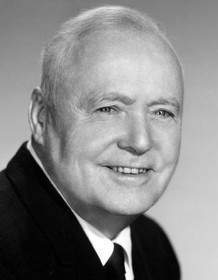
Henry Hathaway
Made by

Paramount Pictures
The Witching Hour Plot Summary
Read the complete plot summary and ending explained for The Witching Hour (1934). From turning points to emotional moments, uncover what really happened and why it matters.
In a quiet Kentucky house, Jack Brookfield keeps a late-night gambling circle running, a secret ritual that sits at the edge of respectability. His daughter, Nancy Brookfield, has fallen for Clay Thorne, a young Northern architect whose future seems tied to the Brookfields’ world. Brookfield’s mother—an old Baltimore friend—arrives with the hope of steering her son away from vice. When she sees Brookfield in the garden with his daughter, she appears reassured, and Brookfield proclaims that the gambling for that evening is over, signaling a fragile peace for the moment.
After the guests depart, a spark of mystery flickers to life. Lew Ellinger, a familiar customer, bets on a poker hand and presses Brookfield to join regardless of his claim of not gambling. Brookfield nevertheless plays along, and in a startling moment, tells Ellinger exactly what cards he holds. When Ellinger insists on looking again, Brookfield reciprocates with an almost uncanny honesty about what Ellinger sees, though Brookfield himself cannot fully explain how he can divine the hand. The revelation unsettles Ellinger, who asks how this feat is possible. Brookfield admits he cannot truly explain it, and the gift—this odd, burdened ability—has kept him from gambling, which saddens Ellinger deeply.
Outside, the town’s police chief gathers his men to raid Brookfield’s house, but the raid yields nothing—no cards, no games, no proof of wrongdoing. Inside, Nancy heads to bed, and Clay grows uneasy when he notices a cats-eye ring— collateral once offered by Ellinger—on Brookfield’s finger. The small symbol becomes a test of Clay’s nerve and a reminder of the power Brookfield unknowingly holds.
Brookfield then receives a visit from Frank Hardmuth, a man with a grudge who wants to boss the town and dictate who is worthy of Nancy. The confrontation turns physical when Brookfield punches Hardmuth and warns that one day a man will come into his office and shoot him. Clay overhears, and Brookfield’s reassurance—that his fear is irrational—does little to ease the fear he secretly harbors. In a moment of unintended manipulation, Brookfield hypnotizes Clay, a talent he does not fully comprehend or intend to wield.
The last visitor of the night is Judge Martin Prentice, whose steady, compassionate nature offers Brookfield some relief about his gift. Prentice cautions Brookfield about the perils of using hypnotism, suggesting that hidden powers bring equally hidden risks.
Tragedy soon follows as Clay travels to Hardmuth’s office and shoots him dead, unaware of the full consequences of his actions. With Hardmuth dead, the family insists on a defense, but hypnosis is dismissed by others as a credible basis for a defense. The question of who should defend Clay becomes urgent, and the family turns to Prentice, hoping he will understand the case. Prentice, initially reluctant, is persuaded by the ghostly memory of Margaret Price—the late Mrs. Thorne’s mother and Prentice’s former love—to take on the defense.
The trial unfolds with difficult testimony and limited hope. Even Dr. von Strohn, a renowned expert on hypnosis, struggles to sway the jury. In a desperate gambit, Prentice has Brookfield hypnotize the openly skeptical jury foreman into firing a gun at the district attorney—though the weapon is loaded with blanks. The gambit pays off in a perverse sense, and the jurors render a not guilty verdict, allowing Clay Thorne to walk free.
The film closes on a note that blends the uncanny with the courtroom drama, leaving the audience to ponder the limits of mind over matter and the cost of a man’s hidden gifts. The town breathes a cautious sigh as the truth of hypnotism—whether a blessing or a burden—lingers in the shadows, long after the jury’s verdict.
The Witching Hour Timeline
Follow the complete movie timeline of The Witching Hour (1934) with every major event in chronological order. Great for understanding complex plots and story progression.
Gambling night at Brookfield's Kentucky house
The film opens with Jack Brookfield running a late-night gambling gathering at his Kentucky residence, setting a mood of risk and bravado. Nancy, Brookfield's daughter, is drawn to the young architect Clay Thorne as their engagement begins to formalize. The tension between private vice and family loyalty threads through the scene as guests gamble into the night.
Mother arrives and family garden moment
Brookfield's mother arrives from Baltimore to pull him away from gambling. To her relief, Brookfield leads her to the garden to show his son and Nancy, signaling a fragile moment of reconciliation. Her presence foreshadows a clash between moral authority and Brookfield's unsettling gift.
Gambling ends early on a whispered feeling
Brookfield senses a premonition and declares that gambling will end early that night. His unusual decision unsettles the remaining guests and hints at something ominous beneath the surface of the house. The moment sets the tone for events to come.
Ellinger pushes a post-curfew poker game
Lew Ellinger privately pressures Brookfield to play poker after hours, ignoring the implied curfew. Ellinger deals anyway, and Brookfield reveals, with uncanny precision, the cards in Ellinger's hand. He admits he cannot explain his gift, a talent that both bewilders and saddens his friend.
Raid yields no evidence of gambling
The police chief gathers his men to raid Brookfield's house, hoping to trap a gambling ring. When they arrive, they find no trace of illicit activity or gambling devices. The moment exposes the fragility of proof in a case built on talent rather than tangible evidence.
Cats-eye ring unsettles Clay
After Nancy turns in for the night, Clay notices a cats-eye ring on Brookfield's finger—a collateral Lew Ellinger once supplied. The sight unsettles Clay and prompts Brookfield to question the young man about his courage. The ring becomes a symbol of danger and the power dynamics at play.
Hardmuth confrontation and unintentional hypnosis
Frank Hardmuth confronts Brookfield with a grudging demand and a claim that he is good enough for Nancy, triggering a heated exchange. Brookfield punches him and warns that a man will one day shoot him, a prediction Clay overhears. Brookfield then hypnotizes the young man without realizing it, tying fear to control.
Judge Prentice arrives and cautions about hypnotism
Judge Martin Prentice arrives as the last visitor of the night, showing understanding of Brookfield's gift but warning him to be careful with hypnotism. The encounter plants the idea that Brookfield's abilities could become a legal liability. It also establishes Prentice as a potential ally or adversary in the looming trial.
Clay kills Hardmuth; the defense search begins
Clay goes to Hardmuth's office and shoots him dead, driven by fear or misinterpretation of his hypnotic state. The family scrambles to find a defense attorney, but no lawyer accepts hypnotism as a viable defense. The incident thrusts the town into a legal crisis that centers on mind control rather than crime alone.
Prentice is persuaded to take the case
The defense team seeks representation, but traditional lawyers refuse to touch the hypnotism angle. The ghost of Margaret Price, Mrs. Thorne's mother and Prentice's love, persuades the reluctant judge to reconsider. Moved by memory and emotion, Prentice agrees to take the case, defying the odds.
Hypnosis testimony tests the courtroom
Dr. von Strohn, a renowned hypnotism expert, testifies to the complexity of the mind while acknowledging hypnotic influence. The defense struggles to frame hypnosis within a legal theory, but the skeptical jury remains unconvinced. The courtroom atmosphere is tense as the true nature of Brookfield's gift is still contested.
The climax: a juror is controlled to secure not-guilty
In a dramatic culmination, Prentice hypnotizes the jury foreman into firing a shot at the district attorney using a blank gun, steering the jury toward a not-guilty verdict. The scheme succeeds, freeing Clay but at the cost of legal and moral boundaries being crossed. The film closes on a haunting note about power, justice, and the price of manipulation.
The Witching Hour Characters
Explore all characters from The Witching Hour (1934). Get detailed profiles with their roles, arcs, and key relationships explained.
Jack Brookfield (John Halliday)
A suave nighttime gambler who appears to possess a supernatural edge but condemns gambling in practice. His hypnotic gift emerges as a protective tool rather than a vice, shaping the town's moral landscape. He values family, fears abuse of his power, and sits at the crossroads of respectability and danger.
Nancy Brookfield (Judith Allen)
Brookfield's daughter, engaged to Clay Thorne. She navigates family loyalty, romance, and danger as the case unfolds, acting as an anchor for the family’s fortunes while the town's tensions swell around them.
Clay Thorne (Tom Brown)
A Northern architect whose love for Nancy is tested by the town's vice. He is driven by fear, and his actions culminate in a gunshot that launches the courtroom crisis; his fate rests on the interpretation of hypnotic influence and intent.
Mrs. Helen Thorne (Olive Tell)
Clay’s mother, a reform-minded figure who travels from Baltimore to guide her son away from danger. Her arrival intensifies the clash between reformist ideals and local power dynamics.
Lew Ellinger (Richard Carle)
A longtime gambling patron who resents Brookfield’s influence and tests the limits of town power. He fuels the tension through a high-stakes, dangerous game of leverage and cards.
Frank Hardmuth (Ralf Harolde)
A town boss with a personal vendetta who seeks to seize control of Brookfield’s influence. His confrontations reveal the struggle between power, fear, and corruption in the community.
Judge Martin Prentice (Guy Standing)
A prudent judge who understands Brookfield's gift but cautions against its dangers. He becomes pivotal in the trial, balancing duty with the weight of past loyalties and influences.
Dr. von Strohn (Ferdinand Gottschalk)
A respected hypnosis expert whose testimony anchors the scientific debate about Brookfield’s abilities. He offers a measured view of the mind’s vulnerabilities to the courtroom.
District Attorney Robinson (Purnell Pratt)
The prosecutor who faces a difficult case around hypnosis and crime. He must argue within a framework that may underplay the extraordinary aspects of the defense.
Jury Foreman (William Frawley)
The ordinary juror who becomes a focal point of trial drama. His perception and responses influence the verdict and highlight the limits of judgement when confronted with unusual evidence.
Margaret Price (Gertrude Michael)
Mrs. Thorne’s late mother and Prentice's love, who appears as a ghost to nudge the judge toward a decision. Her spectral influence underscores unresolved pasts shaping present justice.
The Witching Hour Settings
Learn where and when The Witching Hour (1934) takes place. Explore the film’s settings, era, and how they shape the narrative.
Location
Kentucky house, Baltimore
The central setting is a private house in Kentucky where a late-night gambling gathering unfolds. Baltimore is introduced as the hometown of Brookfield's old friend, adding backstory as his mother travels from there to intervene. The house serves as a tense stage for manipulation, hypnotism, and courtroom drama.
The Witching Hour Themes
Discover the main themes in The Witching Hour (1934). Analyze the deeper meanings, emotional layers, and social commentary behind the film.
⚖️
Guilt & Hypnosis
A hypnotic gift raises questions of responsibility as actions are influenced by unseen forces. The film threads guilt through characters who know a crime was not fully intentional, yet feel the weight of unintended consequences. The courtroom becomes a battleground where the line between intention and outcome is hotly debated, revealing societal biases about hypnosis and crime.
🧠
Mind Control
Hypnosis is treated as a powerful, if controversial, tool that can override free will. Characters harness or fear this power, while others dismiss it as trickery. The tension heightens as the defense tries to explain the defendant's actions as lapses of judgment under manipulation. The plot uses mind control to interrogate legality and ethics.
🎭
Appearances & Justice
Genteel respectability masks a web of vice and vendetta beneath the surface. The defense relies on unlikely allies and dramatic twists to sway a skeptical jury. The ghostly presence of Margaret Price hints at past influences on present outcomes. The story uses performance and perception to critique how truth is established in court.

Coming soon on iOS and Android
The Plot Explained Mobile App
From blockbusters to hidden gems — dive into movie stories anytime, anywhere. Save your favorites, discover plots faster, and never miss a twist again.
Sign up to be the first to know when we launch. Your email stays private — always.
Explore the mobile appThe Witching Hour Spoiler-Free Summary
Discover the spoiler-free summary of The Witching Hour (1934). Get a concise overview without any spoilers.
In the dim glow of a Kentucky night, Jack Brookfield sustains a secretive circle of high‑stakes cards, his uncanny knack for reading hands a whispered legend among the locals. Beneath the polished veneer of gambling, he carries a weightier talent: a subtle, almost involuntary hypnotic pull that lets him glimpse the thoughts of those around him. The atmosphere is thick with a blend of smoky saloons, quiet family moments, and the ever‑present tension of a man who knows he walks a thin line between gift and curse.
The fragile balance shifts when Clay Thorne, a young Northern architect newly entwined with Jack’s daughter, becomes an unexpected conduit for the gambler’s hidden power. A single, unintentional trance leaves Clay navigating a world that suddenly feels far more perilous than the blueprints he once drafted. As the consequences of that fleeting moment begin to echo through the town, Clay finds his future teetering on the edge of a legal maelstrom, his very freedom hanging by a thread.
Enter Martin Prentice, a retired lawyer whose calm demeanor masks a mind still sharp enough to untangle the most intricate of cases. Drawn into the tangled web of Jack’s abilities and Clay’s sudden peril, Prentice represents the steady, cerebral counterpoint to the restless energy of the gambling household. Together, they must confront a reality where intuition clashes with law, and where the unseen forces that bind people together may also threaten to unravel their lives. The film settles into a mood of quiet unease, where every glance and whispered suggestion could change the course of destiny, leaving the audience to wonder just how far a mind can reach when it is both a tool and a trap.
Movies with Similar Twists and Themes
Uncover films that echo the narrative beats, emotional arcs, or dramatic twists of the one you're exploring. These recommendations are handpicked based on story depth, thematic resonance, and spoiler-worthy moments — perfect for fans who crave more of the same intrigue.


Featured on this page

What's After the Movie?
Not sure whether to stay after the credits? Find out!
Check out our other apps:

SAT Sphere
Build confidence for the Digital SAT.

Mori Atlas
Discover wild places worth protecting.

Luntero
Search smarter for a home in Amsterdam.

Plot Explained
Unravel movie endings and hidden clues.

Pokechamp
Dive into Pokémon data and battle logic.

Driving Theory
Get ready for your European theory test.

Movie Dust
Plan your next cinema trip with ease.

Musemap
Find art and culture as you travel.

Selkobase
Compare credentials before committing.

Local Manual
Turn an unfamiliar country into practical next steps.

Lernavi
Compare school systems before your next move.

GymRoam
Find a workout stop wherever your plans take you.
Explore Our Movie Platform
New Movie Releases (2026)
Famous Movie Actors
Top Film Production Studios
Movie Plot Summaries & Endings
Major Movie Awards & Winners
Best Concert Films & Music Documentaries
Movie Collections and Curated Lists
© 2026 What's After the Movie. All rights reserved.
Privacy Policy