

What Is The Great Moment About?
The premise of The Great Moment in 304 words, with nothing given away. The full story follows below.
In the bustling, soot‑stained streets of 19th‑century Boston, the world of medicine and dentistry teeters on the edge of a quiet revolution. The film follows Dr. W.T. Morgan, a charismatic yet stubborn dentist whose relentless curiosity drives him to imagine a world where surgery need not be synonymous with agony. Set against a backdrop of smoky parlors, crowded lecture halls, and the austere corridors of early hospitals, the story captures an era where scientific breakthroughs are as much a matter of personality as of proof.
The tone balances lively humor with meticulous period detail, letting the audience laugh at the absurdities of an age still clutching to bloodletting and grimace‑inducing drills while feeling the weight of Morgan’s earnest ambition. His infectious enthusiasm clashes with a rigid medical establishment that guards its traditions with an almost ceremonial seriousness. Through witty dialogue and clever set pieces, the film paints a portrait of a man who is as much a showman as a scientist, using charm and demonstration to make the invisible scent of ether into a promise of relief.
Alongside Morgan stand a handful of unforgettable companions— the widowed Elizabeth Morton, whose gentle recollections of loss and hope provide a human anchor; a cantankerous professor who offers skeptical guidance; and a cadre of patients whose everyday fears become the catalyst for a larger conversation about compassion in care. Their interactions create a tapestry of personal stakes, underscoring how a single idea can ripple through families, classrooms, and operating rooms alike.
Ultimately, the movie invites viewers to witness the fragile dance between invention and acceptance, humor and hardship, as one determined dentist seeks to transform pain into possibility. The atmosphere hums with anticipation, leaving the audience to wonder whether Morgan’s daring vision will stir the entrenched guardians of medicine—or simply become another footnote in history’s quiet corridors.
What Happens in The Great Moment?
The complete story of The Great Moment, from the first scene to the last, in 613 words (about 3 minutes). Spoilers throughout. Names in the text link to 7 cast member pages.
Spoilers ahead
On a cold, snowy day, Eben Frost makes his way to the farmhouse of Elizabeth Morton, the aging widow of William Morton. At the door, he returns a medal once awarded to Morton—the inscription reads “To the benefactor of mankind. With the gratitude of humanity.” Inside, Lizzie softly recalls the life she shared with Morton, painting a portrait of a man driven by curiosity, generosity, and a relentless urge to ease suffering.
In a brisk, pivotal flashback from years earlier, Morton mortgages his farm to follow a dream that takes him to Washington, D.C. to face President Franklin Pierce. The president speaks of a reward from a grateful nation, yet urges Morton to validate his claim in court by suing a doctor over his discovery. As headlines erupt with suspicion, the court rules the invention unpatentable, while Morton’s spirit rages in a shop that profits from his work without sharing credit or royalties with him.
Back in the present, Lizzie fills in the gaps, recounting Morton’s rise, his stubborn perseverance, and the quiet tragedy of a life spent chasing recognition and justice for his breakthrough. The tale then lightens with a second, more intimate flashback: Morton’s courtship and early married years with Lizzie, and his trials as a dentist who must confront the fear his patients feel at the prospect of pain. He seeks counsel from Charles T. Jackson, a cantankerous professor who muses about cooling gums with topical substances, and he confronts the practical realities of surgical pain with the aid of others who will become pivotal in his story.
Morton tests the therapeutic idea that a vapor, initially explored by Horace Wells, could offer a painless path through procedures. He experiments with ether, guided by the insights of a wary mentor, and learns that the right refinement matters as much as the notion itself. When a successful trial with a patient named Frost seems to prove the concept, Morton begins to cloak the distinctive scent of the ether and markets it as a painless alternative in dentistry, a move that earns him both awe and accusations of theft from his fellow scientists.
As Morton’s reputation grows, he seeks the validation of a broader medical audience. He approaches Professor John C. Warren, who is initially skeptical but agrees to a demonstration at a renowned hospital. The demonstration is scheduled to bring a more serious operation into the spotlight, but the medical establishment—fueled by envy and professional ethics—demands the chemical composition of Letheon before agreeing to widespread use. Morton refuses to disclose full details while a patent is pending, offering instead free access to hospitals and charitable institutions, a gesture he believes will secure broad good will even as some doctors fear losing control.
Facing resistance, Warren must proceed with a painful operation—a public test that will decide whether Letheon can survive the glare of scrutiny. The tense atmosphere thickens as the Medical Society contends with Morton’s claims, and the idea of a truly painless surgery hangs in the balance. Throughout, Morton, moved by the sight of those in need, presses on. In a final, decisive moment, he encounters the young patient to be amputated and, overwhelmed by compassion, steps into the theater to reveal his secret, not to win praise for himself, but to spare future patients from needless suffering—presenting Letheon to Warren and, through him, to the world.
What unfolds is a measured, poignant chronicle of scientific ambition colliding with professional trepidation, ethics, and the human cost of progress. The story tracks Morton’s lifelong pursuit: a dream that could redefine surgery, the personal sacrifices it demands, and the moment when mercy and invention finally converge in the light of public recognition.
The Great Moment Timeline: Every Key Event in Order
11 key events in the order they happen, from “Frost arrives at Morton's farmhouse” to “Morton reveals the Letheon formula to the world”. 11 events name a place, across 11 locations.
- 1
Frost arrives at Morton's farmhouse
Eben Frost trudges through the snow to the aging widow Lizzie Morton's farmhouse. On the way he stops at a pawn shop and redeems a medal once awarded to Morton, inscribed praising him as a benefactor of mankind. Inside the farmhouse, Lizzie recounts Morton's life and their shared memories.
When:Present day Where:Lizzie Morton's farmhouse
- 2
Morton mortgages his farm and travels to Washington
Morton mortgages his farm to pay for a trip to Washington, D.C., to meet President Franklin Pierce. The president signals support for a large monetary award but urges Morton to pursue his claim in court by filing a patent infringement suit against a doctor. Newspapers denounce Morton as greedy, the court rules his discovery unpatentable, and Morton lashes out in a shop that capitalizes on his discovery with no credit or royalties.
When:Several years after Morton's discovery Where:Washington, D.C.
- 3
Lizzie recounts Morton's death and life
Back in the present, Lizzie relates Morton's death and their life together before, during, and after the discovery. She frames the events within the ongoing aftermath of his invention and the ethical battles surrounding it. Her reminiscences set the stage for understanding the man behind Letheon.
When:Present day Where:Morton home
- 4
Morton and Lizzie's courtship and early dental career
The second flashback follows Morton and Lizzie's courtship and early married years. Morton struggles as a dentist with patients who fear the pain of dental operations, seeking guidance from his former professor Charles T. Jackson. Jackson suggests cooling the gums and roots with topical chloric ether; Morton buys ether and begins his experiments, even fainting when it evaporates in his living room.
When:Early years after courtship Where:Morton's home and dental office
- 5
Horace Wells and nitrous oxide breakthrough
Horace Wells arrives and tells Morton about nitrous oxide as an inhalable anesthetic. Wells helps stage a demonstration at Harvard Medical School, but the patient cries out during the class. After a near-fatal overdose on the next patient, Wells abandons the approach.
When:Pre-Letheon era Where:Harvard Medical School
- 6
Morton tests ether as an anesthetic and perfects Letheon
Morton wonders whether the ether vapor could serve as an inhalable anesthetic. He tries the gas on a patient named Frost, who initially goes berserk but settles down after adjustments. Morton consults Jackson, who explains that only highly rectified ether will work; the next trial with Frost succeeds, and Morton starts to cash in on the idea by calling it Letheon.
When:During development Where:Morton's office
- 7
Letheon brings fortune and sparking accusations
Morton camouflages the smell of the ether and promotes Letheon, quickly raking in a fortune through painless dentistry. Jackson and Wells accuse Morton of stealing their ideas, sparking accusations of patent theft. The dispute highlights the shifting balance of credit in a rapidly changing medical landscape.
When:After initial success Where:Hospitals and dental clinics
- 8
Warren agrees to a demonstration at Mass General
Warren agrees to a demonstration at Massachusetts General Hospital and Morton showcases the painless neck tumor excision before doctors and students on October 16, 1846. The demonstration is seen as a turning point for anesthesia, though skeptics remain. Warren then schedules a more serious operation, a leg amputation, to test Letheon further.
When:October 16, 1846 Where:Massachusetts General Hospital
- 9
Ethics clash over Letheon’s formula
The Medical Society demands that Morton disclose the chemical composition of Letheon in line with medical ethics. Morton refuses to reveal the formula until his patent is secured, but offers to let hospitals and charitable institutions use Letheon for free, excluding rival dentists. The proposal tries to balance public benefit with his legal rights while antagonizing colleagues.
When:Before the amputation demonstration Where:Massachusetts General Hospital / Boston
- 10
The amputation proceeds and Morton acts
On the day of the scheduled leg amputation, Warren says the operation must go forward without anesthesia. Morton's heart moves when he encounters a girl about to have her leg amputated and prays over her; moved, he enters the operating theater and reveals Letheon to the surgeon and the world.
When:The scheduled day of the leg amputation Where:Massachusetts General Hospital operating theater
- 11
Morton reveals the Letheon formula to the world
Morton publicly reveals the chemical composition of Letheon to Warren and to the world, marking a turning point in medical history and resolving the ethical stalemate that surrounded his invention. The revelation cements his place in history as the pioneer of anesthesia. The medical community absorbs the significance of this breakthrough as surgeries become progressively painless.
When:During the amputation demonstration Where:Operating theater, Massachusetts General Hospital
Who Are the Main Characters in The Great Moment?
7 characters, among them William Thomas Green Morton (Joel McCrea), Elizabeth Morton (Betty Field) and Professor John C. Warren (Harry Carey): who each one is and the part they play in the story. Every profile links to the actor’s page.
-
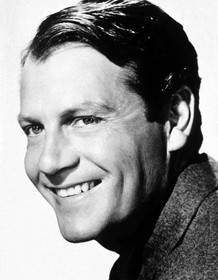
William Thomas Green Morton (Joel McCrea)
Played by Joel McCrea
A pioneering dentist whose pursuit of painless surgery drives the plot. He advances the use of ether as an inhaled anesthetic, faces professional opposition, patent fights, and public scrutiny. His resilience and risk-taking culminate in a dramatic demonstration that changes medical history.
- 💡 Inventor
- 🦷 Dentist
- ⚖️ Controversial figure
-
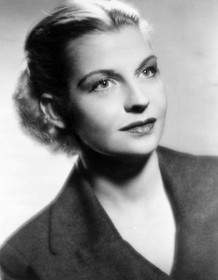
Elizabeth Morton (Betty Field)
Played by Betty Field
Morton's partner in life, who anchors the story with her endurance and support. She recounts the couple's trials and stands beside him through financial pressures, professional disputes, and personal loss.
- 💖 Wife
- 🛡 Supporter
- 🕊 Resilience
-
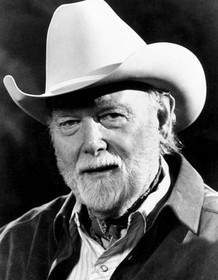
Professor John C. Warren (Harry Carey)
Played by Harry Carey
A skeptical yet pivotal surgeon who witnesses and endorses the anesthesia demonstrations. He bridges Morton’s theoretical idea with practical medicine, ultimately integrating Letheon into surgical practice.
- 🏛 Surgeon
- 🤝 Collaborator
- 🧭 Skeptic turned ally
- DC
Dr. Charles T. Jackson (Julius Tannen)
Played by Julius Tannen
Morton's former professor who counsels on anesthetic research and debates. He represents the early debate among scientists about new chemicals and their ethical use.
- 🧠 Scientist
- 🗝 Idea propagator
- 🧭 Rival perspective
- HW
Horace Wells (Louis Jean Heydt)
Played by Louis Jean Heydt
A colleague whose work on nitrous oxide inspires the broader quest for painless surgery. He provides a contrasting path to Letheon and experiences the highs and risks of medical invention.
- 💨 Anesthesiologist
- 🔬 Collaborator in invention
- 🕊 Complications
-
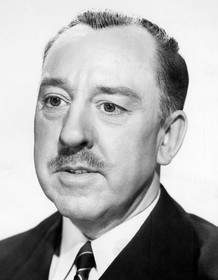
President Franklin Pierce (Porter Hall)
Played by Porter Hall
The political figure who endorses Morton's discovery through the promise of a large grant and presidential support, setting the stage for a legal and public battle over patenting.
- 🏛 President
- 🗝 Patron
- 🗞 Public figure
- DH
Dr. Heywood (Franklin Pangborn)
Played by Franklin Pangborn
A medical professional who serves as part of the Massachusetts Medical Society, representing institutional perspectives on medical ethics and the dissemination of new techniques.
- 🧠 Doctor
- 🏥 Medical authority
- 🗞 Ethic standard
Where and When Is The Great Moment Set?
The Great Moment is set in Morton Farmhouse, Washington, D.C., Massachusetts General Hospital (Boston) and… (Mid-19th century (1840s, with a key demonstration in 1846)). Here is why the time and place matter to the story.
When
Mid-19th century (1840s, with a key demonstration in 1846)
The narrative spans the 1840s, a period of rapid advances in medical science. Anesthesia experiments and public demonstrations begin to redefine surgical risk and medical ethics. The climax centers on the October 16, 1846 demonstration that legitimizes Letheon in a modern operating room. Patenting and financial headlines frame the era as medicine meets patent law.
Where
Morton Farmhouse, Washington, D.C., Massachusetts General Hospital (Boston), Harvard Medical School (Cambridge)
The film opens in a rural farmhouse belonging to Lizzie Morton, grounding the story in a quiet domestic world before medicine's public stage. Washington, D.C. becomes the hub of recognition and controversy as Morton seeks support and patents. The moral and technical center of the tale shifts to Massachusetts General Hospital and Harvard Medical School, where demonstrations and debates about anesthesia unfold.
- ❄️ Rural setting
- 🏛 Medical institutions
- 🗽 Capital city
- 🎓 Academic centers
What Are the Themes of The Great Moment?
3 ideas the story keeps returning to, among them Ambition vs Ethics, Medical Innovation and Public Trust.
-
01
Ambition vs Ethics
Morton's drive to patent and profit from his discovery collides with the Medical Society's demand for transparency. The film contrasts entrepreneurial zeal with professional codes, showing how fame can tempt cutting corners. Ethical questions ripple through hospitals, courtrooms, and newspapers. In the end, Morton's act of revealing his secret is framed as a moral dilemma resolved by saving a patient.
-
02
Medical Innovation
The Letheon episode marks a turning point in surgical history, moving anesthesia from rumor to practice. The story traces how nitrous oxide and ether experimentation evolved into a reliable pain-management technique. Public demonstrations at Harvard and Massachusetts General Hospital highlight the excitement and risk of new technology. The film emphasizes invention, experimentation, and the slow win of scientific adoption.
-
03
Public Trust
Morton's controversial path—seeking patent protection while offering free use to hospitals—tests public trust in medicine and medical institutions. Newspapers amplify the debate, portraying Morton as either a genius or a greedy opportunist. The Medical Society's ethical standards clash with emerging commercial incentives. The climactic choice to reveal Letheon tests whether the public will trust new cures and the men who bring them.
What Kind of Film Is The Great Moment?
Hopeful in tone, with steady pacing and a moderate story, going by the plot summary.
- Tone
- Hopeful
- Pacing
- Steady
- Story
- Moderate
- Intensity
- Medium
- Ending
- Bittersweet
A historically hopeful and steady-paced drama about perseverance, blending compassionate triumph with the melancholic personal cost of a medical discovery that redefined human suffering.
- hopeful
- persevering
- compassionate
- reflective
- melancholic
- determined
- medical discovery
- scientific ambition
- perseverance
- historical drama
Content notes: medical procedures.
Quiz
How well do you remember The Great Moment? Test yourself on the story.


