
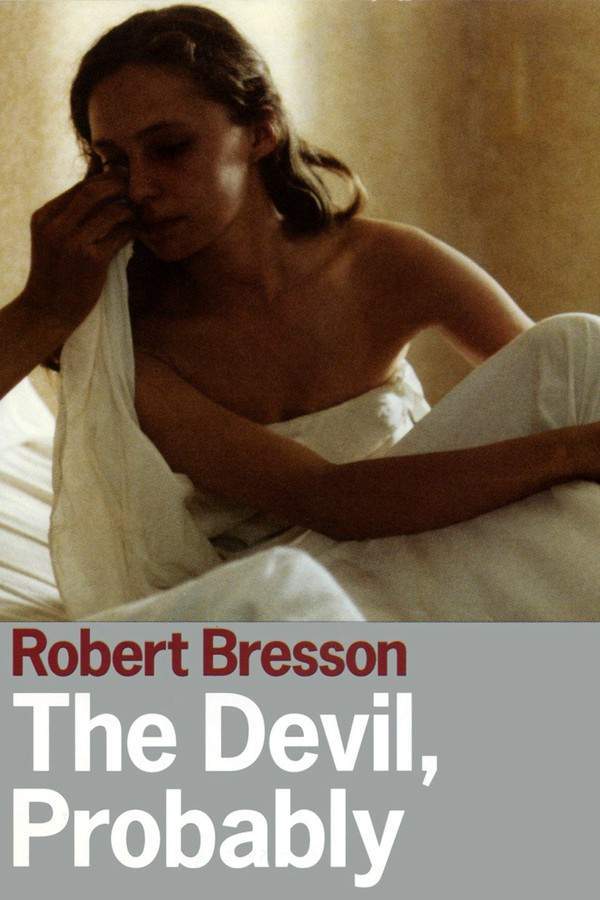
What Is The Devil, Probably (1977) About?
The premise of The Devil, Probably (1977) in 304 words, with nothing given away. The full story follows below.
In the winding streets of 1970s Paris, a hazy melancholy settles over cafés, university halls, and the ever‑watchful silhouettes of historic cemeteries. The city breathes a restless energy, its ambience tinged with quiet protests and the soft murmur of intellectual debate, while an undercurrent of existential dread permeates the air. Within this world, a young student named Charles drifts through his days, caught between the vibrant pulse of the capital and an internal void that makes every interaction feel distant and hollow.
Charles’s closest companions orbit his restless mind. His girlfriend, Alberte, tries to bridge the widening gap between them, offering affection that feels simultaneously intimate and insufficient. Friends such as Michel, an impassioned activist, and Albert, a more reserved confidant, each present their own visions of purpose—political idealism, artistic escape, quiet solidarity—yet none can pierce the fog that surrounds him. Edwige, another link in his social chain, adds a gentle, observational perspective, highlighting the subtle ways his alienation ripples through their shared moments.
Desperate for footholds, Charles turns toward the grand narratives that once promised answers. He dabbles in left‑wing politics, attends religious services, and sits in on psychoanalytic sessions, each experience leaving him with more questions than clarity. A fleeting exchange on a city bus—one passenger asking who mocks humanity and another responding, “the devil probably”—echoes his own inner dialogue, crystallizing the film’s brooding tone of philosophical unease. The narrative lingers on his contemplations, portraying a mind that oscillates between fleeting sparks of insight and overwhelming shadows.
The film’s atmosphere is one of lingering intrigue, where Paris itself becomes a character—beautiful, unforgiving, and full of whispered possibilities. As Charles navigates his circle of friends, lovers, and fleeting ideologies, the story teases the audience with the promise of deeper revelations about meaning, belonging, and the fragile threads that bind us to one another.
What Happens in The Devil, Probably (1977)?
The complete story of The Devil, Probably (1977), from the first scene to the last, in 379 words (about 2 minutes). Spoilers throughout. Names in the text link to 1 cast member page.
Spoilers ahead
The film opens dramatically with two contrasting newspaper headlines about the death of Charles, which takes place in the haunting setting of Père Lachaise Cemetery. This chilling moment sets the stage for a deeper exploration into the six months leading up to this tragic event, as the narrative unfolds through a series of flashbacks and the perspectives of Charles’s closest companions, particularly his friends Michel, Albert, and Edwige.
Charles, a disillusioned student residing in the vibrant city of Paris, finds himself increasingly detached from the world around him. This feeling of alienation gnaws at him, leaving him in a state of emotional turmoil that his girlfriend Alberte and his friends simply cannot comprehend. As he navigates the complexities of life, the emptiness he encounters is palpable.
Attempting to seek solace and guidance, Charles turns to left-wing politics and religion, only to come up short. His environmental activist friend, Michel, tries to inspire him with passionate ideas, but Charles remains unmoved, as if all these pursuits are shrouded in a fog of despair. Similarly, he seeks connection through intimate encounters with Alberte and other casual acquaintances, yet these too are deeply unsatisfying, highlighting his profound sense of disillusionment.
In his quest for meaning, Charles turns to psychoanalysis, hoping to find answers to his gnawing nihilism. Yet, the more he delves into his psyche, the more he becomes burdened with a deep-seated dissatisfaction with the world. His observations become tinged with an unsettling horror as he grapples with existential questions.
One moment of clarity arises during a bus ride when a fellow passenger poses a thought-provoking query: “Who made this mockery of humanity? Who’s leading us by the nose?” To which another passenger replies, “The devil probably.” This exchange resonates deeply with Charles, encapsulating his inner anguish and encapsulating the feelings of despair that swirl around him.
As his mental state deteriorates, Charles fixates increasingly on the grim notion of suicide. His contemplation leads him to make a fateful arrangement with his friend Valentin, whose life has been overshadowed by drug addiction, to procure a handgun that will assist in carrying out his heartbreaking decision. The film poignantly captures a young man’s struggle against a world that seems devoid of meaning, making it a poignant portrayal of existential angst and isolation.
The Devil, Probably (1977) Timeline: Every Key Event in Order
10 key events in the order they happen, from “Opening Headlines” to “Agreement with Valentin”. 3 events name a place, across 3 locations.
- 1
Opening Headlines
The film begins with two contradictory newspaper headlines announcing the death of Charles. This sets the tone for the story, indicating that his life and choices will be examined in depth.
Where:Père Lachaise Cemetery
- 2
Introduction to Charles
The audience is introduced to Charles, a disillusioned student living in Paris. He grapples with feelings of alienation and detachment from society, establishing a deep sense of inner turmoil.
Where:Paris
- 3
Strained Relationships
Charles's interactions with his girlfriend, Alberte, and his friends highlight his inability to connect with others. They are depicted as unable to comprehend the depth of his struggles, amplifying his feelings of isolation.
- 4
Despair in Politics and Religion
Charles seeks solace in left-wing politics and religion but finds them inadequate for his needs. This search for meaning further deepens his discontent and sense of purposelessness.
- 5
Sexual Disconnection
His sexual experiences, including those with Alberte and other acquaintances, leave him feeling empty. This further emphasizes his emotional disconnect and inability to form genuine intimacy.
- 6
Failed Psychoanalysis
Charles undergoes psychoanalysis in hopes of repairing his nihilistic outlook on life. However, this process only intensifies his feelings of despair, leaving him feeling even more lost.
- 7
Increasing Alienation
As the film progresses, Charles begins to observe the world around him with a growing sense of horror and unease. He becomes increasingly critical of societal values and norms, deepening his disconnection.
- 8
Conversation on the Bus
During a pivotal conversation on a bus, a passenger questions the state of humanity, asking who truly leads society. This moment symbolizes Charles's inner anguish and reflects his despair over the human condition.
Where:On a bus
- 9
Focus on Suicide
Charles’s thoughts become increasingly fixated on suicide as a means of escape from his anguish. He contemplates various ways to end his suffering, further illustrating his tragic mindset.
- 10
Agreement with Valentin
In a final act of desperation, Charles makes an arrangement with his drug-addicted friend, Valentin, to end his life using a handgun. This marks a critical point in his unraveling and commitment to his bleak choice.
Who Are the Main Characters in The Devil, Probably (1977)?
4 characters, among them Charles, Alberte and Michel: who each one is and the part they play in the story.
- C
Charles
Charles is a disillusioned student trapped in his thoughts and feelings of detachment. His struggles with societal norms and personal relationships underline his nihilistic perspective on life. As he spirals into despair, his emotional state becomes increasingly precarious.
- 🧠 Student
- 😞 Nihilism
- ⚰️ Despair
- A
Alberte
Alberte is Charles's girlfriend who represents an attempt at connection, though ultimately she too fails to comprehend his inner struggles. Her presence highlights the gap in understanding and the difficulty of forming meaningful relationships in times of alienation.
- 💔 Girlfriend
- 😩 Misunderstanding
- 👫 Disconnection
- M
Michel
Michel is Charles's friend and an environmental activist, embodying an idealistic pursuit of change. However, his efforts only serve to accentuate Charles's sense of disillusionment, revealing the limitations of activism in addressing deeper personal despair.
- 🌱 Activist
- 🤝 Friendship
- 🚫 Disillusionment
- V
Valentin
Valentin is Charles's drug-addicted friend who becomes a catalyst for Charles's tragic decision. His involvement personifies the darker aspects of friendship and the critical moments that can lead one down a destructive path.
- 💊 Addiction
- 🚶♂️ Catalyst
- ⚠️ Tragedy
Where and When Is The Devil, Probably (1977) Set?
The Devil, Probably (1977) is set in Paris. Here is why the place matters to the story.
When
The film navigates contemporary issues of disillusionment prevalent in youth during the late 20th century. This period saw students questioning societal values and expressing feelings of alienation amidst socio-political changes. The world is characterized by a search for meaning, often leading to despair.
Where
Paris
Paris, known as the City of Light, is renowned for its art, fashion, and history. It serves as a backdrop to Charles's existential struggles, embodying both vibrancy and alienation. The film's setting in Paris contrasts its romantic allure with the protagonist's profound disconnection from society.
- 🏙️ City
- 🌍 Urban
What Are the Themes of The Devil, Probably (1977)?
3 ideas the story keeps returning to, among them Alienation, Despair and Suicide.
-
01
Alienation
The theme of alienation permeates the film, capturing Charles's struggle to connect with those around him. His feeling of disconnection is mirrored in his relationships, where he finds no solace or understanding. This disconnect drives him toward a nihilistic outlook, reflecting broader existential questions.
-
02
Despair
Despair is a central theme as Charles grapples with his inner turmoil and dissatisfaction. The portrayal of his relationships, including those with Alberte and Michel, underscores his emotional loneliness. As he contemplates suicide, the film starkly illustrates the depths of human despair.
-
03
Suicide
The narrative explores the dark theme of suicide, depicting Charles's increasingly desperate thoughts and ultimate decision. The film highlights the complexity of mental health issues, illustrating the profound impact of isolation and hopelessness. This theme raises critical discussions about seeking help and understanding.
What Kind of Film Is The Devil, Probably (1977)?
Bleak in tone, with slow pacing and a moderate story, going by the plot summary.
- Tone
- Bleak
- Pacing
- Slow
- Story
- Moderate
- Intensity
- High
- Ending
- Bleak
A deeply melancholic and slow-paced meditation on existential despair, following a disillusioned young man's tragic descent into nihilism against the backdrop of a Paris that feels as empty as his search for purpose.
- disillusioned
- melancholic
- oppressive
- philosophical
- contemplative
- existential
- existential crisis
- nihilism
- suicide
- alienation
Content notes: suicide, self-harm, existential distress.
Quiz
How well do you remember The Devil, Probably (1977)? Test yourself on the story.
