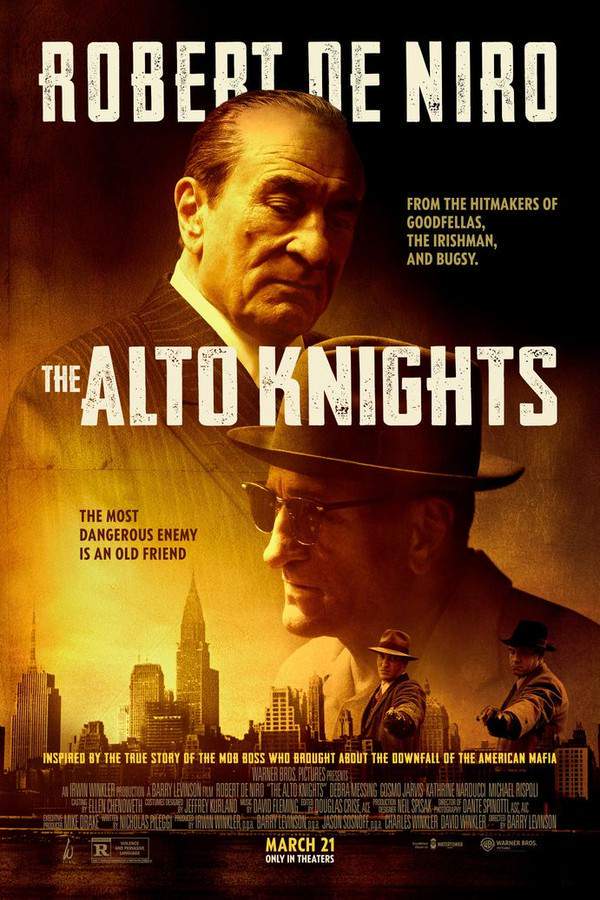
What Is The Alto Knights About?
The premise of The Alto Knights in 303 words, with nothing given away. The full story and the ending follow below.
In the smoky streets of 1920s New York, the city throbs with ambition, whispered codes, and the ever‑present hum of jazz that masks a world of hidden influence. Beneath the glittering façades of speakeasies and Broadway lights lies a network of families whose power is measured not just in territory but in the subtle balance of respect and fear. The film paints this era with a gritty, atmospheric palette—rain‑slicked sidewalks, flickering neon, and cramped backrooms where every word carries weight.
At the heart of this landscape sits Frank Costello, the seasoned head of the Luciano family. He carries the weight of a lifetime built on careful negotiation, a reputation for quiet authority, and a lingering yearning for a quieter existence. His demeanor is measured, his decisions deliberate, and his presence commands both reverence and caution. Across the table, Vito Genovese emerges as a younger, fiercely driven figure whose ambition burns hotter than the city’s nightlights, setting up an uneasy partnership that hints at a fragile alliance.
The dynamic between these two crime bosses is a study in contrasting philosophies: Costello’s strategic patience against Genovese’s relentless pursuit of dominance. Their shared history—once allies, now wary competitors—creates a palpable tension that crackles beneath every conversation, every glance. The film captures this push‑and‑pull through tight, shadow‑laden cinematography and a score that swells with both nostalgia and impending dread, suggesting that the balance of power is as precarious as a candle flickering in a storm.
As the story unfolds, the audience is drawn into a world where personal loyalty clashes with institutional ambition, and where the desire for a peaceful future collides with the relentless demands of a criminal empire. The stage is set for a confrontation that will test the very foundations of both men’s legacies—without ever revealing the exact moves they are about to make.
What Happens in The Alto Knights?
The complete story of The Alto Knights, from the first scene to the last, in 488 words (about 2 minutes). Spoilers throughout. Names in the text link to 1 cast member page.
Spoilers ahead
In the gripping narrative of a disintegrating criminal empire, Frank Costello, the Luciano family boss, finds himself enmeshed in a perilous game of survival following a failed assassination attempt by his ambitious underboss, Vito Genovese. Troubled by the incessant violence and relentless betrayals that color his existence, Costello declares his desire to retire and relinquish control of the family. Yet, Genovese, driven by an insatiable thirst for power and unyielding suspicion, perceives a treacherous plot beneath Costello’s intentions. This rising tide of distrust ignites a silent yet lethal conflict between the two men.
Things escalate when Genovese coldly arranges the brutal execution of Albert Anastasia, Costello’s chosen heir, while the latter sits unsuspectingly in a barber’s chair. This shocking act of violence obliterates the already fragile truce, plunging Costello into a stark realization—his life, along with the safety of his cherished wife, is precariously threatened. Convinced that dismantling the very empire he painstakingly constructed is the only way to secure their safety, Costello recognizes he must act decisively against Genovese’s imminent threats.
Genovese, so conditioned by his own paranoia, views Costello as a persistent danger to his ambition to dominate the Five Families and ascend as capo dei capi. In his warped perception, Costello’s demeanor, which seems mild, conceals a vengeful cunning, ready to retaliate for the thwarted assassination. However, unlike the power-hungry Genovese, Costello opts for a calculated, strategic ploy rather than succumbing to brutish ambition.
Forging a plan that defies the mafia’s traditional retaliatory codes, Costello refrains from murder, understanding that Genovese has enmeshed himself with influential allies likely to seek vengeance. Instead, he embarks on a more nuanced and insidious strategy, leveraging the heightened attention on the mafia to orchestrate Genovese’s arrest.
At the heart of Costello’s operation is the notorious Apalachin meeting. Although never definitively proven, circumstantial evidence hints that Costello may have alerted law enforcement to the congregation of formidable mafia leaders in Apalachin, New York, with Genovese set to solidify his ascendant status. To ensure the authorities would arrive on time, Costello deliberately delays his entrance, stopping for coffee and engaging in innocent apple-picking, all to buy precious moments for the impending raid. His somewhat comical antics, however, do not escape the notice of his vigilant driver.
Caught entirely off guard, the mobsters at the meeting explode into chaos, attempting to escape into the woods and inadvertently leaving a trail of incriminating evidence in their wake. Law enforcement meticulously documents license plate numbers, which leads to the indictment of twenty individuals for conspiracy to obstruct justice, having falsely claimed the meeting’s purpose. The dramatic Apalachin raid not only illuminates the inner workings of the American Mafia but also sets the stage for Genovese’s eventual downfall on drug charges in later years. Meanwhile, Costello, who quietly maneuvers the treacherous waters of organized crime, finally realizes his long-held aspiration for a peaceful retirement, eventually passing away as an older man who outwitted his rivals.
The Alto Knights Timeline: Every Key Event in Order
13 key events in the order they happen, from “Vito Genovese's Ambitious Plot” to “Finding Peace”. 3 events name a place, across 2 locations.
- 1
Vito Genovese's Ambitious Plot
Vito Genovese, the ambitious underboss, orchestrates a failed assassination attempt against Frank Costello, the Luciano family boss. This event marks the beginning of deep-seated distrust and strife between the two.
- 2
Costello's Retirement Decision
Weary of constant bloodshed, Frank Costello decides to inform Genovese of his intention to retire and cede control of the Luciano family. However, this declaration is met with skepticism and distrust from Genovese, who believes Costello is hiding his true intentions.
- 3
The Tipping Point
Genovese's paranoia escalates, leading him to orchestrate the brutal murder of Albert Anastasia, Costello's chosen successor. This shocking act disrupts the tenuous peace and heightens the stakes for Costello and his family.
Where:Barber Shop
- 4
Confronting Danger
In the aftermath of Anastasia's murder, Costello realizes that his life, and that of his wife, are in imminent danger. This realization compels him to consider dismantling the empire he has built in order to ensure their safety.
- 5
Understanding Genovese's Motives
Costello recognizes that Genovese's ambition to control the Five Families makes him a target in his own criminal organization. He understands that Genovese views him as a threat due to his perceived mild nature, which belies a potential for vengeful action.
- 6
Strategic Planning
Rather than resorting to murder, Costello devises a sophisticated plan that relies on leveraging the increased scrutiny of the mafia. His goal is to orchestrate Genovese's incarceration while avoiding direct conflict.
- 7
The Apalachin Meeting
Costello's plan hinges on the infamous Apalachin meeting, where powerful mafia figures gather to discuss their operations. Costello subtly tips off law enforcement about the gathering, setting the stage for a pivotal raid.
Where:Apalachin, New York
- 8
Delaying Tactics
To facilitate the success of his plan, Costello intentionally delays his arrival at the meeting. He engages in leisurely activities like coffee stops and apple-picking, all while ensuring that law enforcement is alerted in time.
- 9
Raiding Apalachin
Law enforcement arrives just in time to catch the mobsters off guard at the Apalachin meeting. The ensuing panic leads attendees to flee into the woods, leaving a trail of incriminating evidence behind.
Where:Apalachin, New York
- 10
Legal Consequences
The raid leads to the arrest and indictment of twenty mafia figures for conspiracy to obstruct justice. The incident exposes the inner workings of the American Mafia to the public and escalates scrutiny on their activities.
Show the other 3 events of The Alto Knights Hide the last 3 events
- 11
Genovese's Downfall
The fallout from the Apalachin meeting ultimately contributes to Vito Genovese's eventual downfall, as he faces formal charges related to heroin trafficking. This decline marks a significant turning point in the mafia landscape.
- 12
Costello's Achievements
In the wake of these events, Frank Costello achieves his long-desired goal of a peaceful retirement. Having outmaneuvered Genovese, he steps back from the violent life of crime.
- 13
Finding Peace
Frank Costello enjoys the remaining years of his life away from the mafia's violent entanglements. His decision to retire allows him to live out his days as an old man, free from the chaos that once dominated his life.
Who Are the Main Characters in The Alto Knights?
2 characters, among them Frank Costello and Vito Genovese: who each one is and the part they play in the story. Every profile links to the actor’s page.
-

Frank Costello
Played by Robert De Niro
Frank Costello is portrayed as a weary and strategic mob boss who seeks peace after a lifetime of violence. He is intelligent and possesses a calm demeanor, which contrasts sharply with the ambitious and paranoid nature of his underboss, Vito Genovese. Costello's plans reveal a man willing to sacrifice power for personal safety and legacy.
- 👨💼 Mafia Boss
- 🧠 Intelligent
- 🕊️ Peace Seeker
-

Vito Genovese
Played by Cosmo Jarvis
Vito Genovese is characterized by his excessive ambition and paranoia, which lead him to betray his boss. His aggressive tactics and willingness to resort to violence put him in direct opposition to Costello's more calculated approach. Genovese's actions ultimately reveal his insecurity and desire for absolute control within the criminal hierarchy.
- ⚔️ Ambitious
- 😈 Paranoid
- 🔥 Aggressive
Where and When Is The Alto Knights Set?
The Alto Knights is set in Apalachin and New York (1950s). Here is why the time and place matter to the story.
When
1950s
The 1950s were a tumultuous time in America, marked by the rise of organized crime and the struggle of law enforcement to combat it. This era witnessed numerous mafia power struggles and violent acts as gangsters vied for control. The public became increasingly aware of mafia operations, resulting in a series of investigations and crackdowns on organized crime.
Where
Apalachin, New York
Apalachin is a small town in New York known primarily for a historic mafia meeting in the 1950s. The town gained notoriety when law enforcement raided a gathering of mafia leaders there, which exposed the underbelly of organized crime in America. This event marked a significant moment in the struggle between the mafia and law enforcement.
- 🏙️ Location
- ⚔️ Mafia
- 🕵️♂️ Law Enforcement
What Are the Themes of The Alto Knights?
3 ideas the story keeps returning to, among them Betrayal, Justice and Power Struggle.
-
01
Betrayal
Betrayal is a central theme in 'The Alto Knights,' highlighted by the troubled relationship between Frank Costello and Vito Genovese. Costello's trust in his underboss becomes his undoing, leading to violent consequences. The atmosphere of paranoia and treachery illustrates the precarious nature of loyalty within the mafia.
-
02
Justice
The pursuit of justice plays a critical role as Costello uses cunning strategies to ensure his survival against Genovese's machinations. Rather than resorting to outright murder, Costello opts for a plan that leverages law enforcement's attention on mafia activities. This tension between criminality and justice highlights the complexities of the characters' moral landscapes.
-
03
Power Struggle
The power struggle between Costello and Genovese represents the broader conflict within the mafia. Genovese's ambition to dominate the Five Families drives the story, leading to violence and intrigue. Costello's calculated moves challenge the traditional norms of mafia warfare, focusing instead on intelligence and strategy.
How Does The Alto Knights End?
The last act of The Alto Knights and what it means, in 192 words. The ending lands as bittersweet. Big spoilers: read the plot summary first if you have not seen it.
The final act, in full
In the end, Frank Costello, having decided to step away from the violent world of crime, chooses a peaceful retirement over continuing the mafia feud. To do this, he orchestrates a clever plan to avoid Vito Genovese and the law altogether. By delaying his arrival at the crucial Apalachin meeting—possibly through the anonymous tips he arranged—Frank effectively ensures that Vito and the other mobsters are caught by the police. This move not only ends his personal conflict with Vito but also marks the unraveling of the American Mafia’s power. Vito is arrested and sentenced to prison, where he eventually dies, limiting his influence. Meanwhile, Frank lives a quieter life, escaping the chaos of his past. Although he faces some legal trouble for tax evasion, he manages to keep his identity under wraps, retire happily, and die of natural causes at the age of 82. His strategic decision to avoid violence and law enforcement allows him to finally leave his criminal past behind and enjoy his remaining years in peace. This ending underscores the themes of power, cunning, and the ultimate pursuit of peace over conflict in the dangerous world of organized crime.
What Kind of Film Is The Alto Knights?
Tense in tone, with steady pacing and a moderate story, going by the plot summary.
- Tone
- Tense
- Pacing
- Steady
- Story
- Moderate
- Intensity
- High
- Ending
- Bittersweet
A tense and methodical gangster epic that charts the psychologically draining power struggle between two paranoid mob bosses, where survival depends on cunning strategy rather than brute force.
- tense
- paranoid
- grim
- calculating
- methodical
- claustrophobic
- mafia rivalry
- betrayal
- power struggle
- organized crime
Content notes: assassination attempt, brutal execution, organized crime violence, betrayal.
Quiz
How well do you remember The Alto Knights? Test yourself on the story.