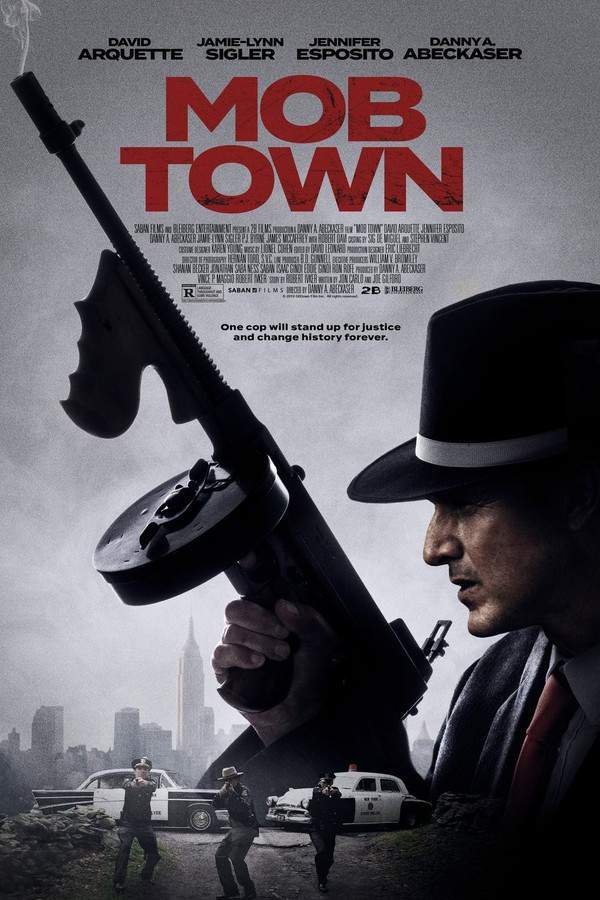
What Is Mob Town About?
The premise of Mob Town in 278 words, with nothing given away. The full story follows below.
In the simmering heat of 1950s America, a quiet upstate New York town becomes the unlikely backdrop for a clash between two worlds. While the nation’s attention is fixated on the looming threat of communism, whispers of an unseen network of crime families circulate beneath the veneer of small‑town normalcy. The atmosphere is thick with suspicion, the streets lined with modest homes that hide the quiet movement of powerful forces gathering under the cover of night.
Enter Edgar Croswell, a forty‑year‑old state trooper whose personal life—marked by divorce and a solitary existence inside the station—has hardened his resolve to notice what others overlook. He teams up, reluctantly, with an FBI agent whose mandate is to pierce the veil of secrecy surrounding these criminal syndicates. Their partnership is uneasy, each bringing a different set of tools and bureaucratic obstacles: Croswell’s intimate knowledge of the town versus the agent’s national reach and the FBI’s preoccupation with larger political battles.
The film’s tone balances the brooding tension of classic noir with the stark realism of a period drama. Shadows stretch across the town’s alleys and the fog that rolls off the nearby lakes mirrors the murky motives of those gathering for the clandestine summit. As the two lawmen close in on the hidden meeting, the audience feels the electric charge of power dynamics at play—authority, intimidation, and the fragile threads of loyalty that bind both sides of the law.
Against this backdrop, the story explores the weight of duty versus personal conviction, the uneasy dance between local intuition and federal ambition, and the ever‑present question of how far one will go when the line between protector and predator begins to blur.
What Happens in Mob Town?
The complete story of Mob Town, from the first scene to the last, in 335 words (about 1 minute). Spoilers throughout. Names in the text link to 3 cast member pages.
Spoilers ahead
On November 14, 1957, more than 100 of the United States’ most notorious organized-crime figures gathered in Apalachin, New York, for a historic meeting orchestrated by Vito Genovese. Genovese, who had already sidelined two major rivals, Frank Costello and Albert Anastasia, sought to consolidate power and declare himself Capo dei Capi, the boss of bosses.
In the quiet upstate town, Sgt. Ed Croswell, a 40-year-old divorced state trooper living at the station, begins to notice odd patterns: unusual visitors, late-night activity, and a sense that something big is unfolding. A semi-retired mobster named Joe Barbara, nicknamed “Joe the Barber,” had recently bought a bottling plant and a 53-acre estate just outside town.
Genovese sets the summit at the Barbara Estate, and much of the film follows the meticulous planning and logistics of bringing so many powerful figures together. Croswell tries to warn local law enforcement and even federal agents, but his alerts are dismissed or ignored, reflecting the era’s skepticism about organized crime.
In a climate where the FBI was prioritizing Cold War fears, director J. Edgar Hoover refused to publicly acknowledge the existence of a “National Crime Syndicate.” Undeterred, Croswell continues his investigation into Joe the Barber and the businesses around him, piecing together a pattern that suggests a larger, coordinated operation.
His breakthrough comes when he discovers that Barbara has effectively monopolized the town’s meat and fish supply and has literally booked every motel room in Apalachin, signaling a planned, coordinated gathering. With little to no backup, Croswell and a small cadre of local officers mount a surprise raid on the estate and arrest 58 of the era’s most infamous crime figures. While those arrests are later overturned, the episode forces the FBI to publicly acknowledge the existence of an organized-crime syndicate.
This acknowledgment leads J. Edgar Hoover to create an organized-crime task force, and it ultimately contributes to the birth of the Racketeer Influenced and Corrupt Organizations (RICO) Act, a landmark tool still used by law enforcement to fight organized crime today.
Mob Town Timeline: Every Key Event in Order
12 key events in the order they happen, from “Genovese consolidates power and eliminates rivals” to “Apalachin as a turning point in public policy”. 12 events name a place, across 8 locations.
- 1
Genovese consolidates power and eliminates rivals
Vito Genovese used his position as head of the Luciano crime family to remove two major rivals, Frank Costello and Albert Anastasia. The moves clear the way for him to claim the title of Capo Dei Capi, the boss of bosses. This power shift sets the stage for a dramatic underworld summit.
When:Before November 14, 1957 Where:New York, NY
- 2
Joe the Barber acquires estate and bottling business
Semi-retired mobster Joe Barbara buys a bottling plant and a large estate near Apalachin to create a secluded base. The purchases provide resources and privacy ideal for hosting a high-level gathering. Barbara’s properties become the planned summit site’s centerpiece.
When:Before November 14, 1957 Where:Barbara Estate vicinity, Apalachin, NY
- 3
Summit planned at Barbara Estate in Apalachin
Genovese decides to hold the historic summit at Barbara Estate, drawing leaders of organized crime from across the country. The plan attracts attention from various factions and law-enforcement watchers. The estate becomes the focal point for what would be a landmark gathering.
When:November 14, 1957 (planning phase) Where:Barbara Estate, Apalachin, NY
- 4
Sgt. Croswell notices unusual activity in Apalachin
Sgt. Edgar Croswell, a dedicated local officer, begins noticing strange traffic and heightened security around town as rumor of a major meeting spreads. He senses something bigger than routine business is taking shape. His observations point toward a clandestine assembly.
When:Mid-November 1957 Where:Apalachin, NY
- 5
Warning to authorities is ignored
Croswell attempts to alert local law enforcement and the FBI, but his warnings are dismissed or overlooked. At the time, national attention is dominated by anti-Communist concerns, not organized crime. The town continues to prepare for the gathering.
When:Mid-November 1957 Where:Apalachin, NY; FBI Headquarters
- 6
Clues of a large, coordinated meeting emerge
Croswell digs deeper and uncovers a crucial clue: Joe the Barber has bought out nearly every meat and fish supplier in town. He also discovers that almost every motel room in Apalachin is booked solid. These signs point to a large, organized gathering rather than ordinary business.
When:Mid-November 1957 Where:Apalachin, NY
- 7
Raid at the Barbara Estate and arrests
With scant backup, Croswell and a small group of local officers raid the Barbara Estate and arrest 58 high-profile mob figures. The operation punctures the facade of a routine meeting and flash floods the town with headlines. It reveals the scale of the underworld gathering and the reach of the attendees.
When:November 14, 1957 Where:Barbara Estate, Apalachin, NY
- 8
Arrests overturned but the truth comes to light
The arrests are eventually overturned in court, highlighting the limitations of local law enforcement at the time. Nevertheless, Croswell’s actions force the FBI to publicly acknowledge the existence of an organized crime syndicate in the United States. The event shifts federal attitudes toward crime networks.
When:November 1957 Where:National (FBI); Apalachin, NY
- 9
Hoover creates an organized-crime task force
In response to the Apalachin revelations, J. Edgar Hoover’s FBI establishes an organized-crime task force to coordinate ongoing investigations. The move marks a turning point in federal efforts against the underworld. It signals a new era of systematic enforcement against organized crime.
When:Late 1950s Where:FBI Headquarters, Washington, D.C.
- 10
RICO Act emerges to target crime enterprises
Over the following years, the need for stronger tools leads to the Racketeer Influenced and Corrupt Organizations (RICO) Act. The act provides prosecutors with the means to dismantle entire criminal enterprises, not just individual acts. It becomes a foundational weapon in the federal fight against organized crime.
When:1970 Where:United States
- 11
RICO reshapes law-enforcement approaches
Since its passage, RICO has been widely used to prosecute complex criminal networks and corrupt organizations. Agencies adopt its framework to target leadership structures and coordinated activity. The statute remains a central tool in ongoing efforts to counter organized crime.
When:1970s–present Where:United States
- 12
Apalachin as a turning point in public policy
The Apalachin meeting becomes a watershed moment in public awareness and policy. The public exposure of a national crime syndicate accelerates reforms and investigative tactics. The event echoes through subsequent legislation and federal investigative strategies.
When:Post-1957 Where:Apalachin, NY
Who Are the Main Characters in Mob Town?
10 characters, among them Sgt. Ed Croswell (David Arquette), Joe Barbara (Danny A. Abeckaser) and Vito Genovese (Robert Davi): who each one is and the part they play in the story. Every profile links to the actor’s page.
-
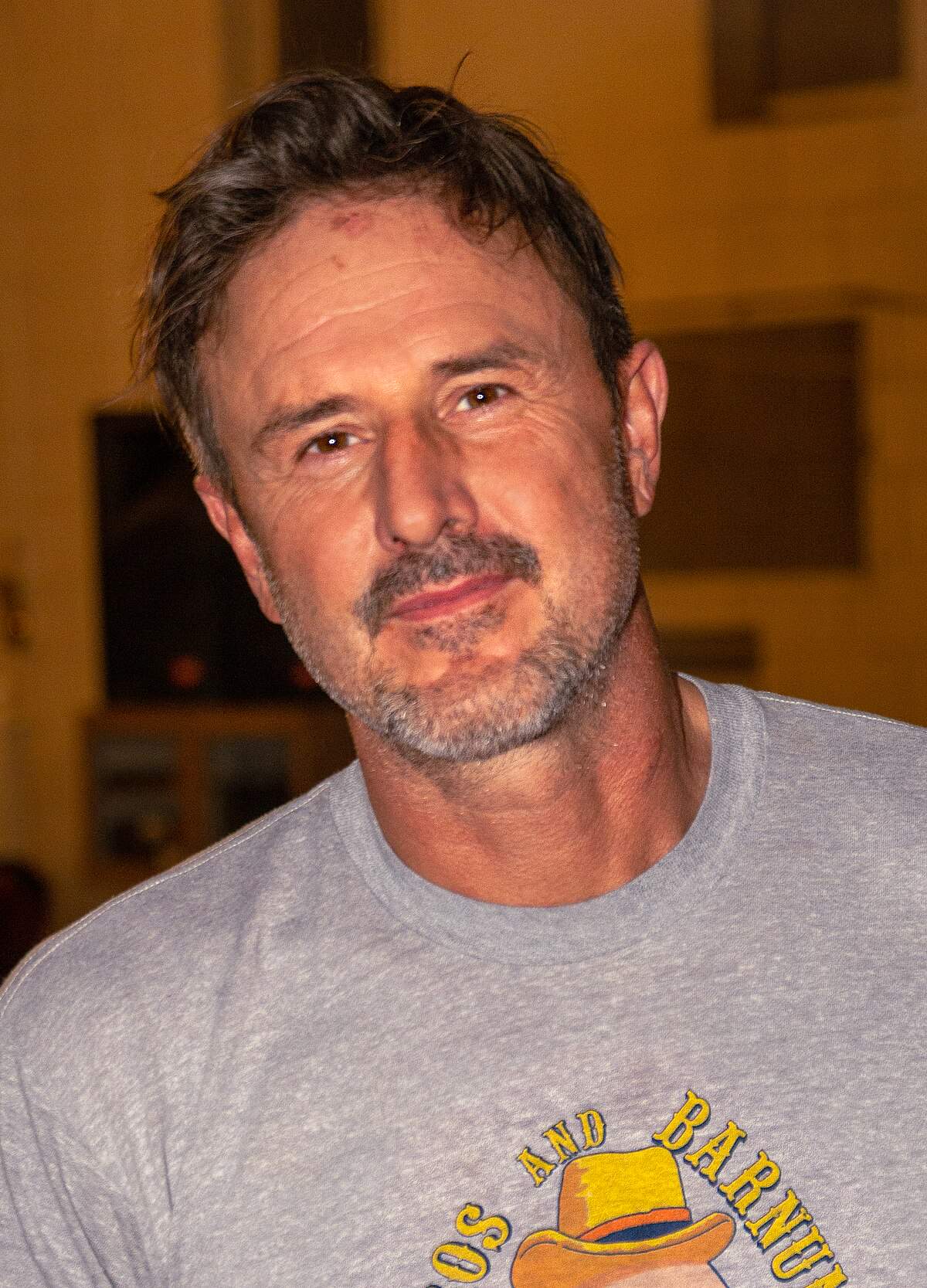
Sgt. Ed Croswell (David Arquette)
Played by David Arquette
A determined state trooper living in the Apalachin police station, Croswell pursues Joe Barbara’s operations despite local resistance. His relentless investigation drives the film’s tension as he confronts bureaucratic inertia and mounting danger.
- 🧭 Investigation
- 🏛️ Law enforcement
- 🔎 Tenacity
-

Joe Barbara (Danny A. Abeckaser)
Played by Danny A. Abeckaser
A semi-retired mob figure who owns the ginger-ale bottling plant and the Barbara Estate, serving as the summit’s undisclosed hub. He embodies the quiet, calculating reach of organized crime behind the surface of small-town life.
- 🏚️ Estate owner
- 🧭 Logistics
- 🧩 Insider
-
Vito Genovese (Robert Davi)
Played by Robert Davi
The driving force behind the summit, Genovese seeks to assert himself as the top boss and coordinate diverse crime families. His planning and authority frame the film’s exploration of power in the underworld.
- 👑 Boss
- 🧠 Mastermind
- 🧭 Power
-
Vincent Vasisko (P.J. Byrne)
Played by P.J. Byrne
An associate involved in the summit’s operations, navigating loyalties and risk within the criminal network. He represents the interconnected web of actors who execute the plan.
- 🤝 Associate
- 🧭 Loyalties
- 🗺️ Network
- JB
Josephine Barbara (Jamie-Lynn Sigler)
Played by Jamie-Lynn Sigler
A member of the Barbara family connected to Joe Barbara, involved in the estate and logistics surrounding the summit. Her role hints at the family ties that support criminal enterprise.
- 👩👧 Family tie
- 🧭 Connections
- 🏛️ Influence
-
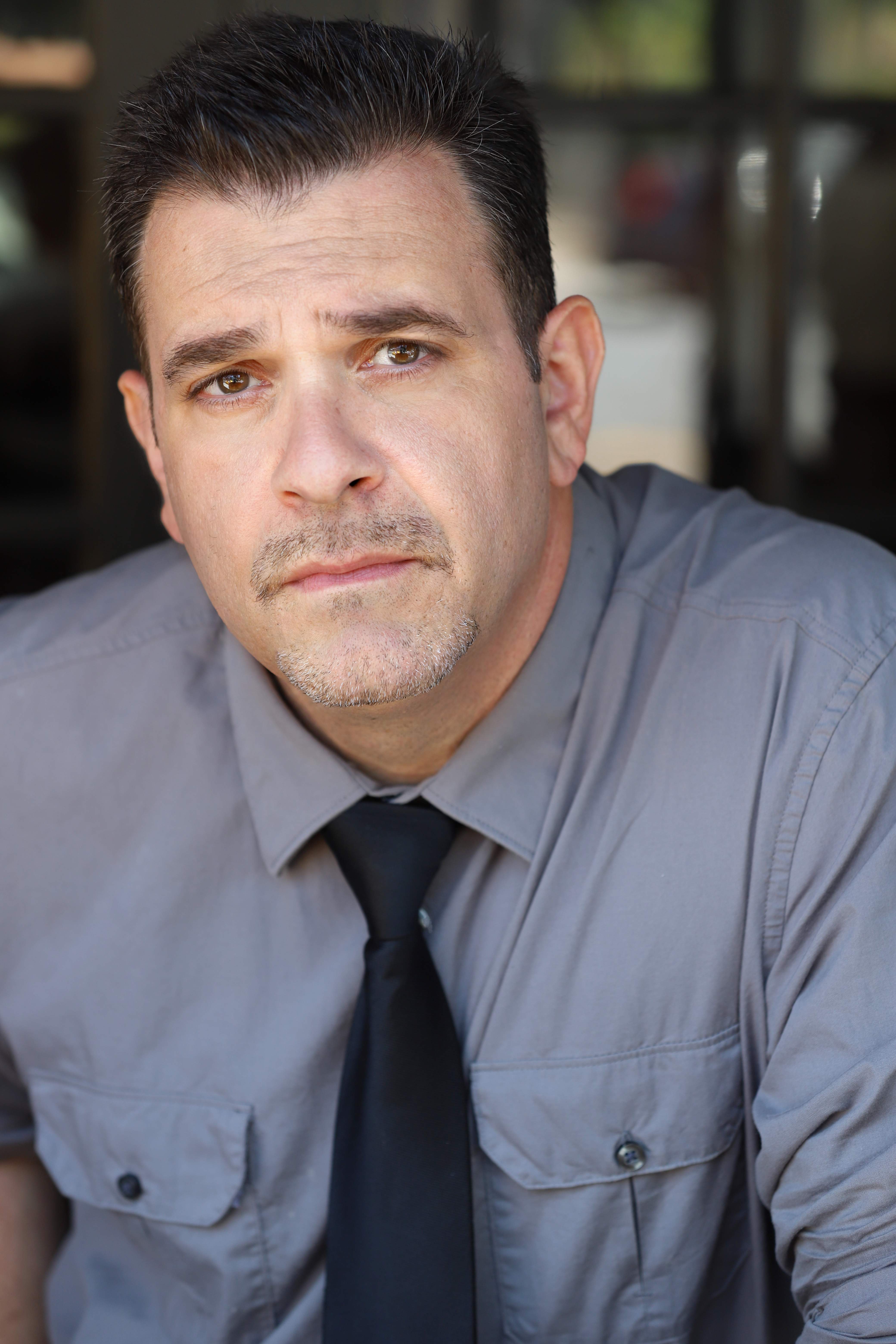
Carmine Galante (Gino Cafarelli)
Played by Gino Cafarelli
A mob figure representing factional players at the summit, illustrating how multiple factions negotiate power within a single event.
- 🤝 Faction leader
- 🧠 Strategist
- 🔗 Network
- VG
Vincent Gigante (Nick Cordero)
Played by Nick Cordero
A key mob figure present at the summit, involved in shaping power dynamics and connections within the underworld.
- 👤 Attendee
- 🧭 Power broker
- 🔒 Insider
-

Natalie Passatino (Jennifer Esposito)
Played by Jennifer Esposito
A contact connected to the Barbara circle, potentially playing a liaison role that ties people and interests together around the summit.
- 👩 Liaison
- 🧭 Connections
- 🏛️ Community
- MM
Mike Miranda (Anthony DeSando)
Played by Anthony DeSando
A mid-level mob figure who participates in the summit, representing the broader participation that sustains the network.
- 🧭 Leader
- 🤝 Networker
- 🗺️ Strategy
- D(
Dominick (Sasha Feldman)
Played by Sasha Feldman
An associate present in Apalachin, contributing to the summit through quiet presence and behind-the-scenes activity.
- 🧩 Associate
- 🗺️ Eyes & Ears
- 🕶️ Secretive
Where and When Is Mob Town Set?
Mob Town is set in Apalachin, New York and Barbara Estate (November 14, 1957). Here is why the time and place matter to the story.
When
November 14, 1957
The events unfold in the late 1950s, a period when organized crime operated through loosely connected regional factions. Public acknowledgement of a national crime syndicate was scarce, and the FBI under J. Edgar Hoover resisted calling it a formal threat. The summit's disruption ultimately motivates law enforcement to rethink its approach and contribute to the creation of the Racketeer Influenced and Corrupt Organizations (RICO) Act.
Where
Apalachin, New York, Barbara Estate
Set in the upstate New York town of Apalachin, the film centers on the Barbara Estate where the historic mob summit is planned. The nearby ginger-ale bottling plant and estate grounds connect the quiet town to a national crime network. The rural backdrop highlights the clash between law enforcement and a powerful syndicate.
- 🗺️ Town setting
- 🧭 Real-life event
- 🕵️♂️ Crime history
What Are the Themes of Mob Town?
3 ideas the story keeps returning to, among them Power & Prestige, Justice & Exposure and Consequence & Reform.
-
01
Power & Prestige
The summit organized by Genovese reveals a calculated bid for supremacy among rival mob factions. Control over money, influence, and territory is pursued through planning, secrecy, and intimidation. The film uses Apalachin’s calm veneer to underscore the scale of clandestine power.
-
02
Justice & Exposure
Sgt. Croswell's persistence clashes with official skepticism, illustrating the friction between local courage and institutional caution. The investigation pushes federal attention onto organized crime and forces a public reckoning. The eventual outcomes highlight the first cracks in the government's response to the syndicate.
-
03
Consequence & Reform
The case catalyzes institutional changes in law enforcement, culminating in greater federal scrutiny and the later creation of the RICO framework. The narrative shows how a single event can alter the balance between crime and law. The film frames reform as a direct consequence of journalists and officers forcing accountability.
What Kind of Film Is Mob Town?
Tense in tone, with steady pacing and a moderate story, going by the plot summary.
- Tone
- Tense
- Pacing
- Steady
- Story
- Moderate
- Intensity
- High
- Ending
- Happy
A tense and methodical crime drama that builds steadily around the unbearable pressure of a lone officer challenging a vast conspiracy, creating a gripping and anxious atmosphere.
- tense
- investigative
- unrelenting
- gripping
- anxious
- methodical
- organized crime
- police investigation
- betrayal
- power struggle
Content notes: gang violence, murder, criminal underworld, political corruption.
Quiz
How well do you remember Mob Town? Test yourself on the story.
Where to Watch Mob Town
Rent or buy it from Fandango At Home and Google Play Movies. US availability and prices from JustWatch.




Streaming availability in the US, powered by