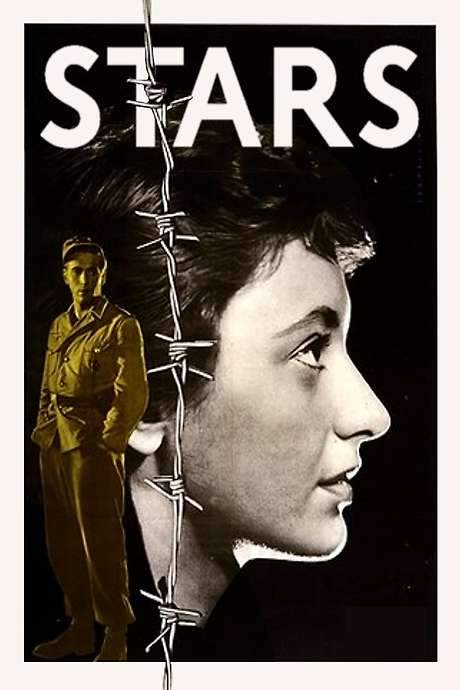



Where to Watch Stars
See current US streaming, rental, and purchase options for Stars (1959) via JustWatch.



Streaming availability powered by 
Stars Plot Summary
Read the complete plot summary and ending explained for Stars (1959). From turning points to emotional moments, uncover what really happened and why it matters.
In a quiet Bulgarian town during 1943, a non-commissioned Wehrmacht officer, Walter, is assigned to supervise the civilian workers at a local motor vehicle workshop. He prefers sketching the town and its people to soldiering, earning the teasing title “Rembrandt” from his supervisor, while his closest comrade, Lieutenant Kurt, beams with pride at a portrait Walter has drawn of him. Walter’s thoughts drift away from the frontlines, and the war feels distant to him as he paces the streets with a quiet curiosity about the lives around him.
Soon, Greek Sephardic Jews are brought into the area, held in a nearby concentration camp until they can be transported to Auschwitz. Through the camp’s barbed wire, Ruth, a Jewish woman, asks Walter for help when a woman there gives birth. Walter initially refuses, and Ruth’s sharp rebuke lands with a sting: she calls him a wolf and a rat, full of contempt. Later, a doctor—a figure who tends to the camp’s exhausted inmates—helps the newborn, and Walter reappears in the camp with this medical aid, indicating a subtle shift in his view of the people behind the wire. Back in the town, Walter discovers the lighter belonging to a Bulgarian named Bai Petko at the workshop’s break-in site but does not tell on the thief, keeping a low profile in the face of the town’s tensions.
The following day, partisan riders secretly arrive at Petko’s home. The “doctor” who treats them claims a need for medicine, and Petko hopes to secure it through Walter’s help. He tells Walter that the medicine is meant for the Jews in the camp, prompting Walter to smuggle a package to Blashe, one of Petko’s trusted helpers. That same evening, Walter and Kurt sit in a pub, and Ruth—brought to Walter by Kurt’s arrangement—spends time with him. The two begin to form a fragile, unlikely connection as they walk the village’s dim streets after curfew, Ruth accompanies Walter to the camp gate, and Walter wonders, with growing ache, what he might actually do to change anything.
The next day brings a harsher reckoning. Blashe is caught with the medicine, and the two men share a quiet, unspoken allegiance—each choosing not to expose the other. Kurt, however, expands his search for stolen goods among the camp’s Jews, meting out punishment to those who possessed pieces of the contraband. Walter realizes that his attempts to do something good have not created real change; Petko’s deception about the medicine’s purpose becomes clear, and Walter returns Petko’s lighter, signaling he remains aligned with Petko’s world rather than with the German authorities. In a quiet, tender moment, Walter sees Ruth again and pleads for her to escape; she eventually agrees to flee the next night, though her fate remains uncertain.
That moment of hope is tempered by the brutal logic of war. The following day, Kurt tells Walter the Jews are to be deported the next day, a line that underscores the sense of impending loss. Walter, now clearly in love with Ruth, discovers a drawing of her in his notebook—the inscription from Kurt implies that the deception about deportation was a protective lie. Walter shifts his plan toward an escape for Ruth, enlisting Petko’s help to move her to safety. Petko reveals that the partisan soldiers had their own hidden agenda—to seize weapons—thus complicating any attempt to shelter Ruth. When the moment to act arrives, Walter tries to orchestrate a ruse with Petko to remove Ruth from the camp, but by then the deportation has already taken place. He races to the train platform and watches the cattle cars pull away, Ruth inside, their speed a painful reminder of what cannot be undone. Returning to his room, Walter finds Ruth’s portrait with Kurt’s note confessing that the departure time was altered for Walter’s sake. In the end, Walter allies with Petko to support the broader resistance’s weapons supply, and the final image lingers on Ruth in the cattle car as the poignant song It Burns (Es brennt) fills the scene. > “Tomorrow.”
Ruth’s plight—along with her father’s presence in the camp and the hardships faced by their group—anchors the film as a meditation on moral choice under occupation, the complexities of mercy, loyalty, and the costly price of choosing who to help when every helping hand risks drawing danger. The characters are drawn with restraint and humanity, tracing a path from apathy to a fragile, desperate attempt at saving lives, even as the war relentlessly presses in on them all.
Stars Timeline
Follow the complete movie timeline of Stars (1959) with every major event in chronological order. Great for understanding complex plots and story progression.
Walter's reluctant duty and artistic escape
In 1943, a non-commissioned Wehrmacht officer named Walter is tasked with supervising civilian workers at a motor vehicle workshop in a small Bulgarian town. He confines himself to drawing the area and its people rather than engaging with the war, earning the nickname 'Rembrandt' from his supervisor. His best friend Kurt prizes a portrait Walter has made, while Walter himself longs to be far from the conflict.
Ruth's plea at the camp
From the camp near the town, Ruth, a Greek Sephardic Jew, asks Walter for help with a woman giving birth. Walter dismissively refuses, and Ruth brands him a wolf and a rat, full of contempt. The moment reveals Walter's emotional distance from the war and his moral ambivalence toward the prisoners.
Delivery assisted by a doctor
That day, Walter returns to the camp with a doctor who helps the exhausted woman bring a child into the world. The act of aiding a birth shows Walter's reluctant willingness to engage with people in need. The moment contrasts with the violence surrounding the war.
Workshop break-in and Petko's lighter
That evening, the motor vehicle workshop is broken into, and Walter finds the lighter of a Bulgarian man named Bai Petko. He chooses not to tell on the man, signaling his preference to stay out of trouble even as crime occurs nearby. The moment marks a turning point in his moral gray zone.
Petko's pitch and medicine smuggling
Next day, partisan soldiers secretly arrive at Petko’s home. Petko, who treats the partisans in the woods, asks Walter for medicine, claiming the supply is for the Jews in the camp. Walter agrees to smuggle a package of medicine to Blashe, one of Petko’s errand boys, blurring the lines between aid and complicity.
Evening encounter with Ruth
At the pub, Kurt notices the many Bulgarian women, while Walter brings Ruth from the camp to mingle in the town’s night streets. They walk together through the town and slowly grow closer, until Walter leaves Ruth at the camp gate and ponders what one can truly do.
Arrest of Blashe and the crackdown
The following day, Blashe is caught by the Bulgarian police with the medicine. Walter and Blashe do not inform on each other, but Kurt orders the Jews in the camp to be punished for possessing the medicine. Walter realizes that trying to do good has not actually helped anyone.
Loyalties tested and Ruth's plan forms
Walter returns Petko’s lighter to prove his loyalty, but Petko still suspects him of informing on Blashe. He then meets Ruth again; she is brought to him at Kurt’s initiative. They talk late into the evening, and Walter urges Ruth to escape, a plan she agrees to pursue the next night.
Deportation looming and the escape plan
The next day Kurt reveals that the Jews will be deported 'Tomorrow.' Walter tries to organize Ruth’s escape with Petko, hoping to use some ruse, while Petko confesses the partisan soldiers’ real aim to steal weapons. By the time the plan could be enacted, the deportations have begun and the timing collapses.
The platform chase and Ruth's departure
Walter runs to the train platform but can only watch the cattle cars carrying Ruth depart. The failed rescue leaves him hollow as the lives of those he wanted to help drift away. He then returns to his room to confront the consequences of his choices.
Portrait revelation and turn toward resistance
Back in his room, Walter finds Ruth’s portrait with a note from Kurt admitting that he lied about the departure time for Walter’s own good. The discovery hardens Walter and pushes him to join Petko in figuring out how to supply weapons to the partisan soldiers. The moment marks a pivot from personal longing to a broader resistance.
Ruth in the cattle car
The final image shows Ruth inside the cattle car, with the poignant song It Burns playing in the background. The ending leaves Walter with a sense of how his small acts of defiance intersect with the brutal machinery of deportation. The film closes on Ruth’s fate as a testament to the costs of moral ambiguity in war.
Stars Characters
Explore all characters from Stars (1959). Get detailed profiles with their roles, arcs, and key relationships explained.
Walter
A non-commissioned Wehrmacht officer assigned to supervise civilian workers in a motor workshop. He prefers drawing people and scenes over waging war, earning the nickname 'Rembrandt' from his supervisor. He is morally conflicted and gradually questions his duties as he grows attached to Ruth and the prisoners.
Ruth (Sasha Krusharska)
A Greek Sephardic Jewish woman imprisoned in the camp. She challenges Walter with her plea for help and embodies resilience in the face of deportation. Her relationship with Walter becomes a focal point of hope and peril.
Kurt (Erik S. Klein)
Lieutenant Kurt is proud of his authority and enforces deportations with strict discipline. He uses the appearance of order to police both prisoners and soldiers and even writes on Walter’s portrait to reveal his hold on the situation.
Bai Petko
A Bulgarian man who acts as a go-between for the locals and the partisans. He believes medicine can help those in the camp and tries to curry favor with Walter, using the drug supply as leverage.
Blashe
One of Petko’s errand boys who is involved in smuggling medicine. He is caught with the medicine by Bulgarian police but neither he nor Walter exposes the other, illustrating mutual non-snitching amid risk.
Doctor
A physician who treats prisoners and participates in the network of helping the camp's ailing residents. He navigates moral lines, choosing to aid people despite the dangers.
Ruth's Father
Ruth's father appears at the camp; he endures the fear and pain of deportations and supports his daughter in the struggle to survive.
Police Governor
A Bulgarian police official overseeing the camp and deportations, representing the institutional force maintaining the system of persecution.
Nervous Jewish Man
A member of the Jewish community shown with anxious demeanor, illustrating the constant fear and precariousness of life under occupation.
Starata evreyka
An elderly Jewish woman in the town, representing resilience and the memory of a community under siege.
Stars Settings
Learn where and when Stars (1959) takes place. Explore the film’s settings, era, and how they shape the narrative.
Time period
1943
Set in 1943 during World War II, Bulgaria is aligned with Axis powers and Jews are confined to camps and deported to Auschwitz. The era's climate is defined by surveillance, arrests, and moral compromises. Everyday life in the town is punctuated by the fear of deportation and the fragile hope of escape.
Location
Small Bulgarian town, nearby concentration camp, rural woods
A small Bulgarian town in 1943 sits under the shadow of wartime occupation. A nearby concentration camp with barbed wire and guarded perimeter casts a constant threat over daily life. The town blends workshop life, pubs, and forested outskirts where partisans operate, shaping the tense atmosphere of the story.
Stars Themes
Discover the main themes in Stars (1959). Analyze the deeper meanings, emotional layers, and social commentary behind the film.
🕊️
Mercy vs Duty
Walter's small acts of kindness toward Ruth and the camp prisoners clash with his military role, highlighting the pull between humanity and obedience. The film uses intimate encounters to question whether personal compassion can survive in a brutal system. It shows that doing the right thing carries personal risk and complex consequences.
⚖️
Moral Ambiguity
Choices are murky as characters balance self-preservation, loyalty, and the urge to help the vulnerable. The officers, partisans, and civilians navigate competing pressures, revealing how easily ethics bend under threat. The story suggests that mercy and complicity can coexist in uneasy forms.
💔
Love in Wartime
Walter and Ruth's relationship becomes a fragile beacon amid fear and deportations. Their moments of connection underscore the human desire for connection, even as plans crumble and danger mounts. The romance is tempered by the likelihood of tragedy, making care feel both precious and risky.

Coming soon on iOS and Android
The Plot Explained Mobile App
From blockbusters to hidden gems — dive into movie stories anytime, anywhere. Save your favorites, discover plots faster, and never miss a twist again.
Sign up to be the first to know when we launch. Your email stays private — always.
Explore the mobile appStars Spoiler-Free Summary
Discover the spoiler-free summary of Stars (1959). Get a concise overview without any spoilers.
In the summer of 1943 a remote Bulgarian village basks in an uneasy stillness, its stone streets and quiet workshops humming beneath the shadow of a wider war. The landscape is a study in contrasts: the pastoral rhythms of daily life coexist with the distant roar of conflict, while barbed‑wire fences begin to appear on the outskirts, hinting at the dark currents flowing through the region.
Walter, a German Wehrmacht sergeant stationed to oversee a modest motor‑vehicle workshop, moves through this world with a sketchbook in hand rather than a rifle at his side. His talent for drawing earns him a teasing nickname among his peers, and his quiet curiosity draws him toward the faces and stories of the townspeople more than toward orders from the front. Alongside him is his fellow officer Kurt, whose pride in the uniform and camaraderie offers a foil to Walter’s more introspective demeanor.
When a transit camp is set up to hold Greek Sephardic Jews awaiting transport, the village’s fragile equilibrium is disturbed. Among the inmates, Ruth reaches out across the wire, pleading for assistance with a woman in labor. Their first exchange is charged with tension and contempt, yet it also plants the seed of an unlikely connection that begins to pull the sergeant out of his detached routine and into a moral landscape far more complex than the orderly sketches he prefers.
The film unfolds as a meditation on the quiet choices that define humanity in extraordinary times. Its tone balances muted melancholy with faint glimmers of hope, inviting the audience to linger on the subtle gestures and lingering gazes that hint at deeper loyalties and the weight of conscience. Within the hushed streets and looming fences, the lives of Walter and Ruth intersect, suggesting that even in a world ruled by war, small acts of compassion can ripple far beyond their humble origins.
Movies with Similar Twists and Themes
Uncover films that echo the narrative beats, emotional arcs, or dramatic twists of the one you're exploring. These recommendations are handpicked based on story depth, thematic resonance, and spoiler-worthy moments — perfect for fans who crave more of the same intrigue.


Featured on this page

What's After the Movie?
Not sure whether to stay after the credits? Find out!
Check out our other apps:

SAT Sphere
Build confidence for the Digital SAT.

Mori Atlas
Discover wild places worth protecting.

Luntero
Search smarter for a home in Amsterdam.

Plot Explained
Unravel movie endings and hidden clues.

Pokechamp
Dive into Pokémon data and battle logic.

Driving Theory
Get ready for your European theory test.

Movie Dust
Plan your next cinema trip with ease.

Musemap
Find art and culture as you travel.

Selkobase
Compare credentials before committing.

Local Manual
Turn an unfamiliar country into practical next steps.

Lernavi
Compare school systems before your next move.

GymRoam
Find a workout stop wherever your plans take you.
Explore Our Movie Platform
New Movie Releases (2026)
Famous Movie Actors
Top Film Production Studios
Movie Plot Summaries & Endings
Major Movie Awards & Winners
Best Concert Films & Music Documentaries
Movie Collections and Curated Lists
© 2026 What's After the Movie. All rights reserved.
Privacy Policy