Stars 1959

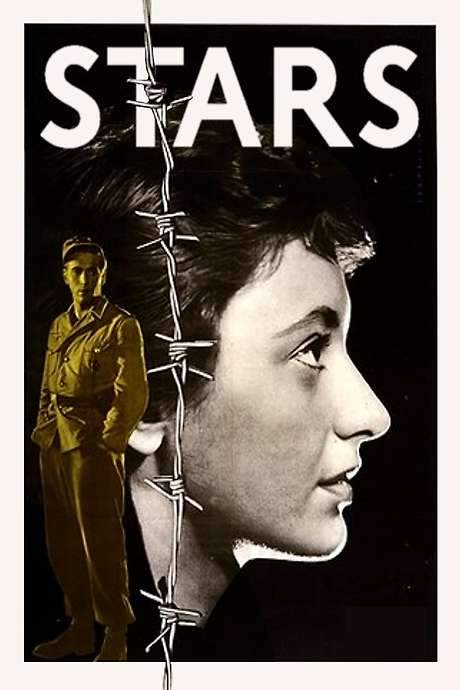
Stationed in a secluded Bulgarian village in 1943, Walter—a German Wehrmacht sergeant and artist—lives in an almost idyllic distance from the war. When a transit camp is set up for Jews arriving from Greece, interned Ruth asks him to help a pregnant woman, and the two form an unlikely bond that alters their lives.


Does Stars have end credit scenes?
No!
Stars does not have end credit scenes. You can leave when the credits roll.
Where to Watch Stars
See current US streaming, rental, and purchase options for Stars (1959) via JustWatch.



Streaming availability powered by 
Meet the Full Cast and Actors of Stars
Explore the complete cast of Stars, including both lead and supporting actors. Learn who plays each character, discover their past roles and achievements, and find out what makes this ensemble cast stand out in the world of film and television.

Itzhak Finzi
Jewish Man
Yuriy Yakovlev
German officer
Hannjo Hasse
Ivan Kondov
Ruth's father
Waltraut Kramm
Muzzi's Friend
Trifon Dzhonev
Jürgen Frohriep
Unteroffizier Walter
Erik S. Klein
Kurt
Albert Zahn
Peter Vasilev
Stefan Pejchev
Bai Petko
Grigor Vachkov
Montyor v rabotilnitzata
Naicho Petrov
Police Govenor
Hans Fiebrandt
Gani Staykov
Milka Tuykova
Partisan
Leo Conforti
Nervous jewish man
Georgi Naumov
Blashe
Luna Davidova
Sasha Krusharska
Ruth
Shtilyan Kunev
Doctor
Elena Hranova
Starata evreyka
Kancho Boshnakov
Georgi Banchev
External Links and Streaming Options
Discover where to watch Stars online, including streaming platforms, rental options, and official sources. Compare reviews, ratings, and in-depth movie information across sites like IMDb, TMDb, Wikipedia or JustWatch.





Take the Ultimate Stars Movie Quiz
Challenge your knowledge of Stars with this fun and interactive movie quiz. Test yourself on key plot points, iconic characters, hidden details, and memorable moments to see how well you really know the film.
Stars from 1959: A wartime drama set in a Bulgarian town during 1943, following a German officer named Walter as he becomes entangled with local resistance, a Jewish woman named Ruth, and the moral complexities of occupation.
Who is the non‑commissioned Wehrmacht officer assigned to supervise the civilian workers at the motor vehicle workshop?
Full Plot Summary and Ending Explained for Stars
Read the complete plot summary of Stars, including all major events, twists, and the full ending explained in detail. Explore key characters, themes, hidden meanings, and everything you need to understand the story from beginning to end.
In a quiet Bulgarian town during 1943, a non-commissioned Wehrmacht officer, Walter, is assigned to supervise the civilian workers at a local motor vehicle workshop. He prefers sketching the town and its people to soldiering, earning the teasing title “Rembrandt” from his supervisor, while his closest comrade, Lieutenant Kurt, beams with pride at a portrait Walter has drawn of him. Walter’s thoughts drift away from the frontlines, and the war feels distant to him as he paces the streets with a quiet curiosity about the lives around him.
Soon, Greek Sephardic Jews are brought into the area, held in a nearby concentration camp until they can be transported to Auschwitz. Through the camp’s barbed wire, Ruth, a Jewish woman, asks Walter for help when a woman there gives birth. Walter initially refuses, and Ruth’s sharp rebuke lands with a sting: she calls him a wolf and a rat, full of contempt. Later, a doctor—a figure who tends to the camp’s exhausted inmates—helps the newborn, and Walter reappears in the camp with this medical aid, indicating a subtle shift in his view of the people behind the wire. Back in the town, Walter discovers the lighter belonging to a Bulgarian named Bai Petko at the workshop’s break-in site but does not tell on the thief, keeping a low profile in the face of the town’s tensions.
The following day, partisan riders secretly arrive at Petko’s home. The “doctor” who treats them claims a need for medicine, and Petko hopes to secure it through Walter’s help. He tells Walter that the medicine is meant for the Jews in the camp, prompting Walter to smuggle a package to Blashe, one of Petko’s trusted helpers. That same evening, Walter and Kurt sit in a pub, and Ruth—brought to Walter by Kurt’s arrangement—spends time with him. The two begin to form a fragile, unlikely connection as they walk the village’s dim streets after curfew, Ruth accompanies Walter to the camp gate, and Walter wonders, with growing ache, what he might actually do to change anything.
The next day brings a harsher reckoning. Blashe is caught with the medicine, and the two men share a quiet, unspoken allegiance—each choosing not to expose the other. Kurt, however, expands his search for stolen goods among the camp’s Jews, meting out punishment to those who possessed pieces of the contraband. Walter realizes that his attempts to do something good have not created real change; Petko’s deception about the medicine’s purpose becomes clear, and Walter returns Petko’s lighter, signaling he remains aligned with Petko’s world rather than with the German authorities. In a quiet, tender moment, Walter sees Ruth again and pleads for her to escape; she eventually agrees to flee the next night, though her fate remains uncertain.
That moment of hope is tempered by the brutal logic of war. The following day, Kurt tells Walter the Jews are to be deported the next day, a line that underscores the sense of impending loss. Walter, now clearly in love with Ruth, discovers a drawing of her in his notebook—the inscription from Kurt implies that the deception about deportation was a protective lie. Walter shifts his plan toward an escape for Ruth, enlisting Petko’s help to move her to safety. Petko reveals that the partisan soldiers had their own hidden agenda—to seize weapons—thus complicating any attempt to shelter Ruth. When the moment to act arrives, Walter tries to orchestrate a ruse with Petko to remove Ruth from the camp, but by then the deportation has already taken place. He races to the train platform and watches the cattle cars pull away, Ruth inside, their speed a painful reminder of what cannot be undone. Returning to his room, Walter finds Ruth’s portrait with Kurt’s note confessing that the departure time was altered for Walter’s sake. In the end, Walter allies with Petko to support the broader resistance’s weapons supply, and the final image lingers on Ruth in the cattle car as the poignant song It Burns (Es brennt) fills the scene. > “Tomorrow.”
Ruth’s plight—along with her father’s presence in the camp and the hardships faced by their group—anchors the film as a meditation on moral choice under occupation, the complexities of mercy, loyalty, and the costly price of choosing who to help when every helping hand risks drawing danger. The characters are drawn with restraint and humanity, tracing a path from apathy to a fragile, desperate attempt at saving lives, even as the war relentlessly presses in on them all.

Coming soon on iOS and Android
The Plot Explained Mobile App
From blockbusters to hidden gems — dive into movie stories anytime, anywhere. Save your favorites, discover plots faster, and never miss a twist again.
Sign up to be the first to know when we launch. Your email stays private — always.
Explore the mobile appWatch Trailers, Clips & Behind-the-Scenes for Stars
Watch official trailers, exclusive clips, cast interviews, and behind-the-scenes footage from Stars. Dive deeper into the making of the film, its standout moments, and key production insights.
Stars Themes and Keywords
Discover the central themes, ideas, and keywords that define the movie’s story, tone, and message. Analyze the film’s deeper meanings, genre influences, and recurring concepts.

Unlock the World of Movies with Our Comprehensive Wiki
Dive into our Movie Wiki for in-depth film encyclopedia entries, including cast biographies, production trivia, plot synopses, behind-the-scenes facts, and thematic analyses. Whether you’re researching iconic directors, exploring genre histories, or discovering hidden easter eggs, our expertly curated movie database has everything you need to fuel your cinematic passion.

Similar Movies To Stars You Should Know About
Browse a curated list of movies similar in genre, tone, characters, or story structure. Discover new titles like the one you're watching, perfect for fans of related plots, vibes, or cinematic styles.




Quick Links: Summary, Cast, Ratings, More

What's After the Movie?
Not sure whether to stay after the credits? Find out!
Check out our other apps:

SAT Sphere
Build confidence for the Digital SAT.

Mori Atlas
Discover wild places worth protecting.

Luntero
Search smarter for a home in Amsterdam.

Plot Explained
Unravel movie endings and hidden clues.

Pokechamp
Dive into Pokémon data and battle logic.

Driving Theory
Get ready for your European theory test.

Movie Dust
Plan your next cinema trip with ease.

Musemap
Find art and culture as you travel.

Selkobase
Compare credentials before committing.

Local Manual
Turn an unfamiliar country into practical next steps.

Lernavi
Compare school systems before your next move.

GymRoam
Find a workout stop wherever your plans take you.
Explore Our Movie Platform
New Movie Releases (2026)
Famous Movie Actors
Top Film Production Studios
Movie Plot Summaries & Endings
Major Movie Awards & Winners
Best Concert Films & Music Documentaries
Movie Collections and Curated Lists
© 2026 What's After the Movie. All rights reserved.
Privacy Policy