What Is Slacker About?
The premise of Slacker in 362 words, with nothing given away. The full story follows below.
In the hazy heat of a single Austin afternoon, a loose‑knit crowd of students, musicians, drifters and dreamers drift through coffee‑shops, streets and makeshift rooms, each carrying a half‑formed idea about the life they want. The film moves like a wandering conversation, slipping from one vignette to the next without lingering, giving the sense of a city‑wide jam session where every voice is a solo that blends into a larger, ever‑shifting soundtrack. There is no single protagonist; instead the story is built on the connections and contradictions that surface when strangers cross paths in a place that feels both intimate and endlessly expansive.
The tone is equal parts dead‑pan humor and earnest melancholy, a comic‑drama that thrives on the quirks of everyday speech. The talkative taxi passenger fills a cab ride with relentless anecdotes, while the UFO aficionado argues passionately that the moon landings happened decades earlier. Nearby, the JFK conspiracy theorist injects doubt into mundane chatter, and the elderly anarchist forms an unexpected bond with a would‑be intruder. In a diner, the hipster woman tries to sell a provocative art piece, and the woman with the black eye offers strangers a random strategy card, hinting at the hidden layers beneath the city’s laid‑back façade.
Through these fleeting encounters the film explores a generation’s search for meaning amid social noise and marginalization. Conversations drift from politics and class to pop culture references—Scooby‑Doo, The Smurfs, Madonna—revealing how the characters use art and absurdity to make sense of their anxieties. The young man with the newspaper becomes a focal point for a cascade of interruptions, while the college couple debates generosity and privilege in a moment that feels both trivial and profound. The mosaic of voices creates a palpable sense of community, even as each figure remains just out of reach.
Overall, the movie captures the restless energy of Austin’s alternative scene, painting a portrait of youthful ambition and uncertainty with a wry, observational style. It invites the audience to linger in the hum of street‑level dialogue, to feel the electric possibility of a day that is simultaneously ordinary and extraordinary, and to wonder what subtle connections might linger long after the conversations fade.
What Happens in Slacker?
The complete story of Slacker, from the first scene to the last, in 788 words (about 3 minutes). Spoilers throughout.
Spoilers ahead
Slacker traces a single day through the lives of a loose-knit cast of mostly under-30 bohemians and misfits in Austin, Texas. The film moves with a loose, roaming energy, jumping from one vignette to another and never lingering with any one character or conversation for more than a few minutes before sliding on to the next scene. The structure feels like a mosaic of noisy opinions, half-formed theories, and small, intimate moments that reveal how people on the margins experience belonging, connection, and drift.
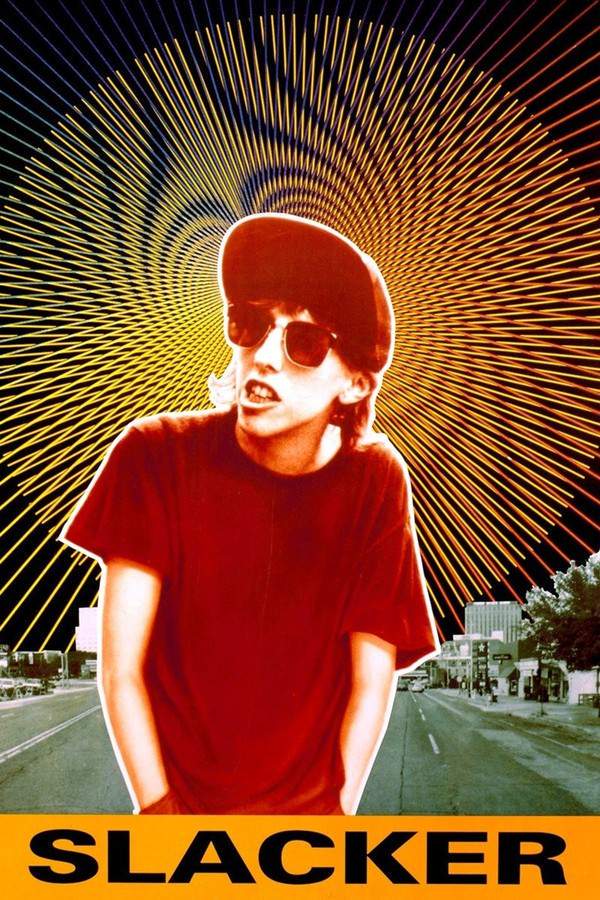
Among the characters we meet is a talkative taxi passenger who keeps the drive lively with endless chatter, a UFO aficionado who stubbornly argues that the U.S. has been on the moon since the 1950s, and a JFK conspiracy theorist who threads doubt into everyday chatter. There’s an elderly anarchist who unexpectedly befriends a man trying to rob his house, a collector obsessed with old television sets, and a hipster woman who tries to sell a Madonna pap smear—an image that even graces the film’s poster. The pap smear scene sits alongside a broader tapestry of odd, vivid personalities, each delivering lines and ideas that feel like they’re trying to catch air.
The film also tracks quieter, more enigmatic moments: a woman hiding a black eye behind sunglasses who offers passers-by a random card of Oblique Strategies; a young man who may have run over his mother, either by accident or design; three renters in a rooming house who discover and read a package of postcards left by a fellow renter who has moved out; a young woman who has just returned to town after being placed in a Dallas mental hospital by her parents; and a man who urges a friend to throw a tent and a typewriter into a creek as a symbolic severing of ties with an ex-girlfriend. Each vignette builds a sense of disconnection and search, as if the city itself is a stage where people try out ideas and identities, sometimes finding relief, sometimes only a temporary distraction.
In a bustling diner, a young man sits with a newspaper and tries to read while others chime in. A patron urges him to “stop following me,” another half-jokingly scolds him for “traumatizing women with sexual intercourse,” and a third, a neighbor dressed in a bathrobe, swoops in to steal his newspaper. The film threads tension and humor through these everyday interruptions, turning ordinary moments into small dramas of misperception and miscommunication. A college couple argues over a can of Coke given to a homeless person, the disagreement escalating into personal jabs before they realize they’ll miss the start of the movie they’re headed to see, and they agree to meet again at the theater in two hours for the next showing. A hitchhiker who speaks softly about coming from a funeral becomes a catalyst for a quiet exchange when his friend asks, “How’d you get out?” and the hitchhiker offers the brisk, almost defiant reply: “Good behavior.”
The film’s conversations probe themes of social exclusion and political marginalization that permeate the day. Characters debate class and opportunity, terrorism and fear, joblessness, and the political moment of the late 1980s, including references to the presidential election and broader questions about who controls the media. They also discuss art in various forms—visual, performance, and popular culture—sometimes with whimsy, sometimes with skepticism. A memorable detail includes a woman depicting her menstrual cycle through a ring of colored teacups, alongside fellow revelers who banter about oppression and the way it appears in everyday pop culture, from Scooby-Doo to The Smurfs. Some voices talk at length, while others listen with varying degrees of interest, creating a dance of dialogue that often feels more like a stream of consciousness than a single, cohesive argument.
The film culminates in a wordless, buoyant finale that shifts the mood from street-level chatter to a sunlit, carefree exuberance. Four friends drive around town filming themselves and the world with handheld 16mm cameras. They step out of the car, sprint into a park, and race to a cliff above a river. There, they laugh, dance, and for a moment, the noise of the day falls away as one friend joyfully throws his camera into the water, the act sealing the film’s sense of release and irreverent play.
Overall, Slacker presents a portrait of a city alive with ideas, frustrations, and moments of camaraderie that flicker and fade as quickly as they appear. It invites viewers to observe a mosaic of conversations, monologues, and fragile connections, reminding us that a day in the life of these characters can be as expansive as the city itself—full of curiosity, irony, and a stubborn hunger for meaning in a world of social noise and marginalization.
Slacker Timeline: Every Key Event in Order
15 key events in the order they happen, from “A talkative taxi ride introduces the day” to “Ending: four friends film their town and throw camera away”. 15 events name a place, across 15 locations.
- 1
A talkative taxi ride introduces the day
The film opens with a chatty taxi passenger weaving long, casual conversations as Austin moves by outside. The scene uses rapid-cut vignettes to establish Slacker's loose, roaming rhythm and to hint at the day’s mosaic structure. It shows how conversations drift from trivial to strange in a single morning.
When:morning Where:Austin, inside a taxi
- 2
A UFO buff proclaims aliens and moon landings
In a street gathering, a UFO buff insists the U.S. has been on the moon since the 1950s. He threads his theory into everyday chatter, a hallmark of the film's fragmentary storytelling. The moment introduces the film’s appetite for eccentric viewpoints within a shared city space.
When:afternoon Where:Austin, street
- 3
A JFK conspiracy theorist voices suspicion
Nearby, a JFK conspiracy theorist voices his suspicion in casual conversation. The dialogue mirrors the film’s recurring preoccupation with authority and hidden truths. The scene blends into the broader tapestry of voices that populate the day.
When:afternoon Where:Austin street
- 4
An elderly anarchist befriends a would-be thief
An elderly anarchist befriends a man trying to rob his house, leading to uneasy humor and unexpected trust. The interaction destabilizes typical boundaries between antagonists and allies. It adds a strange warmth to the film’s portrait of community.
When:afternoon Where:elderly anarchist's home
- 5
A television set collector adds to the odd gallery
Inside a cluttered dwelling, a man collects televisions and the conversations drift between pop culture and personal philosophy. The cluttered dwelling functions as a microcosm of pop culture obsession and personal philosophy. The scene moves with quick cuts and a friendly, rambling rhythm.
When:afternoon Where:Austin apartment
- 6
A Madonna pap smear seller becomes poster icon
A provocative Madonna pap smear seller punctuates the day with a provocative image. The moment underscores Slacker’s habit of mixing shock with humor in everyday life. It also highlights the film’s willingness to push boundaries through art and kitsch.
When:afternoon Where:street or marketplace
- 7
A woman with a black eye offers Oblique Strategies
A woman hiding a black eye offers random Oblique Strategies cards to passers-by. The exchanges feel half-absurd, half revealing about the characters’ strategies for coping with social awkwardness. The vignette emphasizes how people pass around ideas as a way to connect or deflect.
When:afternoon Where:city street
- 8
A tense moment around a possible family accident
A young man sits at the center of a tense moment that may involve his mother and a car accident. The scene leaves his guilt or innocence unsettled, reflecting the film’s focus on ambiguous, everyday crises. It is one of Slacker’s many fragments that layers personal danger into ordinary life.
When:midday Where:family home
- 9
Renters uncover postcards in a rooming house
Three renters in a rooming house discover and read a pack of postcards left by a former occupant. The postcards become a catalyst for memory, gossip, and small social rituals among strangers sharing space. The moment outlines how private artifacts migrate into shared rooms.
When:afternoon Where:rooming house
- 10
A young woman returns from a Dallas mental hospital
A young woman returns to town after being confined in a Dallas mental hospital. She re-enters social spaces with guarded curiosity from friends and strangers alike. Her arrival threads into the day’s mosaic, illustrating reintegration and the fragility of belonging.
When:afternoon Where:Austin, town
Show the other 5 events of Slacker Hide the last 5 events
- 11
A symbolic creek-side rejection of an ex
A man persuades a friend to throw a tent and a typewriter into a creek as a symbolic rejection of an ex-girlfriend. The act is treated with deadpan humor and reflective conversations about desire, objects, and what it means to let go. The scene contributes to the film’s collage of idiosyncratic acts.
When:afternoon Where:park or creekside
- 12
Diner scene: coffee, newspaper, and strangers' remarks
A young man tries to have coffee and read a newspaper in a diner as patrons interrupt with blunt remarks. The interactions comment on boundaries, privacy, and the uncomfortable social texture of casual encounters. The moment is one of several vignettes that test how people listen or fail to listen.
When:morning Where:diner
- 13
College couple argue over a Coke and timing
Two college students argue over giving a Coke to a homeless person, escalating into personal attacks. They realize they will miss the movie they’re heading to see, and decide to meet again at the theater in two hours. The sequence blends mock seriousness with a wistful sense of time slipping away.
When:afternoon Where:city street and theater district
- 14
Hitchhiker from funeral and the question of escape
A hitchhiker recounts coming from his stepfather's funeral, while a friend at a store asks 'How’d you get out?' and he answers 'Good behavior.' The exchange is dryly funny and nonchalant, typical of Slacker’s mood. It ties together travel, mortality, and social invisibility.
When:afternoon Where:store in town
- 15
Ending: four friends film their town and throw camera away
Ending in a wordless, whimsical sequence, four friends drive around town filming with handheld 16mm cameras. They reach a park by a river, run and dance, and one friend throws his camera over the edge. The finale embodies the film’s playful, open-ended ethos about art, friendship, and escaping into motion.
When:evening Where:park overlooking a river
Who Are the Main Characters in Slacker?
14 characters, among them Taxi Passenger (Richard Linklater), UFO Buff and JFK Conspiracy Theorist: who each one is and the part they play in the story.
- TP
Taxi Passenger (Richard Linklater)
A talkative taxi passenger who carries the film's conversations from one city street to the next, acting as a moving thread through the mosaic. He embodies the film's interest in dialogue as social performance, sparking varied debates and oddball anecdotes as the taxi travels. His rapid shifts in topic set the tone for the film's loose, episodic style.
- 🎭 Eccentric
- 💬 Talkative
- UB
UFO Buff
A UFO enthusiast who insists the U.S. has been on the moon since the 1950s, puncturing the film with fringe theories and conspiratorial humor. His monologues expose the thrill and danger of marginal ideas, contributing to the day's theme of social outsider-ism.
- 🛸 Conspiracy
- 🧠 Eccentric
- JC
JFK Conspiracy Theorist
A character obsessed with JFK conspiracy theories, whose rants reveal distrust of power and media narratives. His presence underscores the film's exploration of political paranoia and the way outsiders interpret history. His interruptions push conversations toward rumor and suspicion.
- 🕵️ Conspiracy
- 🎭 Theatrical
- EA
Elderly Anarchist
An elderly anarchist who befriends a man attempting to rob his house, illustrating a paradox of hospitality and radical politics. He brings a calm, principled stance into volatile situations, showing a willingness to engage across divides. His perspective adds a layer of social critique to the day's events.
- 🧓 Elderly
- 🗽 Anarchist
- TS
Television Set Collector
A collector of televisions who treats screens as objects of art and conversation, reflecting the film's obsession with media culture. His hobby frames scenes through the lens of consumer artifacts and nostalgia. He embodies the detours and idiosyncrasies that fill the day.
- 🖼️ Collector
- 📺 Retro
- HW
Hipster Woman (Madonna Pap Smear)
A hipster woman attempting to sell a Madonna pap smear, a surreal image that satirizes commodification and the marketability of oddities. Her scene critiques pop culture's appetite for celebrity and scandal. She adds to the film's collage of quirky, provocative characters.
- 👒 Hipster
- 🧪 Satire
- WW
Woman with Oblique Strategies
A woman who hides a black eye behind sunglasses and offers passers-by Oblique Strategies cards, turning chance into prompts for conversation. She embodies the film's mix of wit and struggle, painting a portrait of resilience and detachment. Her interactions punctuate the day with quirky, strategic randomness.
- 🕶️ Sunglasses
- 🎲 Oblique
- YM
Young Man Driver
A young man who may have run over his mother with the family car, or perhaps not, a moment of tense ambiguity in the day's roster of events. His scene probes guilt, consequences, and the unpredictable turns of everyday life. The moment adds to the film's sense of precarity.
- 🚗 Accident
- 💔 Guilt
- R
Renters
Three renters in a rooming house discover and read a pack of postcards left by a former occupant, a small event that freezes time and threads the quotidian with memory. Their reading of the postcards highlights the film's interest in ordinary objects as vessels of meaning. The moment adds to the day's mosaic of small, intimate discoveries.
- 🏠 RoomingHouse
- 📬 Postcards
- YW
Young Woman (Dallas)
A young woman who has just arrived back in town after her parents placed her in a mental hospital in Dallas, a case study in personal crisis within the film's social tapestry. Her return signals themes of containment, independence, and a search for belonging. She contributes to the day's portraits of youth and marginalization.
- 🌆 Return
- 💊 MentalHealth
- MW
Man with Tent and Typewriter
A man trying to convince a friend to throw a tent and a typewriter into a creek to symbolically reject an ex-girlfriend, a theatrical act of protest that blends whimsy with grievance. The scene epitomizes the day's quirky rituals of expression. It exemplifies how objects become symbols in the characters' personal dramas.
- 🪵 Rebellion
- ✍️ Symbolism
- DY
Diner Young Man
A young man trying to have coffee and read a newspaper in a diner, interrupted by other patrons who challenge or steal his attention. The scene underlines the film's focus on casual interactions and social friction. It adds to the anthology-like texture of the day.
- ☕ Café
- 🗣️ Advice
- CC
College Couple
A college couple who argue over a can of Coke given to a homeless person, culminating in a realization that they’re about to miss the opening moments of the movie they intend to see. They decide to meet again in two hours, symbolizing the film's ongoing negotiations of time and priorities.
- 💑 Relationship
- 🎭 Drama
- H
Hitchhiker
A hitchhiker who claims to come from the funeral of his stepfather, revealing a wry, dry humor in a tense moment as a friend asks, 'How’d you get out?' The exchange captures the film's blend of philosophy and the absurd.
- 🚶 Hitchhiking
- 💬 Witty
Where and When Is Slacker Set?
Slacker is set in Austin and Texas (one day). Here is why the time and place matter to the story.
When
one day
The events unfold over a single day in Austin, moving quickly from one character to another in a stream-of-consciousness style. The day unfolds through disjointed conversations and vignettes rather than a single plotline. It ends with a wordless sequence in which friends drive around the town and one person throws a camera off a cliff into the river, underscoring the film's loose, kinetic timeline.
Where
Austin, Texas
Austin, Texas is the film's setting, portrayed as a vibrant, offbeat city where bohemians and misfits drift through diners, apartments, and street corners. The city is shown as a patchwork of subcultures and conversations that anchor the characters’ wandering lives. The setting emphasizes an indie, countercultural vibe that threads through the film’s episodic style.
- 🎨 Bohemian hub
What Are the Themes of Slacker?
3 ideas the story keeps returning to, among them Social Alienation, Counterculture and Fragmented Narrative.
-
01
Social Alienation
Characters grapple with feelings of social exclusion and political marginalization. Conversations often feel like monologues directed at a world that seems to ignore them, highlighting a sense of detachment in a crowded urban setting. The film probes distrust in institutions and media, while showcasing how dialogue can both connect and confine people.
-
02
Counterculture
The ensemble of misfits and bohemians embodies a countercultural impulse, challenging conventional norms through idle talk, quirky projects, and radical ideas. The film presents a mosaic of subcultures, from conspiracy buffs to street artists, all negotiating belonging in a single city day. This vibe underlines a celebration and critique of nonconformity.
-
03
Fragmented Narrative
Narrative focus shifts rapidly among many characters, never lingering with one for long. The episodic structure mirrors a mosaic of conversations and encounters, creating a cinematic collage rather than a traditional plot. The finale features a wordless, playful sequence of friends filming the town on 16mm, ending with a camera tossed into a river.
What Kind of Film Is Slacker?
Melancholic in tone, with variable pacing and a complex story, going by the plot summary.
- Tone
- Melancholic
- Pacing
- Variable
- Story
- Complex
- Intensity
- Low
- Ending
- Happy
A roaming, episodic portrait of a day in Austin that feels like drifting through a mosaic of philosophical conversations and quiet moments of searching, capturing a generation's anxiety and yearning with a blend of melancholy and whimsical irreverence.
- meandering
- reflective
- quirky
- disconnected
- laid-back
- anxious
- generation x
- urban life
- philosophical dialogue
- marginalized characters
Content notes: mental illness references.
Quiz
How well do you remember Slacker? Test yourself on the story.