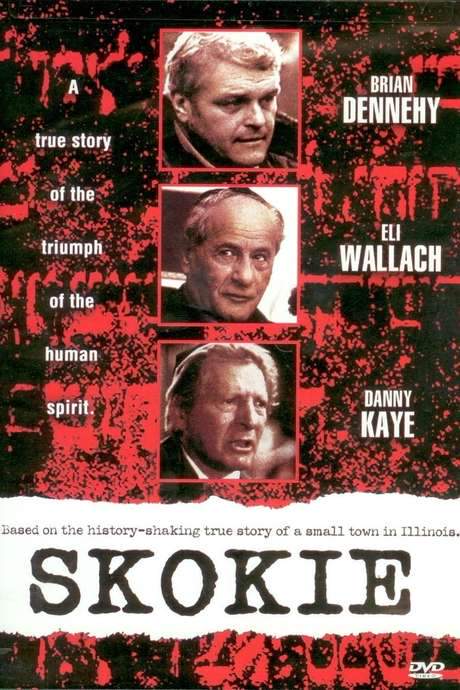


Skokie Plot Summary
Read the complete plot summary and ending explained for Skokie (1981). From turning points to emotional moments, uncover what really happened and why it matters.
In Skokie, a peaceful suburb just north of Chicago, the calm of daily life is upended when Frank Collin George Dzundza selects the town for a neo-Nazi rally. With a Jewish population that makes up a substantial share of the community—many survivors of the Holocaust—the locals understand that such a march would carry the weight of history into the present, reviving memories that many hoped would never return.
Two moderate leaders step into the breach to guide the response: Bert Silverman Eli Wallach and Abbot Rosen Carl Reiner. They advocate a policy of quarantine, arguing that the best course is to ignore the Nazis and refuse to feed the event with publicity. Their plan rests on a simple premise: if the community does not acknowledge the rally, it cannot gain traction in the public eye, and the threat will fade away without provoking a larger confrontation.
But not everyone agrees. A Holocaust survivor named Max Feldman Danny Kaye steps forward as a countervoice. He recalls the taunting whispers that accompanied the Nazi era in Germany and insists that silence can be lethal. “I was told to ignore them then, and I nearly paid with my life,” he says, and his fierce conviction—to act rather than abdicate—begins to sway neighbors who were leaning toward the quarantine approach. He makes it clear that this time he is prepared to take a stand, even to the point of risking bloodshed if necessary. His resolve electrifies the discussion and pushes many villagers to reconsider how they will respond to hate.
As the debate intensifies, a broad coalition begins to form around the idea of protest and public memory. The town’s policing and political leadership—led by Police Chief Arthur Buchanan Brian Dennehy and Mayor Albert J. Smith Ed Flanders—must balance civil rights, public safety, and the emotional stakes of a community determined not to forget. The question at the heart of their deliberations is whether there is a place for dissenting voices in the street while still preserving a space where history cannot be erased or ignored.
The film follows survivors, families, and ordinary residents as they navigate fear, memory, and moral duty. It captures the tension between protecting civil liberties and standing up to hatred, illustrating how a town can mobilize a peaceful counterstatement that honors those who suffered while confronting the danger posed by extremist rhetoric. Through meetings, demonstrations, and quiet, resolute acts, the narrative threads together how a community chooses its response in the face of an affront to humanity.
Throughout, the story emphasizes the fragile line between vigilance and vengeance, between memory and Macabre spectacle. It presents a nuanced, sober portrait of a community wrestling with the hardest questions: How do we honor the past without surrendering to fear in the present? How do we ensure that history’s darkest moments are neither repeated nor rewritten? And how does a town define its moral stance when confronted with a challenge that seeks to test its unity and resolve? The answer lies in collective courage, informed by memory, and guided by a steadfast commitment to never forget.
Skokie Timeline
Follow the complete movie timeline of Skokie (1981) with every major event in chronological order. Great for understanding complex plots and story progression.
Neo-Nazi plans rally in Skokie
Frank Collin selects Skokie, a suburb just north of Chicago, as the site for his next rally, signaling a provocative challenge to the community. The move puts a confrontation with a large Jewish population at the center of the village's future.
Jewish community faces the threat
Skokie's Jewish community, including Holocaust survivors, realizes the march would be a painful reminder of their past. They see the rally as a warning and vow to respond to prevent history from repeating itself.
Community decides to oppose the rally
The community resolves to stand against the rally at all costs. Their goal is to ensure that the Holocaust will not be forgotten or allowed to happen again.
Moderates propose a quarantine strategy
Leaders Bert Silverman and Abbot Rosen propose ignoring the neo-Nazis and refusing to feed the media publicity. They argue that non-engagement will render the rally futile.
Quarantine plan faces resistance
Not everyone agrees with the quarantine approach; some fear it would cede moral ground and let intimidation go unchecked.
Max Feldman challenges the plan with memory of oppression
Holocaust survivor Max Feldman argues that ignoring the Nazis is a trap he learned about in Germany. He recalls nearly being led to a concentration camp and vows to take action, even if it means shedding blood.
Feldman becomes de facto spokesman
Led by Feldman as de facto spokesman, the majority of the community aligns with protesting the rally. His experience and voice become the driving force behind the shift.
Protest plan moves forward
With Feldman's leadership, the community agrees to protest the rally. Organizing efforts begin to marshal attendees and spread their message.
Protest framed as memory of the Holocaust
The protest is framed as a defense of Holocaust memory and the insistence that such hatred not be allowed to resurface. The message centers on remembering the past to prevent its repetition.
Media and public debate intensify
Media attention increases as the community's stance against the rally becomes a public issue. Debates surface about the best way to respond and be heard.
Internal tensions surface
The clash over strategy reveals tensions between different leaders and approaches within the community. The disagreement tests unity and resolve.
Plan to oppose the rally solidifies
A concrete plan to protest is formalized, replacing earlier arguments with a unified course of action. Preparations accelerate as the moment to act approaches.
Skokie Characters
Explore all characters from Skokie (1981). Get detailed profiles with their roles, arcs, and key relationships explained.
Max Feldman (Danny Kaye)
A Holocaust survivor who becomes the de facto spokesman for action, challenging the community's cautionary approach. He speaks from painful memory and urges protest, risking potential violence to prevent a repeat of history. His stance forces others to confront whether memory should drive immediate, concrete resistance.
Bert Silverman (Eli Wallach)
A moderate Jewish community leader advocating a quarantine strategy to avoid feeding the media and escalating tension. He believes restraint will minimize harm and prevent a spectacle that could empower extremists. His cautious approach is tested by competing voices who demand action.
Abbot Rosen (Carl Reiner)
Another moderating figure who, like Silverman, seeks to steer the community away from provocation. He represents the calculated, non-confrontational approach to maintaining safety and stability in the face of hate.
Frank Collin (George Dzundza)
The politically astute neo-Nazi organizer who chooses Skokie as a platform to spread his ideology. He embodies the threat of hate and the calculated use of public events to advance extremist aims.
Mayor Albert J. Smith (Ed Flanders)
The town's mayor, balancing public order with civic responsibility. He faces pressure from residents, law enforcement, and activists as the rally looms, trying to uphold democratic norms while keeping the peace.
Sol Goldstein (David Hurst)
A prominent member of the Jewish community who represents the collective memory and concerns of survivors. He weighs in on the ethics and consequences of confronting hate, contributing to the debate over the right course of action.
Skokie Settings
Learn where and when Skokie (1981) takes place. Explore the film’s settings, era, and how they shape the narrative.
Time period
Late 1970s (around 1978)
The events unfold in the months leading up to and during the planned march, set in a period when debates over civil rights, memory, and public safety dominated American discourse. The town's peace is tested as activists debate whether to confront or ignore the extremist rally. Historical memory of the Holocaust weighs heavily on the residents, shaping their responses.
Location
Skokie, Illinois
Skokie is a comfortable suburban village just north of Chicago, known for its quiet neighborhoods and a strong sense of local identity. The population includes a sizable Jewish community, many of whom are Holocaust survivors who remember the atrocities of World War II. The film centers on this community as it confronts a neo-Nazi rally planned in their town, turning a peaceful suburb into a stage for a national confrontation.
Skokie Themes
Discover the main themes in Skokie (1981). Analyze the deeper meanings, emotional layers, and social commentary behind the film.
🕊️
Hate vs. Memory
The film contrasts the destructive agenda of the neo-Nazi organizers with the community's efforts to protect memory and dignity. It questions whether silence in the face of hate can preserve safety or if memory demands active resistance. The tension forces characters to confront whether memory should drive immediate, concrete resistance.
🤝
Community Resilience
Skokie shows how a diverse town mobilizes to defend its values without surrendering to fear. Leaders debate strategies, from quarantine to protest, revealing different philosophies about how to safeguard a vulnerable minority. The narrative highlights collective action, solidarity, and the price of standing together.
⚖️
Democracy under Pressure
The planned rally pits constitutional rights against the harm caused by hate groups. The film examines how local institutions—mayors, police, and community groups—navigate law, order, and public sentiment. It ultimately portrays the fragility and strength of democratic processes when faced with extremism.

Coming soon on iOS and Android
The Plot Explained Mobile App
From blockbusters to hidden gems — dive into movie stories anytime, anywhere. Save your favorites, discover plots faster, and never miss a twist again.
Sign up to be the first to know when we launch. Your email stays private — always.
Explore the mobile appSkokie Spoiler-Free Summary
Discover the spoiler-free summary of Skokie (1981). Get a concise overview without any spoilers.
In the quiet, tree‑lined streets of Skokie—a tight‑knit suburb just north of Chicago—daily life hums with the rhythm of ordinary families, a thriving local culture, and the lingering echo of histories that refuse to be forgotten. The town’s identity is shaped by a sizable Jewish population, many of whom are descendants of Holocaust survivors, and the community’s collective memory casts a gentle, watchful light over its public spaces. The film’s tone is measured and contemplative, letting the stillness of the neighborhood contrast with the undercurrent of moral unease that soon stirs.
When Frank Collin selects Skokie as the site for a neo‑Nazi rally, the ordinarily placid town is thrust into a dilemma that tests the limits of tolerance and civic responsibility. The clash is not presented as a simple binary of good versus evil; instead, it exposes the fragile balance between the right to free speech and the deep wounds of a people who have endured unimaginable atrocities. The atmosphere tightens, and ordinary conversations acquire a weightier significance as residents grapple with the implications of such a provocative act.
Amid the debate, two seasoned community figures—Bert Silverman and Abbot Rosen—advocate a strategy of “quarantine,” urging the town to withhold the attention that feeds the extremist agenda. Their measured approach underscores a belief in the power of collective restraint. Opposing them, Max Feldman, a Holocaust survivor whose past haunts him, argues that silence can become complicity, insisting that memory demands a voice, however uncomfortable. Meanwhile, civic leaders—Police Chief Arthur Buchanan and Mayor Albert J. Smith—find themselves walking a tightrope, tasked with safeguarding public safety while honoring the constitutional protections that define American democracy.
The film unfolds as a sober, thoughtful portrait of a community navigating the intersection of history, principle, and fear. Its style blends courtroom‑room seriousness with quiet, everyday scenes, inviting the audience to feel the tension that lies between vigilance and vengeance, between remembering the past and confronting present challenges. The result is a resonant meditation on how a town chooses to define its moral compass when faced with a test that threatens both its unity and its conscience.
Movies with Similar Twists and Themes
Uncover films that echo the narrative beats, emotional arcs, or dramatic twists of the one you're exploring. These recommendations are handpicked based on story depth, thematic resonance, and spoiler-worthy moments — perfect for fans who crave more of the same intrigue.

Featured on this page

What's After the Movie?
Not sure whether to stay after the credits? Find out!
Check out our other apps:

SAT Sphere
Build confidence for the Digital SAT.

Mori Atlas
Discover wild places worth protecting.

Luntero
Search smarter for a home in Amsterdam.

Plot Explained
Unravel movie endings and hidden clues.

Pokechamp
Dive into Pokémon data and battle logic.

Driving Theory
Get ready for your European theory test.

Movie Dust
Plan your next cinema trip with ease.

Musemap
Find art and culture as you travel.

Selkobase
Compare credentials before committing.

Local Manual
Turn an unfamiliar country into practical next steps.

Lernavi
Compare school systems before your next move.

GymRoam
Find a workout stop wherever your plans take you.
Explore Our Movie Platform
New Movie Releases (2026)
Famous Movie Actors
Top Film Production Studios
Movie Plot Summaries & Endings
Major Movie Awards & Winners
Best Concert Films & Music Documentaries
Movie Collections and Curated Lists
© 2026 What's After the Movie. All rights reserved.
Privacy Policy