
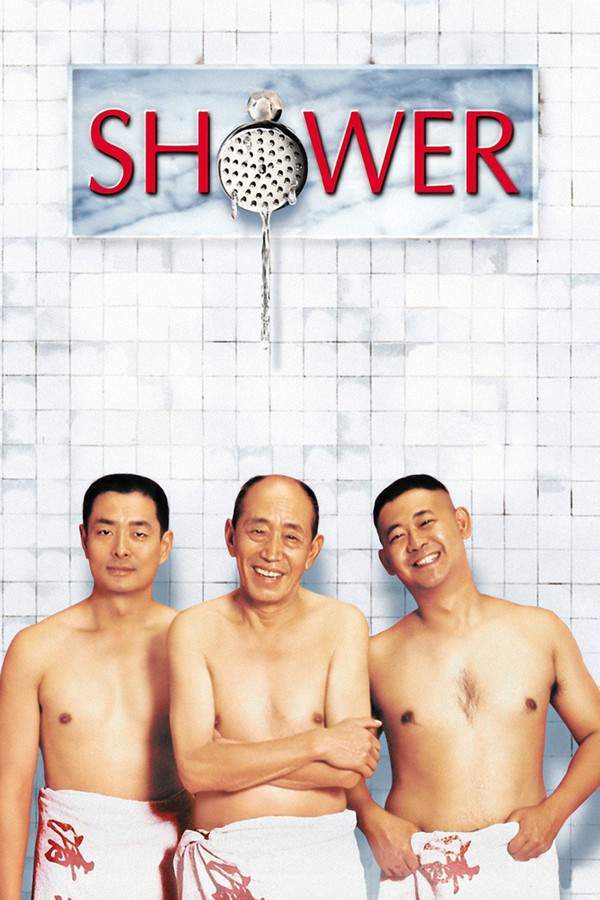
What Is Shower About?
The premise of Shower in 324 words, with nothing given away. The full story follows below.
In a rapidly modernizing Beijing, a modest neighborhood clings to the rhythms of an older life. At its heart stands a beloved community bathhouse, a place where steam and conversation mingle, and where the simple act of washing becomes a ritual of connection. The bathhouse, with its cramped rooms, wooden benches and the occasional hum of a song, feels both timeless and out of step with the gleaming towers that loom beyond its narrow streets.
Inside, the atmosphere balances gentle humor with a quiet melancholy. Patrons linger over chess games, share stories over shared tubs, and find solace in the familiar sounds of shaves, massages, and even the occasional fire‑cupping. The space is less a business than a living room for the city’s retirees, laborers, and wanderers, each visitor leaving a faint imprint on the steam‑filled walls. It is this intimate microcosm that the film lovingly observes, letting the audience breathe in the scent of hot water and the cadence of everyday kindness.
The family that tends the bathhouse anchors the story. Old Liu runs the establishment with steady patience, acting as manager, mediator, and unofficial counselor to his customers. Beside him is his younger son Liu Erming, whose gentle curiosity turns routine chores into playful rituals. Their world is disrupted when Liu Daming, the elder son who left years ago for the bustling opportunities of Shenzhen, returns unexpectedly. A successful businessman now, he carries the weight of a life built far from the steam‑soaked rooms of his childhood, and his arrival stirs both hope and unease.
Against the backdrop of a city caught between heritage and progress, the film explores how place shapes identity and how familial ties can both anchor and challenge us. The bathhouse stands as a symbol of enduring community, inviting viewers to wonder what will happen when the currents of change press against its doors, and how the characters will negotiate the delicate balance between tradition and the future.
What Happens in Shower?
The complete story of Shower, from the first scene to the last, in 885 words (about 4 minutes). Spoilers throughout.
Spoilers ahead
An aged father known to everyone as Old Liu, [Zhu Xu], and his younger, mentally challenged son Liu Erming, [Jiang Wu], run a busy, old-school bathhouse in a winding Beijing neighborhood. This is not just a place to wash; it’s a small world where a dozen rooms hum with daily rituals and small dramas. The bathhouse offers a mix of services—haircuts, massages, shaves, fire cupping, even old-style pedicures—yet its real product is connection. Retired Beijingers, locals, and a motley crew gather here to pass the hours playing Chinese chess, watching cricket fights, or simply sharing space. Old Liu wears many hats at once: manager, fixer of petty squabbles, and a kind of marriage counselor whose advice is offered with a steady, patient tone. The atmosphere is warm, humorous, and gently bittersweet, a delicate balance of work and companionship that holds the place together.
Among the regulars, one man hums O Sole Mio in the shower, only to lose the tune when he steps out in public—until Erming provides a step-by-step, healing moment with a clever hose shower. Another patron, Mr. Zhang, finds himself in a sticky patch of marriage trouble after a naked chase of a thief; Old Liu helps bring about a reconciliation by arranging a quiet search to locate his wife within the bathhouse itself. The small victories and small sorrows that thread through these evenings are stitched together by the duo’s routines. After the bathhouse closes, Old Liu and Erming keep going with a daily jog around the neighborhood, then test their endurance by a playful breath-holding competition in water, a ritual that blends affection with a kind of stubborn resilience. Even the most routine chores—like cleaning up the place—become moments of playful companionship, where the two men behave like children, turning labor into a shared game.
The rhythm of the place shifts when Old Liu’s elder son, Liu Daming, [Pu Cunxin], returns unexpectedly from Shenzhen. Daming left years earlier to seek his fortune and arrives as a successful businessman, with a postcard in his pocket—an illustration of their father lying in bed that he initially believes signals his father’s death. The moment is a mix of relief and awkwardness, for the older son’s homecoming unsettles the old balance. The father-son dynamic is tested; Daming is torn between the call of his business life and the tenderness of a family left behind. The family threads are fragile, and the tension grows as Daming contemplates leaving again in three days to resume his life away from the bathhouse.
A day later, Erming accompanies Daming downtown to reserve a plane ticket, and in the course of the excursion the younger man strays, disappearing from sight. The search is frantic but ultimately fruitless, and when Daming returns, Old Liu lashes out with raw frustration, blaming his elder son for not safeguarding his vulnerable brother. The fear of losing Erming—already having lost one son once before—hangs heavy in the air. Yet the next morning brings a quiet relief: Erming has found his way home, and the family breathes again. The relief shifts into caution: Daming postpones his return to Shenzhen and stays another night, offering a tentative chance at reconciliation.
Rain pelts the city, and on a rooftop leak-fix session, Old Liu catches a chill that progresses into illness. In response, Daming offers to take over the bathhouse work, delaying his journey back and gradually embedding himself in the daily life he once left behind. He continues to join the evening jogs and—alongside Erming—finds a way to belong again. Then, one fateful night, Old Liu passes away peacefully while bathing, a stark moment that tests everyone’s capacity to carry on without him. Erming refuses to acknowledge the loss, insisting that the bathhouse keep its doors open at the usual hour, a testament to his stubborn refusal to surrender the rituals that defined their world.
In the wake of Old Liu’s death, Daming contemplates a drastic solution: taking Erming with him to Shenzhen or placing him in a mental hospital to escape the difficulties of care. The hospital stint is hard on Erming, who fights the attendants and longs for the familiar rhythm of the bathhouse. Ultimately, Daming returns with him to the baths, choosing to resume operations and keep the business—their shared sanctuary—alive for a time longer.
Meanwhile, the district is slated for demolition to make way for new commercial development. Removal crews begin to empty the space, and Erming fights to halt their sweep of the old furniture and memories, determined to preserve the place that has housed so many lives. After a brief struggle, he is gently guided toward accepting the reality of change, and the plan to move forward is set in motion.
The film closes with a poignant communal farewell. A circle of old customers gathers in the bathhouse one last time, carefully removing aging paintings and portraits from the walls as a gallery of the lives that passed through this place. Erming, with a voice thick with longing, returns to the familiar chorus of O Sole Mio, singing it as a final, nostalgic homage to the bathhouse that shaped their days. The scene lingers on the family’s and neighbors’ faces—grief, gratitude, and a quiet resolve—capturing the enduring power of place, memory, and kinship as they step into an uncertain future together.
Shower Timeline: Every Key Event in Order
13 key events in the order they happen, from “Daily life at the bathhouse” to “Final farewell preparations”. 13 events name a place, across 11 locations.
- 1
Daily life at the bathhouse
In Beijing's old district, Old Liu runs a bustling bathhouse that offers services from shaving and massage to fire cupping and pedicures. The regulars spend their days there, chatting, playing chess, and watching cricket fights, forming a close community. Old Liu acts as manager, mediator, and adviser to a motley group who treat the bath as a second home.
Where:Beijing old district bathhouse
- 2
A singing moment and a remedy
A patron sings O Sole Mio in the shower but falters when performing in public. Erming lightens the moment with a playful hose shower, giving him a second chance and a bit of encouragement. The scene shows the bathhouse as a stage for small personal victories and improvised fixes.
Where:bathhouse shower
- 3
Old Liu helps a troubled marriage
Mr. Zhang's marriage has been strained since an incident involving his wife chasing a thief naked. Old Liu arranges a reconciliation by guiding the couple to locate his wife in the bath and confront the issue together. The bathhouse becomes a venue for a humorous yet poignant resolution of intimate conflict.
Where:bathhouse
- 4
Evening jog and bond
After the bathhouse closes, Old Liu and Erming begin their daily jog around the neighbourhood, sharing a rhythm of routine. They then engage in a lighthearted breath-holding contest in the water, blending sport with companionship. The routine strengthens the bond among Old Liu, Erming, and the regulars.
When:Evening Where:Beijing neighbourhood
- 5
Daming returns home
Old Liu's elder son Liu Daming returns from Shenzhen after a postcard leads him to fear his father's health. Now a successful businessman, their reunion hints at long-standing, tense father–son dynamics. Daming plans to stay only a short while before returning to Shenzhen.
Where:Home, Beijing
- 6
Erming accompanies Daming downtown and vanishes
Erming accompanies Daming to downtown to reserve a plane ticket, then mindlessly wanders off and disappears. Daming searches frantically, realizing he cannot easily protect his vulnerable brother. The disappearance puts the family on edge and underscores the fragility of their bonds.
Where:Downtown Beijing
- 7
Return, delay, and resolve
Daming returns home distressed, and Old Liu lashes out, fearing he cannot protect Erming. The next morning Erming reappears at home, and Daming postpones his flight, choosing to stay another night to support the family. The tension between duty and care deepens.
When:Next morning Where:Home, Beijing
- 8
Rain, illness, and new resolve
A heavy rainstorm floods the neighbourhood and Old Liu catches a cold while fixing leaks on the roof, leading to illness. Daming volunteers to take over the bathhouse duties, delaying his departure to Shenzhen. He stays to help, joining the nightly jog with his father and Erming.
When:Following day Where:Bathhouse and rooftop
- 9
Old Liu passes away in the bath
One evening, after returning from their jog, Old Liu dies peacefully while bathing in the tub. The community mourns the patriarch who kept the bathhouse running and connected. Erming struggles to accept the loss but continues to maintain the routine as a tribute.
When:Evening Where:Bathhouse
- 10
Erming clings to the routine
Bereaved but determined, Erming insists the bathhouse open at the usual hour despite his father's death. Daming contemplates taking Erming to Shenzhen but fears his wife’s reaction to living with a mentally challenged man. He decides to place Erming in a mental hospital for a couple of weeks.
When:Immediate aftermath Where:Beijing
Show the other 3 events of Shower Hide the last 3 events
- 11
Hospital battle and homecoming
Erming fights with hospital attendants, struggling to adapt to life in the mental facility. Seeing his distress, Daming abandons the plan to relocate him quickly and resolves to bring Erming back to the bathhouse to resume operations. The two brothers recommit to the place that binds them.
Where:Mental hospital; bathhouse
- 12
Demolition looms over the bathhouse
The district is slated for demolition to make way for commercial development, threatening the bathhouse's existence. Removalists begin packing away old furniture while Erming tries to physically stop them from clearing the space. Daming helps him confront the reality and plan for an uncertain future.
When:Late period Where:District demolition site
- 13
Final farewell preparations
As the end approaches, a group of old customers gathers for the bathhouse's last night, removing paintings and portraits in a final ceremony of memory. Erming sings O Sole Mio as a nostalgic farewell to the space that shaped their lives. The bathhouse is left as a relic of shared history.
When:Last night Where:Bathhouse
Who Are the Main Characters in Shower?
3 characters, among them Old Liu (Zhu Xu), Liu Erming (Jiang Wu) and Liu Daming (Pu Cunxin): who each one is and the part they play in the story.
- OL
Old Liu (Zhu Xu)
An aging, patient manager who serves as mediator, caretaker, and unofficial counselor for both his son Erming and the bathhouse regulars. He treats the bathhouse as a family home, guiding disputes and offering gentle wisdom. His playful approach to daily chores keeps the place lively, even in sorrow. He dies peacefully while bathing, leaving a lasting emotional imprint on the community.
- 👴 Elderly patriarch
- 🧭 Community anchor
- 🤝 Gentle authority
- LE
Liu Erming (Jiang Wu)
Erming is a loving, mentally challenged young man who forms deep connections with the bathhouse crowd. His simple, loyal nature brings warmth and a sense of innocence to daily life. He clings to the bathhouse as his world and his father as his anchor, displaying resilience even through upheaval. His return home and struggles reveal the community's reliance on his presence.
- 🧠 Neurodivergent
- 💖 Beloved son
- 🎶 Nostalgia
- LD
Liu Daming (Pu Cunxin)
Old Liu’s elder son, a successful businessman who returns home after years away. He grapples with whether to bring Erming to Shenzhen and how his wife would react to caring for a mentally challenged brother. He ultimately stays longer to help at the bathhouse, postponing his business plans. His decisions highlight the tension between modernization and family loyalty.
- 💼 Businessman
- 👨👦 Family duty
- 🤝 Reconciliation
Where and When Is Shower Set?
Shower is set in Beijing and China (Late 20th century). Here is why the time and place matter to the story.
When
Late 20th century
The story unfolds during a period of rapid urban change around Beijing. It captures the tension between enduring traditional life and the incoming modernisation and redevelopment. The film focuses on daily rituals and personal bonds rather than sweeping historical events.
Where
Beijing, China
Set in a traditional male bathhouse in an old district of Beijing, the setting is intimate and communal. The neighborhood is dense, aging, and tightly knit, with patrons who spend their days in games and conversations. The bathhouse functions as a microcosm of Beijing life, balancing ritual and camaraderie with the pressures of modern development.
- 🏙️ Beijing
- China
- 🛁 Bathhouse culture
- 🕰️ Traditional social hub
What Are the Themes of Shower?
4 ideas the story keeps returning to, among them Family Bonds, Tradition and Change & Displacement.
-
01
Family Bonds
Old Liu anchors the story as a devoted father and caretaker for Erming and the bathhouse's regulars. The elder son's return tests loyalty and duty, revealing competing obligations between family and ambition. The bathhouse community feels like a second family, shaped by daily rituals and shared care. Love and responsibility endure even as times change.
-
02
Tradition
The bathhouse's rituals—haircuts, massages, chess games, and even cricket fighting—are depicted as living traditions. These routines give the patrons purpose and a sense of belonging, anchoring them in a familiar world. A close-knit community sustains itself through these customs even as urban pressures rise.
-
03
Change & Displacement
Beijing's redevelopment plan puts the district on the chopping block, threatening to erase the bathhouse and its memories. The looming demolition heightens emotional stakes as characters reckon with what they stand to lose. The story uses the imminent loss to explore identity, attachment to place, and the meaning of home.
-
04
Nostalgia
Memories of the bathhouse linger as the neighborhood changes, with old paintings and portraits removed as relics. Erming's final singing of O Sole Mio marks a farewell to a world that is vanishing. The film treats memory as a durable thread tying past and present, giving emotional weight to every ritual that is left behind.
What Kind of Film Is Shower?
Melancholic in tone, with slow pacing and a straightforward story, going by the plot summary.
- Tone
- Melancholic
- Pacing
- Slow
- Story
- Straightforward
- Intensity
- Medium
- Ending
- Bittersweet
A gently melancholic and nostalgic film that captures the warmth of a fading community bathhouse, exploring the quiet sorrow of change and the enduring comfort of family and tradition.
- nostalgic
- melancholic
- gentle
- contemplative
- warm
- bittersweet
- family bonds
- cultural change
- tradition vs modernity
- grief and loss
Content notes: parental death, mental disability, forced institutionalization, community displacement.
