
Secret Honor 1984

Directed by
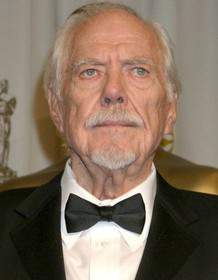
Robert Altman
Made by

Sandcastle 5
Secret Honor Plot Summary
Read the complete plot summary and ending explained for Secret Honor (1984). From turning points to emotional moments, uncover what really happened and why it matters.
In a tense, character-driven meditation, Richard Milhous Nixon—a disgraced former president—paces a dim study in his Saddle River, New Jersey mansion during the early 1980s. A loaded revolver sits on the desk beside a bottle of Scotch and a running tape recorder, while closed-circuit cameras keep a watching chorus of eyes on him. What unfolds over approximately ninety minutes is a long, spiraling monologue that swerves between rage, suspicion, sadness, and disappointment as he traverses the contours of his controversial life and career. The mood is claustrophobic, the air taut with power and paranoia, and the room becomes a kind of confessional stage where memory and grievance are the main performers.
From the outset, the monologue is less a linear history and more a series of interlaced recollections that frequently derail into tangents. Nixon revisits the people who shaped his ascent and his fall, the voices that either supported him or betrayed him, and the forces he believes stood in his way. He speaks of his mother with fondness, paints Dwight Eisenhower with unmistakable anger, interacts with Henry Kissinger in tones that border on condescension, and grapples with John F. Kennedy through a blend of admiration and fury. As he probes these relationships, the narrative voice often shifts with his mood: when anger rises, the speech becomes jagged and disjointed, and if the speaker senses drifting from the point, he directs the unseen transcriber, a character named Roberto, to edit out the digressions and return to a calmer moment earlier in the tape.
Throughout this self-portrait, the former president’s view of himself mutates. At times, he casts himself as a man of the people, insisting that he understood failure and could relate to the average American who had toiled and fought to reach the top. He dwells on humble origins and the relentless effort that propelled him upward, recounting the setbacks he faced and how he supposedly overcame them. Yet these moments of self-affirmation quickly blur into self-pitying rants about being an innocent martyr, ruined by malevolent and hypocritical forces. He vacillates between self-deprecating portraits and self-congratulatory boasts, but he rarely dwells on his own faults for long, preferring to blame others for what he sees as misfortune. A persistent thread is his insistence that Watergate is not relevant to his legacy and that he never committed a crime; since he was never charged, he contends, there is no need for a pardon. He even argues that the pardon he received from Gerald Ford tainted him in the public eye, because—by his own logic—accepting a pardon implies guilt.
The talk grows more conspiratorial as he lifts the veil on his supposed entanglement with a political network he alternately names “the Bohemian Grove” and “The Committee of 100.” He suggests they are concerned with a heroin trade in Asia, and contends he pursued their power and influence as much as a belief in their alleged willingness to bring democracy to Asia. Yet after a pivotal 1972 vote, he claims they shifted their orders: keep the Vietnam War alive at all costs and push for a third term so they can continue the arrangement with him as their instrument. There comes a chilling admission that, at some point, he decided he never wanted to be remembered as the president who sacrificed thousands of soldiers for drug money, so he staged Watergate as a means to exit office while still maintaining broad public support. In his telling, he places blame not on himself but on a public that would rather see him fail, labeling himself a hustler and a thief who believes many of the same people are complicit in the deception.
The tension of the room builds as he chamber-by-chamber weighs the moral and political calculus of his actions. He gestures to the camera feeds, the tape recorder, and the looming specter of his own legacy, wrestling with the idea that a single moment could redefine a life spent in the glare of power. The monologue moves toward a desperate, almost ritual conclusion: he reaffirms his resolve not to end his life, even as the weight of his narrative presses down on him. The final act of the scene culminates in a dramatic demonstration of defiance. He pulls back the hammer on the gun and holds it to his head for a breathless beat, then lets it fall back to the desk. With a fierce, almost apostrophic deliverance, he declares a defiance that becomes his last power move on camera: “They wanted me to kill myself. Well, I won’t do it. If they want me dead, they’ll have to do it… Fuck ‘em.” The moment is reinforced by the haunting visual of the same two words looping across all the closed-circuit monitors in staggered intervals, until the sequence slides into static, leaving the room to a growing, unsettling chant of “Four more years!”
What follows is a careful, almost clinical exploration of how memory, reputation, and power intertwine in the mind of a man who insists on telling his own truth, even as the truth remains contested and fraught. The piece is a study in how one former leader negotiates legacy, blame, and sanity while surrounded by screens, sound, and the echo of a career that refuses to fade. It remains a stark, unflinching portrait that never shies away from uncomfortable questions about duty, loyalty, and the costs of ambition—all directed through the warped glow of a man who believes his narrative is both his vindication and his final indictment.
Secret Honor Timeline
Follow the complete movie timeline of Secret Honor (1984) with every major event in chronological order. Great for understanding complex plots and story progression.
Nixon begins his solitary monologue
In the Saddle River study, Nixon paces back and forth in the early 1980s. He is armed with a loaded revolver, a bottle of Scotch, and a running tape recorder, while closed-circuit cameras watch around him. This marks the opening frame of a ninety-minute, emotionally charged monologue about his life and career.
Ruminations veer into memory and anger
As he speaks, Nixon revisits his controversial life and career with a mix of rage, suspicion, sadness, and disappointment. The monologue frequently drifts into tangents, and he admonishes the unseen 'Roberto' to edit out digressions and return to calmer points. The at-times disjointed cadence reveals a man consumed by his own narrative.
Proud self-presentation and self-doubt
Nixon's self-portrait shifts throughout the talk: sometimes he presents himself as a man of the people who rose from humble beginnings, other times he indulges in self-pity and self-justifying rhetoric. He dwells on his setbacks and hard work, yet avoids dwelling on personal faults, preferring to blame others. The tension shapes the cadence of his tirades.
Denial of Watergate
He explicitly denies the relevance of Watergate, insisting he never committed a crime and was never charged. He argues that a pardon would not have mattered because he believes he was never guilty. The sense of injustice bleeds into the claim that the pardon has tainted his legacy.
The Bohemian Grove and The Committee of 100
Nixon admits he has been the willing tool of a political network he calls the Bohemian Grove and The Committee of 100. He suggests their interest lies in heroin trade with Asia, driven by power and a desire to bring democracy to Asia. The confession reveals a web of influence beyond official history.
Orders after 1972 and ongoing war
He recounts that after the 1972 vote, the network ordered him to prolong the Vietnam War at all costs and to pursue a third term so they could keep profiting from him. The tension between public duty and private ambition surfaces in his narration. The narrative suggests a calculated manipulation of public fate.
Staging Watergate as exit strategy
Deciding he never wanted to be the president who sacrificed thousands of soldiers for drug money, Nixon contends he staged Watergate to leave office while preserving public support. The motive is framed as a self-preserving act rather than confession. He blames forces outside himself to explain his downfall.
Blame the public
As the scheme unfolds, he shifts blame onto the public for supporting him despite recognizing himself as a scam artist and thief in their eyes. He portrays the electorate as complicit in their own seduction by power. The narrative paints a portrait of calculated misreading of his own image.
The gun gesture
Nixon lifts the revolver's hammer to his head and holds it there for a breathless moment, then lowers it back to the desk. The act crystallizes his volatile mood and readiness to end the confession midstream. The scene intensifies the monologue's gravity and stakes.
Final vow and defiance
In the closing minutes, he declares that those who want him dead will have to do it themselves, punctuating with 'Fuck 'em!' The defiant line is reinforced by a looping display on the monitors, signaling an unresolved struggle with fate. The chant of 'Four more years!' swells in the background as the footage spirals into static.
Monitors replay the final moment
The final two words replay on all closed-circuit monitors in staggered intervals, leaving an image of Nixon's stubborn resolve. The room fills with the growing chant of 'Four more years!' that drowns out the confession. The sequence ends as the footage collapses into static and silence.
The surveillance frame and memory
Across the entire sequence, surveillance footage frames Nixon's confession, shaping how his life is remembered. The film probes themes of power, guilt, and control over narrative, underscored by the pervasive gaze of cameras. The closing impression is of a man both actor and prisoner of his own legend.
Secret Honor Characters
Explore all characters from Secret Honor (1984). Get detailed profiles with their roles, arcs, and key relationships explained.
Richard Milhous Nixon (Philip Baker Hall)
A flawed, volatile figure trapped in a long, impassioned monologue. He alternates between grievance and pride, justifying his actions while muttering about enemies and fate. The performance paints him as paranoid, self-pitying, and relentlessly determined to control how his life is remembered.
Secret Honor Settings
Learn where and when Secret Honor (1984) takes place. Explore the film’s settings, era, and how they shape the narrative.
Time period
early 1980s
Set in the early 1980s, the film places Nixon in a post-Watergate, high-tension political climate. The time frame underscores a fallen leader still craving significance and eager to shape his legacy through a relentless monologue. The era’s distrust amplifies the urgency to rewrite history and deflect accountability.
Location
Saddle River, New Jersey
The action unfolds inside a grand study of Nixon’s Saddle River mansion, a tightly controlled private space with closed-circuit cameras and a running tape recorder. The setting emphasizes isolation and a growing fixation on narrative control. It serves as a symbol of power turned inward, where the past is endlessly reviewed and re-scripted.
Secret Honor Themes
Discover the main themes in Secret Honor (1984). Analyze the deeper meanings, emotional layers, and social commentary behind the film.
🗝️
Power and Control
Nixon's monologue centers on influence and the need to steer how events are remembered. The repeating setup—the study, cameras, and tape recorder—shows a man who judges his past by the control he can still exert. Conspiracy threads surface as he constructs a protective myth around his actions and motives.
🧠
Self-Justification
The speaker frequently reframes setbacks as betrayals and portrays dissent as persecution. He vacillates between self-importance and insecurity, constantly rationalizing controversial choices and denying wrongdoing. The narrative reveals a self-image that fluctuates between martyrdom and vanity.
🎭
Legacy and Perception
Throughout the monologue, Nixon fights to sculpt a favorable public image, arguing innocence and heroism while acknowledging the theater of politics around him. The film examines how memory is curated and how a leader attempts to control legacy, even as his own voice undermines its reliability. The final loop of footage and crowd chants emphasizes the fragility of reputation under historical scrutiny.

Coming soon on iOS and Android
The Plot Explained Mobile App
From blockbusters to hidden gems — dive into movie stories anytime, anywhere. Save your favorites, discover plots faster, and never miss a twist again.
Sign up to be the first to know when we launch. Your email stays private — always.
Explore the mobile appSecret Honor Spoiler-Free Summary
Discover the spoiler-free summary of Secret Honor (1984). Get a concise overview without any spoilers.
In the quiet, dimly lit study of a New Jersey mansion, the former president sits alone with a bottle of Scotch, a loaded revolver, and a humming tape recorder. Surrounded by an array of closed‑circuit cameras that turn the room into a sterile confessional, he begins a relentless, ninety‑minute monologue that peels back the layers of his public and private life. The setting—a cramped, claustrophobic office frozen in the early 1980s—creates a pressure‑cooker atmosphere where every word feels both a confession and a defiant proclamation.
The film’s tone is steeped in paranoia and bruised grandeur, echoing the vitriol that once defined the man’s public persona. As the camera watches, the ex‑president shifts between rage, melancholy, and bitter self‑justification, his voice cracking like the static on the monitors. The ever‑present tape recorder captures each inflection, while an unseen transcriber—Roberto—is periodically summoned to edit away spiraling tangents, underscoring the desperate need for control over his own narrative.
Through this singular, character‑driven performance, the audience experiences a study of memory and power. He traverses the terrain of his upbringing, the people who lifted him, and the forces he believes conspired against him, all while clutching at the illusion of innocence. The world outside the study remains unseen, letting the viewer dwell in the suffocating intimacy of a man wrestling with the weight of his legacy, his guilt, and his relentless desire to rewrite history on his own terms.
Richard Milhous Nixon becomes both storyteller and subject, a figure whose confession blurs the line between self‑exoneration and self‑destruction. The film invites viewers to sit in the tension of his solitude, feeling the echo of power reverberate against the walls, and wonder whether the man behind the monologue can ever escape the shadows of his own making.
Movies with Similar Twists and Themes
Uncover films that echo the narrative beats, emotional arcs, or dramatic twists of the one you're exploring. These recommendations are handpicked based on story depth, thematic resonance, and spoiler-worthy moments — perfect for fans who crave more of the same intrigue.
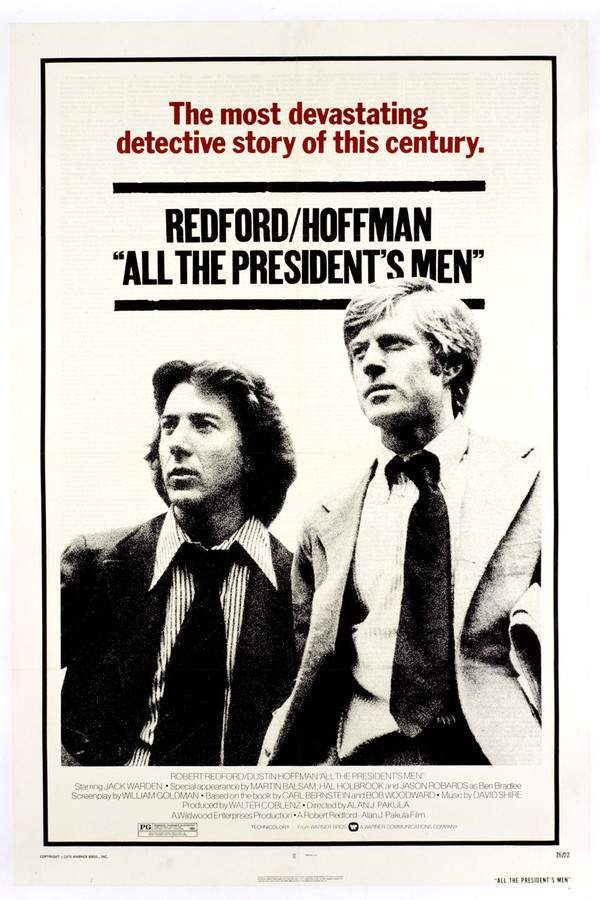
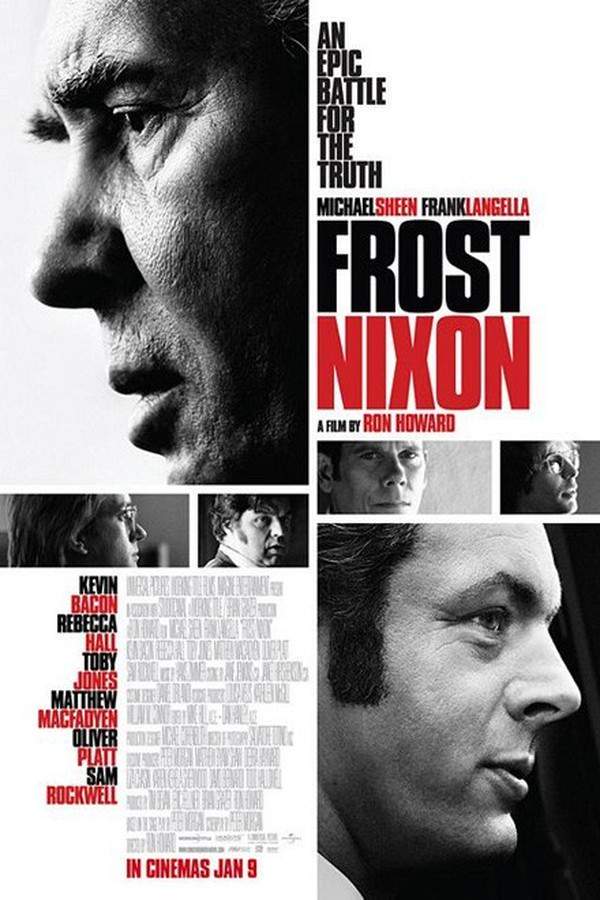
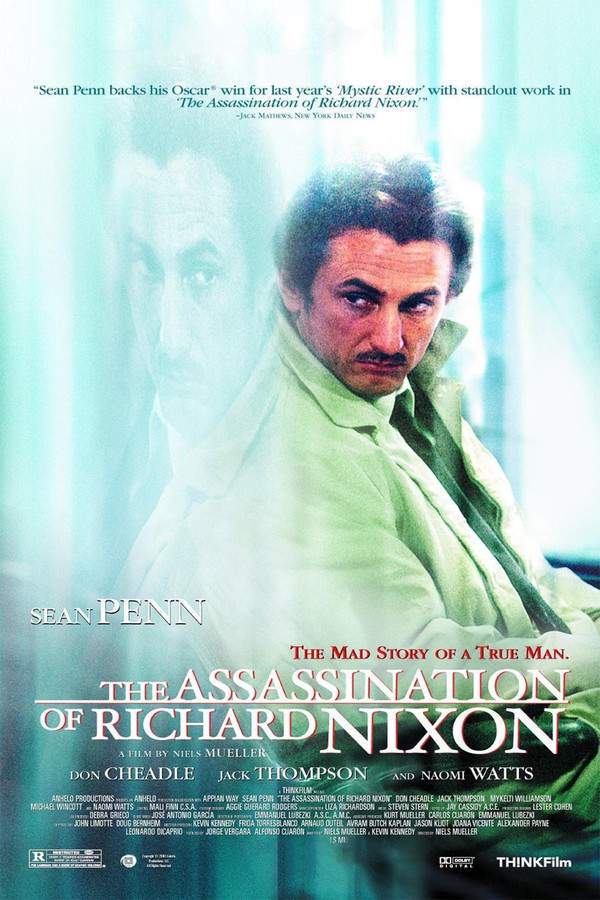


Featured on this page

What's After the Movie?
Not sure whether to stay after the credits? Find out!
Check out our other apps:

SAT Sphere
Build confidence for the Digital SAT.

Mori Atlas
Discover wild places worth protecting.

Luntero
Search smarter for a home in Amsterdam.

Plot Explained
Unravel movie endings and hidden clues.

Pokechamp
Dive into Pokémon data and battle logic.

Driving Theory
Get ready for your European theory test.

Movie Dust
Plan your next cinema trip with ease.

Musemap
Find art and culture as you travel.

Selkobase
Compare credentials before committing.

Local Manual
Turn an unfamiliar country into practical next steps.

Lernavi
Compare school systems before your next move.

GymRoam
Find a workout stop wherever your plans take you.
Explore Our Movie Platform
New Movie Releases (2026)
Famous Movie Actors
Top Film Production Studios
Movie Plot Summaries & Endings
Major Movie Awards & Winners
Best Concert Films & Music Documentaries
Movie Collections and Curated Lists
© 2026 What's After the Movie. All rights reserved.
Privacy Policy