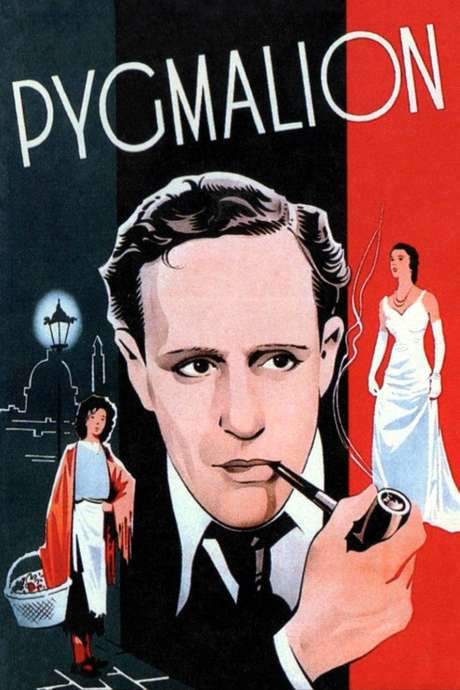
What Is Pygmalion About?
The premise of Pygmalion in 303 words, with nothing given away. The full story follows below.
In bustling early‑twentieth‑century London, the city’s rigid class lines are drawn as sharply as the accents that separate them. Linguist Professor Henry Higgins has built his reputation on treating speech as a science, confident that the melody of a voice can rewrite a person’s destiny. His wit and arrogance make him both a celebrated figure in academic circles and a provocateur to anyone who doubts the power of refined diction.
Across the noisy streets of Covent Garden, Eliza Doolittle sells flowers with a tongue as lively as her market stall. When her sharp‑tongued encounter with Higgins catches his ear, a daring wager is set into motion: Colonel Pickering, a fellow language enthusiast, agrees to fund a six‑month experiment that promises to turn the cockney flower girl into a lady of society. The premise hinges on whether training and habit can reshape identity as effortlessly as a lesson in phonetics.
Living under the same roof, Higgins’s household brings together a cast of contrasting personalities. Mrs Pearce, the practical housekeeper, keeps the domestic world orderly while navigating the newcomer’s presence. Alfred Doolittle, Eliza’s father, offers a roguish counterpoint to the genteel ambitions surrounding him. Across the drawing‑room doors, Mrs Higgins watches with maternal concern, and Freddy Eynsford‑Hill, a young suitor, becomes fascinated by the transformation taking place. Their interactions hint at the tensions between ambition, affection, and the very notion of self‑worth.
The film balances witty social satire with a gentle curiosity about what it means to belong. London’s glittering salons and its noisy streets become a stage for a subtle contest: can the right pronunciation unlock new opportunities, or does the journey reveal something deeper about the characters themselves? The tone remains lively and introspective, inviting the audience to wonder how far language can carry a dream before the heart asserts its own voice.
What Happens in Pygmalion?
The complete story of Pygmalion, from the first scene to the last, in 670 words (about 3 minutes). Spoilers throughout.
Spoilers ahead
One evening in Covent Garden, as passers-by murmur about language, linguist Henry Higgins [Leslie Howard] is mistaken for a policeman, triggering protests from Eliza Doolittle [Wendy Hiller], a sharp-tongued flower seller. The disruption catches Higgins’s attention, and he talks with Colonel Pickering [Scott Sunderland], a fellow language enthusiast who has come from India to study him. Higgins argues that, with his method, Eliza could speak with the elegance of high society and might even pass as a duchess. This audacious claim sparks a bold bet with Pickering: if Higgins can transform Eliza, he will cover all the expenses of her training and testing against a future of greater opportunity.
The next morning Eliza arrives at Higgins’ house to request elocution lessons. Mrs Pearce [Jean Cadell], the housekeeper, prepares Eliza for the day, giving her a bath while Alfred Doolittle [Wilfrid Lawson], Eliza’s father and a workingman with a sly sense of humor, arrives to demand compensation for the damage done to his daughter’s life. Higgins is amused by Doolittle’s roguish charm and offers him ten pounds, but Doolittle rejects the sum, insisting that, as one of the “undeserving poor,” he only wants enough for a one drunken weekend. The scene sets up a tension between aspiration and practicality that threads through the entire story.
After a rigorous internship, Eliza is invited to an at-home gathering hosted by Mrs Higgins [Marie Lohr], Higgins’ mother. There, though she speaks with a cultivated, upper-class accent, Eliza’s slang-filled chatter and profanity shock the guests. Yet among them is Freddy Eynsford-Hill [David Tree], a young man who becomes fascinated with her. When the guests depart, Mrs Higgins voices her concern that Eliza’s two benefactors treat her more as a project or a toy than as a person with a real life and feelings.
Weeks of coaching follow, culminating in a formal embassy reception. Higgins and Pickering fear Eliza may be exposed by a clever observer, Count Aristid Karpathy [Esme Percy], a Hungarian who has earned fame for tutoring American heiresses in elocution and for his knack of tracing social origins through speech. Eliza’s performance at the embassy is so seamless that Karpathy briefly entertains the notion that she could be a princess, a testament to her transformation under Higgins’s tutelage. The triumph, however, leaves Eliza unsettled and resentful: Higgins and Pickering seem to celebrate their method while overlooking her commitment and the depth of her own needs.
Back at home, the victory feels hollow for Eliza. Higgins tries to persuade her to return to him, but she pushes back, arguing that he merely takes her for granted. She hints at independence, even suggesting she could offer elocution lessons herself to earn a living, if necessary. The rift widens as she asserts her own desires—she would rather marry Freddy, who is charming though financially unstable—forcing Higgins to confront the price of progress and the limits of his mentorship.
That night, Higgins returns home after a long walk and unintentionally plays a recording of Eliza’s first visit. He is confronted with the memory of her raw, unpolished self, and when Eliza appears at his study door, she quotes her earlier self with a sly rebuke, asking for the slippers he has forgotten. The moment crystallizes the unsettled, evolving relationship between teacher and pupil. The story closes with their future together left deliberately open, balancing pride, affection, and the possibility of genuine partnership as Eliza asserts her own evolving identity.
I washed my face and hands before I come, I did
The characters are brought to life by a cast who each contribute a distinct thread to this exploration of language, class, and personal agency. Higgins’s rigorous, almost scientific approach contrasts with Eliza’s emerging self-determination, while Mrs Pearce’s steady presence and Mrs Higgins’s maternal concern offer grounding perspectives. The bystander figures and social settings—the Covent Garden bustle, the gracious drawing rooms, and the embassies—provide a textured backdrop that highlights the social dance at the heart of this story, where words become a key to opportunity, status, and identity.
Pygmalion Timeline: Every Key Event in Order
10 key events in the order they happen, from “Covent Garden incident sparks Higgins and Pickering” to “The recording and the uncertain future”. 10 events name a place, across 7 locations.
- 1
Covent Garden incident sparks Higgins and Pickering
While transcribing conversations of passers-by one evening, Higgins is mistaken for a policeman, triggering protests from Eliza Doolittle and bystanders. Colonel Pickering, a fellow linguist from India, arrives to meet him. Higgins flatly asserts that with his method he could teach Eliza to speak so well that she might pass as a duchess.
When:Evening Where:Covent Garden, London
- 2
Eliza seeks elocution lessons; a wager is placed
Eliza arrives at Higgins' house the next morning to request elocution lessons. Colonel Pickering offers to pay all expenses if Higgins can fulfill his boast. Higgins outlines his plan to transform Eliza's speech, setting up the challenge. Eliza's father, Alfred Doolittle, then arrives to demand compensation for the loss of his daughter; Higgins offers him £10, but Doolittle insists on only £5, arguing his status as part of the 'undeserving poor'.
When:Morning Where:Higgins' house, London
- 3
Eliza bathed; Doolittle presses for payment
Eliza is taken upstairs to be bathed by Mrs Pearce, while Alfred Doolittle remains downstairs, pressing for compensation. Higgins teases the moment with a grudging offer and explains how the lessons will shift Eliza's place in society. The contrast between Higgins's experimental approach and Doolittle's roguish pragmatism underscores the social stakes of Eliza's transformation.
When:Late morning Where:Higgins' house, London
- 4
Eliza's 'internship' at Mrs Higgins' gathering
Eliza attends an at-home gathering hosted by Mrs Higgins and speaks with a refined accent, yet she punctuates her conversation with slang and profanity. Freddy Eynsford-Hill, a young admirer, is drawn to her despite the social faux pas. Mrs Higgins expresses disgust that Eliza's guardians treat her like a plaything rather than a person.
When:Evening Where:Mrs Higgins' home, London
- 5
Weeks of coaching lead to an embassy reception
Over several weeks, Eliza undergoes rigorous coaching as Higgins and Pickering escort her to an embassy reception. Higgins fears that the Hungarian Count Aristid Karpathy, famed for identifying origins of high society by speech, will expose Eliza. To everyone's relief, Eliza deceives Karpathy and is mistaken for a Hungarian heiress rather than a native speaker.
When:Evening Where:Embassy, London
- 6
Return from the reception; Eliza's neglected contribution
On the return from the embassy, Higgins and Pickering congratulate themselves on their 'success' while neglecting Eliza's contribution and feelings. Eliza quarrels with Higgins, throws his slippers at him in anger, and declares she has become unsuited to her former life. She leaves to take refuge with Mrs Higgins.
When:Night Where:Higgins' house, London
- 7
Morning revelations: Doolittle's bequest
The following morning Higgins visits his mother and learns that Eliza remains with her. Alfred Doolittle arrives to complain about how Higgins has disrupted his life. He reveals that a bequest from an American millionaire has forced him into the role of a respectable moralist, and plans to marry his unwed partner with Eliza, Pickering, and Mrs Higgins's support.
When:Morning Where:Higgins' house, London
- 8
Doolittle's London church wedding
With the bequest looming, Doolittle prepares for a fashionable London church wedding to his unwed partner. He pleads for the support of Eliza, Pickering, and Mrs Higgins to see him through the ceremony. The group contemplates the social implications of reputation and respectability.
When:Afternoon Where:London church, London
- 9
Eliza asserts independence; chooses Freddy
Meanwhile, Eliza rejects Higgins's insistence that she return home and asserts she wants independence. She explains she would prefer to marry Freddy, who is charming but has no income, highlighting the tension between romance and economic security.
When:Before the wedding Where:Higgins' home, London
- 10
The recording and the uncertain future
After the group departs for the wedding, Higgins returns to his study and accidentally plays a recording of Eliza's first visit. He is stunned by hearing the real Eliza, who mockingly quotes her former self. She then appears at his door, asks for her slippers, and their future relationship is left purposefully unresolved.
When:Night Where:Higgins' study, London
Who Are the Main Characters in Pygmalion?
8 characters, among them Eliza Doolittle (Wendy Hiller), Professor Henry Higgins (Leslie Howard) and Colonel George Pickering (Scott Sunderland): who each one is and the part they play in the story. Every profile links to the actor’s page.
-
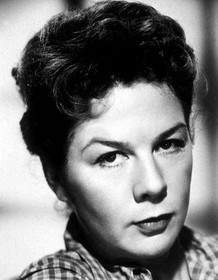
Eliza Doolittle (Wendy Hiller)
Played by Wendy Hiller
A Cockney flower girl whose rough speech and social position clash with upper-class expectations. Through Higgins' elocution lessons, she learns to imitate refined speech and navigate new social spaces. Her journey raises questions about autonomy, ambition, and the price of becoming ‘acceptable’ to high society.
- 🌸 Transformation
- 🗣️ Elocution
- 💬 Social mobility
-
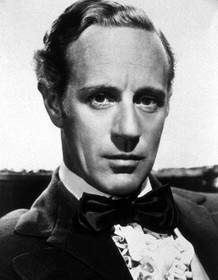
Professor Henry Higgins (Leslie Howard)
Played by Leslie Howard
A brilliant but brusque linguist who believes language can determine social rank and control. He treats Eliza as a challenging project rather than a person, and his methods drive the drama and her eventual push for independence. His confidence and occasional arrogance create a friction that fuels the narrative.
- 🧠 Intelligence
- 🗣️ Language
- 🧭 Mentor
- CG
Colonel George Pickering (Scott Sunderland)
Played by Scott Sunderland
A fellow linguist and gentleman who travels from India to study dialects and supports the experiment financially. He offers a steadier, more balanced perspective than Higgins and helps Eliza navigate social situations. His presence adds a cross-cultural layer to the language project.
- 🤝 Friendship
- 🧭 Mentor
- 🌍 Cross-cultural
- MP
Mrs. Pearce (Jean Cadell)
Played by Jean Cadell
The practical housekeeper who runs Higgins' household and keeps Eliza on track. She is protective yet firm, enforcing rules while caring about Eliza's welfare. Her domestic realism grounds the experiment in everyday life.
- 🏡 Household
- 🧼 Practical
- 🗣️ Etiquette
- MH
Mrs. Higgins ( Marie Lohr )
Played by Marie Lohr
Higgins' perceptive mother, who embodies upper-class sensibilities and questions the humanity of Eliza's treatment. She articulates concerns about respect and the social implications of the experiment. Her perspective highlights the tension between tradition and personal growth.
- 👩👦 Family
- 🧭 Perspective
- 🎭 Society
- AD
Alfred Doolittle (Wilfrid Lawson)
Played by Wilfrid Lawson
Eliza's father, a roguish dustman whose wit exposes the contradictions of respectable society. His reluctance to embrace a settled life contrasts with the consequences of his daughter's new status. He becomes entangled in the social upheaval surrounding Eliza's transformation.
- 😂 Humour
- 💰 Money
- 🧭 Social critique
- CA
Count Aristid Karpathy (Esme Percy)
Played by Esme Percy
A famed Hungarian elocution coach who has gained notoriety for shaping heiresses' accents and reading high society. He appears as a sharp, calculating rival to Higgins, challenging the notion that refinement is purely a matter of speech. His presence heightens the play's questions about authenticity and performance.
- 🕴️ Competition
- 🗺️ Aristocracy
- 🎯 Expertise
- FE
Freddy Eynsford-Hill (David Tree)
Played by David Tree
A young, romance-minded suitor who is drawn to Eliza's transformed voice and presence. His affections test the boundaries of social class and independence. His gentleness offers a hopeful contrast to Higgins' scientific approach to Eliza.
- 💘 Romance
- 🎩 Naivety
- 🕊️ Hope
Where and When Is Pygmalion Set?
Pygmalion is set in London, Covent Garden and Higgins' House (Edwardian era). Here is why the time and place matter to the story.
When
Edwardian era
Set in the early 20th century London, a period defined by strict class codes and rapid urban change. Language, reputation, and appearance are crucial markers of social rank. The narrative uses these backdrop details to explore opportunities and constraints tied to who one can become through speech and behavior.
Where
London, Covent Garden, Higgins' House
The story unfolds in London, beginning at Covent Garden where Eliza sells flowers. Much of the action shifts to Higgins' townhouse and the surrounding social milieu, including Mrs Pearce's domestic spaces and formal gatherings. The settings illustrate an urban center with sharp social divisions, where speech and manners largely determine status.
- 🌆 Urban London
- 🗣️ Language and manners
- 🏛️ Class structure
What Are the Themes of Pygmalion?
3 ideas the story keeps returning to, among them Language Class, Identity and Power & Class.
-
01
Language Class
Language acts as a gatekeeper to social status and opportunity. Higgins believes mastering speech can elevate Eliza to a higher social realm, while Eliza tests how much of her identity is tied to how she speaks. The process reveals how performance of language can reshape life prospects, for better or worse. It raises questions about authenticity versus social utility in pursuit of ascent.
-
02
Identity
Eliza undergoes a visible transformation that challenges her sense of self and social role. The lessons turn her into a different person on the outside, while she grapples with inner desires and autonomy. The narrative treats identity as a performance shaped by others’ expectations and one’s own choices. It asks whether true selfhood can endure beyond the surface changes in speech and manners.
-
03
Power & Class
Power dynamics hinge on wealth, status, and the control of conversation. Higgins exerts intellectual dominance, while Pickering provides steadier support, complicating the balance of influence. Alfred Doolittle and the broader social milieu critique the costs of respectability and social mobility. The story questions whether transformation is truly freeing or another form of social control.
What Kind of Film Is Pygmalion?
Bittersweet in tone, with steady pacing and a moderate story, going by the plot summary.
- Tone
- Bittersweet
- Pacing
- Steady
- Story
- Moderate
- Intensity
- Medium
- Ending
- Ambiguous
An elegant and witty social comedy that follows a transformative mentorship, delivering sharp societal critique alongside a bittersweet, ambiguous exploration of personal agency and class identity.
- witty
- reflective
- societal observation
- character-driven
- bittersweet
- sophisticated
- class and society
- transformation and identity
- language and power
- battle of the sexes
Quiz
How well do you remember Pygmalion? Test yourself on the story.
Where to Watch Pygmalion
Stream it on Artiflix and Criterion Channel, or rent or buy it from Amazon Video and FlixFling. US availability and prices from JustWatch.
Stream 14
 Artiflix
  Criterion Channel
  Darkroom
  Fawesome
  FlixFling
  fuboTV
  HBO Max
  HBO Max Amazon Channel
  Kanopy
  Mometu
  Plex
Plex  Plex Channel
  The Roku Channel
  Xumo Play
Streaming availability in the US, powered by