What Is Pygmalion About?
The premise of Pygmalion in 321 words, with nothing given away. The full story follows below.
In bustling early‑twentieth‑century London, class is spoken as loudly as the market cries that echo through Covent Garden. Henry Higgins, a flamboyant professor of phonetics, boasts that the right lessons can rewrite a person’s destiny, turning the rough‑spoken into the genteel. The city’s rigid social ladders and the power of speech become the backdrop for a playful yet pointed exploration of identity, ambition, and the thin veneer that separates “respectable” society from the streets below.
Enter Eliza Doolittle, a bright‑eyed flower girl whose Cockney cadence marks her as a child of the market. When she approaches Higgins with a desperate request for elocution lessons, the professor sees more than a charity case—he sees a living experiment for his theory. Joining him is Colonel Pickering, a fellow scholar whose genteel confidence adds both competition and camaraderie to the venture. Their wager to transform Eliza into a lady of refinement sets the stage for a clash of worlds, while a modest financial arrangement with Eliza’s dust‑man father, Alfred Doolittle, introduces the practical realities of the social experiment.
The house where the training unfolds is a microcosm of Victorian propriety, filled with the crisp precision of academia and the lingering scent of household chores. As Eliza begins to master pronunciation and posture, the seasoned educators must confront their own habits, prejudices, and the unexpected emotional currents that arise when an outsider learns to step into a world that never invited her. The tonal balance wavers between witty banter, gentle mockery, and moments of earnest reflection, hinting at deeper questions about belonging and self‑respect.
Against this backdrop of linguistic gymnastics and societal expectations, the story teases the possibility that a change in speech might open doors—or expose hidden fissures—in both the student and her mentors. The promise of transformation lingers, inviting the audience to wonder how far a new voice can carry a determined spirit before the world demands to hear the truth behind it.
What Happens in Pygmalion?
The complete story of Pygmalion, from the first scene to the last, in 649 words (about 3 minutes). Spoilers throughout. Names in the text link to 3 cast member pages.
Spoilers ahead
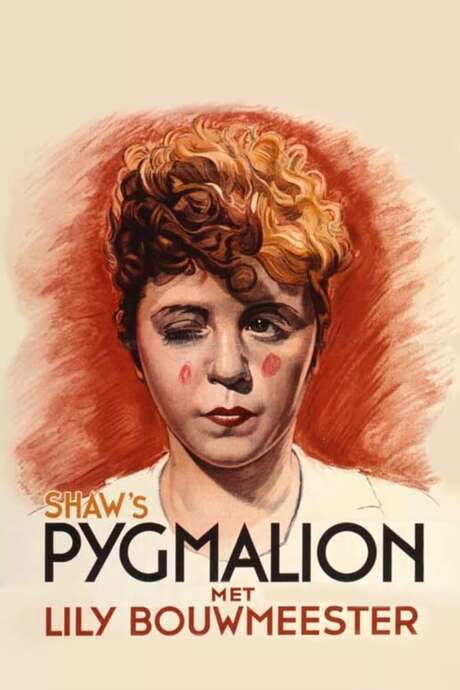
Eliza Doolittle, Lily Bouwmeester, is at the heart of a lively incident in Covent Garden when linguist Professor Higgins, Johan De Meester, is mistaken for a policeman by passers-by and bystanders, while the flower seller protests the disruption. In the aftermath, Higgins chats with Colonel Pickering, Eduard Verkade, a fellow scholar who has just arrived from India to meet him. Higgins argues that if Eliza could be taught to speak with precision and confidence, she could sculpt a brighter future for herself and even pass as a duchess.
The next morning, Eliza arrives at Higgins’ house to request elocution lessons. Colonel Pickering makes a friendly bet, offering to cover all expenses if Higgins can back up his boast. Eliza is escorted upstairs for a bath by Mrs Pearce, the housekeeper, just as Alfred Doolittle—the dustman and Eliza’s father—stumbles in to demand compensation for losing his daughter. Amused by Doolittle’s roguish charm, Higgins offers him £10, but Doolittle insists on £5, explaining that as one of the “undeserving poor” he only wants enough for a drunken weekend.
After a rigorous training period, Eliza is sent to an at-home gathering hosted by Mrs Higgins, the professor’s mother. There, even though she speaks with a refined accent, her slang-filled chatter and profanity scandalize the guests. Yet one guest, Freddy Eynsford-Hill, is captivated by her presence. After the guests depart, Mrs Higgins voices her disapproval that Eliza’s two protectors treat her more like a plaything than a person deserving respect.
Weeks of coaching lead to a public test at an embassy reception. Higgins and Pickering bring Eliza along, and Higgins encounters a former pupil, Count Aristid Karpathy, a Hungarian who has become famous for teaching American heiresses how to master elocution and for spotting social origins from speech. Fearing exposure, Higgins and Pickering worry that Karpathy might expose Eliza, but she manages to deceive him so convincingly that he mistakes her for a Hungarian princess—the result is that her English sounds so impeccable that it seems inauthentically native.
On the return from the reception, Higgins and Pickering congratulate each other on their success, yet they overlook Eliza’s own contribution and, more importantly, her feelings. Wounded by their indifference, Eliza quarrels with Higgins, even throwing his slippers in his face when he asks for them, and laments that she may be unsuited to the life she dreamed of. She seeks refuge at Mrs Higgins’s home, seeking a little warmth and guidance.
The next morning, Higgins visits his mother and learns that Eliza is staying with her, but before they can meet, Mr Doolittle arrives to complain about the upheaval Higgins has caused in his life. Higgins had once joked to an American millionaire that Doolittle was England’s most original moralist, and that whim of a bequest has now placed Doolittle on a path to respectability—an obligation he cannot ignore. He prepares to attend a fashionable London church wedding to his unwed partner, and he asks for Eliza, Pickering, and Mrs Higgins to support him through the ordeal.
Higgins and Eliza are left alone for a moment, and he tries to coax her back into his life, but she resists, insisting that she would rather marry Freddy, who is charming though financially precarious. When Higgins scoffs at that idea, Eliza reveals her resolve: she could use her newly acquired talents to offer elocution lessons herself and gain financial independence.
As the wedding party departs, Higgins wanders home in a contemplative mood and discovers a recording of Eliza’s first visit playing in his study. He then hears a knock at the door and, to his astonishment, Eliza returns, her voice now mocking her former self as she repeats, “I washed my face and hands before I come, I did.” He turns away, asking for his slippers, leaving their future together shrouded in ambiguity and possibility.
I washed my face and hands before I come, I did.
Pygmalion Timeline: Every Key Event in Order
12 key events in the order they happen, from “Evening Covent Garden encounter and Higgins's boast” to “A final note of ambiguity”. 12 events name a place, across 8 locations.
- 1
Evening Covent Garden encounter and Higgins's boast
During an evening in Covent Garden, Professor Higgins is mistaken for a policeman by passers-by, provoking protests from Eliza Doolittle. Higgins and Pickering discuss language and social class as the crowd disperses. Higgins boasts that with his method, Eliza could pass as a duchess if she learns to speak properly.
When:Evening Where:Covent Garden, London
- 2
Eliza asks for elocution lessons
The next morning, Eliza arrives at Higgins' house to request elocution lessons. Colonel Pickering is impressed by her resolve and makes a bet to cover all expenses if Higgins can prove his boast. Higgins accepts, setting up the experiment to transform Eliza's speech and prospects.
When:Morning Where:Higgins' house
- 3
Bath and the roguish father arrives
Eliza is prepared for lessons with a bath overseen by Mrs. Pearce while Higgins and Pickering prepare for the test. Alfred Doolittle, Eliza's father, arrives to demand compensation for losing his daughter. Higgins offers £10, but Doolittle accepts only £5, explaining he wants just enough for a drunken weekend.
When:Morning Where:Higgins' house
- 4
Eliza debuts at Mrs. Higgins’ house
After weeks of internship, Eliza attends an at-home gathering hosted by Mrs. Higgins. She speaks with a refined accent but fills her conversation with slang and profanity, shocking the guests. Freddy Eynsford-Hill is captivated by her, while Mrs. Higgins laments that her son and Pickering treat Eliza as a plaything rather than a person.
When:Weeks later Where:Mrs. Higgins’ house
- 5
Prepping for the embassy and facing Karpathy
Weeks of coaching culminate in an embassy reception where Higgins fears exposure by Count Aristid Karpathy, a former pupil who can discern origins from speech. Eliza manages to deceive Karpathy, convincing him that she is a Hungarian princess rather than a native speaker. The tension of potential discovery drives the final polish of her elocution.
When:Evening Where:London embassy
- 6
Return from the reception and quarrel
Higgins and Pickering celebrate their perceived success, selfishly neglecting Eliza's contribution and feelings. She quarrels with Higgins, throws his slippers at him, and decides to seek refuge at Mrs. Higgins's home. The rift between teacher and student widens at this moment.
When:Night Where:Higgins' house
- 7
Morning revelations and Doolittle’s bequest
The following morning, Higgins learns that Eliza is staying with Mrs. Higgins. Alfred Doolittle arrives to protest how Higgins has disrupted his life, only to reveal the bequest from an American millionaire that would force him into respectability. Doolittle now plans to marry his unwed partner and seeks support from Eliza, Pickering, and Mrs. Higgins.
When:Morning Where:Higgins' house
- 8
Eliza asserts independence and choices
Higgins presses Eliza to return to his script, but she resists, declaring that she would rather marry Freddy, a charming but penniless suitor. She also warns that she could use her elocution skills to teach others and gain economic independence, rather than relying on Higgins or her former circumstances.
When:Morning Where:Higgins' house
- 9
The wedding and the journey to it
With the wedding of Doolittle's partner approaching, the group leaves to attend the ceremony, highlighting the social changes and upheavals that have accompanied Eliza’s transformation. The wedding becomes a backdrop to the evolving relationships among the characters. Eliza's stance remains independent even as the others prepare for the event.
When:Day Where:London
- 10
Higgins discovers Eliza’s true voice
Higgins returns home after a long walk and plays a recording of Eliza's first visit, only to be startled by her present, real self at the study door. She quotes her earlier self, mocks him, and asks where his slippers are. The moment leaves their future relationship ambiguous and unsettled.
When:Morning after the wedding Where:Higgins' study
- 11
Freddy pursues Eliza
Freddy Eynsford-Hill continues to pursue Eliza, seeking another chance to see her after the social upheavals and the embassy events. Eliza weighs romance against her own burgeoning sense of independence and agency. The dynamic between them adds a future-tense tension to the resolution.
When:After embassy Where:London streets and venues
- 12
A final note of ambiguity
The film closes without a definitive resolution: Higgins and Eliza stand on unequal footing, yet they have moved closer in understanding. The ending suggests potential collaboration or further clashes, leaving their fate deliberately open to interpretation. The audience is left with a sense of possibility rather than closure.
When:Evening Where:Higgins' study / surrounding rooms
Who Are the Main Characters in Pygmalion?
9 characters, among them Eliza Doolittle (Lily Bouwmeester), Professor Henry Higgins (Johan De Meester) and Colonel Pickering (Eduard Verkade): who each one is and the part they play in the story. Every profile links to the actor’s page.
- ED
Eliza Doolittle (Lily Bouwmeester)
Played by Lily Bouwmeester
Eliza is a bold, quick-witted flower seller who becomes a focused, determined learner under Higgins's tutelage. She navigates the tension between her street speech and the aristocratic veneer she’s pressured to adopt. Her drive for autonomy and belonging propels the central conflict of transformation.
- 🗣️ Protagonist
- 💬 Transformation
- 💪 Agency
- PH
Professor Henry Higgins (Johan De Meester)
Played by Johan De Meester
Higgins is a brilliant but prideful linguist who believes language shapes social worth. He treats Eliza as a linguistic project and measures success by outward polish rather than inner change. His confidence borders on detachment, yet his expertise drives the core conflict.
- 🧠 Mentor
- 🗣️ Language expert
- 🧭 Ambition
- CP
Colonel Pickering (Eduard Verkade)
Played by Eduard Verkade
Pickering acts as a humane foil to Higgins, supporting Eliza with respect and belief in her potential. He values humanity over status and helps temper Higgins's more abrasive methods. His kindness provides a counterweight to the professor's single-minded pursuit.
- 🤝 Support
- 🗺️ Ethos
- 🧭 Diplomacy
- MH
Mrs. Higgins (Emma Morel)
Played by Emma Morel
Mrs. Higgins serves as a perceptive observer of her son's methods and Eliza's feelings. She champions Eliza's dignity and recognizes the emotional cost of the experiment. Her presence questions whether refinement should come at the expense of humanity.
- 🧭 Observer
- 🪪 Etiquette
- 💬 Insight
- D(
Doeluttel (Mr. Doeluttel) (Matthieu van Eysden)
Played by Matthieu van Eysden
Mr. Doeluttel is Eliza's father, a roguish dustman figure whose life is upended by social shifts. He embodies the pressures and paradoxes of upward mobility in a world of appearances. His interactions highlight family dynamics and economic concerns.
- 👨👧 Family
- 🧱 Social change
- 🗣️ Accent-strategy
- MV
Mevrouw van Heteren-Hill (Sara Heyblom)
Played by Sara Heyblom
A socialite whose reception becomes a test for Eliza's new persona. She represents high-society expectations and the judgment Eliza risks facing. The scene reveals how appearances influence reputation.
- 🎩 High society
- 🪞 Judgment
- 🗣️ Etiquette
- MV
Mevrouw van Heteren-Hill's dochter (Tous Sigma)
Played by Tous Sigma
A guest in upper-class circles who embodies the social gaze Eliza confronts. Her reactions underscore the performance of refinement and the pressures of propriety. She helps illustrate the era's social rituals.
- 👗 Fashion
- 🧐 Observation
- 🧭 Social ritual
- MV
Mevrouw van Heteren-Hill's zoon (Wim Kan)
Played by Wim Kan
A young member of high society who mirrors the era's views on class and reputation. He participates in or observes social events that test Eliza's transformation. His presence anchors the male gaze of the social circle.
- 👦 Youth
- 🗣️ Social pressure
- 🪄 Influence
- JS
Juffrouw Snijders (Nel Oosthout)
Played by Nel Oosthout
A household figure who helps populate Higgins's social world. Her presence adds to the sense of routine and order in domestic spaces where Eliza learns and is judged.
- 🧹 Support
- 🏠 Domestic life
- 🗣️ Attitude
Where and When Is Pygmalion Set?
Pygmalion is set in London and Covent Garden (Early 20th century (Edwardian era)). Here is why the time and place matter to the story.
When
Early 20th century (Edwardian era)
The story unfolds in a period of rigid class structure and formal manners. Language, etiquette, and social reputation are crucial markers of status. Settings such as ballrooms, drawing rooms, and city streets reflect the era’s emphasis on appearance and propriety.
Where
London, Covent Garden
London provides the bustling backdrop for a study of social class and language. The action unfolds in Covent Garden streets, Higgins's urban residence, and upscale social events like embassy receptions. The city’s public spaces contrast with intimate drawing-room settings where social rules and appearances are constantly negotiated.
- 🏙️ London
- 🎭 Classic
- 🗺️ Urban setting
What Are the Themes of Pygmalion?
3 ideas the story keeps returning to, among them Language & Class, Independence & Identity and Power & Morality.
-
01
Language & Class
Mastering elocution is presented as a potential passport to higher social circles, challenging the notion that birth determines worth. Higgins believes speech can elevate Eliza, while she seeks autonomy beyond her birth status. The tale probes authenticity versus performance in the pursuit of social advancement.
-
02
Independence & Identity
Eliza pursues economic and personal independence, contesting a dynamic where she is treated as a project. Her evolving identity clashes with expectations and the power dynamics of Higgins's experiment. The narrative tracks her move toward agency and self-definition.
-
03
Power & Morality
Teacher–pupil dynamics reveal ethical and social power imbalances shaped by wealth and status. Doolittle’s forced respectability and the surrounding social gaze highlight moral questions about manipulation and impact. The ending leaves Eliza’s and Higgins’s futures open to interpretation.
What Kind of Film Is Pygmalion?
Light in tone, with steady pacing and a straightforward story, going by the plot summary.
- Tone
- Light
- Pacing
- Steady
- Story
- Straightforward
- Intensity
- Low
- Ending
- Ambiguous
A witty and charming comedy of manners that steadily chronicles the transformation of a flower girl into a lady, filled with sharp social satire and culminating in an ambiguously hopeful ending.
- witty
- uplifting
- satirical
- charming
- class-conscious
- transformative
- social class
- makeover
- linguistics
- gender roles
Content notes: classism.
Where to Watch Pygmalion
Stream it on Artiflix and Criterion Channel, or rent or buy it from Amazon Video and FlixFling. US availability and prices from JustWatch.
Stream 14
 Artiflix
  Criterion Channel
  Darkroom
  Fawesome
  FlixFling
  fuboTV
  HBO Max
  HBO Max Amazon Channel
  Kanopy
  Mometu
  Plex
Plex  Plex Channel
  The Roku Channel
  Xumo Play
Streaming availability in the US, powered by