
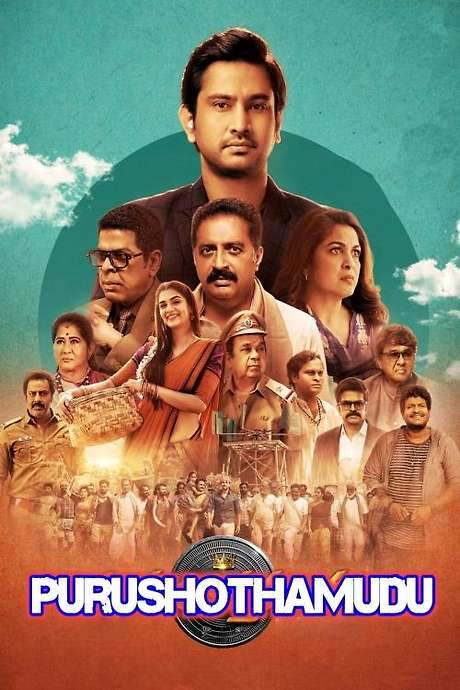
What Is Purushothamudu About?
The premise of Purushothamudu in 295 words, with nothing given away. The full story follows below.
Set against the contrasting worlds of corporate wealth and rural simplicity, the story follows Rachit Ram, the young heir to a sprawling business empire based in Hyderabad. Having completed his education abroad, Rachit returns to India to face an unusual condition set by the company’s founder: he must live as an ordinary person for 100 days, stripped of money, influence, and the privileges that have defined his life. The challenge is demanding, but Rachit accepts it, leaving behind the comfort of his family and venturing into a remote village far from the polished boardrooms he is destined to inherit.
The shift in environment is jarring and transformative. Settling in a small rural community, Rachit encounters a way of life defined by hard labor, close-knit relationships, and the daily struggles of those who depend on the land for their livelihood. The villagers, wary of outsiders yet welcoming in their own way, offer him a chance to understand resilience, humility, and the value of honest work. The experience slowly begins to reshape his perspective, as the rhythm of village life pulls him further away from the identity he has always known.
Beneath the surface of this personal journey lies a layer of family tension. Rachit’s aunt and cousin, who harbor ambitions of their own, are quietly working against his success, eager to see him fail. Their scheming casts a shadow over Rachit’s endeavor, hinting that the challenge ahead is not only one of endurance but also of navigating the complicated loyalties within his own household.
With each passing day, the 100-day trial tests Rachit’s character in ways he never anticipated. The story unfolds as a layered exploration of identity, privilege, and the quiet strength required to step outside one’s world and truly understand the lives of others.
What Happens in Purushothamudu?
The complete story of Purushothamudu, from the first scene to the last, in 788 words (about 3 minutes). Spoilers throughout. Names in the text link to 4 cast member pages.
Spoilers ahead
Rachit Ram, Raj Tarun the heir to the Hyderabad-based Parasuramaiah Group of Companies, returns to India after finishing his studies abroad. His grandfather, the company’s founder, laid down a bold bylaw: the prospective heir must live as an ordinary person for 100 days, without using wealth, influence, or identity. While his father Aditya Ram, Murali Sharma, worries that this rule might have helped trigger the disappearance of his elder brother Raghu Ram, Rachit accepts the challenge and sets out to prove that leadership can come from serving people, not from titles alone.
His aunt Vasundhara Ram, Ramya Krishnan who already controls half the business and dreams of her son Abhay Ram taking over as CEO, tries to derail him from the start. With a determined smile and a ready plan, she channels her influence to shadow his every move. To escape the city’s glare, Rachit leaves Hyderabad and travels to Rayapulanka, a rural town near Rajahmundry, where he works as an agricultural laborer and begins to see life through the lens of the people who actually farm the land. There, he befriends Ammulu, Hassini Sudhir a local woman who shares the community’s struggles and offers him a grounded perspective on the countryside.
Using his knowledge and a practical mindset, Rachit introduces affordable irrigation methods and techniques that help local farmers stretch scarce water and improve yields. What begins as small, clever fixes gradually earns him the trust of the villagers, who start counting on him as someone who understands their daily grind and is willing to roll up his sleeves to help. Though initially hesitant to get involved in their ongoing problems, he soon becomes a steady, dependable presence—someone the community can rely on when resources are tight and a hostile environment threatens their livelihoods.
This growing influence puts him on a collision course with Balaraju, the violent son of the local MLA, who resents a outsider challenging his control. When Rachit rescues Ammulu from Balaraju’s henchmen, the scale of the farmers’ troubles becomes clear: Balaraju’s family has gobbled up much of the surrounding land and has tight grip on crucial resources. Rather than taking sides, Rachit urges the villagers to unite and petition the government, turning their local grievances into a voice that can demand attention from higher authorities. Their campaign makes waves, eventually reaching officials in Delhi, and Rachit’s actions draw public notice as he moves through the years of the challenge with grit and a quiet resolve.
As the deadline for the 100-day test approaches, the strain on Rachit’s relationship with Ammulu grows when she learns he has been concealing his true identity and the reasons behind his presence in the village. Meanwhile, violence escalates: Balaraju’s supporters strike back, destroying trees and hard-fought gains, while Abhay’s henchmen intensify their pursuit to capture Rachit before the challenge ends. Rachit sustains serious injuries in a fierce clash, yet he manages to reach a government committee meeting and articulate the farmers’ grievances in a way that resonates with the officials. His words—and the visible commitment behind them—help tilt the outcome in favor of reform.
The committee responds by abolishing the restrictive flower-marketing system that had tied farmers’ produce to unfavorable terms, allowing them to sell their crops more freely. Back at the company board, there’s a moment of doubt: it is announced that Rachit completed only 99 days because he was attacked on the final day. Yet the board ultimately recognizes the spirit and essence of his undertaking, affirming that he has fulfilled the mission in spirit if not in the literal count.
In a turning revelation, Raghu Ram returns after two decades, shedding light on the earlier disappearance and explaining that wealth and influence pale in comparison to helping people in need. He shares that during his time away he faced poverty and hunger, learning firsthand the value of compassion and service. He reveals that he found the wounded Rachit and helped him survive, leading to a heartfelt reconciliation with Aditya and Vasundhara. With Raghu Ram’s perspective and approval, Rachit’s path to leadership gains stronger footing, and Vasundhara publicly approves his appointment as CEO, with the board casting a unanimous vote in his favor. Abhay accepts defeat and offers a remorseful apology to his parents.
The story closes with the unanticipated reality that Rachit did survive his injuries. He returns to the village with a renewed sense of purpose and uses his wealth to protect a farmer from losing his land by clearing a debt and stabilizing the farmer’s prospects. The final chapters show Rachit reconnecting with Ammulu and continuing to champion the welfare of the village, illustrating a leadership that puts people first and demonstrates that true stewardship can emerge from humility, perseverance, and shared roots.
Purushothamudu Timeline: Every Key Event in Order
14 key events in the order they happen, from “Rachit returns to India to claim the family legacy and accept the 100-day test” to “Rachit is appointed CEO and helps the village”. 14 events name a place, across 3 locations.
- 1
Rachit returns to India to claim the family legacy and accept the 100-day test
Rachit Ram, heir to the Parasuramaiah Group, returns to India after completing his education abroad. He learns that the founder’s bylaws require the prospective heir to live 100 days as an ordinary person, without using the family wealth or influence. He accepts the challenge, hoping it will prove his leadership beyond status.
Where:Hyderabad
- 2
Aunt Vasundhara opposes him; Abhay aims for CEO
Vasundhara Ram, who controls half the family company, schemes to derail Rachit's path to the throne. She wants her son Abhay to become CEO and uses underhanded tactics to sabotage him. The rivaling interests heat up as the clock for the 100 days starts ticking.
Where:Hyderabad
- 3
Rachit moves to Rayapulanka and begins life as a laborer
He relocates to Rayapulanka, living as an agricultural laborer to fulfill the 100-day condition. He keeps a low profile while observing the villagers’ struggles. The move marks the beginning of his hands-on attempt to understand the community.
Where:Rayapulanka
- 4
He applies his knowledge to improve irrigation
Drawing on his education and ingenuity, he introduces inexpensive irrigation methods that boost crop yields. The practical improvements win the villagers’ trust and show that wealth isn’t needed to make a difference. He becomes known as a problem-solver rather than a distant heir.
Where:Rayapulanka
- 5
Ammulu becomes his ally and friend
Rachit befriends Ammulu, a local woman who becomes his ally and confidante. Their growing bond anchors his effort to help the community. He starts seeing the villagers as people with real needs, not just a problem to solve.
Where:Rayapulanka
- 6
Rachit faces Balaraju and rescues Ammulu
Balaraju, the violent son of the local MLA, confronts Rachit and his supporters. He and his henchmen abduct Ammulu, but Rachit mounts a rescue and pushes back. The incident exposes how the village’s land and resources are controlled by a few powerful families.
Where:Rayapulanka
- 7
Villagers petition the government for reform
Moved by the unfolding injustice, Rachit helps the villagers organize and petition the government for reform. The campaign draws the attention of authorities in Delhi, widening the scope beyond the village. The action signals a shift from local protest to national scrutiny.
Where:Delhi
- 8
Public attention grows; pursuit to locate him intensifies
As the 100-day countdown advances, public attention intensifies and Vasundhara and Abhay race to locate him. News outlets pick up the story, turning Rachit into a symbol of reform. The search adds pressure on the family to resolve the situation.
Where:Delhi
- 9
Ammulu learns Rachit's true identity and their relationship strains
Ammulu learns that Rachit has concealed his true identity as the heir and future CEO. The revelation strains their relationship just as the deadline nears. He questions whether the price of leadership is too steep for personal sacrifices.
Where:Rayapulanka
- 10
Final assaults threaten the village; Rachit is wounded
Balaraju’s men launch a brutal attack on the villagers’ land, destroying trees and crops. Abhay’s henchmen also attempt to kill Rachit, leaving him severely wounded. He fights to reach the forthcoming committee hearing despite his injuries.
When:Final day Where:Rayapulanka
Show the other 4 events of Purushothamudu Hide the last 4 events
- 11
Rachit speaks at the government committee meeting
Rachit makes it to a government committee meeting and explains the farmers’ grievances in detail. He collapses after delivering his testimony, but his words prompt officials to act. The incident becomes the turning point that drives policy change.
When:Final day Where:Delhi
- 12
The committee abolishes the flower-marketing system
Impressed by his perseverance, the committee abolishes the restrictive flower-marketing system, letting farmers sell their produce freely. The reform marks a tangible victory for the village and validates his approach. The move signals a broader shift toward farmer welfare.
Where:Delhi
- 13
Raghu Ram returns and reconciles with the family
Raghu Ram, who disappeared twenty years earlier, returns and reveals what he learned about poverty and service. He explains that wealth without compassion is empty and reconciles with Aditya and Vasundhara. He declares support for Rachit's succession.
When:20 years after Where:Hyderabad
- 14
Rachit is appointed CEO and helps the village
Vasundhara publicly declares Rachit the rightful CEO, and the board unanimously confirms the appointment. Abhay accepts defeat and apologizes to his parents. Rachit then returns to Rayapulanka to help a farmer pay off a debt and to reconcile with Ammulu.
Where:Hyderabad
Who Are the Main Characters in Purushothamudu?
6 characters, among them Rachit Ram (Raj Tarun), Ammulu (Hassini Sudhir) and Vasundhara Ram (Ramya Krishnan): who each one is and the part they play in the story. 5 of them link to the actor’s page.
- RR
Rachit Ram (Raj Tarun)
Played by Raj Tarun
Rachit Ram is the heir to the Parasuramaiah Group who returns from abroad to fulfill a founder's decree: live as an ordinary person for 100 days. He disguises his wealth to work as a laborer in Rayapulanka and learns the everyday struggles of farmers. Using his knowledge, he introduces low-cost irrigation methods and earns the villagers' trust, becoming a catalyst for reform. His leadership grows from empathy, not entitlement.
- 🌟 Heir
- 🤝 Empathy
- 💡 Problem-Solver
- A(
Ammulu (Hassini Sudhir)
Played by Hassini Sudhir
Ammulu is a local farmer's daughter who befriends Rachit. She is cautious of outsiders at first but opens up as she witnesses his genuine intent to help. Her bond with Rachit grounds the romance and grounds the fight for the village's rights in human connection. She becomes a moral compass and community anchor in the narrative.
- 🌾 Local Friend
- 💚 Compassion
- 🤝 Community
- VR
Vasundhara Ram (Ramya Krishnan)
Played by Ramya Krishnan
Vasundhara Ram is the ambitious aunt who controls half the family business and pushes her son Abhay to become CEO. She uses corporate maneuvering and rivalry to stall Rachit's ascent. Her actions embody wealth-driven prioritization, clashing with the community-focused reforms at stake in the village.
- 💼 Corporate Power
- 🧭 Ambition
- 👩 Family
- AR
Abhay Ram (Sameer Hasan)
Played by Sameer Hasan
Abhay Ram is Vasundhara's son and the primary antagonist, using henchmen and underhanded tactics to foil Rachit's plans. He represents the old guard resisting change and fearing a loss of control. His confrontations with Rachit escalate the conflict between corporate interests and village welfare.
- 💥 Antagonist
- 🧷 Power Plays
- 🛡️ Opposition
- AR
Aditya Ram (Murali Sharma)
Played by Murali Sharma
Aditya Ram is the father figure in the family who weighs family duty against social responsibility. He initially anchors the status quo but grows to respect the greater good his son is pursuing. His evolution mirrors the film's theme that leadership is about serving people, not preserving privilege.
- 👨 Family
- 🧭 Leadership
- 💬 Dialogue
- RR
Raghu Ram
Raghu Ram returns after twenty years, revealing that wealth and influence are not the measure of leadership. He has tasted poverty and hunger and now speaks for a more compassionate approach to power. His revelation and support help guide Rachit's path and reconcile the family.
- 🕊️ Reunion
- 💡 Wisdom
- 🤝 Reconciliation
Where and When Is Purushothamudu Set?
Purushothamudu is set in Hyderabad and Rayapulanka (near Rajahmundry) (Present-day India). Here is why the time and place matter to the story.
When
Present-day India
Set in contemporary India, the story weaves between modern corporate settings in Hyderabad and a rural village in Andhra Pradesh. It reflects current issues like irrigation, land rights, and bureaucratic hurdles. Technology and political processes enable activism as villagers press for change.
Where
Hyderabad, Rayapulanka (near Rajahmundry)
Hyderabad houses the Parasuramaiah Group's headquarters and epitomizes corporate power. Rayapulanka, a village near Rajahmundry, represents the agrarian life and local struggles for water, land, and resources. The film juxtaposes these places to show how wealth and influence collide with rural welfare and reform.
- 🏙️ Corporate hub
- 🌾 Rural heartland
- 🏛️ Political currents
What Are the Themes of Purushothamudu?
3 ideas the story keeps returning to, among them Leadership, Farmers' rights and Identity.
-
01
Leadership
Rachit's 100-day challenge reframes leadership as service rather than mere control. He hides his wealth and identity to learn what the people need, then mobilizes them to demand reforms. His actions show that true leadership requires empathy, courage, and personal sacrifice. The revelation by Raghu Ram underscores that real leaders prioritize the welfare of others over personal gain.
-
02
Farmers' rights
Farmers face the harvesting of power by landowners and political actors. Rachit's village organizing and the petition to Delhi highlight how collective action can shift government policy. The policy win dissolves the restrictive flower-marketing system and frees the farmers to sell their produce. The story frames reform as a moral imperative tied to livelihoods.
-
03
Identity
Rachit's concealed identity creates tension between his personal wealth and his commitment to the village. The community gradually accepts him through his deeds rather than his status. The cast's moral arc shows that character is proven by service in adversity, not by lineage. The eventual acceptance catalyzes the transformation of the village and the company alike.
What Kind of Film Is Purushothamudu?
Hopeful in tone, with steady pacing and a moderate story, going by the plot summary.
- Tone
- Hopeful
- Pacing
- Steady
- Story
- Moderate
- Intensity
- Medium
- Ending
- Happy
A heartwarming family drama where a privileged heir discovers humility and purpose while helping rural farmers, blending romance, community empowerment, and uplifting triumph over corrupt local politics.
- hopeful
- uplifting
- triumphant
- heartwarming
- community-driven
- family-focused
- corporate inheritance
- rural life
- social justice
- political corruption
Content notes: violence, assault, attempted murder, political corruption, property destruction.
Quiz
How well do you remember Purushothamudu? Test yourself on the story.
