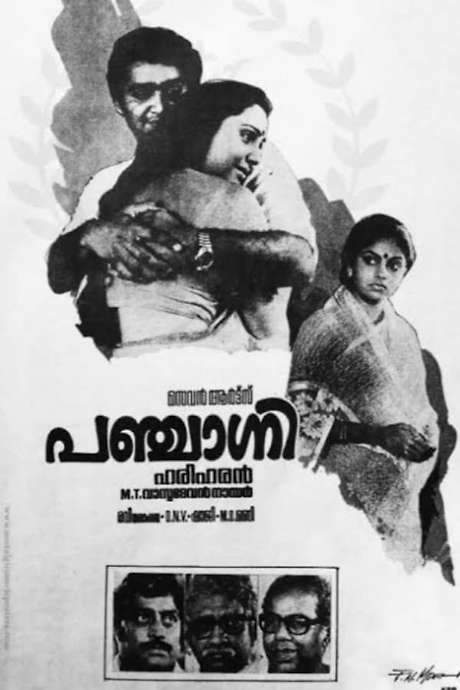



Panchagni Plot Summary
Read the complete plot summary and ending explained for Panchagni (1986). From turning points to emotional moments, uncover what really happened and why it matters.
Indira, Geetha, a Naxal activist, is out on parole for a brief two-week window from the central jail in Cannanore. This limited freedom centers on the memory of a crime she didn’t commit alone, the murder of Avarachan, a landlord whom she had witnessed kill a young tribal woman after he raped and impregnated her. The film follows how those two weeks unfold as Indira tries to piece together belonging, safety, and a path forward under the glare of past actions.
Her home life is tense from the start. Indira’s mother, a former freedom fighter who is now on her deathbed, longs for reconciliation and believes her daughter might finally be free. Her younger sister Savithri, Nadhiya, Savithri’s husband Prabhakaran, Devan, and her nephew greet Indira with warmth, hoping the family can heal. Yet the welcome feels fragile. Indira’s older brother, who has come from Delhi to perform their mother’s death rites, refuses to engage and ultimately leaves, thrusting the burden of the rite onto the shoulders of Indira’s nephew. The home becomes a battleground of suspicion, where Savithri suspects a hidden affair between Indira and her husband, and where Ravi, Indira’s unemployed younger brother, struggles with anger and drugs, resentment simmering just beneath the surface.
Most of Indira’s acquaintances keep an uneasy distance, except for Sharadha, Chithra, a former classmate who has stayed close. Sharadha’s life has shifted since college—she is married to Rajan, Murali—and the couple’s closeness to Indira offers a rare thread of support. The tension between acceptance and fear threads through Indira’s days as the parole period drags on.
Into this fraying tapestry enters Rasheed, Mohanlal, a freelance journalist who is determined to secure an interview with Indira. She initially resists his persistence, but his insistence presses her to open up in stages, and a wary rapport gradually forms between them. As days pass, Indira finds herself with fewer options for shelter. Savithri’s suspicions about an affair, combined with the shadow of Ravi’s behavior, leave Indira with the sense that she has nowhere stable to stay. Even Sharadha’s hospitality becomes strained when Rajan’s behavior—already a source of discomfort—grows more unsettling, and the couple’s home environment becomes untenable for Indira.
Reluctantly, Rasheed offers her a place to stay, and what begins as a cautious shelter evolves into a meaningful connection. The two cultivate a bond built on trust and mutual respect, and Indira slowly discovers a sense of companionship and legitimacy in a world that has often treated her as a threat. As the parole period approaches its end, Rasheed uses all possible channels to secure a government remission order in time, so Indira can return to life beyond the walls without the shadow of prison looming over her.
With the remission taking shape, Savithri and Ravi begin to reconcile with Indira, overjoyed at the prospect of her release. Eager to share the good news, Indira hurries to Sharadha’s home, only to uncover a grim, brutal scene: Sharadha’s maid Malu has been gang-raped by Rajan and his friends. The revelation crystallizes Indira’s unwavering sense of justice and duty. In a decisive act born of her own moral code, she shoots Rajan with his hunting rifle. The moment marks not just a response to personal betrayal but a statement about protecting the vulnerable, even at personal cost. After this act, Indira surrenders herself at the police station, choosing accountability over evasion.
Throughout these two weeks, the film threads together themes of loyalty, guilt, and the heavy price of vigilantism. It explores how a person accused of violence can still act to protect others, how families navigate love and blame, and how the pursuit of remission and redemption collides with the raw, immediate consequences of trauma and exploitation. The story remains steadfast in its portrayal of Indira as a complex figure—not a simple political symbol, but a person whose choices ripple through the lives of those around her.
Panchagni Timeline
Follow the complete movie timeline of Panchagni (1986) with every major event in chronological order. Great for understanding complex plots and story progression.
Parole granted; Indira leaves Cannanore central jail
Indira, a Naxal activist serving a life sentence for the murder of Avarachan, is released on a two-week parole. She steps out of the Cannanore central jail into a world that will soon become unfamiliar to her. The parole period is tightly supervised, with expectations about her conduct during this fragile window.
Return home; mother on deathbed
Indira returns to her family home and is greeted by her mother, a former freedom fighter, who is on her deathbed. The reunion brings a mix of relief and impending sorrow as the family processes her temporary freedom. The atmosphere blends hopeful anticipation with the gravity of her mother's condition.
Ravi's anger at Indira's presence
Ravi, Indira's younger brother, reacts with anger to her return, blaming her for his inability to secure a job. The volatile dynamic adds pressure to the household during the parole period. His resentment foreshadows further familial strain as events unfold.
Older brother refuses to talk during death rites
Indira's older brother, back from Delhi to perform their mother's death rites, refuses to speak with her and eventually leaves after a major quarrel. The rift disrupts the family's ritual duties and deepens Indira's isolation. The nephew ends up performing some rites in her stead.
Sharadha remains a supportive neighbor
Sharadha, Indira's old classmate who lives nearby, offers quiet support and friendship amid the family's tensions. She provides a steady presence in Indira's circle, contrasting with the hostility she sometimes faces at home. Her companionship becomes a lifeline during the parole window.
Rasheed's interview attempt and Indira's initial refusal
Rasheed, a freelance journalist, persistently seeks an interview with Indira. She initially declines, annoyed by his persistence, signaling a complicated professional curiosity around her case. This interaction plants the seeds for a later, deeper connection between them.
Indira's housing instability grows
As days pass, Indira feels unwanted and ends up with no permanent place to stay. The lack of shelter intensifies her sense of vulnerability during the parole window. The family and friends struggle to provide lasting support.
Indira moves in with Rasheed
Seeking stability, Indira asks Rasheed for help and ends up staying at his place. The arrangement gives her a safe space during the parole period and marks a turning point in their evolving relationship. The proximity increases emotional connection between them.
Rasheed and Indira's bond deepens
Over time, Indira and Rasheed grow closer and a loving relationship blossoms. They share confidences and navigate the complexities of parole together. The relationship provides emotional support as external pressures mount.
Remission order secured
Rasheed works with bureaucratic channels and, after significant effort, secures a government remission order in time. This development means Indira may avoid returning to jail when the parole ends. The moment brings relief but also highlights the fragility of the system.
Family reconciliation and relief
Savithri and Ravi reconcile with Indira, rejoicing at the prospect of her release. The family begins to imagine a future beyond the two-week period, embracing the possible freedom she now seems to have earned. The mood shifts from suspicion to hopeful celebration.
Indira learns of the incident at Sharadha's home
Rushing to Sharadha's place to share the good news, Indira discovers that Sharadha’s maid Malu has been gang-raped by her husband Rajan and his friends. The scene exposes brutal violence and tests Indira's righteous resolve. She reacts with shock, realizing the danger around those close to her.
Indira shoots Rajan and surrenders
True to her righteous self, Indira shoots Rajan with his hunting rifle to stop the assault. Immediately after, she surrenders herself at the police station, accepting responsibility for her actions. The act culminates the two-week arc with a dramatic choice and personal sacrifice.
Panchagni Characters
Explore all characters from Panchagni (1986). Get detailed profiles with their roles, arcs, and key relationships explained.
Indira (Geetha)
A Naxal activist serving a life sentence, Indira returns home on parole for a two-week window. She navigates isolation, suspicion, and a longing for belonging while trying to stay true to her righteous resolve. Her relationship with Rasheed grows from professional caution to a protective, intimate bond as she seeks shelter and safety.
Rasheed (Mohanlal)
A freelance journalist who persists in interviewing Indira and ultimately helps her find shelter. He becomes a pivotal ally during her parole, balancing professional curiosity with genuine concern for Indira's safety. Their evolving relationship adds emotional depth to the unfolding drama.
Rajan (Murali)
Sharadha's husband and a womanizer who embodies the film's antagonist side. His actions culminate in the gang-rape of Malu, and Indira's fierce retribution against him marks a turning point in the plot. He represents the brutality that Indira fights against, both personally and socially.
Sharadha (Chithra)
Indira's old classmate who lives nearby and remains one of the few who offer her support. Her husband Rajan's downfall strains their relationship, highlighting the collateral damage of Indira's parole and the broader social paranoia surrounding her stay.
Avarachan (Prathapa Chandran)
A landlord who Indira witnesses kill a young tribal woman after she was raped and impregnated by him. His murder becomes the catalyst for Indira's final act of justice before she surrenders to the police.
Savithri (Nadhiya)
Indira's sister who, along with her husband Prabhakaran, reconsiders their relationship with Indira as tensions within the family surface. She represents a path to reconciliation and the emotional stakes of family loyalty.
Panchagni Settings
Learn where and when Panchagni (1986) takes place. Explore the film’s settings, era, and how they shape the narrative.
Time period
Two weeks (parole period)
The events unfold over a two-week parole window during which Indira is released with a remission order in sight. The clock intensifies personal and legal pressures as family tensions flare and trust is tested. This tight timeframe drives pivotal choices, including Indira's ultimate act of justice. The period culminates in a consequential confrontation with Rajan and the legal consequences that follow.
Location
Cannanore Central Jail, Indira's home, Rasheed's place, Sharadha's place
The film is rooted in Cannanore, where Indira serves a life sentence in the central jail. Much of the drama unfolds in the private spaces of Indira's family and friends—her home, Rasheed's place, and Sharadha's home—highlighting the tension between public perception and intimate relationships. These locations together trace the social fallout of Indira's parole and the fragile shelter she seeks. The settings emphasize both institutional confinement and the precarious freedom she experiences during the two-week window.
Panchagni Themes
Discover the main themes in Panchagni (1986). Analyze the deeper meanings, emotional layers, and social commentary behind the film.
🕊️
Freedom vs Duty
Indira's temporary release places her between personal freedom and looming duty to the law. The two-week span exposes the costs of liberation for her and those around her. The film examines whether true freedom can exist within a system that seeks to define moral boundaries for oppressed individuals.
⚖️
Justice and Vigilance
The narrative juxtaposes formal justice with vigilante impulses. Indira's sense of righteousness clashes with the consequences of violence she commits to protect others. The remission order tests whether law or moral action ultimately governs outcomes.
🔥
Activism and Consequence
Indira's background as a Naxal activist casts a shadow over her choices and the reactions of family and society. The story traces how radical commitments collide with everyday life and personal relationships. Activism's costs become central to her fate during the parole period.
👪
Family and Redemption
The film centers on family dynamics—misunderstandings, reconciliations, and the search for acceptance. Indira's bonds with Savithri, Rasheed, and Sharadha reveal both support and conflict. Redemption emerges not just through legal outcomes but through how loved ones choose to stand by her.

Coming soon on iOS and Android
The Plot Explained Mobile App
From blockbusters to hidden gems — dive into movie stories anytime, anywhere. Save your favorites, discover plots faster, and never miss a twist again.
Sign up to be the first to know when we launch. Your email stays private — always.
Explore the mobile appPanchagni Spoiler-Free Summary
Discover the spoiler-free summary of Panchagni (1986). Get a concise overview without any spoilers.
In the remote hills of Kerala, a tribal community clings to its traditions while the shadows of past injustice linger in every conversation. Indira—a woman marked by a lifelong sentence for a crime born of resistance—receives a brief two‑week parole that becomes a fragile window into a world she has been forced to observe from behind bars. The film’s tone is an unflinching blend of stark realism and lingering melancholy, letting the raw landscape echo the inner turbulence of a soul searching for redemption amid lingering trauma.
Back home, mother, a once‑fierce freedom fighter now on her deathbed, hopes the fleeting freedom might finally bring peace to her daughter. Around the kitchen table, Savithri and her husband Prabhakaran offer tentative warmth, while a younger nephew shoulders the weight of ancestral rites. Older brother, arriving from the city to perform the final rites, keeps his distance, leaving Ravi, the volatile younger sibling, to grapple with anger and hopelessness. These strained relationships form a delicate tapestry of love, suspicion, and unspoken grievances that define Indira’s precarious return.
A solitary thread of support comes from Sharadha, a former classmate whose marriage to Rajan has settled into a quiet routine. Their home briefly becomes a refuge, but even the safest corners are tinged with unease. Into this fragile equilibrium steps Rasheed, a determined journalist whose persistence nudges Indira toward reluctant openness. Their growing rapport hints at the possibility of trust and shared purpose, offering a glimmer of connection in a world that has consistently treated her as an outlier.
As the parole days unwind, the film breathes through the tension between fleeting liberty and the weight of history. Every conversation, every lingering glance, suggests that Indira’s journey is as much about confronting the echoes of past cruelty as it is about navigating the fragile bonds of family and newfound allies, leaving the audience poised on the edge of an unresolved, haunting quest for justice.
Movies with Similar Twists and Themes
Uncover films that echo the narrative beats, emotional arcs, or dramatic twists of the one you're exploring. These recommendations are handpicked based on story depth, thematic resonance, and spoiler-worthy moments — perfect for fans who crave more of the same intrigue.








Featured on this page

What's After the Movie?
Not sure whether to stay after the credits? Find out!
Check out our other apps:

SAT Sphere
Build confidence for the Digital SAT.

Mori Atlas
Discover wild places worth protecting.

Luntero
Search smarter for a home in Amsterdam.

Plot Explained
Unravel movie endings and hidden clues.

Pokechamp
Dive into Pokémon data and battle logic.

Driving Theory
Get ready for your European theory test.

Movie Dust
Plan your next cinema trip with ease.

Musemap
Find art and culture as you travel.

Selkobase
Compare credentials before committing.

Local Manual
Turn an unfamiliar country into practical next steps.

Lernavi
Compare school systems before your next move.

GymRoam
Find a workout stop wherever your plans take you.
Explore Our Movie Platform
New Movie Releases (2026)
Famous Movie Actors
Top Film Production Studios
Movie Plot Summaries & Endings
Major Movie Awards & Winners
Best Concert Films & Music Documentaries
Movie Collections and Curated Lists
© 2026 What's After the Movie. All rights reserved.
Privacy Policy