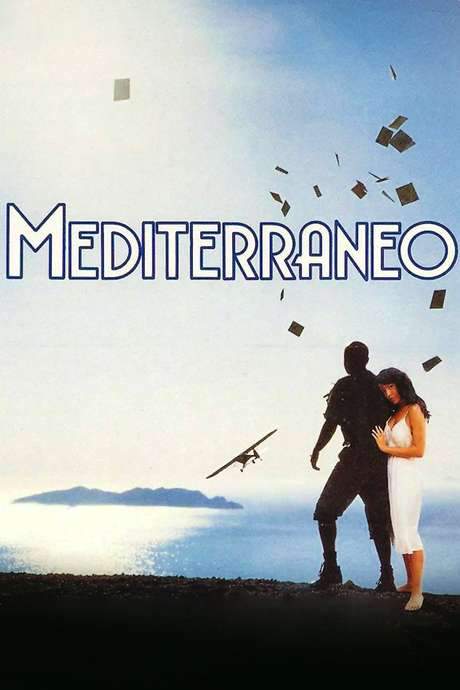
Mediterraneo 1991

Directed by

Gabriele Salvatores
Made by

Penta Film
Mediterraneo Plot Summary
Read the complete plot summary and ending explained for Mediterraneo (1991). From turning points to emotional moments, uncover what really happened and why it matters.
In 1941, one year after Italy aligned with Germany against the Allies in World War II, a small group of misfit Italian soldiers is sent to Megísti, a tiny Greek island in the Aegean Sea, for four months of lookout duty. The ensemble is a cross section of ordinary men who find themselves drawn to the island and its people: Lt. Raffaele Montini, a lieutenant with a painter’s eye, and Sgt. Nicola Lo Russo, a macho sergeant with a stubborn streak; a ski instructor who travels with his beloved donkey Silvana; and a handful of other quirky souls who discover that warmth and humor can bloom even in the margins of war. The group’s shared vibe is playful and resilient, repeatedly echoed by the motto they mutter to each other: > One face, one race
They arrive expecting danger, but their initial efforts to fortify the island are clumsy and lighthearted rather than heroic. They stumble upon a small town with no townspeople, and as night falls they witness distant bombing on the horizon. Through radio intercepts, they learn the ship meant to pick them up has been destroyed, a blow that should unsettle them yet somehow seeps into a calmer, almost dreamlike pace. The villagers later reappear, explaining that the Germans had taken all the men, yet, seeing how harmless the Italians appear, they choose to slip back into their everyday routines. The landscape—hot, bright, and serenely indifferent—begins to mold the soldiers into a different rhythm, a tempo less about marching and more about living. On the island, the local Orthodox priest befriends the lieutenant, a painter by instinct, and asks him to restore the murals in his church, inviting art into daily faith and ritual. Orthodox priest The lieutenant’s artfulness becomes a bridge between duty and beauty, and the priest’s trust grants him a canvas for quiet defiance against the war’s noise.
As days drift by, two soldiers who are brothers form a bond with a young shepherdess, a trio whose affection deepens with shared days under the sun and on the dusty lanes. They eventually consummate their friendship, and the shepherdess loves them both equally, a gentle counterpoint to the war that rages only in distant headlines. Meanwhile, Sergeant Lo Russo—still the only member of the group with a real taste for conflict—turns to folk dancing, letting the island’s warmth loosen his grip on war’s gravity and prompting him to ponder his place in the world. In a parallel thread, the shyest soldier, Antonio Farina, finds love with the island’s prostitute, Vassilissa. Their tender bond leads to marriage, and they choose to stay on the island so Vassilissa can pursue her dream of opening a restaurant, a bright aspiration that seems to bloom even in the shadow of war. The remaining soldiers eventually return to Italy, carrying with them memories that smell of sun, salt, and forgiveness rather than victory.
As time folds forward, the three men who remain most tethered to the island’s peace—those who have chosen to listen to its tempo—are drawn back together in old age, prompted by visits to the tomb of Vassilissa, who has since passed away. Their reunion on Megísti is a quiet testament to a life altered by a war they never truly felt as theirs, a life where friendship, art, love, and simple rituals of daily living outlast the echoes of conflict.
Mediterraneo Timeline
Follow the complete movie timeline of Mediterraneo (1991) with every major event in chronological order. Great for understanding complex plots and story progression.
Deployment to Megisti
In 1941, a misfit group of Italian soldiers is sent to Megisti for four months of lookout duty. The unit includes a lieutenant who loves art, a macho sergeant, a ski instructor with his beloved donkey Silvana, and several quirky companions. They arrive with a sense of duty but are quickly drawn into the island's heat, light, and easy pace, far from a real war.
Inept wartime precautions
With war seemingly distant, the soldiers prepare for an attack in overly elaborate ways, but their methods prove comically wrong. Their nervous energy clashes with the island's idle rhythm, revealing their unfamiliarity with actual combat. The mood shifts from alert to languid curiosity as they settle in.
Bombing horizon and lost pickup
That night they see bombing on the horizon and, through radio intercepts, learn the ship that was supposed to pick them up has been destroyed. The revelation traps them on the island and reframes their sense of time. They begin to confront being stranded rather than ready to depart.
Villagers reappear and explain
The villagers reemerge from hiding and reveal they had fled because Germans took all the men, but now see the Italians as harmless and resume their ordinary lives. The episode marks a turning point from fear to communal life. It also shows war’s absence in the everyday rhythm of the island.
Integration and cross-cultural warmth
The Italian soldiers are absorbed into island life, enjoying the landscape and the hospitality of the Greeks and a visiting Turk. The refrain 'One face, one race' appears as a shared belief that humans can coexist across differences. The soldiers start to see the island as home rather than a battleground.
Priest and murals restoration
The Orthodox priest befriends the lieutenant, who is an amateur painter, and asks him to restore murals in the church. Their collaboration deepens their bond and reveals art as a bridge between soldiers and locals. The lieutenant’s sketches begin to transform the village space.
Brothers and the shepherdess
Two soldiers who are brothers befriend a young shepherdess, forming a complex, affectionate bond. The shepherdess, in turn, loves them both equally, creating a delicate triangle of care and emotion. Their relationship becomes a quiet, human center of the island’s life.
Farina falls for Vasilissa
The shyest soldier, Farina, falls in love with Vasilissa, the island’s prostitute. Their romance blossoms slowly as they navigate trust and desire in a place far from wartime rules. The bond between them hints at a future beyond Italy for some of the men.
Wedding and island life
Farina and Vasilissa marry and decide to stay on the island, pursuing Vasilissa’s dream of opening a restaurant. Their union becomes a symbol of choosing life over duty. Meanwhile, the rest of the group prepares to return to Italy.
Lo Russo’s existential turn
Sergeant Lo Russo, the group’s fiery wartime spirit, takes up folk dancing and begins to reflect on his place in the universe. The light, communal moments contrast with earlier aggressive impulses, signaling inner change. The dance becomes a quiet rebellion against war’s logic.
The group returns to Italy
The rest of the soldiers eventually decide to return to Italy, leaving the island to its sunlit routines and the couple who chose to stay. Their departure underscores the island’s power to change lives even as war continues elsewhere. The departure marks the end of their four-month assignment as soldiers.
Old age reunion and Vasilissa’s tomb
Many years later, three of the men return to the island to visit Vasilissa’s tomb and are briefly reunited there. Vasilissa had died in the intervening years, but her memory connects the men to the place. The island remains a quiet witness to their histories and choices.
Mediterraneo Characters
Explore all characters from Mediterraneo (1991). Get detailed profiles with their roles, arcs, and key relationships explained.
Lt. Raffaele Montini (Claudio Bigagli)
An amateur painter with a gentle soul, Montini fosters art and friendship on the island. His curiosity and openness help him connect with the Orthodox priest and the locals, making him a bridge between war and peace. He embodies a peaceful leadership style, choosing empathy over aggression.
Antonio Farina (Giuseppe Cederna)
The shyest member of the group, Farina navigates affection and self-discovery as he falls for Vassilissa. His sensitivity contrasts with the harsher roles of war, revealing a capacity for deep emotion and commitment. His arc centers on love and choosing a life beyond combat.
Sgt. Nicola Lo Russo (Diego Abatantuono)
Lo Russo is the fiery, war-adept voice among the soldiers, yet he also embraces music, dance, and reflection. His growing appreciation for the island’s rhythm shows a more humane side of a soldier who could have been a zealot. He embodies energy tempered by wonder.
Luciano Colasanti (Ugo Conti)
A ski instructor who navigates the heat and landscape alongside his donkey Silvana, Colasanti provides practical humor and resilience. His presence anchors the group’s adaptation to island life and adds a touch of eccentricity.
Vassilissa (Vana Barba)
The island’s prostitute who forms a surprising bond with Farina and is central to a love story that ends in marriage and a dream of opening a restaurant. Her relationships reveal themes of longing, agency, and shared aspiration.
Orthodox priest (Luigi Montini)
A local priest who befriends Montini and invites him to restore church murals, the priest embodies faith, tradition, and a willingness to collaborate across boundaries. He fosters a sense of community and continuity amidst upheaval.
Mediterraneo Settings
Learn where and when Mediterraneo (1991) takes place. Explore the film’s settings, era, and how they shape the narrative.
Time period
1941
The story unfolds in 1941, one year after Italy joined Germany against the Allies. A four-month lookout mission on Megísti traps a group of misfit Italian soldiers in a sunlit, heat-drenched routine. They experience a war that feels distant, as bombing is seen on the horizon but not fought on their ground. The time period frames their gradual immersion into island life rather than heroic battle.
Location
Megísti (Greek island in the Aegean Sea)
Megísti is a small Greek island in the Aegean Sea, known for its sun-drenched streets and open horizons. The movie uses the island as a peaceful stage away from the mainland’s fighting, where locals greet visitors with warmth. The landscape, heat, and church murals give the place its quiet character, inviting the soldiers to slow down and belong. The town’s revived life becomes a contrast to the war elsewhere.
Mediterraneo Themes
Discover the main themes in Mediterraneo (1991). Analyze the deeper meanings, emotional layers, and social commentary behind the film.
🕊️
War and Peace
The film juxtaposes the distant horrors of World War II with a peaceful island life that draws the soldiers into ordinary joys. War remains off-screen, as the men discover friendship, humor, and humanity in a place they initially overlook. The conflict becomes a backdrop rather than a battlefield, highlighting the resilience of ordinary people.
🤝
Belonging
The soldiers are absorbed into island life, forming bonds with locals and each other. The Orthodox priest and the painter among them bridge cultural gaps, while a shepherdess and others become part of the soldiers’ makeshift family. The island unwinds its welcoming rhythm, offering a sense of home away from home.
💘
Love and Loyalty
Farina’s shy romance with Vassilissa drives a tender subplot that culminates in marriage and a shared dream on the island. Other soldiers find companionship and affection as life on Megísti reshapes their identities. Love here is a quiet, transformative force that outlasts the men’s original mission.

Coming soon on iOS and Android
The Plot Explained Mobile App
From blockbusters to hidden gems — dive into movie stories anytime, anywhere. Save your favorites, discover plots faster, and never miss a twist again.
Sign up to be the first to know when we launch. Your email stays private — always.
Explore the mobile appMediterraneo Spoiler-Free Summary
Discover the spoiler-free summary of Mediterraneo (1991). Get a concise overview without any spoilers.
On a sun‑baked Aegean isle in the summer of 1941, a tiny Italian warship is ordered to withdraw, leaving a handful of soldiers behind to keep watch over the silent coast. The island of Megísti is almost picture‑perfect—a white‑washed village perched on cliffs, crystal waters lapping at pebble‑strewn bays, and an atmosphere that seems to have forgotten the war raging elsewhere. The soldiers arrive expecting duty and danger, yet the quiet landscape quickly turns their assignment into an unexpected interlude, where the rhythm of daily life begins to eclipse the clatter of artillery.
Among the detachment, Lt. Raffaele Montini stands out with a painter’s eye, his quiet curiosity drawing him toward the island’s colors and its modest Orthodox church. Beside him, the burly and stubborn Sgt. Nicola Lo Russo carries the swagger of a career soldier, still clutching at the notion of combat even as the heat softens his resolve. They are joined by an eclectic group—a ski instructor who never left his winter gear behind, a shy rookie, and others whose quirks hint at stories far removed from the front lines. Their interactions are laced with humor and a shared mantra that binds them together, a reminder that they are “one face, one race” in the absurd theatre of war.
The island itself becomes a character, its bright sun and lazy breezes coaxing the men toward simple pleasures: conversations over fresh fish, spontaneous folk dances, and the occasional brush with local customs. An Orthodox priest, warm and welcoming, offers the lieutenant an unexpected chance to merge art with faith, while the townspeople—though initially absent—hint at lives that continue despite the conflict surrounding them. This setting cultivates a tone that is both gently comedic and quietly reflective, allowing the soldiers to discover a side of themselves far removed from the battlefield.
As days stretch into weeks, the group’s dynamic evolves from rigid military order to a loose, almost familial camaraderie, each man subtly reshaped by the island’s unhurried tempo. The promise of rescue hangs in the distance, but the true focus remains on how an unlikely troupe of strangers learns to live, laugh, and find a fleeting sense of peace beneath the Mediterranean sun.
Movies with Similar Twists and Themes
Uncover films that echo the narrative beats, emotional arcs, or dramatic twists of the one you're exploring. These recommendations are handpicked based on story depth, thematic resonance, and spoiler-worthy moments — perfect for fans who crave more of the same intrigue.




Featured on this page

What's After the Movie?
Not sure whether to stay after the credits? Find out!
Check out our other apps:

SAT Sphere
Build confidence for the Digital SAT.

Mori Atlas
Discover wild places worth protecting.

Luntero
Search smarter for a home in Amsterdam.

Plot Explained
Unravel movie endings and hidden clues.

Pokechamp
Dive into Pokémon data and battle logic.

Driving Theory
Get ready for your European theory test.

Movie Dust
Plan your next cinema trip with ease.

Musemap
Find art and culture as you travel.

Selkobase
Compare credentials before committing.

Local Manual
Turn an unfamiliar country into practical next steps.

Lernavi
Compare school systems before your next move.

GymRoam
Find a workout stop wherever your plans take you.
Explore Our Movie Platform
New Movie Releases (2026)
Famous Movie Actors
Top Film Production Studios
Movie Plot Summaries & Endings
Major Movie Awards & Winners
Best Concert Films & Music Documentaries
Movie Collections and Curated Lists
© 2026 What's After the Movie. All rights reserved.
Privacy Policy