What Is Lola About?
The premise of Lola in 302 words, with nothing given away. The full story follows below.
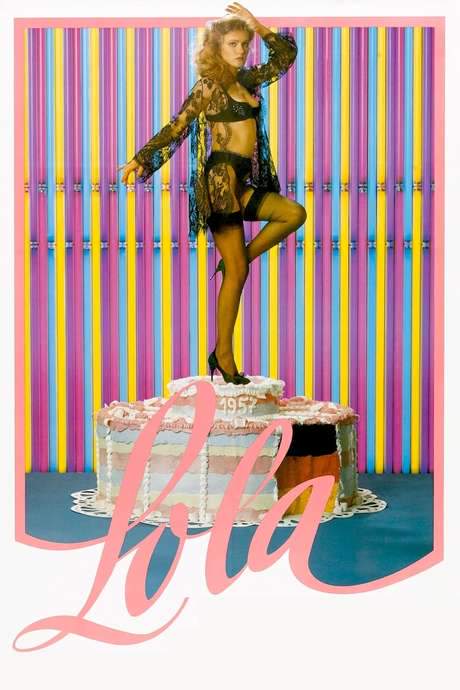
In the soft, candy‑colored glow of an autumn‑touched West Germany, the city of Coburg hums with the restless optimism of post‑war reconstruction. Yet beneath the pastel façades, a glossy satire of capitalism flickers, echoing the decadent longing of classic films like The Blue Angel. The streets are lined with cafés, construction sites, and dimly lit cabarets, each a stage for the subtle power plays that keep the city’s fragile order in motion.
Lola commands the attention of every man who drifts through the brothel where she sings, a cabaret performer whose allure is matched only by her sharp awareness of the transactions that govern her world. While she revels in the sway she holds over patrons, a deeper desire pulses beneath her performances—a yearning for financial security, a place to call her own, and a love that could anchor her in a society that constantly treats everything as a commodity.
Schuckert, a charismatic property developer, epitomizes the city’s emerging elite, his influence extending from construction permits to the whispered deals that shape Coburg’s future. Across the same urban landscape, von Bohm, a cultured and idealistic building commissioner newly arrived from the east, brings a rigor and moral compass that clash with the established order. Their intersecting ambitions set the stage for a daring contest, as Lola envisions a scheme that could turn the very structures of power to her advantage, positioning herself between the builder’s pragmatism and the commissioner’s integrity.
The film unfolds as a richly textured portrait of desire and decadence, where every glittering surface conceals a negotiation, and every character navigates the thin line between exploitation and aspiration. In this world, love, ambition, and the relentless churn of commerce intertwine, inviting the audience to wonder which forces will ultimately shape the destiny of those daring enough to play the game.
What Happens in Lola?
The complete story of Lola, from the first scene to the last, in 326 words (about 1 minute). Spoilers throughout. Names in the text link to 3 cast member pages.
Spoilers ahead
In 1957 Coburg, as West Germany rebuilds, the city’s social order leans on the power of a few men and their fortunes. The mayor, the police chief, the bank president, and the newspaper editor all prosper, but at the center of it all stands Schuckert, Mario Adorf a shrewd property developer who owns the brothel where many of the city’s men seek relief. His favorite singer there is Lola, Barbara Sukowa.
A quiet upheaval arrives with the arrival of the high-minded and cultured von Bohm, Armin Mueller-Stahl a refugee from East Prussia who takes the post of building commissioner. Divorced, he hires a woman with a young granddaughter as his housekeeper and dedicates himself to his new job. One day, while he is away, the housekeeper brings Lola to his house. It is Lola who decides she wants to know this interesting man and she introduces herself under her real name, Marie-Luise, soon catching von Bohm’s attention. He proposes, unaware of her night job or that Schuckert is the father of her daughter, and Lola warns him off. When he is finally taken to the brothel, he learns the truth about her and the lives that intersect in Coburg’s shadowy corners.
Meanwhile, von Bohm begins to uncover Coburg’s widespread corruption, including building permits engineered by Schuckert. He tries to stop it, but the entrenched system shows little interest in reform. Still in love with Lola, he presses on, hoping to bring change from within a city that has long rewarded the few at the expense of many.
Unable to alter the system and driven by his feelings, von Bohm marries Lola with Schuckert’s blessing. As a wedding gift, Schuckert hands them the deed to the brothel, a stark symbol of how power reshapes private lives. After the church ceremony, while von Bohm strolls, Schuckert inescapably asserts his influence and takes the bride to bed, sealing a complicated union where affection, ambition, and corruption are all entangled.
Lola Timeline: Every Key Event in Order
12 key events in the order they happen, from “Postwar reconstruction grips Coburg” to “An unresolved struggle amid entangled loyalties”. 12 events name a place, across 7 locations.
- 1
Postwar reconstruction grips Coburg
In 1957, Coburg and much of West Germany are in a phase of rebuilding. The town's elite—mayor, police chief, bank president, newspaper editor, and property developer Schuckert—enjoy the spoils of the new order. Lola, Schuckert's favored singer, embodies the prosperity and moral ambiguity of the era.
When:1957 Where:Coburg
- 2
A new building commissioner arrives
A high-minded, cultured refugee from East Prussia arrives as Coburg's building commissioner. He openly aims to reform the crooked practices that sustain the town's power structure. He begins organizing his household with a housekeeper and raises expectations for change.
When:early 1957 Where:Coburg
- 3
The housekeeper and Lola enter his life
The commissioner hires a woman with a young daughter as his housekeeper. The housekeeper's daughter is Lola, who will later be known by her stage name and real name, Marie-Luise, intersecting with his world. This introduces Lola into his personal sphere.
When:soon after arrival Where:von Bohm's home
- 4
Lola makes contact with the commissioner
Lola, using her real name Marie-Luise, decides to get to know the intriguing new official and soon attracts his attention. Her approach reveals the start of a forbidden acquaintance that will shape the coming events. The meeting begins to blur the line between professional reform and personal desire.
When:soon after first encounter Where:von Bohm's house
- 5
A marriage proposal and Lola's warning
Unaware of Lola's nights as a performer or that Schuckert is her daughter's father, von Bohm proposes marriage. Lola warns him off, sensing the danger of pursuing a relationship that defies the town's power dynamics. The proposal raises questions about truth, loyalty, and social risk.
When:shortly after first meeting Where:Coburg
- 6
The brothel visit reveals Lola's truth
When von Bohm is finally taken to the brothel, he discovers the truth about Lola and her double life. He learns that she is more deeply connected to Coburg's secrets than he realized. The revelation deepens the conflict between his ideals and the town's corrupt underbelly.
When:after the proposal Where:the brothel
- 7
Investigating Coburg's corruption
Meanwhile, von Bohm has been collecting evidence of Coburg's widespread corruption, including building permits masterminded by Schuckert. He decides to put a stop to the schemes, hoping to restore integrity to the town. His pursuit pits him against the entrenched interests that benefit from the status quo.
When:during tenure as building commissioner Where:Coburg
- 8
Reform efforts meet indifference
Despite his findings, nobody is interested in his reform efforts and the corrupt network remains intact. The town's power structure resists change, leaving von Bohm isolated in his mission. The clash highlights the challenge of moral leadership in a system built on compromise.
When:after investigations Where:Coburg
- 9
A wedding against the odds
Still in love with Lola, von Bohm marries her with Schuckert's blessing. The union ties the reform-minded official to a figure connected to the very power he seeks to overturn. The wedding marks a precarious alliance born from conflicting loyalties.
When:after decision to marry Where:church in Coburg
- 10
The deed to the brothel changes hands
As a wedding gift, Schuckert passes the deed to the brothel to the couple. The deed effectively makes their home a stake in Coburg's crooked system. The gesture underscores the uncomfortable convergence of love, money, and power.
When:on the wedding day Where:church vicinity
- 11
Schuckert's betrayal after the ceremony
Immediately after the church ceremony, Schuckert seduces Lola, taking the bride to bed. The scene exposes the fragility of the marriage and the depth of Schuckert's influence. It also signals the limits of von Bohm's ideals in a corrupt milieu.
When:immediately after the ceremony Where:near the church
- 12
An unresolved struggle amid entangled loyalties
The newlyweds' fragile union and the ownership of the brothel illustrate how power, sex, and money intertwine in Coburg. The corruption that von Bohm hoped to eradicate remains entrenched, leaving outcomes uncertain. Lola's dual life continues to shape the town's future.
When:following the wedding Where:Coburg
Who Are the Main Characters in Lola?
5 characters, among them Lola (Barbara Sukowa), von Bohm (Armin Mueller-Stahl) and Schuckert (Mario Adorf): who each one is and the part they play in the story. Every profile links to the actor’s page.
-
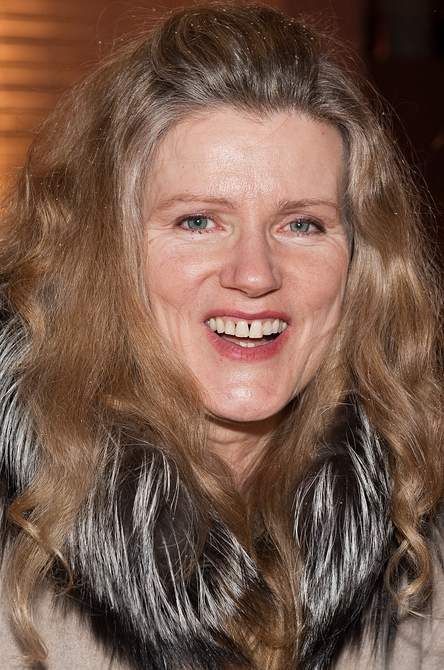
Lola (Barbara Sukowa)
Played by Barbara Sukowa
Lola is the charismatic and alluring singer who works at Schuckert's brothel. She is ambitious and adept at navigating a male-dominated society, using charm and performance to advance her position. Her complex morality and desire drive much of the film’s tension as she engages with power and love alike.
- 🎤 Singer
- 💋 Alluring
- 🎭 Complex
- ⚖️ Ambiguous
- VB
von Bohm (Armin Mueller-Stahl)
Played by Armin Mueller-Stahl
A divorced building commissioner and East Prussia refugee, von Bohm is initially moral and reform-minded, intent on exposing corruption. His investigation collides with Lola’s world as he falls in love with her and ultimately marries her. His struggle between ethics and desire highlights the era’s precarious balance of power and principle.
- 🧭 Idealist
- 🏛️ Reformer
- ⚖️ Principled
-
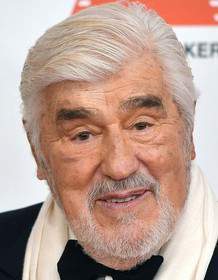
Schuckert (Mario Adorf)
Played by Mario Adorf
A wealthy property developer who owns the brothel, Schuckert wields considerable influence over the town’s elite. He is the architect of the corruption network and Lola’s employer and, as Lola's daughter's father, occupies a central, morally dubious position in the plot. His blessing seals the union between personal gain and social power.
- 💼 Powerful
- 🏗️ Developer
- 🤑 Corrupt
- LM
Lola's Mother (Karin Baal)
Played by Karin Baal
Lola’s mother figure, a presence in Lola’s life that grounds some of the personal stakes. She represents the ordinary side of life that is caught up in the larger web of power and privilege surrounding Coburg’s elite. Her role underscores the familial dimensions of Lola’s choices.
- 👩 Motherly
- 🎭 Protective
- 🌟 Complex
- FS
Frau Schuckert (Rosel Zech)
Played by Rosel Zech
Schuckert’s wife and a member of the town’s elite circle. Her position reflects the social duplicity of the era, where appearances mask complicity in corruption. She embodies the moral ambiguity of the upper crust that sustains the status quo.
- 🏰 Elite
- 🤫 Complicit
- 💎 Lavish
Where and When Is Lola Set?
Lola is set in Coburg and West Germany (1957). Here is why the time and place matter to the story.
When
1957
1957 marks a year within West Germany's swift postwar rebuilding and economic growth. The era is characterized by rapid modernization, social change, and a willingness among the powerful to bend rules for profit. This backdrop frames the moral compromises and power dynamics at play in the story.
Where
Coburg, West Germany
The story unfolds in Coburg in 1957, during West Germany's postwar reconstruction period. The town's social elite are tied to rapid redevelopment and economic churn that defines everyday life. The setting centers on a brothel run by a powerful developer, illustrating how wealth influences both public and private spheres.
- 🏛️ Postwar Reconstruction
- 🇩🇪 West Germany
What Are the Themes of Lola?
3 ideas the story keeps returning to, among them Corruption, Morality and Romance.
-
01
Corruption
Wealth and influence drive corrupt practices that permeate city life. Schuckert uses building permits and financial leverage to consolidate power, while other city leaders tolerate or participate in the scheme. Attempts to expose the corruption are met with indifference or resistance from those who benefit. The deed to the brothel as a wedding gift crystallizes how personal ties reinforce systemic wrongdoing.
-
02
Morality
Lola’s double life pits personal ambition against societal norms of decency. Von Bohm’s principled stance clashes with his growing attraction to Lola, entrapping him in a web of desire and duty. The narrative explores how public virtue can be undermined by private passions and how hypocrisy sustains a corrupt order.
-
03
Romance
Romance here acts as a catalyst that reshapes loyalties and power. Lola uses affection to navigate a male-dominated, money-driven environment, while von Bohm’s love complicates his mission to reform. The union between Lola and von Bohm, blessed by Schuckert, ties love to wealth and influence, blurring the line between romance and manipulation.
What Kind of Film Is Lola?
Bittersweet in tone, with steady pacing and a moderate story, going by the plot summary.
- Tone
- Bittersweet
- Pacing
- Steady
- Story
- Moderate
- Intensity
- Medium
- Ending
- Bittersweet
A colorful yet cynical satirical drama that follows a cabaret singer's calculated ascent through a corrupt society, balancing romantic yearning with a bleakly pragmatic view of human relationships.
- satirical
- cynical
- melancholic
- erotic
- colorful
- corrupt
- political corruption
- prostitution
- social climbing
- capitalism
Content notes: sexual content, prostitution, exploitation.
Where to Watch Lola
Stream it on Criterion Channel. US availability and prices from JustWatch.
Stream 1
 Criterion Channel
 Streaming availability in the US, powered by