

What Is Lesson of the Evil About?
The premise of Lesson of the Evil in 302 words, with nothing given away. The full story follows below.
In the polished corridors of a prestigious Japanese high school, the atmosphere is a delicate balance of academic ambition and the restless energy of adolescence. The school prides itself on excellence, yet beneath its orderly surface simmer tensions—bullying, cheating, and the pressures that accompany youthful competition. This world, rendered with a stark, almost clinical aesthetic, feels both familiar and eerily heightened, as if every whispered rumor and hurried footstep carries hidden weight.
At the heart of this environment is Seiji Hasumi, an English teacher whose charisma and polished background—an Ivy‑League education and a stint at a European investment bank—make him a favorite among students and colleagues alike. His lectures are engaging, his demeanor warm, and his reputation as a mentor seems unassailable. Yet the film hints that the very qualities that endear him to those around him may also conceal something far more unsettling, suggesting a disquieting duality that underpins his character.
Haunted by the growing chaos among his pupils, Hasumi becomes increasingly preoccupied with the notion of order and control. His frustration with the school’s darker undercurrents drives him toward an extreme, unsettling solution—one that promises to reshape the fragile equilibrium of the classroom in a way that feels both methodical and chilling. The narrative builds a tense, atmospheric mood, blending the ordinary rhythm of school life with an undercurrent of dread that suggests the line between teacher and tormentor may be thinner than anyone realizes.
The film’s tone oscillates between the familiar rites of teenage life and a foreboding sense of inevitability, inviting viewers to question how far a seemingly benevolent figure might go when faced with the complexities of youth. It offers a compelling study of charisma masking menace, setting the stage for a story where the quiet corridors of academia could become the arena for something profoundly disturbing.
What Happens in Lesson of the Evil?
The complete story of Lesson of the Evil, from the first scene to the last, in 969 words (about 4 minutes). Spoilers throughout.
Spoilers ahead
Seiji Hasumi [Hideaki Ito] is introduced as a beloved English teacher whose charm hides a dangerous truth. A graduate of Harvard with an MBA, he spent two years at Morgenstern, a European investment bank, before returning to Japan to teach high school. From the outside, he seems impeccably confident and enlightened, yet his internal landscape is defined by a startling lack of empathy. He lives with a chilling antisocial personality, a condition that surfaces as he navigates the worlds of students and colleagues with a cold, strategic eye. His early years reveal a troubling pattern: by fourteen, he had already killed both parents and his former tutor, a dark preface to a life spent watching, calculating, and pouncing when it suits him. In flashbacks to his time in the United States, Hasumi forms a disturbingly coordinated partnership with an American killer named Dave, a bond that is as gleefully violent as it is chillingly clinical. The two are seen carrying buckets of blood, bones, and organs, underscoring a history of gruesome acts. Eventually, Hasumi ends that partnership by subduing Dave and burning him alive in a barrel, insisting that their hobbies differ—Dave thrives on killing for fun, while Hasumi does not.
Back in Japan, Hasumi channels his misanthropy into what looks like reform. He takes aim at problems like bullying and sexual harassment in the school, using calculated moves to assert control. He begins by confiscating all students’ cell phones prior to exams and secretly deploying a cell phone jammer to eliminate cheating, presenting himself as the morally decisive voice the school needs. The jamming raises suspicion among the student body, particularly among a group whose cheating history makes them anxious about the loss of an advantage. Their suspicions turn toward the school’s Radio Club adviser, a loner physics teacher named Masanobu Tsurii [Mitsuru Fukikoshi], who insists he is not involved. This clash triggers a fraught cat-and-mouse dynamic as Hasumi tests the limits of his influence and Tsurii digs into Hasumi’s past, uncovering unsettling details from Hasumi’s early teaching career that linked to a string of suicides at another school.
Meanwhile, a separate thread unfolds around a blackmail plot involving Miya Katagiri [Fumi Nikaido], a student who is caught shoplifting. The school’s PE teacher, Shibahara, uses recorded admissions of guilt to coerce Miya into sexual favors, a moral crime Hasumi recognizes and neutralizes, telling Miya that a blackmail and statutory rape case would be far more dangerous than shoplifting. Their uneasy alliance deepens as Miya eventually becomes Hasumi’s lover, a dangerous tangled web that intertwines vulnerability with control. As Hasumi regains leverage, he leverages Miya’s access to a private online student forum to publish allegations against a fellow delinquent, a plot designed to foment unrest and test loyalties within the student body.
Hasumi’s calculus grows bolder as he notices the school’s more vulnerable figures. He targets art teacher Takeki Kume [Takehiro Hira], manipulating Kume into lending him a luxury apartment after exposing Kume’s sexual relationship with a male student. Hasumi then imposes his own narrative of legitimacy by pressuring Miya to provide access to an anonymous student discussion board, stirring rumors and planting accusations that will help him orchestrate a broader upheaval. As tensions rise, Hasumi arranges a brutal mounting of fear and manipulation, all while maintaining the veneer of a responsible mentor.
On the night of the school festival’s haunted-house setup, the situation erupts into a devastating trap. Hasumi lures Miya onto the roof, knocks her unconscious, and makes it appear as if she has committed suicide. When another student seeks Miya, he discovers the forged suicide note and realizes Hasumi’s scheme has moved to the next stage. Hasumi then switches focus to a mass killing of his students, framing Kume as the culprit by improperly wearing Kume’s shoes during the oncoming carnage. Throughout the massacre, Hasumi’s shotgun seems almost possessed by his former partner Dave, whispering through the intercom and heightening the sense of omnipresent surveillance. He tricks the remaining students into believing an intruder with a shotgun is on the loose and orders them to retreat to the roof, where he has already cut off access.
Two students do manage to survive by disguising two dead peers and hiding in the school’s interior as they slip away through an emergency chute. Yet the body count continues to rise as the roof becomes a hunting ground for Hasumi, who relentlessly pursues those who remain. Kakeru, a skilled archer, fights back and aims at Hasumi, only to be killed in the exchange, while Satomi Shirai [Mayu Matsuoka] is fatally wounded during the chaos. With most students accounted for, the survivors on the ground floor try to regroup, and Hasumi’s plan to cover his tracks begins to unravel. He attempts to stage a police-appearing handcuffing and a sham suicide, using the defeatist narrative to claim a higher, mythic purpose for his actions.
A crucial turn comes when one of the surviving students reveals that a training defibrillator at the school recorded a voice naming Hasumi as the killer before the deaths occurred. That audio provides a hard piece of evidence that undercuts Hasumi’s carefully constructed excuses. He turns to an austere defense drawn from Norse mythology, attempting to cast his acts as “the will of God” rather than cold, rational crime. Yet the survivors dispute this interpretation, and one notes that Hasumi is clearly unhinged, turning the “game” into a relentless, dangerous test of power. The other survivor hints that Hasumi is already preparing the next iteration of his “game,” signaling that the violence may not be over. In a final twist, Miya survives the rooftop fall and calls out Hasumi’s name, leaving the audience with a chilling sense that the story is far from finished, a sentiment echoed by the film’s final line—“to be continued.”
to be continued.
Lesson of the Evil Timeline: Every Key Event in Order
14 key events in the order they happen, from “Harvard MBA and return to teaching” to “Defiance, evidence, and sequel tease”. 14 events name a place, across 9 locations.
- 1
Harvard MBA and return to teaching
Hasumi graduates from Harvard College with an MBA and spends two years at Morgenstern, a European investment bank. He then returns to Japan to pursue high school teaching, bringing with him a polished charm that masks his darker impulses.
Where:Harvard / Morgenstern (Europe) / Japan
- 2
Charm hides a dangerous psyche
Outward charm masks Hasumi's cold, antisocial personality. The narrative notes that he killed his parents and his form tutor at fourteen, foreshadowing the killings to come.
Where:Japan
- 3
Partnership formed in America
In the United States, Hasumi meets a fellow killer named Dave, and the two form a disturbing partnership. They are depicted carrying buckets of human blood, bones, and organs, hinting at numerous unreported murders.
Where:United States
- 4
Dave's murder
Hasumi eventually kills Dave by knocking him out and burning him alive inside a barrel, explaining that while Dave enjoyed killing for fun, Hasumi does not.
Where:United States
- 5
Jamming to stop cheating
Back in Japan, Hasumi tackles cheating by secretly jamming cell phones during exams, ensuring a cheating-free test. The move triggers suspicion among teachers and students who notice the abnormal loss of service.
Where:Japanese High School
- 6
Suspicion and murder of Tsurii
Tsurii, a Physics teacher, becomes suspicious of Hasumi after learning of past student suicides. Hasumi learns of the suspicions by bugging a room, then confronts Tsurii on a train and murders him, making it look like a hanging suicide.
Where:Train (Japan)
- 7
Keisuke interrogated and killed
Hasumi confronts Keisuke, the cheating ringleader, tortures him to admit the cheating, and then kills him, preventing exposure.
Where:School vicinity
- 8
Miya's blackmail and romance
A female student Miya becomes entangled with Hasumi after being blackmailed by PE teacher Shibahara. Hasumi reassures her of safety and begins a romantic relationship, intensifying his manipulation.
Where:School
- 9
Kume and Miya's access to the forum
Hasumi uses Miya to access an online private discussion board used by students and anonymously posts claims about the murder of Rina's father. He also blackmails art teacher Kume into lending him his luxury apartment.
Where:School / Apartment
- 10
Tadenuma's murder
After a fight at the school, Hasumi lures delinquent student Tadenuma out for a drink and murders him; the students later believe Tadenuma ran away from home.
Where:School vicinity
Show the other 4 events of Lesson of the Evil Hide the last 4 events
- 11
Rooftop deception and Miya's fall
During the school's haunted-house event, Hasumi lures Miya to the rooftop, knocks her out, and throws her off to fake her suicide, forging a note to support the lie. Miya survives the fall, keeping the threat alive.
Where:School rooftop
- 12
Massacre begins
Hasumi stages a mass killing by wearing Kume's shoes to frame him and uses the intercom to warn of an intruder with a shotgun. Students head to the roof while others barricade the art room, creating chaos and fear.
Where:School
- 13
Kakeru's stand and downfall
Kakeru, an adept archer, escapes to call the police but returns to rescue Satomi. A confrontation with Hasumi ends with both men firing; Kakeru is slain and Satomi dies.
Where:School
- 14
Defiance, evidence, and sequel tease
Two surviving students improvise a cover by disguising two dead peers and hiding inside the school, while tossing the real corpses down an emergency chute to mislead Hasumi. The defibrillator records include an audio clue naming Hasumi as the killer, and the ending shows Miya calling Hasumi's name with 'to be continued'.
Where:School
Who Are the Main Characters in Lesson of the Evil?
8 characters, among them Seiji Hasumi (Hideaki Ito), Satomi Shirai (Mayu Matsuoka) and Keisuke Hayami (Shota Sometani): who each one is and the part they play in the story. Every profile links to the actor’s page.
- SH
Seiji Hasumi (Hideaki Ito)
Played by Hideaki Ito
A charismatic English teacher with a deep antisocial personality disorder, capable of meticulous planning and brutal violence. He uses charm to manipulate peers and students, masking his lack of empathy. His history—bullying, family murder, and a murderous partnership in the United States—fuels his cold, calculated actions in the present.
- 👤👤 Antisocial personality
- 🗺️ Criminal mastermind
- ⚖️ Moral ambiguity
-

Satomi Shirai (Mayu Matsuoka)
Played by Mayu Matsuoka
A popular student who becomes entangled in Hasumi's world. She is involved in the social dynamics of the class and shows resilience and vulnerability as she navigates manipulation, danger, and survival. Her arc centers on loyalty, fear, and the will to resist coercive control.
- 👤 Student
- 🛡️ Survivor
- 💔 Romantic tension
- KH
Keisuke Hayami (Shota Sometani)
Played by Shota Sometani
A smart, rebellious student who leads the cheating group and becomes a target of Hasumi's wrath. He faces moral choices under pressure and ultimately confronts the teacher's deadly authority.
- 👤 Student leader
- 🧭 Peer pressure
- 🗝️ Secret-keeper
- MT
Masanobu Tsurii (Mitsuru Fukikoshi)
Played by Mitsuru Fukikoshi
An intelligent physics teacher who suspects Hasumi and becomes entangled in the investigation of the disappearances and the escalating danger. His skepticism clashes with Hasumi's manipulation, leading to a fatal confrontation.
- 👤 Teacher
- 🧭 Suspicion
- 💬 Inquisitive
-
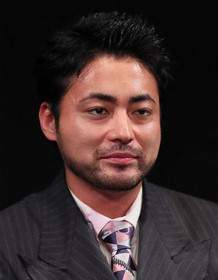
Tetsuro Shibahara (Takayuki Yamada)
Played by Takayuki Yamada
A PE teacher who becomes entangled in a blackmail plot involving Miya. He is depicted as calculating and morally compromised, illustrating the theme of exploitation within the school.
- 👤 Teacher
- 💼 Blackmailer
- 🖤 Moral compromise
- MY
Miya Yasuhara (Erina Mizuno)
Played by Erina Mizuno
A student who becomes Hasumi's lover and a key witness to the darker machinations at the school. Her survival hinges on cunning and courage as she navigates coercion and danger.
- 👤 Student
- 🕊️ Survival
- 💔 Complex relationship
-

Takeki Kume (Takehiro Hira)
Played by Takehiro Hira
An art teacher who becomes a target of coercion as Hasumi manipulates him into lending his luxury apartment. He embodies the theme of moral compromise under intimidation.
- 👤 Teacher
- 🗝️ Blackmailed
- 🧭 Moral conflict
- RK
Rina Kiyota's Father (Kenichi Takitoh)
Played by Kenichi Takitoh
The father of a student who becomes entangled in the blackmail and tragedy surrounding the school, illustrating how adults become pawns in Hasumi's games.
- 👤 Family figure
- ⚖️ Blackmail victim
Where and When Is Lesson of the Evil Set?
Lesson of the Evil is set in Japan and United States (Early 21st century). Here is why the time and place matter to the story.
When
Early 21st century
Events unfold in modern-day Japan, with occasional flashbacks to Hasumi's American years. The school year, exams, and cultural festival situate the action in a current educational setting, while Hasumi's past provides historical context to his unempathic behavior.
Where
Japan, United States
The primary setting is a contemporary Japanese high school where a charming yet dangerous English teacher wields power over students. The story also shifts to Hasumi's past in the United States, including Harvard and a European investment bank, revealing a global backdrop to his persona. The school environment appears modern, featuring classrooms, a culture festival, and the social dynamics of classroom life.
- 🏫 School
- 🗺️ Japan
- 🧭 Flashbacks to USA
What Are the Themes of Lesson of the Evil?
4 ideas the story keeps returning to, among them Facade, Moral Ambiguity and Violence in Education.
-
01
Facade
Hasumi presents a charming and supportive exterior that masks a cold, calculating inner life. The contrast between appearance and reality drives the tension of the story, revealing how power can corrupt trust within a classroom. The film continuously probes what people choose to show others versus what they feel inside.
-
02
Moral Ambiguity
The narrative blurs lines between justice and cruelty, as Hasumi justifies violence through a warped logic. Characters grapple with guilt, manipulation, and the questionable ethics of prosecuting or protecting students. The gun of power becomes a legal argument as much as a weapon.
-
03
Violence in Education
Set against a backdrop of bullying, blackmail, and sexual misconduct, the film treats the school as a battleground. The massacre that unfolds exposes how institutions can fail to protect students and how fear can be weaponized. It forces viewers to confront the horror that can emerge from toxic power dynamics.
-
04
Authority & Control
Hasumi's control over staff, students, and their narratives demonstrates how authority can be misused for personal satisfaction. The story showcases coercive tactics—blackmail, manipulation, and staged suicides—to maintain dominance. The outcome questions whether admiration for charisma can excuse criminal manipulation.
What Kind of Film Is Lesson of the Evil?
Dark in tone, with fast pacing and a moderate story, going by the plot summary.
- Tone
- Dark
- Pacing
- Fast
- Story
- Moderate
- Intensity
- High
- Ending
- Bleak
A deeply unsettling and claustrophobic thriller that builds from calculated manipulation to a brutal, explosive massacre, leaving the viewer in a state of shock and dread.
- twisted
- claustrophobic
- anxious
- unsettling
- chilling
- oppressive
- sociopathy
- high school corruption
- systemic manipulation
- mass violence
Content notes: mass murder, graphic violence, bullying, sexual coercion, suicide (faked), sociopathic behavior.
Quiz
How well do you remember Lesson of the Evil? Test yourself on the story.
