What Is Kubi About?
The premise of Kubi in 318 words, with nothing given away. The full story follows below.
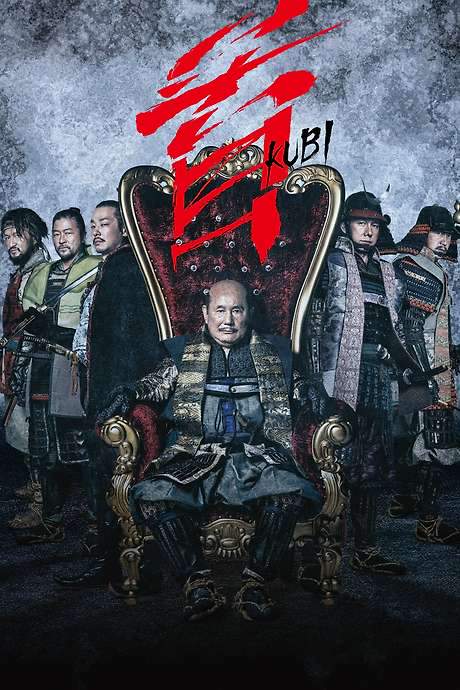
Against the fractured landscape of feudal Japan, Oda Nobunaga pursues a ruthless vision of unity, treating military conquest, political discipline, and personal authority as inseparable. His court is a place where loyalty is tested constantly and power depends on reading both rivals and allies correctly. Nobunaga’s severity gives the film a tense, oppressive center: even those nearest him must perform deference while quietly protecting their own ambitions. The world around him is similarly unsettled, with great daimyo, hardened commanders, and lesser rivals all seeking leverage in a hierarchy that offers advancement but little security.
Among his most important lieutenants is Araki Murashige, a proud and forceful vassal whose usefulness makes him central to Nobunaga’s plans. Their relationship carries an intimate, coercive dimension, adding psychological unease to the political struggle. Murashige appears as a man of pride, ambition, and mounting resentment, while Nobunaga’s need to dominate every exchange makes trust feel conditional and unstable. Around them, ambitious retainers cultivate dangerous reputations, cautious ones hide their intentions, and ordinary followers watch for openings in the elite’s conflicts. The result is an atmosphere of martial hierarchy in which honor is repeatedly invoked but rarely dependable.
The crisis begins when Murashige turns against his lord and vanishes, turning a challenge to Nobunaga’s authority into a much wider disturbance. With the balance of power suddenly open to doubt, finding the missing rebel becomes essential: it is both a search for a dangerous opponent and a test of control over the realm. Nobunaga’s campaign for national unity now collides with the suspicion, rivalry, and fragmented loyalties of his own inner circle. Kubi thus presents feudal Japan as a brutal chessboard where every oath may conceal calculation and every apparent victory can deepen the suspicion of those who witness it. Its mood is grim, charged, and relentlessly uneasy, building toward a portrait of power in which closeness to the ruler offers prestige without guaranteeing safety.
What Happens in Kubi?
The complete story of Kubi, from the first scene to the last, in 325 words (about 1 minute). Spoilers throughout. Names in the text link to 9 cast member pages.
Spoilers ahead
Spanning from the 1579 Siege of Arioka Castle to the aftermath of the Battle of Yamazaki in 1582, the film presents a gritty reimagining of Japanese history. The narrative focuses on the toxic power dynamics within the officer corps of Ryo Kase as Oda Nobunaga, who maintains control over his generals through a combination of sexual domination and psychological intimidation. Nobunaga lures his subordinates with promises of succession while secretly plotting to eliminate potential threats, including Kaoru Kobayashi as Tokugawa Ieyasu and Takeshi Kitano as Hashiba Hideyoshi.
The tension peaks when Ken’ichi Endô as Araki Murashige revolts due to paranoia and jealousy. Although Nobunaga orders Hidetoshi Nishijima as Akechi Mitsuhide to execute him, it is revealed that Mitsuhide and Murashige share a secret romantic relationship. Mitsuhide hides Murashige while quietly orchestrating his own rebellion. Meanwhile, Hideyoshi—the only general without sexual ties to Nobunaga—plays the role of a harmless subordinate while gathering intelligence and leveraging connections with Ittoku Kishibe as Sen no Rikyu and the strategist Tadanobu Asano as Kuroda Kanbei.
The film portrays the ruling class with a callous disregard for bushido, favoring violence and deception. This is exemplified by Ieyasu’s use of disposable body doubles and the desperate struggle of Shido Nakamura as Naniwa Mosuke, a peasant attempting to climb the social ladder through murder and theft.
The climax occurs at the Honno-ji Temple. In a subversive twist, Nobunaga is not killed by seppuku but is beheaded by the abused Jun Soejima as Yasuke, who steals the head to deny Mitsuhide his trophy. In the ensuing chaos, Hideyoshi executes a rapid military march to confront Mitsuhide at Yamazaki. Following his defeat, a fleeing Mitsuhide is cornered by Mosuke; Mitsuhide commits seppuku and offers his head to Mosuke for a promotion, only for Mosuke to be stabbed to death by fellow robbers. The story concludes with Hideyoshi coldly dismissing the decomposed heads of both men, viewing them as insignificant now that his victory is absolute.
Kubi Timeline: Every Key Event in Order
19 key events in the order they happen, from “The Siege of Arioka Castle” to “Hideyoshi's Indifferent Judgment”. 9 events name a place, across 5 locations.
- 1
The Siege of Arioka Castle
Araki Murashige, one of Oda Nobunaga's generals, launches his revolt against his overlord during the Siege of Arioka Castle. Driven by paranoia and jealousy over Nobunaga's unpredictable treatment of him, Murashige defies the man who once dominated him. The rebellion is quickly crushed by Nobunaga's overwhelming forces.
When:1579 Where:Arioka Castle
- 2
Nobunaga's Web of Domination
The film portrays Oda Nobunaga maintaining loyalty across his officer corps through sexual domination, most notably over Araki Murashige and Akechi Mitsuhide. He also dangles the promise of succession to whichever general conquers the most territory for him, dismissing his son Nobutada as incompetent. This cruel system of intimidation keeps his ambitious vassals in line.
- 3
Scheming Against His Rivals
Behind the promises of reward, Nobunaga secretly schemes to eliminate the generals and allies who pose the greatest threat to him. His targets include Tokugawa Ieyasu and Hashiba Hideyoshi, two of the most dangerous men in his orbit. Nobunaga's patronage is revealed to be a trap, with his rivals' destruction always on the agenda.
- 4
Mitsuhide's Grim Assignment
Following Murashige's failed revolt, Nobunaga tasks Akechi Mitsuhide with capturing and executing his fellow general. The assignment places Mitsuhide in an agonizing position, as Nobunaga unknowingly hands the hunt to his victim's secret lover. Mitsuhide must appear to carry out his overlord's will while concealing his true loyalties.
- 5
A Secret Relationship Revealed
It is revealed that Murashige and Mitsuhide share a homosexual relationship of their own, independent of their bonds to Nobunaga. Instead of executing him, Mitsuhide hides Murashige away in secret. While sheltering his lover, Mitsuhide slowly begins to plan his own revolt against Nobunaga.
- 6
Hideyoshi's Harmless Facade
Hashiba Hideyoshi, pointedly the only man in Nobunaga's officer class with no sexual ties to the overlord, plays the humble subordinate. He presents himself as deferential and as harmless as possible to both Nobunaga and Tokugawa Ieyasu. The performance masks a patient and calculating ambition.
- 7
Hideyoshi's Intelligence Network
In secret, Hideyoshi gathers intelligence on allies and enemies alike, seeking leverage over everyone around him. His network draws on ties to unaffiliated ninja clans, peasant recruits, and the auspices of the tea master Sen no Rikyu. This web of information becomes the foundation of his rise to power.
- 8
Kanbei's Dirty Work
Kuroda Kanbei serves as Hideyoshi's ruthless problem-solver throughout the era's power struggles. He assists Hideyoshi's ambitions and disposes of assets and allies who might compromise him. The arrangement exemplifies the film's callous world, where any pretense of bushido is readily abandoned for advantage.
- 9
Ieyasu's Expendable Doubles
Tokugawa Ieyasu casually cycles through multiple kagemusha, or body doubles, as he moves among his enemies. The stand-ins are set up to be assassinated or killed in his place, buying him safety at the cost of their lives. His survival is portrayed as a cold, calculated routine rather than a matter of honor.
- 10
Mosuke's Bloody Ascent
Interwoven with the warlords' schemes is the story of Naniwa Mosuke, a peasant seeking to rise into the samurai class. Starting as a thief, he becomes an ashigaru, following a path not unlike Hideyoshi's own ascent. His ambition leads him to murder fellow peasants along the way.
Show the other 9 events of Kubi Hide the last 9 events
- 11
Murashige Cast Off a Cliff
As he prepares his assault on Honno-ji, Mitsuhide coldly abandons Murashige, the lover he once sheltered. Murashige, held in a wooden cage, is thrown off a cliff. The betrayal underlines how swiftly even intimate alliances are discarded when they outlive their usefulness.
- 12
The Honno-ji Incident
Akechi Mitsuhide launches his long-planned assault on Honno-ji Temple, where Oda Nobunaga is staying. The surprise attack sets in motion the famous Incident at Honno-ji and shatters Nobunaga's inner circle. With this strike, Mitsuhide finally moves against the overlord who dominated him.
When:1582 Where:Honno-ji Temple
- 13
Death by Yasuke's Blade
Nobunaga does not meet his end through the ceremonial seppuku expected of a defeated lord. Instead, Yasuke, an African retainer much abused by Nobunaga throughout the film, beheads him in fury. Yasuke walks away carrying the head, denying Mitsuhide the proof of his victory.
When:1582 Where:Honno-ji Temple
- 14
The Force March from Takamatsu
Exploiting the chaos left by Nobunaga's death, Hideyoshi force-marches his army from the Siege of Takamatsu. His troops cover the distance with astonishing speed to confront Mitsuhide's forces before they can consolidate power. The gamble sets the stage for the decisive clash of 1582.
When:1582 Where:Takamatsu
- 15
The Battle of Yamazaki
Hideyoshi's forced march forces a confrontation with Mitsuhide's army at Yamazaki. In the ensuing battle, Hideyoshi's forces soundly defeat Mitsuhide's. The victory secures Hideyoshi's claim to succeed Nobunaga and dooms the brief reign of the man who killed him.
When:1582 Where:Yamazaki
- 16
Flight Through Hostile Roads
As Mitsuhide flees the disaster at Yamazaki, his retainers are harassed and killed by peasant robbers on the road. The once-feared general finds himself hunted by the very commoners the samurai class trampled. Among those closing in is the peasant-turned-soldier Naniwa Mosuke.
When:1582 Where:Roads near Yamazaki
- 17
Mitsuhide's Final Seppuku
Cornered by Mosuke, Mitsuhide accepts his defeat and commits seppuku. With his dying act, he offers his head to Mosuke, granting the ambitious peasant the trophy that promises him promotion. Even in death, the great general becomes a stepping stone in another man's rise.
When:1582 Where:Roads near Yamazaki
- 18
Mosuke's Last Betrayal
Mosuke's hard-won prize proves fleeting. The same robber band that hunted Mitsuhide turns on him, stabbing the ambitious peasant to death. His dream of rising into the samurai class dies with him on the roadside.
When:1582 Where:Roads near Yamazaki
- 19
Hideyoshi's Indifferent Judgment
The film closes with Hideyoshi observing the heads of the casualties from the Battle of Yamazaki. When presented with the much-decomposed heads of Mitsuhide and Mosuke, he gruffly dismisses them. For the new master of the realm, possessing their heads no longer matters at this point of his victory.
When:1582 Where:Yamazaki
Who Are the Main Characters in Kubi?
4 characters, among them Hanya no Sahei, Akechi Mitsuhide and Oda Nobunaga: who each one is and the part they play in the story. Every profile links to the actor’s page.
-
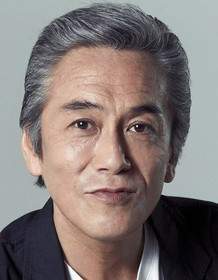
Hanya no Sahei
Played by Susumu Terajima
A cunning and ambitious officer in Nobunaga's army, Hanya no Sahei navigates the treacherous waters of loyalty and betrayal. He is deeply involved in the personal and political conflicts among the generals, often using manipulation to achieve his goals. His character embodies the complexities of power struggles and the costs that come with them.
- ⚔️ Samurai
- 🏯 Loyalist
- 🧠 Strategist
-
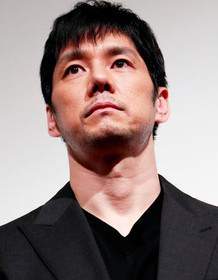
Akechi Mitsuhide
Played by Hidetoshi Nishijima
A cunning strategist and one of Nobunaga's most trusted officers, Akechi Mitsuhide grapples with loyalty and his hidden desires. His deep-seated relationship with Murashige drives critical plot points, revealing layers of ambition and betrayal. Ultimately, Mitsuhide's choices lead to drastic consequences, marking him as a tragic figure in the narrative.
- ⚔️ General
- 💔 Betrayer
- 🧠 Strategist
-

Oda Nobunaga
Played by Ryo Kase
The powerful and ruthless warlord, Oda Nobunaga, epitomizes the brutal realities of feudal Japan. His use of intimidation and manipulation to secure loyalty from his generals illustrates his complex character. Driven by ambition and paranoia, Nobunaga's journey culminates in a tragic downfall, highlighting the perils of absolute power.
- ⚔️ Warlord
- 🏯 Ambitious
- 🔥 Ruthless
-
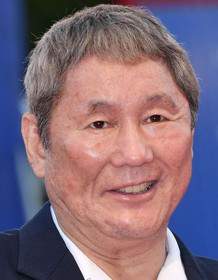
Hideyoshi
Played by Takeshi Kitano
A key character who carefully maneuvers through political intrigue without the emotional ties that bind others. Hideyoshi's intelligence and resourcefulness make him a formidable player in the power struggles at hand. He represents the pragmatic approach to survival and success amidst the chaos of war.
- ⚔️ General
- 🧠 Cunning
- 🏯 Political Player
Where and When Is Kubi Set?
Kubi is set in Arioka Castle, Honno-ji Temple and Yamazaki (1579-1582). Here is why the time and place matter to the story.
When
1579-1582
The film's timeline captures a transformative period in Japan, characterized by intense political machinations and military conflict during the Sengoku period. Events such as the Siege of Arioka Castle and the Honno-ji Incident signify the chaotic struggle for power, loyalty, and betrayal among samurai and warlords. This era was marked by shifting allegiances, the rise and fall of key figures, and the evolution of warfare and governance in the country.
Where
Arioka Castle, Honno-ji Temple, Yamazaki
Arioka Castle, a strategic stronghold, was the site of a notable siege during the power struggles in feudal Japan. Honno-ji Temple is infamous as the location where Oda Nobunaga met his demise, marking a pivotal event in Japanese history. Yamazaki, known for the significant battle that took place there, represents the clash of power among samurai and the tumultuous nature of alliances and betrayals.
- 🏯 Historical Site
- 🔥 Battle Ground
- 🏞️ Castle
What Are the Themes of Kubi?
3 ideas the story keeps returning to, among them Betrayal, War & Struggle and Love & Loyalty.
-
01
Betrayal
Betrayal is a central theme, illustrated through the complex interpersonal relationships among Nobunaga and his generals. Nobunaga's tactics of manipulation and intimidation breed treachery and rebellion, as loyalty is constantly tested. Ultimately, the film explores how ambition and fear lead to betrayal, culminating in violent power shifts.
-
02
War & Struggle
The narrative vividly portrays the brutal realities of war and the struggle for supremacy in a feudal society. Battles such as the Siege of Takamatsu and the confrontation at Yamazaki highlight the violent nature of the era. War is not merely a backdrop but a catalyst that drives characters' motivations and choices throughout the film.
-
03
Love & Loyalty
The film delves into unconventional relationships that define loyalty among the samurai, showcasing the intricate dynamics of love and power. Homosexual relationships serve as both a tool for manipulation and genuine connection amid the backdrop of political strife. This theme complicates traditional notions of loyalty and duty, emphasizing the personal stakes involved in a world fraught with danger.
What Kind of Film Is Kubi?
Dark in tone, with variable pacing and a complex story, going by the plot summary.
- Tone
- Dark
- Pacing
- Variable
- Story
- Complex
- Intensity
- High
- Ending
- Bleak
A brutal, suspense-laden period drama where political treachery, coercive power, and rapid reversals turn Japan’s unification into a grim contest of survival and ambition.
- brutal
- oppressive
- visceral
- mournful
- intimidating
- volatile
- political intrigue
- power struggle
- unification of Japan
- feudal Japan
Content notes: war violence, graphic beheading, murder, sexual coercion, psychological abuse, suicide.
Quiz
How well do you remember Kubi? Test yourself on the story.