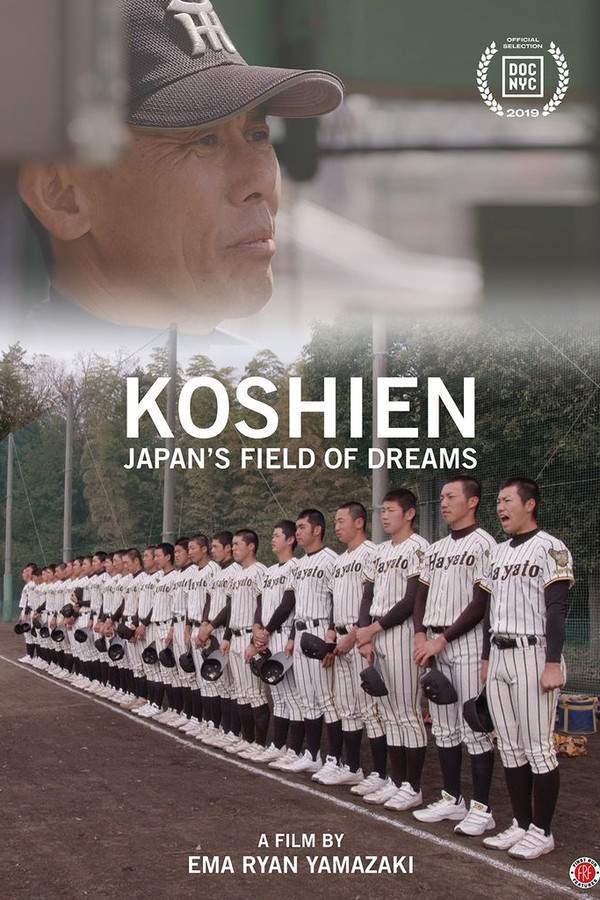
What Is Koshien: Japan's Field of Dreams About?
The premise of Koshien: Japan's Field of Dreams in 287 words, with nothing given away. The full story follows below.
In a nation where baseball transcends sport to become a cultural institution, the Koshien tournament stands as a century-old tradition that captures Japan’s deepest values of discipline, respect, and community. This documentary invites viewers into the world of high school baseball, where young athletes and their mentors navigate the weight of national expectation and the pursuit of excellence on a stage that has launched the careers of legendary players like Shohei Ohtani.
At the heart of the story stands Tetsuya Mizutani, manager of Yokohama Hayato High School, whose unwavering commitment to traditional Japanese baseball philosophy shapes every aspect of his team’s existence. His approach demands total dedication—long practices, strict discipline, and a reverent attention to detail that extends from the playing field to the very maintenance of the grounds. For Mizutani, baseball is not merely a game but a vehicle for teaching life’s harder lessons, even when his stern methods seem to belong to another era.
Offering a striking counterpoint, Hiroshi Sasaki—a former student of Mizutani who now manages Higashi Hanamaki High School—embodies a more modern philosophy that emphasizes player autonomy and personal growth. His reflections on mentorship reveal a manager who sees himself less as an authority figure and more as a gardener nurturing potential, allowing young athletes to grow into themselves rather than molding them to a predetermined form.
As both men lead their respective teams through the pressures of tournament season, the film weaves between their contrasting philosophies while painting a broader portrait of Japanese society—its rituals, its orderly rhythms, and the quiet dignity found in collective purpose. What emerges is a meditation on leadership, legacy, and the enduring question of how tradition and innovation can coexist in the pursuit of a shared dream.
What Happens in Koshien: Japan's Field of Dreams?
The complete story of Koshien: Japan's Field of Dreams, from the first scene to the last, in 1,031 words (about 4 minutes). Spoilers throughout. Names in the text link to 5 cast member pages.
Spoilers ahead
Koshien: Japan’s Field of Dreams is a documentary that dives into the deep cultural weight of Japan’s National High School Baseball Championship, known simply as Koshien. The film opens with Tetsuya Mizutani, the steadfast manager of Yokohama Hayato High School in Kanagawa, stepping onto the field to announce his roster for the upcoming prefectural tournament and delivering a stern lecture to his players about the twin duties of performance and behavior. The opening montage then unfurls a sense of Koshien’s grandeur, weaving in clips of later-famous players who once wore high school uniforms, including Shohei Ohtani and Yusei Kikuchi, to remind viewers that today’s legends often begin as ambitious teenagers chasing a shared dream.
As the cameras follow Mizutani at work, the film paints a portrait of a coach whose philosophy is rooted in tradition. Baseball, for him, is a discipline built on relentless hard work, meticulous training, and a clear hierarchy where direction comes from the top down. He lectures his players with a steady, uncompromising tone, and punitive measures are depicted as a routine part of striving for excellence. Though he concedes that his approach is old-fashioned, he has no intention of softening his methods. Under his watch, the Hayato crew absorbs the same rigid rules—weight requirements, exhaustive practice, and a culture of self-policing—shaping not only their on-field performances but also their sense of team identity, to the point that players sometimes train each other to mirror their manager’s standards.
Away from the diamond, Mizutani’s devotion bleeds into his home life. His wife explains that he is rarely present in the evenings or on weekends because coaching duties swallow him whole, even as he serves as vice-principal of the school during the day. The strain of this life extends to his family, including his son Kosho Mizutani, who is about to begin high school. Rather than following in his father’s exact footsteps, Kosho sets his sights on Higashi Hanamaki High School in Iwate Prefecture, suggesting a tension between tradition and personal aspiration that threads through the documentary. The film gently raises questions about how a single-minded pursuit of success might shape generations of young athletes and the people who love them.
Across town, the Hanamaki High School program finds its own counterpoint in the figure of manager Hiroshi Sasaki. Sasaki previously coached Hayato and is connected to the same legendary year that produced players who later reached the professional ranks, including Yusei Kikuchi and Shohei Ohtani. Sasaki’s philosophy is presented through a different lens than Mizutani’s: he views his job as a gardener tending young plants—offering support and setting boundaries, while allowing each player to grow into his own strengths. He is shown embracing modern tools, even smartphones, to help his students refine their batting form, balancing the heritage of the sport with the advantages of contemporary coaching techniques. He openly admits that he cannot claim sole credit for Ohtani’s development and expresses concern about how past decisions may have stifled other talents before them. The juxtaposition of Sasaki’s quieter confidence with Mizutani’s more punitive rigidity underscores two distinct paths toward success in the same sport.
Interwoven throughout the film are vivid sequences that capture the texture of Japanese life—speeding trains, gloves and shoes neatly lined up, crowds queuing for a ride or a game, and a culture of respectful bowing and restraint. Some footage is modern, others archival, creating a tapestry that reminds viewers that Koshien sits at the crossroads of enduring tradition and evolving society. Against this backdrop, Mizutani speaks at length about his own childhood, offering glimpses of a life shaped by Tokushima, the prefecture that inspired his early dreams of victory in the national tournament. The narrative also follows a crucial moment when Hayato suffers a tough loss, a blowout marred by errors, and Mizutani confronts his captain about the team’s failures—emphasizing the traits of effort, confidence, and leadership that he believes were lacking in that game.
Meanwhile, Hanamaki’s players pulse with a different energy. Under Sasaki’s watch, their training atmosphere is electric; they envision triumph at the prefectural level and practice their post-win celebrations with a joy that contrasts Mizutani’s stern, almost ritualistic approach. When the time comes for their own prefectural game, the film watches as they secure a hard-fought victory and celebrate in a way that signals a shift toward a new generation of discipline and self-expression. The moment is tender and ceremonial: the team hoists their manager triumphantly, a ritual echoing the tradition of Japanese baseball, and Mizutani, on a separate line, phones Sasaki to offer congratulations. He watches Hanamaki from afar, a mix of pride and envy coloring his gaze as he contemplates what might have been under different circumstances for his own squad. The documentary alternates between the cheering crowds and the solemn finality of extra innings, culminating in a broader sweep of Koshien tournaments still unfolding across the country.
As the film nears its close, both men—Mizutani and Sasaki—are shown at the threshold of renewal. Mizutani reflects on the need to temper his severity and to reach closer to his players, recognizing that even a hard-won discipline can coexist with empathy. He rides a bicycle, listening to something on his headphones, and softens in his expressions, suggesting a readiness to adapt without abandoning core principles. Sasaki, too, appears more open to flexibility—announcing a loosening of strict rules, like crew-cut requirements—while reaffirming a steadfast commitment to disciplined play and to preserving the valuable parts of baseball tradition. The film thus closes on a note of hopeful transition: two managers at the start of a new season, guiding a fresh crop of students toward future opportunities, each searching for a balance between heritage and growth, and between personal and collective dreams.
In the end, Koshien: Japan’s Field of Dreams invites audiences to witness more than a sport. It presents a meditation on mentorship, sacrifice, and the ways communities rally around a shared dream. It is a portrait of how coaching philosophies shape young athletes, how personal lives press against professional demands, and how the ritual of competition—whether in a tournament’s 100th year or in a quiet, ordinary practice—continues to redefine what it means to strive, to fail, and to persevere.
Koshien: Japan's Field of Dreams Timeline: Every Key Event in Order
14 key events in the order they happen, from “Mizutani announces Hayato roster and sets expectations” to “New starts and softened edges”. 14 events name a place, across 13 locations.
- 1
Mizutani announces Hayato roster and sets expectations
Tetsuya Mizutani reveals the Yokohama Hayato High School lineup for the upcoming prefectural tournament. He lectures the players on how every action should please others with their conduct and performance. His coaching mantra emphasizes discipline, hard work, and top-down authority.
When:start of roster announcement, pre-tournament period Where:Yokohama Hayato High School
- 2
Koshien’s grandeur and a star-studded montage
The film intercuts footage celebrating Koshien’s prestige with clips of former high school standouts who progressed to professional ranks. The montage frames Koshien as a cultural rite, shaping how players dream and managers measure ambition. There is a sense of the national significance that looms over every local game.
When:opening montage Where:Japan
- 3
Mizutani’s old-school philosophy shown in practice
Back at Hayato, Mizutani sternly lectures his team, explaining his traditional approach to building character through punishment and high expectations. He acknowledges his style is old-fashioned, yet shows no intention of softening. Players internalize these rules as they imitate his manner both on and off the field.
When:during training and meetings Where:Hayato High field
- 4
Rigorous training and self-imposed duties
Hayato players maintain the field, endure weight requirements, and eat more than they feel they need, all under Mizutani’s orders. The routine reflects a culture where even non-playing teammates are expected to contribute to the team’s discipline. The film contrasts this intensity with the players’ personal sacrifices at home.
When:ongoing training period Where:Hayato High
- 5
Mizutani’s home life reveals professional dedication
Mizutani’s wife explains that he is rarely at home because he is consumed by his job, serving as vice-principal by day and coach by night. The narrative contrasts family life with the relentless demands of the baseball program. Their son Kosho is shown growing up with different aspirations.
When:evenings and weekends Where:Mizutani household
- 6
Kosho’s high school choice and aspirations
Kosho Mizutani aims to enter Higashi Hanamaki High School in Iwate Prefecture rather than following his father’s team. His decision highlights the personal cost of coaching dedication and the generational distance within the sport. The film uses his choice to broaden the story beyond Hayato.
When:before entering high school Where:Kosho’s home
- 7
Sasaki’s arrival and three-year plan at Hanamaki
Hiroshi Sasaki, Hanamaki’s manager and former Hayato coach, introduces a forward-looking three-year plan for his players. He frames his role like a gardener, guiding but not stunting their growth. He worries about having once stifled potential and embraces modern tools to improve batting.
When:start of the new school year Where:Hanamaki High School
- 8
Sasaki’s modern methods and mentoring
Sasaki admires the use of smartphones and data to help students refine their batting form. He balances tradition with new teaching aids, encouraging disciplined play while recognizing individual growth. The scenes juxtapose his garden metaphor with the team's lively practice atmosphere.
When:start of school year Where:Hanamaki Field
- 9
Hayato’s first prefectural game looms
Back at Hayato, the team keeps training under Mizutani’s gaze as the season progresses towards the first game of the prefectural tournament. The tension builds as the players sense the weight of meeting expectations in a high-stakes environment. Mizutani’s stern guidance continues to shape their approach.
When:pre-game period Where:Hayato High Stadium
- 10
Hayato’s first game ends in a blowout loss
Hayato suffers a blowout defeat due to errors and the opponent’s superior hitting. The loss devastates the seniors, who realize this may be their final game with the team. Mizutani expresses remorse for not guiding the team toward Koshien in the tournament’s centennial year.
When:during the prefectural tournament Where:Hayato High Stadium
Show the other 4 events of Koshien: Japan's Field of Dreams Hide the last 4 events
- 11
Hanamaki advances, celebrating their victory
Meanwhile, Hanamaki wins the prefectural tournament, buoyed by a lively, collective effort and a post-win celebration. The team lifts their manager in the air, a traditional gesture that marks their unity and success. Sasaki watches with pride and a hint of nostalgia.
When:final of prefectural tournament Where:Hanamaki High Stadium
- 12
Mizutani’s envy and reflections
Mizutani watches Hanamaki’s success on television and phones Sasaki to offer congratulations, admitting envy of his former protege. He contemplates what could have been with Hayato and whether stronger relationships might have translated into better results. The film uses this moment to pivot toward personal growth.
When:after Hanamaki’s victory Where:Mizutani residence
- 13
Closing montage and transition to a new season
Footage of the crowd and stadium surroundings cycles through the remainder of the Koshien tournament, underscoring the ongoing tradition. The film ends with both managers planning for a fresh start with new players, emphasizing continued discipline and growth. The narrative hints at future opportunities and personal development.
When:end of tournament Where:Koshien context
- 14
New starts and softened edges
Mizutani resolves to soften slightly, aiming to be closer to his players while maintaining standards. He rides a bicycle, listening to music, a small sign of balance returning to his life. Sasaki also embraces a looser policy on certain rules, signaling a matured approach to leadership.
When:post-season Where:City streets and various locations
Who Are the Main Characters in Koshien: Japan's Field of Dreams?
5 characters, among them Tetsuya Mizutani, Hiroshi Sasaki and Kosho Mizutani: who each one is and the part they play in the story. Every profile links to the actor’s page.
- TM
Tetsuya Mizutani
Played by Tetsuya Mizutani
Mizutani is a dedicated, old-fashioned baseball manager who also serves as vice-principal. He leads with a stern, lecture-driven style, enforcing demanding training, weight requirements, and top-down discipline. Beneath the rigor lies a concern for his players and a desire to see them grow, even as he occasionally laments his harsh methods and yearns for a closer connection with his team. His home life includes a wife and a son, Kosho, who represents his personal investment in the next generation.
- ⚖️ Strict
- 🧭 Mentor
- 🏫 School life
- HS
Hiroshi Sasaki
Played by Hiroshi Sasaki
Sasaki is the former Hayato coach now leading Hanamaki, using a gardener’s metaphor to frame coaching as cultivation. He balances support and boundaries, embracing modern tools like smartphones to analyze batting form while resisting the urge to micromanage. He reflects on past influence while maturing into a more flexible, player-centered approach. His leadership aims to unlock talent while preserving the discipline that defined the program.
- 🧭 Mentor
- 🌿 Gardening philosophy
- 📱 Tech-enabled coaching
- KM
Kosho Mizutani
Played by Kosho Mizutani
Kosho is Mizutani's son, about to enter high school. He carries the weight of his father's baseball world but aims to carve his own path, choosing Higashi Hanamaki High School over following in his father's footsteps. The tension between family expectations and personal ambition adds a personal layer to the broader high school baseball narrative.
- 🎯 Ambition
- 🏫 Teen life
- 👨👦 Family
- SO
Shohei Ohtani
Played by Shôhei Ohtani
Shohei Ohtani is introduced through archival clips and the memory of a high school star who later became a major league sensation. His presence illustrates the tournament's prestige and the lasting impact Koshien has on players who go on to professional careers.
- ⚾ Prodigy
- 🏆 Fame
- YK
Yusei Kikuchi
Played by Yusei Kikuchi
Yusei Kikuchi appears in montage form, representing another high-profile example of a player who passed through Koshien. His inclusion underscores the tournament’s role as a launchpad for future professional stars and reinforces the documentary's focus on talent development.
- ⚾ Prodigy
- 🌟 Legacy
Where and When Is Koshien: Japan's Field of Dreams Set?
Koshien: Japan's Field of Dreams is set in Kanagawa Prefecture, Iwate Prefecture, Tokushima Prefecture and Japan. Here is why the place matters to the story.
When
Contemporary high school baseball is the film's focus, framed by archival footage that reveals how coaching, equipment, and tradition have evolved over time. It documents modern coaching tools, like video analysis and smartphones, alongside a timeless emphasis on discipline and team loyalty. The result is a layered portrait of a sport deeply rooted in local communities and national identity.
Where
Kanagawa Prefecture, Iwate Prefecture, Tokushima Prefecture, Japan
Set across Kanagawa and Iwate prefectures, the documentary captures the intense culture of Japan's high school baseball circuit and the ritualized preparation that leads to Koshien. It also references Tokushima as Mizutani's home prefecture, rooting the film in regional pride. The scenes blend urban trains, school routines, and the quiet discipline of the sport, illustrating how local communities rally around young players.
- ⚾ Baseball culture
- 🗺️ Japan
- 🏫 High school sports
What Are the Themes of Koshien: Japan's Field of Dreams?
3 ideas the story keeps returning to, among them Tradition & Discipline, Mentorship & Growth and Koshien & National Stage.
-
01
Tradition & Discipline
The film centers on a manager who preaches hard work, hierarchy, and top-down control. His approach is described as old-fashioned, but unwavering in its resolve. Players endure weight requirements, rigorous training, and meticulous routines, illustrating how discipline shapes performance and character. The film also hints at the tension between honoring tradition and listening to evolving needs of players.
-
02
Mentorship & Growth
Coaches are portrayed as gardeners of talent, guiding rather than simply directing. Sasaki emphasizes boundaries that let young players grow stronger, while acknowledging he cannot take credit for others' later success. The narrative highlights how mentorship can alter life trajectories, fanning the flames of ambition while testing personal autonomy. The players' dreams of reaching Koshien anchor this growth in a national tournament context.
-
03
Koshien & National Stage
Koshien is depicted as more than a tournament—it is a national stage where communities rally around teenagers. The film intercuts with visuals of the stadium, crowds, and archival clips that frame the 100th year of the event. The managers' rivalry, rival teams, and the climactic games underscore the mythos of Japanese baseball and its enduring rituals. Even as teams lose, the tournament pulses with tradition and possibility.
What Kind of Film Is Koshien: Japan's Field of Dreams?
Hopeful in tone, with steady pacing and a moderate story, going by the plot summary.
- Tone
- Hopeful
- Pacing
- Steady
- Story
- Moderate
- Intensity
- Medium
- Ending
- Happy
A thoughtful and steady-paced documentary that explores the deep cultural significance of high school baseball through contrasting coaching philosophies, balancing stern discipline with hopeful personal growth.
- reflective
- disciplined
- hopeful
- nostalgic
- respectful
- solemn
- high school baseball
- mentorship
- tradition vs modernity
- sacrifice
Quiz
How well do you remember Koshien: Japan's Field of Dreams? Test yourself on the story.