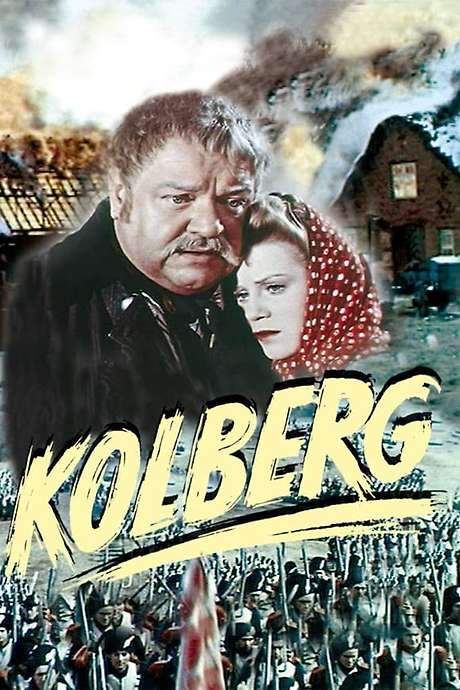


Kolberg Plot Summary
Read the complete plot summary and ending explained for Kolberg (1945). From turning points to emotional moments, uncover what really happened and why it matters.
Set in 1813 after the Befreiungskriege, the film opens with Prussian Landwehr and volunteers marching through Breslau, as crowds surge with energy and pride. Nettelbeck stands at the heart of the city’s resolve, challenging both fear and complacency as the siege cloud hangs over Kolberg. Beside him, the seasoned strategist is not alone in his beliefs about how a civilian-led defense can hold against a formidable foe; Gneisenau weighs in, arguing that Kolberg’s earlier resistance proved the crucial power of citizen armies and local dedication. The camera lingers on the bustling streets and the anxious faces of townspeople who must decide where their loyalties and duties lie when empire and army seem distant yet inexorable.
A shift in time carries the viewer to Vienna in 1806, where the abdication of Francis II, the last Holy Roman Emperor, unfolds against a backdrop of political upheaval and shifting allegiances. In a key moment, the film underscores the drama of leadership with a stark remark about the Emperor, encapsulated in a line that rings through the narrative: > an Emperor who abandoned the German people in their hour of need. This encapsulates the sense of betrayal and the unfinished burden of nations trying to chart a new course amid invading forces and collapsing old orders.
The story then returns to Kolberg in 1806, where life continues in ordinary rhythms even as danger closes in. The town’s leaders, led by Mayor Nettelbeck, grapple with Napoleon’s announcements and their implications for survival. Opinions split among residents: some see opportunity in French victories, others fear subjugation, while Nettelbeck remains steadfast in opposition to surrender. In a bold move, he creates a citizen militia and marshals supplies, resisting the inertia of the regular Prussian Army and the creeping sense that resistance is futile. The tension between civic courage and military caution becomes the throughline of this section, highlighting how local initiative can stretch beyond official channels when the pressure to capitulate grows intense.
As pressure mounts, Nettelbeck confronts brutal threats of execution from the military hierarchy. To buy time and give Kolberg a chance, he dispatches Maria, a humble farmer’s daughter, on a perilous journey to Königsberg. She is to seek an audience with the King and with Queen Louise, carrying the weight of the town’s fate on her shoulders. Her mission is not merely personal courage but a bridge between the private life of a citizen and the high-stakes politics of a court in retreat. The journey becomes a test of nerve and resolve, and the narrative makes a pointed connection between ordinary life and national destiny.
Maria’s bold overture reaches the royal circle, and she wins an audience with the Queen. The Queen is moved by the plea and, in a decisive moment, orders that Gneisenau be sent to Kolberg to reinforce the beleaguered city. The film emphasizes that leadership can come from a combination of popular pressure, personal sacrifice, and the confidence of those at the top who are willing to act when the moment demands it. The Queen’s intervention signals a turning point in the siege, aligning the citizen mobilization with the military response in a way that gives Kolberg a fighting chance.
Within the siege, the narrative threads together the efforts of the city, the militia, and the higher command as they coordinate to hold the line. A subtle undercurrent of political storytelling threads through the plot, reminding viewers that war is not only about battles but also about the will to stand up against overwhelming odds. The execution of this plan—bolstered by Maria’s courage and the decisive orders from the royal court—helps reshape the city’s fate, even as the film notes that the historical record may not fully align with every event depicted on screen. The sense of collective effort and communal resolve serves as a throughline, underscoring how ordinary people and extraordinary leadership can converge to alter the course of a town under siege.
The film then moves forward to a broader horizon: 1813, after the Tauroggen Agreement. Napoleon’s failures in Russia have shifted the mood among Prussian leaders, who now entertain the possibility of challenging him directly rather than waiting for favorable tides. It is Gneisenau who persuades the King to take a bold stand, culminating in a stirring royal proclamation. The call, known in history as An Mein Volk, rises as a rallying cry that frames the Wars of Liberation as not only a political rebuke to occupation but a renewed assertion of national identity and resolve.
Throughout this sweeping narrative, the film threads together themes of leadership, civic resilience, and the moral responsibilities of those who govern and those who follow. The evolving relationship between citizens and the crown—the way a city can mobilize its people and a monarch can respond with decisive action—forms the emotional core of the story. The result is a vivid, human-scale portrait of a nation at a crossroads, where courage is found not only on battlefields but in the daily choices of those who refuse to surrender to fear.
Kolberg Timeline
Follow the complete movie timeline of Kolberg (1945) with every major event in chronological order. Great for understanding complex plots and story progression.
Breslau 1813: crowds and citizen defences
The film opens in 1813 with Prussian Landwehr and volunteers marching through Breslau amid enthusiastic crowds. King Frederick William III and Count August von Gneisenau discuss the recent events, underscoring that the defense of Kolberg under siege demonstrated the power of citizen armies.
Vienna 1806: abdication of Francis II
In Vienna, the last Holy Roman Emperor Francis II abdicates, signaling a reshaping of German politics. Gneisenau condemns the move, calling him an Emperor who abandoned the German people in their hour of need.
Kolberg 1806: townsfolk debate the future
Back in Kolberg, inhabitants debate Napoleon's announcements and the implications for their town. Some see French victories as a net positive, while others fear surrender and loss of independence. Nettelbeck remains steadfast in resisting the French.
Nettelbeck forms a citizen militia
Nettelbeck organizes a citizen militia, gathering supplies and mobilizing ordinary townspeople. He opposes the regular Prussian army's surrender plans and pushes for a determined defense of Kolberg.
Threat of execution and a desperate plea for leadership
Facing threatened execution by the military, Nettelbeck concludes that Kolberg can be saved only if a great leader emerges. He sends Maria, a farmer's daughter, on a dangerous mission to Königsberg to reach the king and queen.
Maria travels to Königsberg
Maria undertakes a perilous journey to Königsberg to plead with the royal court. Her purpose is to secure intervention to defend Kolberg, risking her safety along the way.
Queen Louise is approached
Maria meets the Queen, Louise, who holds the key to unlocking royal support. Through her, the plan is set in motion to bring Gneisenau to Kolberg.
Gneisenau takes command
Gneisenau confronts Nettelbeck and emerges as the top leader. He joins forces with the army and the citizens, coordinating a united effort to defend the city.
Kolberg's defense and the French retreat
With new leadership, Kolberg resists the French siege and ultimately survives as they retreat. The film emphasizes the power of citizen resolve and concerted action in turning the tide.
Return to 1813 after Tauroggen
The narrative returns to 1813 after the Convention of Tauroggen, with the war against Napoleon looming anew. Napoleon is depicted as having been defeated in Russia, prompting Prussian leaders to consider bold action.
Gneisenau pushes the king toward action
Gneisenau convinces Frederick William to confront Napoleon and act decisively. He persuades the king to rally the nation behind a renewed war for liberation.
An Mein Volk: the proclamation to begin the Wars of Liberation
Frederick William writes and issues the proclamation An Mein Volk, signaling the start of the Wars of Liberation. The act unifies Prussia and sets the stage for a broader call to arms against Napoleon.
Kolberg Characters
Explore all characters from Kolberg (1945). Get detailed profiles with their roles, arcs, and key relationships explained.
Nettelbeck (Heinrich George)
The mayor and steadfast defender of Kolberg, Nettelbeck pushes past complacency, insisting on a citizen-led militia. He clashes with the traditional army’s lethargy, advocating practical preparations and collective defense. His determination anchors the town’s resolve under pressure.
Maria (Kristina Söderbaum)
A farmer’s daughter who undertakes a dangerous journey to Königsberg to seek royal intervention. Maria embodies courage and resolve, becoming the catalyst that connects the court to the city's defense. Her mission highlights the human cost of war and the power of individual action.
Gneisenau (Horst Caspar)
The general who emerges as the top commander, coordinating with Nettelbeck and the townspeople. He balances military strategy with political savvy, driving the unified defense. Gneisenau’s leadership becomes the turning point that saves Kolberg.
Königin Louise (Irene von Meyendorff)
The queen who becomes a crucial conduit, convinced to order Gneisenau to Kolberg. Her role shows the palace’s influence in mobilizing resources and shaping national resolve. She is portrayed as a stabilizing, compassionate figure who supports the city’s defense.
Napoléon Ier (Charles Schauten)
The French emperor whose campaigns threaten Kolberg, representing the external force challenging Prussian sovereignty. His military ambitions set the siege in motion and frame the stakes for the defense. The film portrays him as the formidable antagonist driving the conflict.
König Friedrich Wilhelm III. (Claus Clausen)
The Prussian king whose decisions shape the city’s defense and the broader war effort. His interactions with Gneisenau and Maria reveal the tension between royal authority and popular mobilization. He embodies the political leadership at the national scale.
Kolberg Settings
Learn where and when Kolberg (1945) takes place. Explore the film’s settings, era, and how they shape the narrative.
Time period
1806–1813 (Napoleonic Wars)
The story unfolds in the early 19th century during the Napoleonic Wars. It shifts between 1806, when Kolberg faces French pressure, and 1813, after major military setbacks and the onset of the Wars of Liberation. The period frames a struggle between occupation and a mobilized citizen-led defense.
Location
Kolberg (Kołobrzeg), Breslau (Wrocław), Vienna, Königsberg
Kolberg is the Baltic Sea port city at the heart of the siege, where citizens rally under pressure to defend against French forces. The film also moves through Breslau and Vienna, depicting the political leadership debating how to respond to Napoleon. Königsberg serves as the royal destination where Maria seeks audience with the King and Queen to mobilize aid.
Kolberg Themes
Discover the main themes in Kolberg (1945). Analyze the deeper meanings, emotional layers, and social commentary behind the film.
🛡️
Patriotism
Patriotism and civic duty drive the plot as ordinary people form a citizen militia to defend Kolberg. The community resists surrender and takes responsibility for the city’s fate. The film emphasizes collective resolve over professional armies, showing how unity can alter outcomes. It also highlights the tension between loyalty to the king and protection of the people.
⚔️
Leadership
Leadership under fire is tested by Nettelbeck’s defiance of cowardice and his push to organize supplies. Gneisenau rises as the decisive military leader who coordinates army and townsfolk. Their collaboration demonstrates how strong leadership can transform a siege into a turning point. The film portrays leadership as a bridge between civilian courage and military strategy.
🇩🇪
Resistance
The tale centers on resisting foreign domination and forging national identity. Maria’s perilous mission to Königsberg shows the personal cost of leadership, while the Queen’s involvement underscores the power of political will to aid a beleaguered city. The film frames resistance as both civic courage and strategic persuasion.

Coming soon on iOS and Android
The Plot Explained Mobile App
From blockbusters to hidden gems — dive into movie stories anytime, anywhere. Save your favorites, discover plots faster, and never miss a twist again.
Sign up to be the first to know when we launch. Your email stays private — always.
Explore the mobile appKolberg Spoiler-Free Summary
Discover the spoiler-free summary of Kolberg (1945). Get a concise overview without any spoilers.
In the waning days of the Napoleonic Wars, the German town of Kolberg finds itself isolated on the edge of a sweeping French advance. The city’s narrow streets and looming sea walls become the backdrop for a tense, almost claustrophobic atmosphere where the sound of distant artillery threatens to drown everyday life. Against the weight of empire and the relentless march of soldiers, the town’s very existence hangs in a fragile balance, hinting at both the grandeur of history and the intimate worries of ordinary people.
At the heart of this struggle stands a determined civic leader, Nettelbeck, whose fervor for liberty clashes with the cautious directives of distant military commanders. Beside him, the seasoned strategist Gneisenau offers a measured perspective, embodying the tension between seasoned experience and raw, popular resolve. Their interactions shape the city’s emerging spirit, as each debate and council meeting feels charged with the potential to either ignite collective action or surrender to despair. The tone oscillates between solemn duty and restless optimism, capturing a community poised on the brink of either ruin or redemption.
Among the townsfolk, a young farmer’s daughter, Maria, embodies the personal stakes of the siege. Though she has never walked the halls of power, her quiet strength and unassuming background highlight the film’s focus on ordinary courage rising to meet extraordinary challenges. Her presence underscores a world where the line between civilian life and the harsh demands of war blurs, suggesting that the true heroes of Kolberg may emerge from the most unexpected places.
The film’s visual language leans heavily into sweeping landscapes and tightly framed interiors, creating a sense of looming menace while also revealing the resilience etched onto each face. A muted palette of smoky grays and muted earth tones reflects the looming artillery barrage, yet occasional bursts of warm, defiant light hint at the unstoppable human will to resist. Together, these elements establish a richly textured, suspense‑laden portrait of a city refusing to yield, inviting the audience to wonder how far its people will go when history presses so close.
Movies with Similar Twists and Themes
Uncover films that echo the narrative beats, emotional arcs, or dramatic twists of the one you're exploring. These recommendations are handpicked based on story depth, thematic resonance, and spoiler-worthy moments — perfect for fans who crave more of the same intrigue.



Featured on this page

What's After the Movie?
Not sure whether to stay after the credits? Find out!
Check out our other apps:

SAT Sphere
Build confidence for the Digital SAT.

Mori Atlas
Discover wild places worth protecting.

Luntero
Search smarter for a home in Amsterdam.

Plot Explained
Unravel movie endings and hidden clues.

Pokechamp
Dive into Pokémon data and battle logic.

Driving Theory
Get ready for your European theory test.

Movie Dust
Plan your next cinema trip with ease.

Musemap
Find art and culture as you travel.

Selkobase
Compare credentials before committing.

Local Manual
Turn an unfamiliar country into practical next steps.

Lernavi
Compare school systems before your next move.

GymRoam
Find a workout stop wherever your plans take you.
Explore Our Movie Platform
New Movie Releases (2026)
Famous Movie Actors
Top Film Production Studios
Movie Plot Summaries & Endings
Major Movie Awards & Winners
Best Concert Films & Music Documentaries
Movie Collections and Curated Lists
© 2026 What's After the Movie. All rights reserved.
Privacy Policy