What Is Waterloo About?
The premise of Waterloo in 292 words, with nothing given away. The full story follows below.
In the crisp summer of 1815, Europe teeters on the edge of a new war. The continent has just watched a once‑unassailable ruler surrender his empire and retire to a tiny island, only to vanish weeks later with a small guard in tow. Whispers of his return ripple through the courts and barracks, stirring old loyalties and fresh fears. The film paints a world where grand palaces share the same tense air as muddy roadways, and where every diplomatic conversation could mask a marching column. Against this backdrop, a looming clash threatens to reshape the balance of power forever.
At the heart of the story stand two iconic figures. Napoleon Bonaparte reappears, driven by a mixture of personal resolve and the magnetic pull of his former empire, seeking to rally an army that still remembers his triumphs. Opposite him, Duke of Wellington commands a coalition forged from the ashes of earlier campaigns in Spain and Portugal, his strategic mind honed by hard‑won victories. Their rivalry is less a simple good‑versus‑evil tale and more a meeting of towering wills, each aware that the other’s choices will reverberate across nations. The film dwells on their contrasting styles—Napoleon’s charismatic, almost theatrical command versus Wellington’s measured, almost austere leadership—hinting at the chess‑like maneuvers that will soon unfold.
The tone is deliberately grand yet intimate, blending sweeping vistas of the Belgian countryside with close‑up moments of weary soldiers and cautious diplomats. Cinematography captures the tension of a continent holding its breath, while a subtle score underscores the undercurrent of inevitable conflict. Viewers are invited into a world where honor, ambition, and the weight of history converge, setting the stage for a decisive encounter that will test the limits of strategy, loyalty, and the very fate of empires.
What Happens in Waterloo?
The complete story of Waterloo, from the first scene to the last, in 505 words (about 2 minutes). Spoilers throughout. Names in the text link to 7 cast member pages.
Spoilers ahead
Following the collapse of the 1814 campaign, Napoleon Bonaparte, Rod Steiger, is forced to abdicate under pressure from his marshals and is exiled to Elba with a small guard. After a year, he escapes and once more rallies the French to his banner. In the same upheaval, Louis XVIII flees the throne, a shift that sends the European powers back toward war. In Brussels, at the Duchess of Richmond’s ball, the looming threat becomes real as the Duke of Wellington, Christopher Plummer, learns that Napoleon is marching into Belgium, a revelation that pushes him to coordinate a strategy that could split the allied forces. The decision, ultimately, is to halt Napoleon at Waterloo, a moment that will redefine the balance of Europe.
At Quatre-Bras, Marshal Ney, Dan O’Herlihy in the part, fights the British to a draw, while Napoleon defeats the Prussians at Ligny. Ney rides quickly to report, and in doing so inadvertently lets Wellington pull his lines back intact. Seeing the moment, Napoleon commands Grouchy, Charles Millot, to lead about 30,000 troops against the Prussians to prevent their rejoining the British, while he concentrates his remaining forces on striking Wellington.
On 18 June 1815 the Battle of Waterloo erupts with a heavy French artillery opening. Napoleon tries feints against Wellington’s flanks at Hougoumont and La Haye Sainte, but the British commander keeps his main force disciplined and ready. General Picton, Jack Hawkins as General Sir Thomas Picton, is sent to seal a vulnerable gap when a Dutch brigade falters, and he pays with his life. Ponsonby, Michael Wilding as Colonel Sir William Ponsonby, leads a daring cavalry charge toward the French guns but becomes isolated from the main Allied force and falls to a shower of lancers.
As the day unfolds, troops arriving from the east are met with uncertainty; Wellington suspects Grouchy’s advance while Blücher, the Prussian commander, Sergo Zakariadze presses toward the field to tip the scales. Napoleon, troubled by stomach pains, briefly withdraws and leaves Ney in command. A misinterpreted order to the Allied troops to retire 100 paces is taken as a full withdrawal by Ney, who responds with renewed vigor and a bold cavalry assault against the British lines. Yet the British squares hold firm, inflicting heavy losses on the French.
The battle’s momentum shifts as La Haye Sainte falls and Napoleon commits the Imperial Guard to deliver the decisive blow. In the pivotal moments that follow, Maitland’s 1st Foot Guards deliver a brutal, close-range volley that shatters the Imperial Guard’s assault, a turning point that the arrival of Blücher helps seal. For the first time in its history, the Imperial Guard collapses, and the Allied forces claim a hard-won victory at Waterloo.
That evening, Wellington walks the field among the thousands of casualties, reflecting on the blood price of the day. Napoleon, though he survives, is urged by his marshals to flee while there is still a path to escape, a cautionary note that echoes the fragile fate of empires and the uncertain future that lies ahead.
Waterloo Timeline: Every Key Event in Order
13 key events in the order they happen, from “Napoleon abdicates and is exiled to Elba” to “Evening aftermath and Napoleon urged to flee”. 13 events name a place, across 8 locations.
- 1
Napoleon abdicates and is exiled to Elba
Following the collapse of the 1814 campaign, Napoleon is forced to abdicate at the urging of his marshals and is exiled to Elba. He spends about a year there before escaping and plotting his return to power.
When:1814 Where:Elba
- 2
Napoleon escapes Elba and returns to power in France
Napoleon escapes from Elba and sails back to France, where he quickly rallies supporters and reclaims leadership. His bold move shocks Europe, forcing the major powers to mobilize against him.
When:1815 Where:Elba/France
- 3
Louis XVIII flees France; European powers declare war again
With Napoleon back on the throne, King Louis XVIII flees Paris while the European powers declare war on France once again. The continent braces for a rematch that will redraw the map of Europe.
When:1815 Where:France/Europe
- 4
Duchess of Richmond's ball signals Napoleon's approach; Wellington plans to stand at Waterloo
News of Napoleon's march reaches Brussels during the Duchess of Richmond's ball, warning Wellington of the French advance. He decides to delay and prepare a stand at Waterloo to split British and Prussian forces.
When:June 1815 Where:Brussels
- 5
Ney fights the British at Quatre-Bras
Marshal Ney engages the British at Quatre-Bras, fighting to a draw that buys time and blunts the Allied advance. The result leaves the British and their allies maneuvering for a decisive confrontation.
When:June 1815 Where:Quatre-Bras
- 6
Napoleon defeats the Prussians at Ligny
Napoleon defeats the Prussians at Ligny, forcing Blücher's troops to retreat and concentrate to support Wellington. The French momentum grows as the enemy seeks better coordination.
When:June 1815 Where:Ligny
- 7
Ney reports to Napoleon, enabling Wellington to withdraw
Ney travels to report to Napoleon, and the timing allows Wellington to withdraw his intact army to a more defensible position. The two commanders continue to shape the battlefield's impending clash.
When:June 1815 Where:Quatre-Bras
- 8
Napoleon orders Grouchy to pursue the Prussians
Napoleon orders Grouchy to lead about 30,000 men in pursuit of the Prussians to prevent their rejoining Wellington's army. The plan hinges on keeping the Prussians separated from the main Allied force.
When:June 1815 Where:Belgian countryside
- 9
Battle of Waterloo begins and feints are launched
The Battle of Waterloo opens with heavy French cannon fire as Napoleon tests Wellington with feints on the flanks at Hougoumont and La Haye Sainte. Wellington holds his ground and resists diversion of his main force.
When:18 June 1815 Where:Waterloo
- 10
Picton is killed; Ponsonby falls in action
General Picton is killed while helping to plug a gap in the British line, and Ponsonby is later cut down during a cavalry charge. These losses underscore the brutal cost of the day for the Allied forces.
When:18 June 1815 Where:Waterloo
Show the other 3 events of Waterloo Hide the last 3 events
- 11
Ney's cavalry charge is repelled
A French cavalry assault led by Ney is repelled by infantry squares, and a misreading of orders hampers the French attack. The center of the line holds as the battle grinds on.
When:18 June 1815 Where:Waterloo
- 12
Imperial Guard assault and Allied breakthrough
Maitland's 1st Foot Guards deliver a devastating volley against the Imperial Guard, driving back the assault. Blücher arrives on the field, and the Imperial Guard finally breaks, sealing the Allied victory.
When:18 June 1815 (evening) Where:Waterloo
- 13
Evening aftermath and Napoleon urged to flee
That evening Wellington surveys the field's thousands of casualties, and Napoleon, having survived the day, is urged by his marshals to flee the battlefield.
When:18 June 1815 Where:Waterloo
Who Are the Main Characters in Waterloo?
6 characters, among them Napoleon Bonaparte (Rod Steiger), Arthur Wellesley, Duke of Wellington (Christopher Plummer) and Napoleon's Marshal Ney (Dan O'Herlihy): who each one is and the part they play in the story. Every profile links to the actor’s page.
-
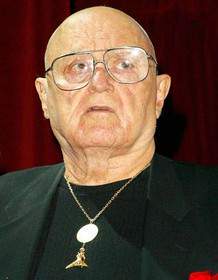
Napoleon Bonaparte (Rod Steiger)
Played by Rod Steiger
Napoleon is depicted as a calculating strategist whose health and stamina influence crucial decisions. He alternates between bold offensives and cautious rethinks, driven by a relentless urge to reclaim his empire. His leadership is marked by a blend of audacious risk-taking and reliance on trusted marshals to execute plans.
- 🧠 Strategic
- ⚔️ Military Leader
- 👑 Emperor
-
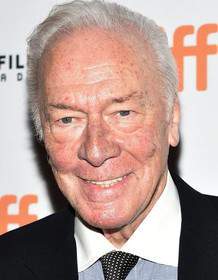
Arthur Wellesley, Duke of Wellington (Christopher Plummer)
Played by Christopher Plummer
Wellington emerges as a calm, methodical commander who prioritizes cohesion among Allied forces. He uses terrain and timing to blunt French offensives, coordinating with his staff and the Prussians. His resolve under pressure shapes the battle’s tempo and ultimate outcome.
- 🧭 Commander
- 🧠 Strategic
- 👑 Leader
- NM
Napoleon's Marshal Ney (Dan O'Herlihy)
Played by Dan O'Herlihy
Ney is a formidable cavalry commander whose zeal drives aggressive actions. He delivers critical reports and leads key charges, but his decisions echo through the campaign with significant consequences. His loyalty to Napoleon and willingness to take bold risks define his role in the battle.
- ⚔️ Cavalry
- 🔥 Bold
- 🧠 Tactical
- FW
Friedrich Wilhelm von Blücher (Sergo Zakariadze)
Played by Sergo Zakariadze
Blücher is portrayed as the early-arriving Prussian marshal whose timely force reinforcements tip the balance for the Allies. He embodies pragmatic, relentless pursuit of coordination with Wellington to press Napoleon’s army. His presence underscores the alliance's critical role in securing victory.
- 🧭 Allied Commander
- ⚔️ Cavalry
- 🗺️ Coalition
-

Grouchy (Charles Millot)
Played by Charles Millot
Grouchy is assigned to pursue the Prussians but interprets orders cautiously, leading to a missed opportunity that alters the battle’s momentum. He embodies the tension between risk-averse leadership and aggressive pursuit. His choices become a focal point for the Allies’ ultimate advantage.
- 🧭 Misinterpretation
- ⚔️ Cavalry
- 🧠 Strategic
-

Duchess of Richmond (Virginia McKenna)
Played by Virginia McKenna
The Duchess of Richmond represents the civilian world intersecting with war, her ball signaling peace-time society on the brink of conflict. Her presence anchors the narrative in a civilian setting while the armies move toward catastrophe. The scene underscores how war intrudes on everyday life and morale.
- 🎭 Aristocracy
- 🕊️ Civilian life
- 🏛️ Social sphere
Where and When Is Waterloo Set?
Waterloo is set in Brussels, Belgium, Waterloo, Belgium, Elba, Italy (1815). Here is why the time and place matter to the story.
When
1815
The action unfolds during the final phase of the Napoleonic Wars, centering on the events leading to and including the Battle of Waterloo on 18 June 1815. It depicts the rapid mobilization of coalitions, shifting loyalties, and the pressure of a continent-wide conflict. The period is defined by political upheaval, strategic gambits, and the high human cost of war.
Where
Brussels, Belgium, Waterloo, Belgium, Elba, Italy
The film tracks events across key Belgian sites, starting with the social milieu of Brussels during the Duchess of Richmond's ball and moving to the battlefield near Waterloo. It portrays the strategic terrain where alliances form and break, and where the outcome hinges on maneuvering between towns and fortified positions. The narrative also touches on Napoleon’s exile to Elba and his dramatic return, anchoring the action in real, geographically meaningful places.
- 🗺️ Belgium
- ⚔️ War
- 🕰️ Historical battle sites
What Are the Themes of Waterloo?
2 ideas the story keeps returning to, among them War & Strategy and Duty & Leadership.
-
01
War & Strategy
The plot is driven by battlefield decisions, where tempo, positioning, and timing decide fortunes. It highlights Ney’s bold cavalry charges, Grouchy’s disputed orders, and Wellington’s insistence on leveraging terrain to neutralize French momentum. The film shows how miscommunication and hesitation can alter the course of a campaign, underscoring the fragile nature of grand plans.
-
02
Duty & Leadership
Leadership is tested as commanders balance personal ambition, national loyalty, and the burdens of those who depend on them. The characters wrestle with whether to press forward, retreat, or cooperate with allies, illustrating the moral complexity of making war-time choices. Civilians and soldiers alike bear the consequences of decisions made under extreme pressure, revealing the human cost behind strategic victory.
What Kind of Film Is Waterloo?
Tense in tone, with fast pacing and a moderate story, going by the plot summary.
- Tone
- Tense
- Pacing
- Fast
- Story
- Moderate
- Intensity
- High
- Ending
- Bittersweet
An intensely gripping and stressful historical epic that thrusts the viewer into the brutal chaos of a pivotal battle, building to a somber and reflective conclusion on the heavy human cost of war.
- epic
- tense
- suspenseful
- melancholic
- grim
- tragic
- war and peace
- historical battle
- leadership
- fate of empires
Content notes: war violence, mass casualties.
Quiz
How well do you remember Waterloo? Test yourself on the story.