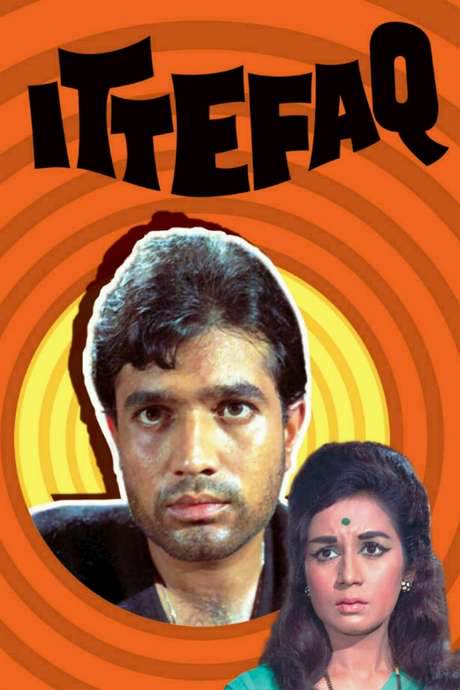
Ittefaq 1969

Directed by

Yash Chopra
Made by

B.R. Films
Ittefaq Plot Summary
Read the complete plot summary and ending explained for Ittefaq (1969). From turning points to emotional moments, uncover what really happened and why it matters.
Dilip Roy [Rajesh Khanna] is a dedicated painter whose life with his wealthy wife, Sushma [Alka], seems comfortable on the surface but is edged with rising tension. During a quiet, immersive session of painting, Dilip’s wife interrupts, asking him to accompany her out. He refuses, and the moment sparks a heated clash: she destroys one of his canvases, amplifying the strain between them. In a burst of emotion, Dilip shoves her and warns that he would kill her, then walks away from the heated scene. When he returns, he discovers his wife dead, and the police arrive to arrest him, propelled by the testimony of Renu [Bindu Desai], his sister-in-law who shares their home. Dilip maintains that his rage overwhelmed him, and that he cannot recall the exact sequence of events, insisting that he did not kill his wife.
As the trial unfolds, Dilip’s behavior becomes increasingly unpredictable, pushing him toward a deeper psychological unraveling. Dr. Trivedi [Gajanan Jagirdar], a seasoned psychologist, examines him and ultimately recommends keeping him under hospital observation for longer. The tension of confinement and the weight of suspicion carve a path for Dilip’s eventual escape. On a storm-soaked night, he slips away and finds himself at Rekha’s house, a residence of wealth in a neighborhood where privacy is supposed to be secure. Rekha [Nanda] is a married woman living with the comforts of a privileged environment, and her husband is away at the time. Dilip forces his entry and, at gunpoint, pleads with Rekha to hide him from the pursuing authorities. She attempts to summon help, but the call never goes through, and Rekha is compelled to shelter him.
With the danger temporarily contained, Dilip and Rekha share a tense, fragile conversation that nudges them toward mutual understandings and shaky trust. Dilip sheds his prison uniform and shifts into civilian clothes, a symbolic move that signals a fragile hope of normalcy. Yet night deepens around them, and Dilip awakens to a midnight sound, discovering Rekha isn’t there. A search reveals the shocking sight of a young man’s body in the bathroom, a discovery that Rekha hastily denies as reality and insists is only in Dilip’s mind. He grows suspicious, convinced that Rekha is hiding something far more dangerous than an abandoned crime scene.
Dilip decides to confront the truth by reaching out to the police, claiming that he found Jagmohan, Rekha’s husband, dead in the house and accusing Rekha of murder. Rekha counters that her husband has not yet returned from Calcutta, casting doubt on Dilip’s accusation. After a thorough search, Jagmohan’s body is found outside the house, and the investigation turns toward Dilip as a possible culprit, with a piece of his prison-issued cloth discovered in Jagmohan’s hands as a troubling clue that seems to bind him to the crime. Dilip insists that someone is manipulating the investigation, hinting that Inspector Diwan [Sujit Kumar] may be aiding Rekha, a suspicion he supports with a seemingly trivial but telling piece of evidence—an unused cigarette lighter that the inspector had taken on a prior visit to Rekha’s home, a visit the inspector had denied.
Facing a mounting tangle of accusations and half-truths, Rekha admits to having an affair with the inspector, admitting that her husband’s murder was the direct result of their secret liaison. Overcome by guilt and remorse, Rekha takes her own life. The turmoil does not end there, however. Inspector Karwe [Iftekhar], pursuing a different line of inquiry, continues the search for the truth and uncovers another layer to the case. Through careful forensic work, including a fragment of Renu’s bracelet found in Dilip’s color palette and fingerprint analysis, he identifies Renu as the actual killer of Dilip’s wife and clears Dilip of the murder charge. The truth reframes the entire drama: the woman who stood closest to the murder case was not the one who paid the ultimate price, and the real killer sits among those who concealed it for a time.
In the end, the story leaves viewers with a nuanced portrait of passion, betrayal, and the fragility of memory. Dilip’s name is cleared, not by a simple confession, but by a meticulous web of evidence that exposes the real perpetrator and the complexity of the relationships that tangled everyone in the tragedy. The movie unfolds with a balance of psychological tension and investigative rigor, presenting a moral landscape where appearances can be deceptive, and the quiet corners of a wealthy city can hide dangerous secrets. The performances—rooted in a grounded, dramatic realism—draw the audience into a labyrinth of doubt, shifting loyalties, and the uneasy realization that truth in a courtroom can hinge on the smallest, almost incidental details.
Ittefaq Timeline
Follow the complete movie timeline of Ittefaq (1969) with every major event in chronological order. Great for understanding complex plots and story progression.
Dilip's painting passion and marital conflict
Dilip Roy is a devoted painter married to the wealthy Sushma. While he works, she insists they go out, he refuses, and she destroys one of his paintings. In a fit of rage he shoves her, threatens he would kill her, and storms out of the house.
Sushma's death and Dilip's arrest
When he returns, he finds Sushma dead and is immediately arrested as the prime suspect. The police rely on the testimony of Renu, Sushma's sister, while Dilip claims his anger made him lose control and that he did not kill her.
Psychological evaluation begins
During the trial, Dilip is subjected to psychological analysis by Dr. Trivedi. The doctor concludes that he should be kept under observation in the hospital for a longer period due to his erratic behavior.
Escape to Rekha's house
On a stormy night, Dilip escapes from the hospital and heads for Rekha's house, seeking shelter. Rekha, a married woman whose husband is away, initially hides him from the police, while Dilip threatens her and demands she protect him.
Rekha's warning and Dilip's transformation
After a tense exchange, Rekha pleads with him and they talk for a while. Dilip asks for forgiveness, and he gradually sheds his prison uniform with Rekhа's help.
Midnight discovery
Dilip falls asleep and wakes at midnight to a strange sound. He searches Rekha's house and finds the body of a young man in the bathroom, a discovery Rekha dismisses as his imagination while he suspects she is hiding something.
Dilip implicates Rekha in a double murder
Believing Rekha to be involved, Dilip calls the police and reports finding Jagmohan's body in the house, accusing Rekha of murdering her husband. Rekha denies this, claiming Jagmohan hasn't returned from Calcutta.
Jagmohan's body and the prison clue
Officials later find Jagmohan's body outside the house, and suspicion centers on Dilip. A piece of a prisoner-number cloth is found stuck in Jagmohan's hand, linking Dilip to his past and fueling the case against him.
Inspector Diwan's alleged collusion
Dilip suspects Inspector Diwan is aiding Rekha, citing a cigarette lighter that the inspector had taken during a prior visit. The inspector publicly denies any visit or acquaintance with Rekha.
Rekha's confession and suicide
With no other options, Rekha admits she was having an affair with the inspector and that her husband was murdered by them when he walked in on them. She then kills herself out of guilt and remorse.
Renu revealed as killer; Dilip exonerated
Inspector Karwe uncovers a bracelet fragment from Renu in Dilip's color palette and uses fingerprinting to prove that Renu killed Dilip's wife Sushma. With this new evidence, Dilip is cleared of the murder charge.
Ittefaq Characters
Explore all characters from Ittefaq (1969). Get detailed profiles with their roles, arcs, and key relationships explained.
Dilip Roy (Rajesh Khanna)
Dilip is a passionate painter and husband who suddenly finds himself the prime suspect after his wife’s death. He battles rage, memory loss, and a stubborn sense of injustice as the investigation closes in. His volatile temperament and refusal to fully recall the night propel the drama.
Rekha (Nanda)
Rekha is a wealthy socialite who shelters Dilip during his flight and becomes entangled in secrets, including an affair with a police inspector. Her actions are driven by self-preservation and guilt, making her both alluring and dangerous. The investigation peels back her layers, revealing a complex mix of vulnerability and calculation.
Dr. Trivedi
Dr. Trivedi is the psychologist who evaluates Dilip and recommends extended hospitalization. His analysis provides a clinical lens on Dilip’s memory gaps and emotional volatility, shaping how guilt and innocence are interpreted. The doctor’s observations become a tool for the story’s tension.
Inspector Diwan (Sujit Kumar)
Inspector Diwan is a policeman in Rekha’s orbit whose past visits and possible collusion cast doubt on his reliability. He embodies the tension between authority and secrecy, influencing the investigation’s twists. His actions are pivotal to the plot’s shifting loyalties.
Inspector Karwe (Iftekhar)
Inspector Karwe is the thorough investigator who uncovers crucial evidence that clears Dilip and points to the real killer. His methodical approach contrasts with the emotional drama, providing a moral counterweight to the story’s chaos.
Renu (Bindu Desai)
Renu is Sushma’s sister who initially appears to be a witness in the case. The investigation gradually reveals her as the true killer of Sushma, driven by hidden motives and family tensions.
Public Prosecutor Khanna (Madan Puri)
Public Prosecutor Khanna represents the state's case, pushing for a verdict that confirms or contests the narrative spun by the witnesses. His role tests the limits of legal strategy within the courtroom drama.
Ittefaq Settings
Learn where and when Ittefaq (1969) takes place. Explore the film’s settings, era, and how they shape the narrative.
Location
Rekha's house, Dilip's house, Hospital, Police station, Calcutta
The narrative unfolds across a modern urban setting in a wealthy metropolitan area. Rekha's residence and Dilip's house serve as key stages for the thriller, with the stormy night trapping characters inside. The hospital and police precinct provide the procedural backdrop, while Calcutta is referenced as a distant tie to Rekha's husband.
Ittefaq Themes
Discover the main themes in Ittefaq (1969). Analyze the deeper meanings, emotional layers, and social commentary behind the film.
🔎
Truth vs Deception
Truth is slippery as conflicting narratives emerge from memory gaps, evasions, and insinuations. The story stacks clues and misdirections to keep the viewer guessing about who truly killed Sushma. Each character’s account invites doubt, transforming deduction into a tense game of interpretation. The final reveal forces a reassessment of what really happened and who bears the guilt.
🧠
Psychology
Dr. Trivedi’s evaluation places Dilip under clinical scrutiny, turning the mind into a crime-solving tool. The hospital setting frames behavior as data, influencing perceptions of innocence and culpability. The thread shows how psychological insight can shape a trial and the audience’s belief. It also exposes how professionals may be drawn into dramatic machinations.
💔
Infidelity & Guilt
Love and betrayal entangle Rekha with others in the investigation, complicating motive and loyalty. The affair with Inspector Diwan reveals a dangerous nexus of desire and deception. Rekha’s actions catalyze violence and tragedy, driving the plot toward a fatal reckoning. Guilt pervades the characters as relationships fracture under pressure.

Coming soon on iOS and Android
The Plot Explained Mobile App
From blockbusters to hidden gems — dive into movie stories anytime, anywhere. Save your favorites, discover plots faster, and never miss a twist again.
Sign up to be the first to know when we launch. Your email stays private — always.
Explore the mobile appIttefaq Spoiler-Free Summary
Discover the spoiler-free summary of Ittefaq (1969). Get a concise overview without any spoilers.
In the midst of a relentless storm, the night seems to close in on a quiet, upscale neighbourhood, turning ordinary houses into isolated islands of anxiety. The relentless rain and flickering lights create a thin veil of tension that makes every creak and distant thunderclap feel like a secret waiting to be heard. It is within this claustrophobic atmosphere that an unexpected visitor arrives, turning the night into a precarious dance between safety and dread.
Dilip Roy is the figure who breaks the fragile calm. Once confined within the stark walls of a mental hospital, he is now a fugitive whose reputation precedes him, earning the label of an accused murderer. Though his outward demeanor is calm, there is an unmistakable undercurrent of unease that hints at deeper psychological layers. His presence brings an unsettling mix of curiosity and fear, as the darkness outside mirrors the turmoil inside his mind.
Rekha lives in a well‑appointed home, a place that normally offers comfort and privacy. With her husband away, she finds herself alone when the storm forces an unsettling encounter. The sudden arrival of a desperate stranger shatters her routine, and she must confront an uneasy blend of compassion, self‑preservation, and the primal instinct to protect her sanctuary. As the night stretches on, the thin line between guest and threat blurs, leaving her on edge.
The film thrives on this storm‑filled setting, using shadows, rain‑splattered windows, and muted conversations to build a tense, psychological thriller. Every whispered word and hesitant breath amplifies the feeling that something vital hangs in the balance, inviting the audience to linger in the uneasy silence between thunderclaps and wonder what will emerge when the storm finally subsides.
Movies with Similar Twists and Themes
Uncover films that echo the narrative beats, emotional arcs, or dramatic twists of the one you're exploring. These recommendations are handpicked based on story depth, thematic resonance, and spoiler-worthy moments — perfect for fans who crave more of the same intrigue.







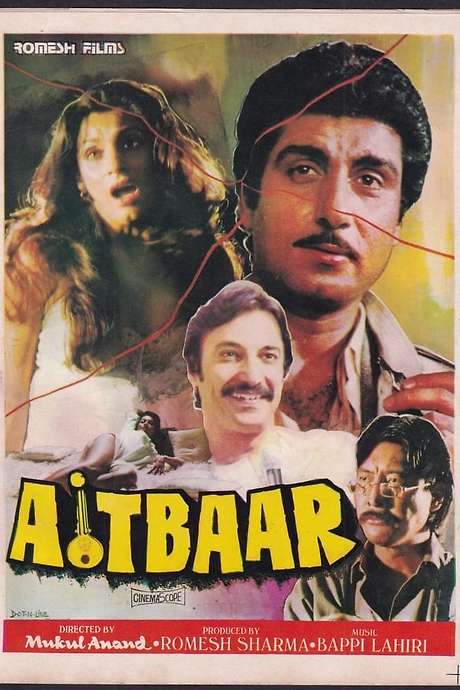
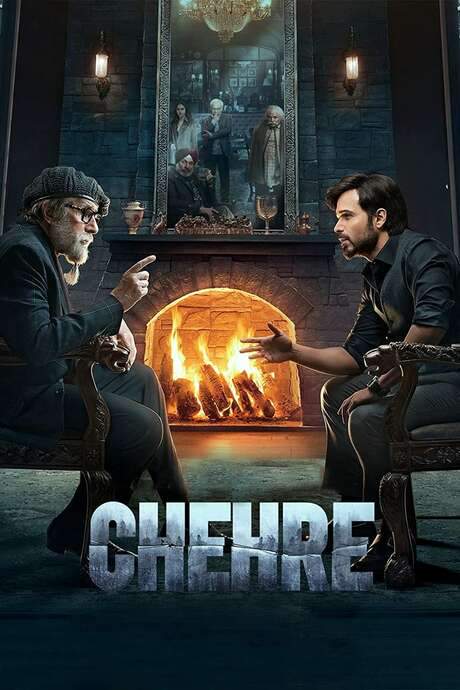
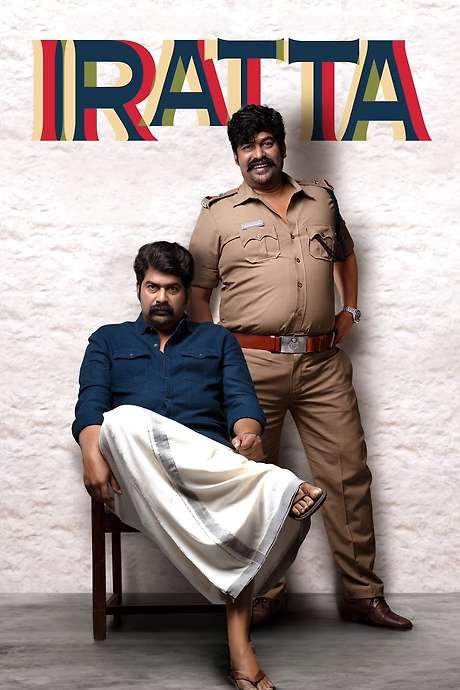


Featured on this page

What's After the Movie?
Not sure whether to stay after the credits? Find out!
Check out our other apps:

SAT Sphere
Build confidence for the Digital SAT.

Mori Atlas
Discover wild places worth protecting.

Luntero
Search smarter for a home in Amsterdam.

Plot Explained
Unravel movie endings and hidden clues.

Pokechamp
Dive into Pokémon data and battle logic.

Driving Theory
Get ready for your European theory test.

Movie Dust
Plan your next cinema trip with ease.

Musemap
Find art and culture as you travel.

Selkobase
Compare credentials before committing.

Local Manual
Turn an unfamiliar country into practical next steps.

Lernavi
Compare school systems before your next move.

GymRoam
Find a workout stop wherever your plans take you.
Explore Our Movie Platform
New Movie Releases (2026)
Famous Movie Actors
Top Film Production Studios
Movie Plot Summaries & Endings
Major Movie Awards & Winners
Best Concert Films & Music Documentaries
Movie Collections and Curated Lists
© 2026 What's After the Movie. All rights reserved.
Privacy Policy