
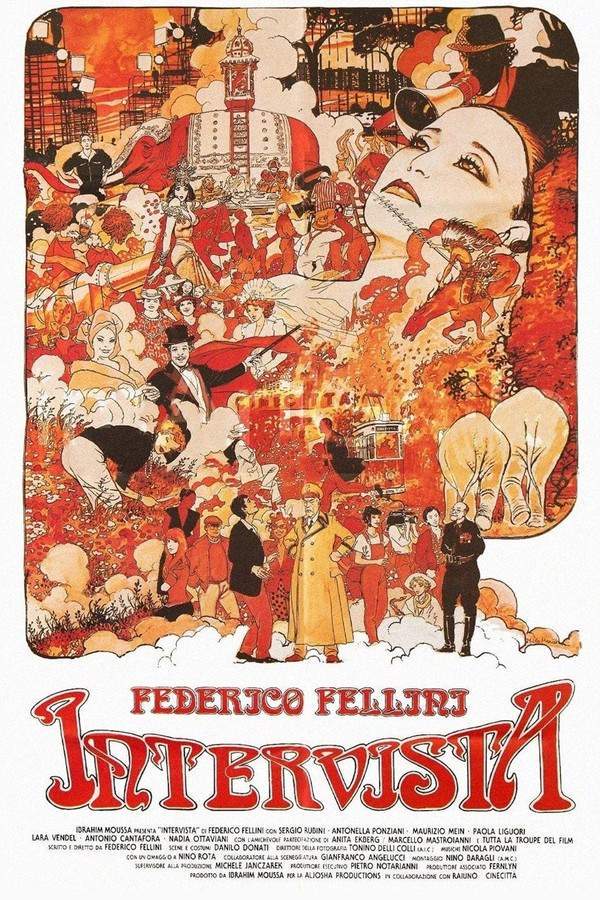
Intervista 1992

Directed by
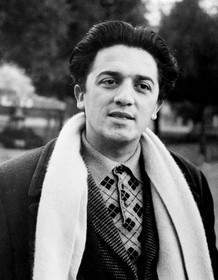
Federico Fellini
Made by

Academy Pictures
Intervista Plot Summary
Read the complete plot summary and ending explained for Intervista (1992). From turning points to emotional moments, uncover what really happened and why it matters.
Interviewed by a Japanese television crew for a report on his latest film, Federico Fellini takes the audience on an intriguing journey behind the scenes at Cinecittà. As the crew prepares for a nighttime scene that Fellini describes as “the prisoner’s dream” — a moment where his hands seek a way out of a dark tunnel — he reflects on the challenges of his advancing age and weight, realizing that escaping simply by “flying away” is becoming increasingly tough. However, once he breaks free, he gazes down at Cinecittà from a remarkable height.
The following morning, Fellini joins the Japanese crew for a quick tour of the studios, where they encounter a series of outrageous television commercials in the making. During this tour, Fellini’s casting director presents him with four young actors intended to play the part of Karl Rossmann, the lead in his cinematic interpretation of Kafka’s Amerika. Fellini introduces the audience to the charming female custodian of Cinecittà, Nadia Ottaviani, who cleverly manages to evade the interview by retreating into the desolate backlot of Studio 5 to gather dandelions for herbal tea.
Meanwhile, Fellini’s assistant director, Maurizio Mein, is on site at the Casa del Passeggero, a formerly inexpensive hotel that has now transformed into a drugstore. Fellini desires to include this location in his film, as it recalls his first visit to Cinecittà as a journalist back in 1938, during the Fascist regime. As the past and present intertwine, Fellini interacts with his younger self, portrayed by Sergio Rubini. After the crew reconstructs the façade of the Casa del Passeggero at a different location in Rome, a fake tramway transports the young Fellini/Rubini from the American Wild West, populated by Indian warriors, to a stunning cliff overlooking a herd of wild elephants off the coast of Ethiopia. Upon arriving at Cinecittà, he embarks on an interview with the matinee idol, Katya — a character that pays homage to actress Greta Gonda, with whom he conducted his very first interview.
As the narrative unfolds, the boundaries between reality and filmmaking blur, plunging viewers into the chaotic world of two feature films run by domineering directors. However, this feeling is ephemeral; for the remainder of the film, Fellini and Maurizio Mein work tirelessly to assemble the perfect cast and set for the fictional adaptation of Amerika. This setup enables Fellini/Rubini to traverse time, experiencing the filmmaking process firsthand — from disgruntled actors who fell short in auditions, including Marcello Mastroianni in a TV commercial as Mandrake the Magician, to unsettling incidents like a bomb threat, and even a visit to Anita Ekberg’s home where she and Mastroianni reenact scenes from La Dolce Vita. The narrative culminates in bizarre screen tests featuring Kafka’s Brunelda, who finds herself in a bathtub surrounded by two young men. Just as chaos seems to ensue, a troublesome thunderstorm threatens the production of Amerika, culminating in a peculiar attack by faux Indians wielding television antennas like spears.
As the film wraps up back inside Studio 5 at Cinecittà, Fellini’s voice resonates with a melancholic reflection: > “So the movie should end here. Actually, it’s finished.” In a tongue-in-cheek response to dissatisfied producers regarding his somber conclusions, the Maestro illuminates their world with the hopeful glow of an arc lamp, presenting them with a soaring ray of sunshine.
Intervista Timeline
Follow the complete movie timeline of Intervista (1992) with every major event in chronological order. Great for understanding complex plots and story progression.
Interview with Japanese Crew
Federico Fellini is interviewed by a Japanese television crew who are preparing a report on his latest film. This sets the stage for an exploration of Fellini's creative process and the challenges he faces as he ages.
Preparation for Nighttime Scene
As the crew prepares to film a nighttime scene described by Fellini as 'the prisoner’s dream', he reflects on his struggles with aging. He feels the metaphorical weight of escaping a dark tunnel becoming increasingly daunting.
Remarkable Perspective
Once he breaks free from his dark reflections, Fellini finds himself at an astonishing height, gazing down at the Cinecittà studios. This imagery symbolizes his complex relationship with the filmmaking process and artistic freedom.
Tour of Cinecittà Studios
The next morning, Fellini joins the Japanese crew for a tour of the Cinecittà studios. They witness various outrageous television commercials being filmed, showcasing the extravagant side of Italian cinema.
Casting Karl Rossmann
During the tour, Fellini's casting director presents four young actors for the lead role of Karl Rossmann in his adaptation of Kafka's Amerika. This moment highlights Fellini's commitment to finding the perfect cast.
Encounter with Nadia Ottaviani
Fellini introduces the audience to Nadia Ottaviani, the charming female custodian of Cinecittà. She cleverly evades the interview by retreating into Studio 5's backlot to gather dandelions for herbal tea, reflecting the everyday magic of the film set.
Reflection on the Casa del Passeggero
Fellini's assistant director, Maurizio Mein, works at the Casa del Passeggero, now a drugstore. Fellini wishes to feature this location in his film, reminiscing about his first visit to Cinecittà during the Fascist regime in 1938.
Young Fellini's Journey
Fellini interacts with his younger self, portrayed by Sergio Rubini, as crew members reconstruct the façade of the Casa del Passeggero. This scene bridges the gap between past and present in Fellini's cinematic world.
The Fake Tramway Journey
In a surreal sequence, a fake tramway transports the young Fellini from an American Wild West setting to a breathtaking cliff in Ethiopia. This journey epitomizes Fellini's imaginative storytelling and influences from diverse cultures.
Interview with Katya
Fellini interviews the matinee idol Katya during his adventures at Cinecittà. Katya serves as a homage to actress Greta Gonda, marking a significant connection to Fellini's past experiences in film.
Blurring Reality and Filmmaking
As the narrative unfolds, the lines between reality and filmmaking blur. The audience is thrust into the tumultuous worlds of domineering directors and their chaotic productions, reflecting the unpredictability of cinema.
Challenges in Production
Fellini and Maurizio Mein tirelessly assemble the perfect cast for Amerika. Their efforts are complicated by disgruntled actors, unsettling bomb threats, and visits to Anita Ekberg's home for reenactments, highlighting the challenges mixed with creativity.
Bizarre Screen Tests
The film features bizarre screen tests with Kafka's character Brunelda, who finds herself in a bathtub with two young men. These peculiar moments amplify the surreal nature that is characteristic of Fellini's filmmaking.
Thunderstorm Disruption
As chaos looms, a thunderstorm threatens the production of Amerika, culminating in a bizarre attack led by faux Indians wielding television antennas as spears. This scene metaphorically represents the unpredictability of film production.
Conclusion of the Film
Back in Studio 5 at Cinecittà, Fellini offers a melancholy reflection on the completion of his film. He humorously responds to producers criticizing his somber ending, illuminating their world with a hopeful arc lamp's glow.
Intervista Characters
Explore all characters from Intervista (1992). Get detailed profiles with their roles, arcs, and key relationships explained.
Federico Fellini
Fellini serves as both the protagonist and director, offering a meta-narrative that reflects on his life and the filmmaking journey. He struggles with the passage of time and his legacy, showcasing vulnerability through his memories while maintaining his artistic vision.
Maurizio Mein
As Fellini’s assistant, Maurizio supports the filmmaking process with meticulous attention to detail. His character represents the backbone of production, navigating the challenges and logistics while embodying the dedication required in the film industry.
Nadia Ottaviani
Nadia is portrayed as a charming custodian of Cinecittà, known for her clever evasiveness during interviews. Her character adds a light-hearted touch to the narrative, grounding the chaotic world of filmmaking with everyday humor.
Marcello Mastroianni
Mastroianni's character appears in a comedic television commercial as Mandrake the Magician. His role serves as a nod to his iconic status in Italian cinema and brings a layer of nostalgia to the story.
Sergio Rubini
Rubini plays a younger version of Fellini, providing insight into the maestro's past while enriching the narrative. His character's journey reflects the struggles and evolution of the famed director over the years.
Anita Ekberg
Ekberg’s character is referenced during a visit to her home, emphasizing her connection to Fellini's earlier works. Her presence evokes memories of the golden age of Italian cinema and the charm of classic films.
Intervista Settings
Learn where and when Intervista (1992) takes place. Explore the film’s settings, era, and how they shape the narrative.
Time period
1938, Present Day
The narrative intertwines memories from 1938, a time during Italy’s Fascist regime, with present-day reflections. This juxtaposition allows for an exploration of how the film industry has evolved while also bringing to light the nostalgic memories and challenges of past hardships.
Location
Cinecittà, Casa del Passeggero, Rome, Ethiopia
Cinecittà is a renowned film studio in Rome, often referred to as the 'Hollywood on the Tiber.' It has played a pivotal role in the history of Italian cinema, hosting numerous international film productions. The Casa del Passeggero, once a budget hotel, has now transformed into a drugstore, reflecting the changing landscape of the city.
Intervista Themes
Discover the main themes in Intervista (1992). Analyze the deeper meanings, emotional layers, and social commentary behind the film.
🎬
Filmmaking Process
The film delves into the intricate and chaotic world of filmmaking, showcasing the behind-the-scenes efforts involved in creating a cinematic piece. Through Fellini's perspective, the audience witnesses auditions, casting processes, and the pervasive challenges faced during production, blurring the lines between reality and fiction.
🌀
Reality vs. Fiction
As the story unfolds, the distinction between reality and the filmmaking process blurs. Fellini’s interactions with his younger self and the chaotic elements of production immerse viewers in a surreal experience, prompting reflections on the nature of storytelling and artistic expression.
🌧️
Chaos
The film portrays a tumultuous environment, with disruptions such as bomb threats and stormy weather that threaten the production. This theme of chaos symbolizes the unpredictability of film making, illustrating how external factors can interfere with the artistic vision.

Intervista Spoiler-Free Summary
Discover the spoiler-free summary of Intervista (1992). Get a concise overview without any spoilers.
In the bustling heart of Rome’s legendary studios, a celebrated filmmaker opens his world to a curious Japanese documentary crew eager to capture the essence of his creative spirit. The camera follows him through the iconic backlots of Cinecittà, where every corridor seems to echo with the ghosts of past productions. The premise is a gentle meditation on memory, inviting the audience to wander beside an artist who has spent a lifetime turning dreams into celluloid, all while a new, mysterious project looms on the horizon.
At the center of this exploration stands Federico Fellini, a towering figure whose reputation is built on whimsy, visual poetry, and an unapologetic love of the absurd. He greets the interview with his characteristic blend of humor and introspection, acknowledging the weight of his years even as he remains fascinated by the possibilities of flight and imagination. His reflections are less about recounting achievements and more about the sensation of standing on a precipice—between the nostalgic glow of bygone eras and the restless urge to venture into uncharted cinematic territories.
Surrounding him are the vibrant personalities that populate the studio’s everyday life: a charismatic custodian who slips away to tend to quiet rituals, an eager casting director presenting fresh faces for a daring adaptation, and a meticulous assistant director who helps bridge past and present. Their interactions are painted with a tone that is simultaneously reverent and playful, suggesting that the process of filmmaking is as much a collaborative dance as it is an individual’s artistic pilgrimage.
The film’s mood is a kaleidoscope of nostalgia, fantasy, and gentle satire, blurring the line between documentary observation and creative performance. As the crew captures snippets of conversation, rehearsals, and spontaneous humor, they reveal a world where reality and imagination intertwine, leaving viewers with a lingering sense of wonder about the endless possibilities that still lie ahead for the maestro and his ever‑evolving craft.
Movies with Similar Twists and Themes
Uncover films that echo the narrative beats, emotional arcs, or dramatic twists of the one you're exploring. These recommendations are handpicked based on story depth, thematic resonance, and spoiler-worthy moments — perfect for fans who crave more of the same intrigue.


Featured on this page

What's After the Movie?
Not sure whether to stay after the credits? Find out!




Explore Our Movie Platform
New Movie Releases (2026)
Famous Movie Actors
Top Film Production Studios
Movie Plot Summaries & Endings
Major Movie Awards & Winners
Best Concert Films & Music Documentaries
Movie Collections and Curated Lists
© 2026 What's After the Movie. All rights reserved.