What Is Habermann About?
The premise of Habermann in 252 words, with nothing given away. The full story follows below.
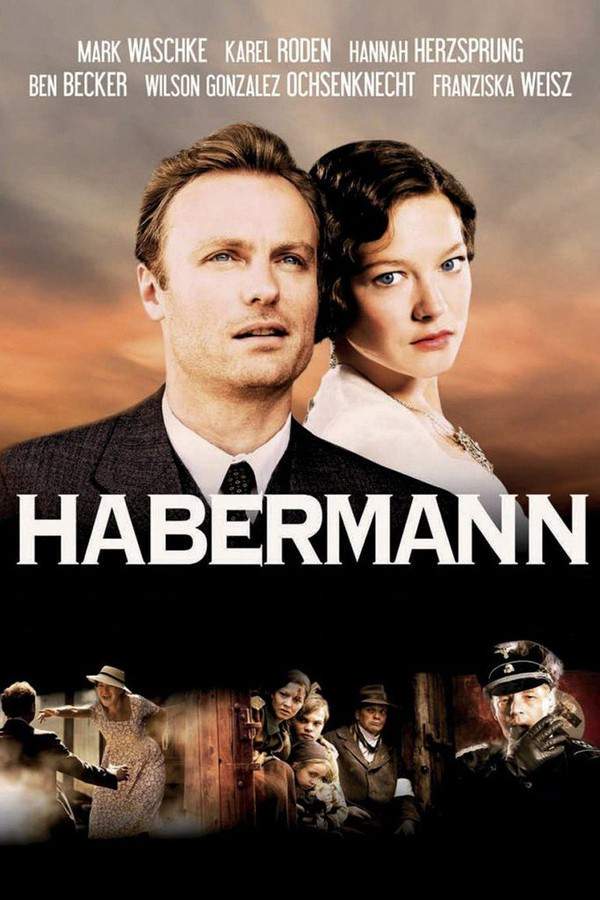
In the fertile valley of the Sudetenland, a modest town thrives under the steady hum of a combined saw‑ and grist‑mill. Its owner, August Habermann, has built a life of quiet prosperity, believing that the German and Czech inhabitants can coexist in mutual respect. His marriage to Jana, a woman of Czech heritage, and his long‑standing friendship with Karel Březina, a Czech craftsman, anchor his world in a fragile but hopeful harmony that seems to defy the gathering storm beyond the borders.
The summer of 1938 brings the continent to a fevered edge, and the looming specter of war begins to infiltrate everyday life. Political realignments shift the balance of power, turning commercial opportunities into moral dilemmas. As foreign mandates press upon the town, August finds his once‑secure enterprise caught between loyalty to his community and the unsettling demands of a new order. Meanwhile, his younger brother Hans embraces the fervor of the era, creating a personal clash that mirrors the broader cultural rift.
Against this backdrop of mounting uncertainty, the film paints a portrait of ordinary people pressed into extraordinary circumstances. The atmosphere is one of tense elegance, where the rhythmic creak of the mill’s waterwheel contrasts with the silent dread that hangs over each conversation. Relationships are tested, identities are questioned, and the promise of peace feels increasingly out of reach. Habermann invites the viewer to linger in a world where love, duty, and survival intersect, hinting at the inevitable collision between personal conviction and the inexorable tide of history.
What Happens in Habermann?
The complete story of Habermann, from the first scene to the last, in 799 words (about 3 minutes). Spoilers throughout.
Spoilers ahead
In 1937, a prosperous ethnic German mill owner named August Habermann stands as the moral center of a town called Eglau in the Sudetenland. His mill operates as both a sawmill and a gristmill, and he preserves a pragmatic but hopeful belief that Sudeten Germans and Czechs can coexist peacefully under his roof. He marries a Czech woman, Jana, who later is revealed to be half-Jewish, a detail that quietly colors the family’s fate. August’s closest confidant is Karel Březina, a Czech who embodies a bridge between communities. The two families live with a delicate tolerance until the shadows of war begin to loom.
When the Munich Agreement transfers the Sudetenland to Germany in October 1938, August welcomes the change as a commercial opportunity, hoping it will grant access to the German market for his business. But Karel’s warning rings true: the Czech people become second-class citizens, and the mood in Eglau grows increasingly menacing as the brutal SS officer Kurt Koslowski arrives to enforce a new order. Koslowski’s presence brings a harsh, personal threat to August’s world, as he bullies August into selling flour to a hospital/spa that treats wounded German soldiers at cost, a move that exposes how power can exploit reliance and loyalty.
The tension deepens as August’s younger brother, Hans, who is ardently Nazi, chooses to join the Wehrmacht in 1941 after finishing the Hitler Youth, despite August’s opposition. The war’s harsh arithmetic hardens quickly: in 1943, Koslowski’s men murder Hora, a Czech bookkeeper at the mill, after pamphlets predicting Germany’s defeat begin to circulate. The war’s cruelty touches even the intimate ties of the Habermann household when Hans is badly wounded in 1944, and Jana helps him desert by pulling him off a train, a moment that leaves him torn between duty and survival. Both Jana and August urge him not to return to a conflict they view as madness, but Hans remains haunted by the promise of a cause he once believed in, even as his injuries ground him.
As August and Karel journey along a forest road, tragedy compounds. Masek, Eliška’s son and August’s housekeeper’s child, shoots a German soldier he encounters, forcing Karel to kill another to silence a witness. Koslowski escalates his vendetta by ordering the random execution of twenty Czechs in retaliation. In a desperate bid to save lives, August bribes Koslowski with his family’s precious jewelry, hoping to halt the planned killings. The plan fails when Koslowski breaks his word and executes nine of the chosen Czechs, while sending Jana and her daughter to a concentration camp. The collaborating mayor of Eglau, Hartel, informs Koslowski that Jana’s father was Jewish, a discovery that shatters August’s already fragile sense of safety and belonging.
Broken in spirit, August refuses to heed Karel’s advice to flee the Sudetenland. He clings to a land he has lived in for generations, convinced that his wife and daughter are dead, and that his identity is irreparably wrecked by the moral weight of the era.
With the war ending in May 1945, the region erupts into a lynch mob mentality as the Czech majority turns on the Sudeten Germans. The Czechoslovak Army forces many of them onto trains bound for occupied Germany. Jana and her daughter manage to escape the concentration camp, aided along their journey home by Red Army soldiers advancing into the Sudetenland. In a cruel twist of fate, Eliška seizes the Habermann family safe and tells Masek that his father was Wilhelm Habermann, reframing what was taken as theft into a claim of rightful inheritance. Masek boasts to a vengeful mob led by Hartel that he is a Habermann and now the owner of the mill, prompting the mob to lynch him as a traitor.
The violence reaches its brutal apex when August is killed by the same mob that had pursued the family, his life ending as he is tied to the mill’s water wheel. Jana and her daughter are expelled from the region, and as she is forced onto a train to Bavaria, Karel hands her a piece of jewelry given to her by August on their wedding day, a tangible memory meant to keep August’s memory alive in the face of loss. The film’s epilogue notes a grim historical footnote: in reality, it was Karel Březina who accused mayor Hartel of leading the mob that lynched Hubert Habermann, a matter that went unresolved with no prosecutions.
This deeply human, panoramic drama traces how loyalty, love, and memory collide with the brutal forces of nationalism and war, revealing how ordinary lives are imperceptibly carved by the tides of history. The narrative never shies away from the sorrow and moral ambiguity of its characters, offering a sober meditation on coexistence, complicity, and the enduring ache of a homeland lost to violence.
Habermann Timeline: Every Key Event in Order
16 key events in the order they happen, from “August Habermann's mill and a peaceful co-existence” to “Epilogue: truth and impunity”. 16 events name a place, across 8 locations.
- 1
August Habermann's mill and a peaceful co-existence
In 1937, August Habermann runs a prosperous mill in Eglau that serves both as a sawmill and gristmill. He treats Sudeten Germans and Czechs as co-workers and neighbors, trying to keep peace between communities. He marries Jana, a Czech woman who is later revealed to be half-Jewish, cementing a mixed family in a tense time.
When:1937 Where:Eglau, Sudetenland
- 2
Munich Agreement and a warning
Following the Munich Agreement, the Sudetenland is ceded to Germany in October 1938. August welcomes the change, hoping it will open the German market for his business. Karel, his Czech friend, warns that Czechs will become second-class citizens, and the warning foreshadows coming brutality.
When:October 1938 Where:Eglau, Sudetenland
- 3
Koslowski's oppression at the mill
SS Sturmbannführer Kurt Koslowski arrives and begins mistreating the Czech workers. Under his command, August is forced to sell flour to a local hospital at cost for the German war effort. The brutality toward Czechs shocks August, who cares especially for Masek, Eliška's son and his trusted employee.
When:Late 1938 Where:Habermann mill, Eglau
- 4
Masek's true lineage
Masek, the son of Eliška, is one of August's trusted Czech workers. The relationship deepens when it is revealed that Eliška was August's father's mistress, making Masek August's half-brother, though their bond remains forged through shared hardship.
When:1937-1939 Where:Habermann mill, Eglau
- 5
Hans joins the Wehrmacht
In 1941, August's ardently Nazi younger brother Hans joins the Wehrmacht after graduating from the Hitler Youth. The family becomes divided by ideology as the war intensifies. The decision underscores the pull of national loyalty against personal relationships.
When:1941 Where:Eglau
- 6
Pamphlets foretell defeat; Hora is killed
In 1943, pamphlets predicting Germany's defeat circulate, unsettling the regime. Koslowski orders the killing of Hora, the Czech bookkeeper at the mill, signaling a brutal escalation of control. This act foreshadows further violence against Czech workers.
When:1943 Where:Habermann mill, Eglau
- 7
Hans wounded; Jana aids his desertion
In 1944, Hans is badly wounded while serving; Jana helps him escape by pulling him off a train, turning him into a deserter. Both insist he has suffered enough for 'that madman' and urge him not to return to the front. The act strains the family as the war rages on.
When:1944 Where:Train, near Eglau
- 8
Masek and Karel duel on a forest road
While traveling with Karel on a forest road, Masek kills a German soldier he encounters, forcing Karel to kill another to silence a witness. The violence underscores the brutal, collapsing rule of law under occupation. The incident deepens fear and mistrust in the town.
When:1944-1945 Where:Forest road near Eglau
- 9
Execution plan halted by jewelry bribe
Koslowski decides to execute 20 Czechs selected at random in retaliation. August bribes him with the family’s expensive jewelry to stop the executions. Koslowski breaks his word and executes nine, while sending Jana and her daughter to a concentration camp.
When:1944-1945 Where:Habermann mill, Eglau
- 10
Hartel exposes Jana's Jewish father
Hartel, the collaborating Mayor of Eglau, tells Koslowski that Jana's father was Jewish. August is broken in spirit and ignores Karel's advice to flee the Sudetenland, declaring that his home is where his family has lived for centuries and that he is spiritually dead.
When:1944-1945 Where:Eglau
Show the other 6 events of Habermann Hide the last 6 events
- 11
Liberation and the post-war backlash
After Czechoslovakia is liberated in May 1945, a lynch-mob atmosphere prevails as Sudeten Germans are attacked and forced onto trains toward occupied Germany. The town's divisions erupt into collective punishment as the war concludes.
When:May 1945 Where:Sudetenland, near Eglau
- 12
Jana and daughter escape and are helped home
Jana and her daughter escape from the concentration camp with the aid of Red Army soldiers advancing into the Sudetenland. They are guided toward safety and a path back to their homeland as Allied forces push forward. The journey marks a fragile step toward reuniting the family.
When:May 1945 Where:Concentration camp to Sudetenland
- 13
Inheritance claim and mob lynching
Eliška loots the Habermann safe and reveals to Masek that his father was Wilhelm Habermann, effectively giving him his supposed inheritance. Masek proclaims himself the owner of the mill, prompting Hartel and a vengeful Czech mob to lynch him as a traitor. The violence reflects postwar vendettas and the collapse of legal order.
When:May–June 1945 Where:Eglau
- 14
August Habermann is killed by the mob
The same lynch mob that targets Masek captures August, tying him to the water wheel of his own mill. He is killed in a brutal act of revenge as the town grapples with its shattered social order. The murder seals the town's fate in the immediate postwar chaos.
When:May–June 1945 Where:Habermann mill, Eglau
- 15
Exile and memory
Jana and her daughter are expelled from the Sudetenland as the region is emptied of its German-speaking population. Karel gives Jana a piece of jewelry from August to keep his memory alive. The epilogue notes that the real mob leader was never prosecuted, leaving memory and accountability unresolved.
When:May–June 1945 Where:Sudetenland, then Bavaria-bound trains
- 16
Epilogue: truth and impunity
The epilogue reveals that the real Hubert Habermann's death involved a mob led by Mayor Hartel, and though the truth is acknowledged, no one is prosecuted. The community is left to confront the consequences of collective violence and historical memory. The story ends with a somber reminder of unresolved accountability.
When:Post-1945 Where:Eglau
Who Are the Main Characters in Habermann?
10 characters, among them August Habermann, Jana Habermann and Karel Březina: who each one is and the part they play in the story.
- AH
August Habermann
Wealthy ethnic German mill owner in Eglau who believes in peaceful coexistence between Sudeten Germans and Czechs. He is apolitical and marries Jana, a Czech woman who is later revealed to be half-Jewish. He is protective of his Czech workers, especially Masek, the son of his housekeeper Eliška, and he tries to shield them from abuse. He ultimately succumbs to the regime’s cruelty, bribing Koslowski to stop executions, and dies when the mob hangs him at the mill.
- 💼 Industrialist
- 🕊️ Moral Dilemma
- 👨👩👧 Family
- JH
Jana Habermann
A Czech wife of August; she is later revealed to be half-Jewish. She endures persecution and is separated from her husband, facing a concentration camp ordeal before escaping with her daughter with help from Red Army soldiers. Her resilience anchors the family’s memory after their exile and she carries the weight of the marriage’s tragic consequences.
- ❤️ Family
- 🧭 Survival
- 🇨🇿 Czech identity
- KB
Karel Březina
August’s Czech best friend who warns him about the fate of Czechs after annexation and later confronts the consequences of collaboration. He is a cautious ally who tries to navigate a dangerous landscape and ultimately exposes the truth about mob violence after liberation.
- 🗺️ Loyalty
- 🕰️ Memory
- 🇨🇿 Czech identity
- KK
Kurt Koslowski
SS Sturmbannführer who brutalizes Czech workers, enforces harsh orders, and arranges executions to punish resistance. He escalates violence, breaks his word, and becomes a key instrument of oppression that catalyzes the town’s descent into terror.
- ⚔️ Oppression
- 💀 Brutality
- M
Masek
Son of Eliška, the Habermann housekeeper, and a Czech worker who becomes entangled in the mill’s deadly power struggles. He is involved in violence and is later claimed as Habermann’s heir, only to be lynched by a local mob that views him as a traitor.
- 🪙 Inheritance
- ⚔️ Violence
- 🧭 Ethnic tension
- E
Eliška
Housekeeper to the Habermann family and mother of Masek; her secret about Habermann’s paternity adds to the film’s web of loyalties and betrayals. She aids in the revelation of hidden inheritance and becomes part of the combustible power dynamics surrounding the mill.
- 👩👧👦 Family
- 💰 Exploitation
- 🧭 Loyalty
- HH
Hans Habermann
August’s younger brother who joins the Wehrmacht, adopts Nazi ideology, is wounded, and later deserts. His arc explores the friction between family ties and ideological allegiance during the war.
- 🪖 Family conflict
- 🧭 Ideology
- H
Hora
The Czech bookkeeper at Habermann’s mill who is killed by Koslowski, a death that sparks further violence and escalates the town’s fear and resistance.
- 🧾 Bookkeeping
- ⚰️ Violence
- H
Hartel
The collaborating mayor of Eglau who supports the Nazis and fuels the mob’s violence; he is implicated in the later memory debates about leadership of the mob and the real Hubert Habermann’s lynching.
- 🏛️ Authority
- ⚖️ Betrayal
- JD
Jana's Daughter
The daughter of Jana, who endures displacement and exile alongside her mother. She embodies the human cost of war and forced migration in the Sudetenland.
- 👧 Child
- 🆘 Rescue
Where and When Is Habermann Set?
Habermann is set in Eglau and Sudetenland (1937–1945). Here is why the time and place matter to the story.
When
1937–1945
The story unfolds from 1937 through the war’s end in 1945. It begins with the pre-war milieu and the Munich Agreement, then follows the occupation and Nazi rule in the Sudetenland. The period culminates in liberation and a violent post-war reckoning that rewrites local memory.
Where
Eglau, Sudetenland
Eglau is a mill town in the Sudetenland where a family-owned mill operates as both a sawmill and a gristmill. The community comprises Sudeten Germans and Czechs living side by side, with rising tension as political changes sweep through the region. The mill, hospital/spa, and local administration anchor life here as World War II approaches.
- 🏭 Industrial town
- 🧭 Ethnic tension
- 🗺️ Border region
What Are the Themes of Habermann?
3 ideas the story keeps returning to, among them Moral Dilemma, Oppression and Memory & Betrayal.
-
01
Moral Dilemma
August Habermann strives to keep peace by employing both Sudeten Germans and Czechs, navigating a fragile coexistence. He confronts abuse from Koslowski and makes difficult compromises to protect workers, family, and business. The film shows how ordinary people bend or break under political pressure, raising questions about complicity, memory, and responsibility.
-
02
Oppression
Koslowski’s brutality and the loyalty of local authorities reveal how state power weaponizes fear. The random executions, forced transfers, and mass intimidation devastate communities and erode trust. The violence is intimate as it seeps into work, family life, and everyday choices, culminating in a murderous mob.
-
03
Memory & Betrayal
After liberation, a lynch-mob atmosphere erupts as old grievances collide with new memories. The revelation that Masek’s claimed inheritance is tied to a crime unsettles perceptions of kinship and property. The epilogue notes that Karel Březina accused the mayor of leading the mob that lynched the real Hubert Habermann, underscoring how memory can be contested and unresolved.
What Kind of Film Is Habermann?
Bleak in tone, with steady pacing and a moderate story, going by the plot summary.
- Tone
- Bleak
- Pacing
- Steady
- Story
- Moderate
- Intensity
- High
- Ending
- Bleak
A steadily paced, oppressive drama that immerses the viewer in the grim reality of a family torn apart by war and ethnic hatred, culminating in a profoundly tragic and emotionally devastating conclusion.
- oppressive
- somber
- tragic
- melancholic
- tense
- grim
- world war ii
- ethnic conflict
- moral ambiguity
- loss of home
Content notes: war violence, execution, lynching, concentration camps, ethnic persecution, mob violence.
Quiz
How well do you remember Habermann? Test yourself on the story.