Habermann 2011


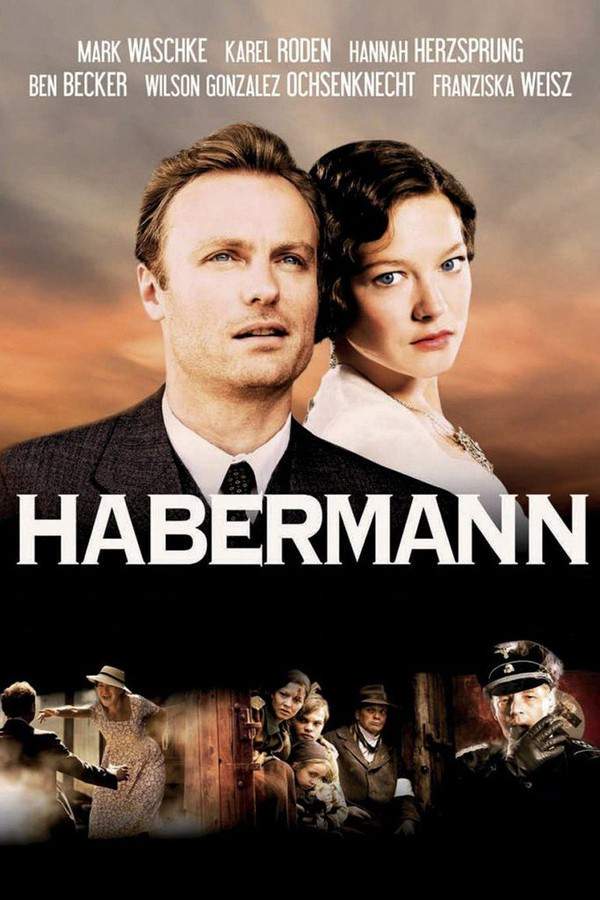
As tensions escalate in 1938's tumultuous Europe, a prosperous mill owner's tranquil existence in the Sudetenland is shattered, his world torn apart by the looming specter of war.


Does Habermann have end credit scenes?
No!
Habermann does not have end credit scenes. You can leave when the credits roll.
Where to Watch Habermann
See current US streaming, rental, and purchase options for Habermann (2011) via JustWatch.








Meet the Full Cast and Actors of Habermann
Explore the complete cast of Habermann, including both lead and supporting actors. Learn who plays each character, discover their past roles and achievements, and find out what makes this ensemble cast stand out in the world of film and television.
No actors found
External Links and Streaming Options
Discover where to watch Habermann online, including streaming platforms, rental options, and official sources. Compare reviews, ratings, and in-depth movie information across sites like IMDb, TMDb, Wikipedia or Rotten Tomatoes.








Ratings and Reviews for Habermann
See how Habermann is rated across major platforms like IMDb, Metacritic, and TMDb. Compare audience scores and critic reviews to understand where Habermann stands among top-rated movies in its genre.

46
Metascore
tbd
User Score


40%
TOMATOMETER

77%
User Score

7.0 /10
IMDb Rating

60
%
User Score
Full Plot Summary and Ending Explained for Habermann
Read the complete plot summary of Habermann, including all major events, twists, and the full ending explained in detail. Explore key characters, themes, hidden meanings, and everything you need to understand the story from beginning to end.
In 1937, a prosperous ethnic German mill owner named August Habermann stands as the moral center of a town called Eglau in the Sudetenland. His mill operates as both a sawmill and a gristmill, and he preserves a pragmatic but hopeful belief that Sudeten Germans and Czechs can coexist peacefully under his roof. He marries a Czech woman, Jana, who later is revealed to be half-Jewish, a detail that quietly colors the family’s fate. August’s closest confidant is Karel Březina, a Czech who embodies a bridge between communities. The two families live with a delicate tolerance until the shadows of war begin to loom.
When the Munich Agreement transfers the Sudetenland to Germany in October 1938, August welcomes the change as a commercial opportunity, hoping it will grant access to the German market for his business. But Karel’s warning rings true: the Czech people become second-class citizens, and the mood in Eglau grows increasingly menacing as the brutal SS officer Kurt Koslowski arrives to enforce a new order. Koslowski’s presence brings a harsh, personal threat to August’s world, as he bullies August into selling flour to a hospital/spa that treats wounded German soldiers at cost, a move that exposes how power can exploit reliance and loyalty.
The tension deepens as August’s younger brother, Hans, who is ardently Nazi, chooses to join the Wehrmacht in 1941 after finishing the Hitler Youth, despite August’s opposition. The war’s harsh arithmetic hardens quickly: in 1943, Koslowski’s men murder Hora, a Czech bookkeeper at the mill, after pamphlets predicting Germany’s defeat begin to circulate. The war’s cruelty touches even the intimate ties of the Habermann household when Hans is badly wounded in 1944, and Jana helps him desert by pulling him off a train, a moment that leaves him torn between duty and survival. Both Jana and August urge him not to return to a conflict they view as madness, but Hans remains haunted by the promise of a cause he once believed in, even as his injuries ground him.
As August and Karel journey along a forest road, tragedy compounds. Masek, Eliška’s son and August’s housekeeper’s child, shoots a German soldier he encounters, forcing Karel to kill another to silence a witness. Koslowski escalates his vendetta by ordering the random execution of twenty Czechs in retaliation. In a desperate bid to save lives, August bribes Koslowski with his family’s precious jewelry, hoping to halt the planned killings. The plan fails when Koslowski breaks his word and executes nine of the chosen Czechs, while sending Jana and her daughter to a concentration camp. The collaborating mayor of Eglau, Hartel, informs Koslowski that Jana’s father was Jewish, a discovery that shatters August’s already fragile sense of safety and belonging.
Broken in spirit, August refuses to heed Karel’s advice to flee the Sudetenland. He clings to a land he has lived in for generations, convinced that his wife and daughter are dead, and that his identity is irreparably wrecked by the moral weight of the era.
With the war ending in May 1945, the region erupts into a lynch mob mentality as the Czech majority turns on the Sudeten Germans. The Czechoslovak Army forces many of them onto trains bound for occupied Germany. Jana and her daughter manage to escape the concentration camp, aided along their journey home by Red Army soldiers advancing into the Sudetenland. In a cruel twist of fate, Eliška seizes the Habermann family safe and tells Masek that his father was Wilhelm Habermann, reframing what was taken as theft into a claim of rightful inheritance. Masek boasts to a vengeful mob led by Hartel that he is a Habermann and now the owner of the mill, prompting the mob to lynch him as a traitor.
The violence reaches its brutal apex when August is killed by the same mob that had pursued the family, his life ending as he is tied to the mill’s water wheel. Jana and her daughter are expelled from the region, and as she is forced onto a train to Bavaria, Karel hands her a piece of jewelry given to her by August on their wedding day, a tangible memory meant to keep August’s memory alive in the face of loss. The film’s epilogue notes a grim historical footnote: in reality, it was Karel Březina who accused mayor Hartel of leading the mob that lynched Hubert Habermann, a matter that went unresolved with no prosecutions.
This deeply human, panoramic drama traces how loyalty, love, and memory collide with the brutal forces of nationalism and war, revealing how ordinary lives are imperceptibly carved by the tides of history. The narrative never shies away from the sorrow and moral ambiguity of its characters, offering a sober meditation on coexistence, complicity, and the enduring ache of a homeland lost to violence.

Coming soon on iOS and Android
The Plot Explained Mobile App
From blockbusters to hidden gems — dive into movie stories anytime, anywhere. Save your favorites, discover plots faster, and never miss a twist again.
Sign up to be the first to know when we launch. Your email stays private — always.
Explore the mobile appDiscover Film Music Concerts Near You – Live Orchestras Performing Iconic Movie Soundtracks
Immerse yourself in the magic of cinema with live orchestral performances of your favorite film scores. From sweeping Hollywood blockbusters and animated classics to epic fantasy soundtracks, our curated listings connect you to upcoming film music events worldwide.
Explore concert film screenings paired with full orchestra concerts, read detailed event information, and secure your tickets for unforgettable evenings celebrating legendary composers like John Williams, Hans Zimmer, and more.


Cars Featured in Habermann
Explore all cars featured in Habermann, including their makes, models, scenes they appear in, and their significance to the plot. A must-read for car enthusiasts and movie buffs alike.
Habermann Themes and Keywords
Discover the central themes, ideas, and keywords that define the movie’s story, tone, and message. Analyze the film’s deeper meanings, genre influences, and recurring concepts.

Unlock the World of Movies with Our Comprehensive Wiki
Dive into our Movie Wiki for in-depth film encyclopedia entries, including cast biographies, production trivia, plot synopses, behind-the-scenes facts, and thematic analyses. Whether you’re researching iconic directors, exploring genre histories, or discovering hidden easter eggs, our expertly curated movie database has everything you need to fuel your cinematic passion.
Similar Movies To Habermann You Should Know About
Browse a curated list of movies similar in genre, tone, characters, or story structure. Discover new titles like the one you're watching, perfect for fans of related plots, vibes, or cinematic styles.






Quick Links: Summary, Cast, Ratings, More

What's After the Movie?
Not sure whether to stay after the credits? Find out!
Check out our other apps:

SAT Sphere
Build confidence for the Digital SAT.

Mori Atlas
Discover wild places worth protecting.

Luntero
Search smarter for a home in Amsterdam.

Plot Explained
Unravel movie endings and hidden clues.

Pokechamp
Dive into Pokémon data and battle logic.

Driving Theory
Get ready for your European theory test.

Movie Dust
Plan your next cinema trip with ease.

Musemap
Find art and culture as you travel.

Selkobase
Compare credentials before committing.

Local Manual
Turn an unfamiliar country into practical next steps.

Lernavi
Compare school systems before your next move.

GymRoam
Find a workout stop wherever your plans take you.
Explore Our Movie Platform
New Movie Releases (2026)
Famous Movie Actors
Top Film Production Studios
Movie Plot Summaries & Endings
Major Movie Awards & Winners
Best Concert Films & Music Documentaries
Movie Collections and Curated Lists
© 2026 What's After the Movie. All rights reserved.
Privacy Policy