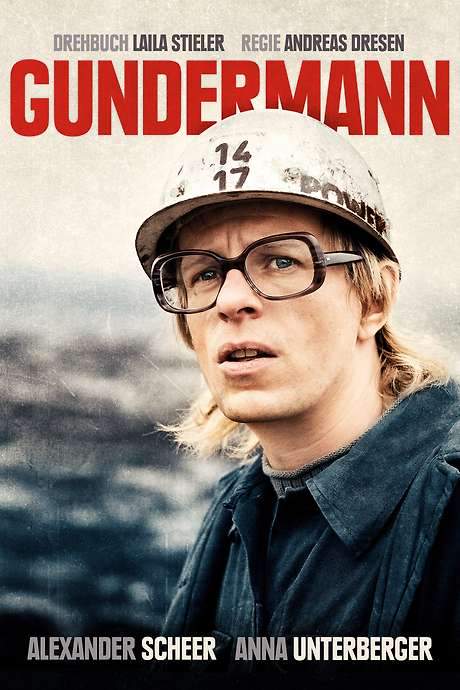
What Is Gundermann About?
The premise of Gundermann in 302 words, with nothing given away. The full story follows below.
In the waning years of a divided Germany, a world of coal dust, cold steel and restless melody collides with the rigid expectations of a socialist state. Amid the sprawling mines and the muted hum of a bucket‑wheel excavator, the everyday grind becomes a backdrop for a quieter, more defiant art. The film paints a landscape where the stark industrial reality of the East German countryside is tinged with an undercurrent of yearning, capturing both the oppressive weight of bureaucracy and the fleeting beauty that can still be found in a sunrise over a slag heap.
At the heart of this tapestry walks Gerhard Gundermann, a miner‑turned‑songwriter whose voice rises from the depths of his labor. A committed communist with a fierce independence, he channels the contradictions of his world into music that celebrates nature while his own work tears it apart. His songs echo the hopes and frustrations of his fellow workers, and his charisma draws a small, loyal band of collaborators who share his desire to turn grit into poetry.
His personal life unfolds alongside his public one, marked by a partnership with his wife, Conny, whose presence grounds him even as his touring schedule and artistic drive strain domestic rhythms. Beneath the surface of his relationships lies a lingering, uneasy connection to the secret police that once recruited him, a fact that casts a quiet, persistent tension over every interaction. The film moves with a contemplative, almost lyrical tone, allowing the audience to feel the pull between duty and desire, conformity and rebellion.
The story invites viewers to contemplate how a man can be both a product and a critic of his era, how music can become both an escape and a confession, and how the shadows of history linger long after the walls that created them have crumbled.
What Happens in Gundermann?
The complete story of Gundermann, from the first scene to the last, in 529 words (about 2 minutes). Spoilers throughout. Names in the text link to 2 cast member pages.
Spoilers ahead
Beginning in 1992 with the unmasking of Gerhard Gundermann Alexander Scheer as a former unofficial collaborator of the East German security service Stasi, the film offers a careful look at selected episodes from the life of the singer-songwriter and excavator operator. The narrative unfolds through moments that illuminate his public and private roles, painting a portrait of a man pulled between art, work, and ideology.
As the story moves, we see Gundermann entangled in the politics of the GDR and quietly forming a life with his partner, his wife Conny Anna Unterberger. Cutbacks and compromises ripple through his world, and his father’s decisive break with him marks a turning point that weighs heavily on Gundermann’s sense of belonging. The film does not shy away from the contradictions that define his life: he draws creative fire from the landscapes he works to mine, using a bucket-wheel excavator to uncover coal even as his songs celebrate the beauty of nature that this very labor threatens to erase.
Though he is portrayed as a committed communist, Gundermann’s directness and willfulness clash with the era’s pressure to conform, ultimately leading to his exclusion from the Socialist Unity Party of Germany (SED). In a bid to affect real change for his fellow workers, he becomes an unofficial collaborator—an IM—with the hope of improving working conditions and safety measures on the job. The film makes clear that his motives are complex: not merely self-preservation, but a belief that practical reforms could align his political ideals with lived reality.
The collapse of the GDR becomes a harsh mirror, forcing Gundermann to confront the harm that his choices may have caused. He discovers that he, too, was surveilled by friends and acquaintances, and that his Stasi file—sometimes referred to in German as a Täterakte—has vanished from the Stasi Records Agency. In a pivotal interview, he refuses the easy, formulaic apology that many former IMs offer, choosing instead to acknowledge the weight of his past. He reaches out to several of his colleagues and bandmates, confessing his past involvement with the Stasi and opening the door to difficult, but necessary, conversations.
As life goes on, Gundermann becomes a father, and his wife expects a new balance: less time on the road and more time at home. He pledges change and follows through, aiming to repair trust and rebuild relationships. The emotional center of the film rests on his willingness to own up to his history, a move that softens hard lines between creator and audience, performer and friend.
In the end, the resonance of Gundermann’s confession finds its audience and his bandmates ready to listen. The film culminates in a fragile but honest reconciliation with both his music and the people who helped shape it, suggesting that truth, even when painful, can serve as a path back to community. Throughout, the atmosphere remains grounded in the tension between artistry and industry, conviction and consequence, memory and consequence, offering a portrait that is at once intimate and political.
The result is a nuanced, deeply human portrayal that invites viewers to reflect on the costs—and the courage—of living with one’s past while still searching for a future that feels true.
Gundermann Timeline: Every Key Event in Order
12 key events in the order they happen, from “Gundermann's Stasi unmasking” to “Legacy and memory”. 12 events name a place, across 3 locations.
- 1
Gundermann's Stasi unmasking
The film opens with the 1992 revelation that Gerhard Gundermann was an unofficial collaborator of the Stasi. This unmasking frames the narrative and signals the moral complexity of his life. Viewers understand that his public persona will be tested by a painful past.
When:1992 Where:Germany
- 2
Early political involvement and meeting Conny
Earlier episodes show Gundermann engaging in GDR politics and meeting his wife Conny. These moments reveal how personal relationships intersect with ideological commitments. They set up the tension between his artistic ambitions and the demands of his political world.
When:1980s Where:GDR
- 3
Family fracture
His father breaks ties with him after the cutbacks and political choices, creating a painful family rift. The act underlines how private loyalties are strained by public pressures. This moment foreshadows the heavy costs of his path.
When:1980s Where:GDR
- 4
Art in a mining world
Gundermann finds inspiration for his music while operating the bucket-wheel excavator that digs coal. His songs celebrate nature even as his work destroys it, creating a poignant contradiction. This tension between craft and conscience remains central to his life.
When:1980s–1990s Where:GDR coal mining region
- 5
Becoming an IM to help workers
He takes on unofficial collaboration in the hope of improving working conditions and safety for his fellow workers. The move is framed as pragmatic rather than purely political. It complicates his image as a committed communist.
When:late 1980s Where:GDR
- 6
Conformism vs. candor
His directness and willfulness clash with the conformism of the GDR, leading to his exclusion from the Socialist Unity Party. This isolation pushes him further into the margins of the system he supports. It marks a turning point in how he is perceived by others.
When:late 1980s Where:GDR
- 7
Collapse and personal reckoning
With the collapse of the GDR, Gundermann comes to see how his past actions could have harmed others. He learns that he was spied on by friends and acquaintances, turning suspicion inward. His Stasi file, oddly, has disappeared from the Stasi Records Agency, leaving questions about memory and accountability.
When:1990s Where:Germany
- 8
A difficult, honest refusal
In an interview after reunification, he refuses to apologize in the customary formulaic way. He explains that reading his reports makes forgiveness feel like an evasion of truth. He argues that he must bear the weight of his actions rather than offer a hollow apology.
When:1990s Where:Germany
- 9
Confession to colleagues and band
He reaches out to several colleagues and band members, confessing that he was once an IM. This confession reframes his relationships and invites others to reckon with the past alongside him. It marks a shift from secrecy to accountability.
When:1990s Where:Germany
- 10
Family life and promises
Gundermann becomes a father, and his wife expects him to spend less time on tour and more at home. He promises to improve and balance his musical life with family responsibilities. The personal stakes add urgency to his public confession.
When:1990s Where:Germany
- 11
Reconciliation with band and audience
He reconciles with his band members and the audience after his genuine confession about his ties to the Stasi. The reconciliation suggests a possible peace between art, memory, and truth. It closes his arc with a sense of earned understanding rather than simple vindication.
When:Late 1990s Where:Germany
- 12
Legacy and memory
The film ends with a nuanced reflection on legacy, guilt, and memory as Gundermann continues his work with a more complex self-awareness. He remains an artist who cannot escape the past, yet seeks honesty with his peers and fans. The conclusion emphasizes how truth-telling can heal relationships, even if it cannot erase history.
When:Late 1990s–present Where:Germany
Who Are the Main Characters in Gundermann?
6 characters, among them Gerhard Gundermann (Alexander Scheer), Conny (Anna Unterberger) and Volker (Milan Peschel): who each one is and the part they play in the story. Every profile links to the actor’s page.
-

Gerhard Gundermann (Alexander Scheer)
Played by Alexander Scheer
A singer-songwriter and bucket-wheel excavator operator whose life is marked by contradictions. He is a committed communist whose directness clashes with conformity in the GDR, eventually becoming an unofficial Stasi collaborator to try to improve working conditions. The revelation of his past and his ultimate confession drive the emotional arc of the film as he tries to reconcile with his band, friends, and family.
- 🎭 Complex
- 🧭 Conflicted
- 🎶 Musician
-

Conny (Anna Unterberger)
Played by Anna Unterberger
Gundermann's wife, whose patience and expectations anchor the personal side of his life. She hopes he spends less time on tour and more time with family, creating a tension between artistic ambition and domestic duty. Her perspective highlights the human costs of Gundermann's public life.
- 💑 Partner
- 🧭 Family
- 🎶 Supportive
-

Volker (Milan Peschel)
Played by Milan Peschel
A fellow musician and member of Gundermann's band, representing the creative circle that grounds him. Volker embodies loyalty and the camaraderie of artists navigating political pressures and personal ambitions. His interactions illuminate the collaborative nature of Gundermann's music and the compromises musicians face under a surveillance regime.
- 🎸 Band
- 👥 Friend
-

Parteisekretär (Bjarne Mädel)
Played by Bjarne Mädel
A party secretary who embodies the conformist pressures of the SED era. He represents the state's expectations and the tightrope walked by individuals like Gundermann who balance ideology with personal and professional survival. His presence underscores the political obstacles to authentic expression.
- 🏛️ Official
- 🧭 Conformity
- T(
Tagebauleiter (Alexander Schubert)
Played by Alexander Schubert
The open-cast mining site manager who personifies the industrial hierarchy and the demands of cranking production. His interactions with workers reflect the tensions between labor needs, safety, and authority within the mining community. He serves as a backdrop to Gundermann's dual life as worker and artist.
- 🏭 Manager
- 🛠️ Authority
- V(
Veteran (Peter Sodann)
Played by Peter Sodann
An elder worker whose experience anchors the film's memory of the labor movement. He observes the changing dynamics within the mining town and offers a perspective on loyalty, sacrifice, and the passage of an era. His presence reinforces the film's meditation on legacy and communal memory.
- 🕰️ Veteran
- 🧭 Memory
Where and When Is Gundermann Set?
Gundermann is set in East Germany and coal mining region (1990s). Here is why the time and place matter to the story.
When
1990s
The narrative spans the post-reunification era, beginning with the 1992 unmasking of Gundermann’s Stasi past and continuing through the turbulent years that followed. It highlights a Germany transitioning from the GDR era to a new political order, where memories of the old system clash with new freedoms. The time frame emphasizes personal reckonings as society redefines loyalty, truth, and forgiveness.
Where
East Germany, coal mining region
The story unfolds in the East German coal mining milieu, where a bucket-wheel excavator shapes both the landscape and the lives of workers. It situates Gundermann within a working-class town tied to the mines, showing how industry and culture collide. The setting highlights the daily reality of labor, political pressure, and the struggle to maintain personal integrity in a surveillance state.
- ❗️ Historical
- ⛏️ Mining
- 🧭 Biographical
What Are the Themes of Gundermann?
3 ideas the story keeps returning to, among them Guilt, Art and Politics and Legacy.
-
01
Guilt
Gundermann's past as an unofficial Stasi collaborator weighs on his conscience and his relationships. The film traces how this guilt shapes his choices, from political maneuvering to his personal life. His confession becomes a catalyst for accountability and a chance at reconciliation with friends and colleagues.
-
02
Art and Politics
The music Gundermann creates is inseparable from his labor and his era's politics. The film shows how songs can express longing and truth while navigating state censorship and expectations of conformity. The tension between artistic freedom and social duty drives his career and relationships, revealing how art can illuminate reality even within a constraining system.
-
03
Legacy
Memory and reputation loom large as Gundermann confronts a past partially shared with his peers. The missing Stasi file raises questions of accountability, while his public confession reshapes how he is remembered. The film examines forgiveness, belonging, and how a complicated life can still be redeemed through honesty.
What Kind of Film Is Gundermann?
Melancholic in tone, with steady pacing and a moderate story, going by the plot summary.
- Tone
- Melancholic
- Pacing
- Steady
- Story
- Moderate
- Intensity
- Medium
- Ending
- Bittersweet
A heavy, melancholic character study of a conflicted artist grappling with political betrayal and moral compromise within the oppressive system of East Germany.
- melancholic
- introspective
- conflicted
- reflective
- oppressive
- resigned
- political betrayal
- artistic expression
- grief and loss
- moral conflict
Content notes: political oppression, psychological manipulation, betrayal.
Quiz
How well do you remember Gundermann? Test yourself on the story.