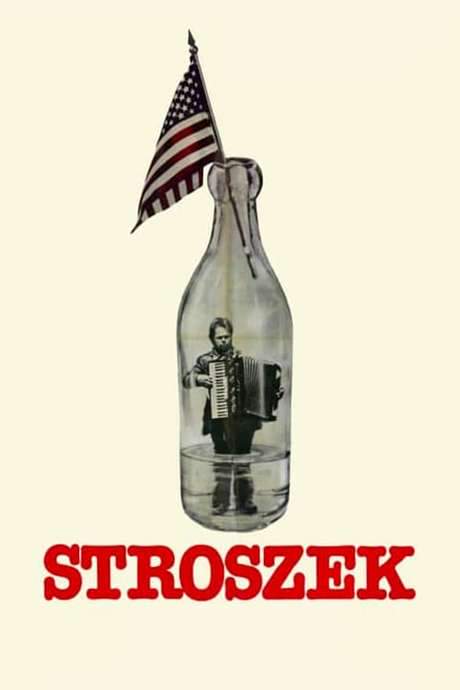
Stroszek 1977


Directed by

Werner Herzog
Made by

Werner Herzog Filmproduktion
Where to Watch Stroszek
See current US streaming, rental, and purchase options for Stroszek (1977) via JustWatch.

Cineverse Amazon Channel
HD
Fandor Amazon Channel
HD
Philo
HD
Shout! Factory Amazon Channel
HD
Kanopy
HD
Cineverse
HD
Plex
HD
Plex Channel
HD
Shout! Factory TV
HD
The Roku Channel
HD
Tubi TV
SD
Amazon Video
HD
Apple TV Store
HD
Google Play Movies
SD
YouTube
SD Streaming availability powered by 
Stroszek Plot Summary
Read the complete plot summary and ending explained for Stroszek (1977). From turning points to emotional moments, uncover what really happened and why it matters.
Bruno Stroszek is a West Berlin street performer who, freshly released from prison and warned to curb his drinking, heads to a familiar bar where he meets Eva, a prostitute down on her luck, and invites her to stay with him in the apartment his landlord kept for him. They are harried and beaten by Eva’s former pimps, who insult Bruno, pull his accordion apart, and humiliate him by making him kneel on his grand piano with bells balanced on his back. Facing the prospect of further harassment, Bruno and Eva decide to leave Germany and accompany Bruno’s eccentric elderly neighbour Scheitz, who was planning to move to Wisconsin to live with his American nephew Clayton Szalpinski.
After sightseeing in New York City, they buy a used car and arrive in a winter-bound, barren prairie near the town of Railroad Flats. There Bruno works as a mechanic with Clayton Szalpinski and his assistant, while Eva works as a waitress at a truck stop and Scheitz pursues his interest in animal magnetism. Eva and Bruno buy a mobile home sited on Clayton’s land; with bills mounting, the bank threatens to repossess it. Eva returns to prostitution to supplement her wages, but it is not enough to meet the payments. She tires of Bruno’s worrying and leaves him, accepting a ride with truck drivers bound for Vancouver.
A collection agent visits Bruno, who is now drinking heavily, and has him release the home for auction. Scheitz believes there is a conspiracy against them and sets off with Stroszek to confront it. They try to rob the bank in town, find it closed, and hold up the barber shop beneath it instead. With the $32 stolen they go grocery shopping across the street. The police arrive and arrest Scheitz without noticing Bruno. Holding a large frozen turkey and a shotgun, Bruno returns to the garage where he works, loads the tow truck with beer, and drives along a highway into the mountains.
The truck breaks down in a small mountain town and Bruno pulls over to a restaurant, where he tells his story to a German-speaking businessman. He then starts the truck and leaves it circling in the parking lot with a fire taking hold in the engine compartment. He enters a roadside attraction across the street and activates the coin-operated animal exhibits, then switches on a chairlift and rides it with his frozen turkey. After completing a trip up and down the mountainside, he passes out of view and a shot is heard. The police arrive at the scene to find the truck fully ablaze, Bruno’s body still on the chairlift, and animals performing nonstop. The film ends with footage of a dancing chicken and other animals.
Stroszek Timeline
Follow the complete movie timeline of Stroszek (1977) with every major event in chronological order. Great for understanding complex plots and story progression.
Bruno is released and humiliated
Bruno Stroszek is released from prison in West Berlin, and a warning to curb his drinking follows him. He goes to a familiar bar where he meets Eva, a down-on-her-luck prostitute, and invites her to stay in the apartment his landlord kept for him. Their fragile companionship is shattered when Eva's former pimps ambush them, insult Bruno, tear his accordion apart, and force him to kneel on his grand piano with bells balanced on his back.
Escape plan and move toward Wisconsin
Facing further harassment, Bruno and Eva decide to leave Germany and accompany their eccentric neighbor Scheitz, who plans to move to Wisconsin to live with his American nephew Clayton. The trio departs West Berlin and travels by road, with Scheitz providing eccentric humor along the way. After a stop for sightseeing in New York City, they buy a used car and press on toward the Midwest.
New York City sightseeing en route
The trio stops in New York City for sightseeing as part of their cross-country dash toward the Midwest. They soak in the urban atmosphere and seize some freedoms that feel almost comic after their Berlin constraints. After the city visit, they purchase a used car to continue the journey.
Arrival at Railroad Flats and new life begins
They arrive in a winter-bound, barren prairie near the town of Railroad Flats. Bruno starts work as a mechanic for Clayton and his assistant, while Eva finds work as a waitress at a truck stop. Scheitz pursues his odd interest in animal magnetism, adding another layer of eccentricity to their struggling household.
Mobile home and escalating debt
With mounting bills, Bruno and Eva buy a mobile home and set it on Clayton's land in the hope of stability. The bank threatens to repossess the home, tightening the noose around their finances. Eva returns to prostitution to supplement her wages, and she eventually leaves Bruno for a ride with truckers bound for Vancouver.
Debt collectors and creeping paranoia
A collection agent visits Bruno, who has fallen into heavy drinking, and he is forced to release the home for auction. Scheitz grows convinced that a conspiracy is against them, and the two decide to confront it directly, despite their wavering nerves. The escalating tension pushes them further toward reckless decisions.
Confronting the supposed conspiracy
Scheitz and Bruno set out to confront the alleged forces working against them, planning a bold, if misguided, strike. They move through the town as their plan escalates from frustration to reckless action, dragging Bruno deeper into despair. The mood shifts from grim determination to dark, almost absurd inevitability.
Bank and barber shop caper
They attempt to rob the bank, but it is closed, so they improvise by holding up the barber shop beneath it instead. With a few dollars taken, they head across the street for groceries. The police arrive, arrest Scheitz, and Bruno remains unseen, slipping away during the chaos.
Return to the garage and surge toward the mountains
Bruno returns to the garage where he works, loading the tow truck with beer and driving off along a highway toward the mountains. He clutches a frozen turkey and a shotgun as he heads into the unknown, appearing to seek some final freedom or escape. The night closes in around him as the landscape blurs into memory.
Restaurant confession and engine fire
Bruno pulls over in a mountain town and tells a German-speaking businessman at a restaurant the story of his life. He restarts the truck and leaves it idling as a fire starts in the engine compartment. He then moves across the street to a roadside attraction and activates the coin-operated animal exhibits.
Chairlift ride with the frozen turkey
Bruno switches on a chairlift and rides it with his frozen turkey, looping up and down the mountainside as the truck burns in the distance. He disappears from view after the ride, leaving the fate of his body uncertain. The sequence blends revelry with looming catastrophe.
Final catastrophe and aftermath
Police arrive to find the truck fully ablaze, with Bruno's body still on the chairlift and animals performing nonstop in the roadside attraction. The film ends with footage of a dancing chicken and other animals, leaving Bruno’s fate as a haunting, absurd capstone to his life.
Stroszek Characters
Explore all characters from Stroszek (1977). Get detailed profiles with their roles, arcs, and key relationships explained.
Bruno Stroszek (Bruno S.)
A West Berlin street performer recently released from prison, Bruno is hopeful, stubborn, and prone to relying on luck. His charisma masks a deteriorating situation as he pursues companionship and a better life. His stubborn optimism propels the plan to leave Germany and settle in the Midwest, even as circumstances escalate toward tragedy.
Eva (Eva Mattes)
A prostitute down on her luck who befriends Bruno and moves in with him. Eva's resilience keeps her surviving through precarious work, yet her relationship with Bruno strains under mounting debt and eviction threats. She ultimately leaves Bruno to pursue a road to Vancouver.
Scheitz
An eccentric, elderly neighbor who accompanies Bruno on his ill-fated move to America. He pursues an interest in animal magnetism and suspects conspiracies around their plans. His odd beliefs add a surreal layer to the group's attempts to escape their circumstances.
Clayton (Clayton Szalpinski)
Bruno's American nephew who offers a place to stay and work on his land. Clayton works as a mechanic in the wintery prairie setting, providing a sense of purpose and a path to stability, though the world remains entangled in financial stress and independence.
Mechanic's Assistant (Ely Rodriguez)
Clayton's assistant who aids in the mechanical work on the prairie site. The helper contributes to the resilience of the small operation, though their role remains secondary to the central conflict and Bruno's unfolding fate.
Stroszek Settings
Learn where and when Stroszek (1977) takes place. Explore the film’s settings, era, and how they shape the narrative.
Time period
Late 1970s
The narrative unfolds in the late 1970s, a period marked by economic strain and social shifts in both Europe and America. It juxtaposes the lingering postwar ambiance of West Berlin with the stark, bureaucratic Midwest. The era informs the characters' precarious livelihoods and the fragility of their aspirations.
Location
West Berlin, New York City, Railroad Flats, Wisconsin
Bruno and Eva's story starts in West Berlin before moving to New York City, then onward to a barren prairie near Railroad Flats, Wisconsin. The film shifts between crowded urban spaces and desolate rural landscapes to emphasize dream and deprivation. These locations frame the characters' attempts to escape poverty while exposing the harsh realities of their world.
Stroszek Themes
Discover the main themes in Stroszek (1977). Analyze the deeper meanings, emotional layers, and social commentary behind the film.
💔
Poverty
The story centers on economic precarity, where Bruno and Eva chase stability through precarious means. Prostitution, debt, and the threat of repossession reveal how vulnerability narrows choices and erodes dignity. The film highlights exploitation and the merciless nature of a system that offers little safety nets. Survival becomes a constant negotiation under financial pressure.
🗽
American Dream
The couple's move to America is framed as a quest for a brighter future, a hope that quickly collides with cold reality. They invest in a mobile home and independence, only to face mounting bills and looming loss. The film critiques the ideal of the American Dream by showing its fragility and conditional access. Disillusionment grows as expectations are thwarted by structural barriers.
🌌
Isolation
Isolation permeates the film, from Bruno's solitary ambitions to Eva's reliance on precarious work. The barren landscapes and sparse dialogue intensify the sense of loneliness. Bruno's final act—driving into the mountains, surrounded by animals in a doomed spectacle—cements the theme of inescapable solitude. The environment itself becomes a mirror for inner emptiness.

Coming soon on iOS and Android
The Plot Explained Mobile App
From blockbusters to hidden gems — dive into movie stories anytime, anywhere. Save your favorites, discover plots faster, and never miss a twist again.
Sign up to be the first to know when we launch. Your email stays private — always.
Explore the mobile appStroszek Spoiler-Free Summary
Discover the spoiler-free summary of Stroszek (1977). Get a concise overview without any spoilers.
In the gritty outskirts of West Berlin, a freshly released prisoner tries to stitch together a life that feels as fragile as the glockenspiel he carries. Bruno Stroszek drifts through dim bars and rain‑slick streets, his evenings filled with the melancholy notes of an accordion, a modest talent that offers little more than a temporary distraction from his past and an ever‑present admonition to curb his drinking. The city’s cold, bureaucratic edge presses against his modest ambitions, leaving him with just enough hope to keep moving forward.
A chance encounter in a familiar haunt introduces Eva, a weary prostitute whose own survival hinges on small, desperate choices. Their connection forms a quiet partnership, each seeing in the other a rare chance for companionship amid the harshness of their surroundings. Adding to the trio is Scheitz, an eccentric elderly neighbor whose odd habits and philosophical musings hint at a world beyond the ordinary, and whose own plans for a fresh start spark the idea of a collective escape.
Together they set their sights on an unlikely destination: the wide‑open, snow‑covered plains of Wisconsin. The promise of the American Midwest—its barren prairies, modest towns, and the notion of land ownership—offers a stark contrast to the cramped alleys of Berlin. As they embark on this transatlantic venture, the film balances a bleak yet oddly hopeful tone, blending stark realism with moments of absurdity. The characters carry their flaws and fragile dreams across the ocean, confronting an unfamiliar landscape that is both a blank page and an unknown challenge, leaving the audience to wonder how their fragile bonds will endure in this new, silent world.
Movies with Similar Twists and Themes
Uncover films that echo the narrative beats, emotional arcs, or dramatic twists of the one you're exploring. These recommendations are handpicked based on story depth, thematic resonance, and spoiler-worthy moments — perfect for fans who crave more of the same intrigue.
Featured on this page

What's After the Movie?
Not sure whether to stay after the credits? Find out!
Check out our other apps:

SAT Sphere
Build confidence for the Digital SAT.

Mori Atlas
Discover wild places worth protecting.

Luntero
Search smarter for a home in Amsterdam.

Plot Explained
Unravel movie endings and hidden clues.

Pokechamp
Dive into Pokémon data and battle logic.

Driving Theory
Get ready for your European theory test.

Movie Dust
Plan your next cinema trip with ease.

Musemap
Find art and culture as you travel.

Selkobase
Compare credentials before committing.

Local Manual
Turn an unfamiliar country into practical next steps.

Lernavi
Compare school systems before your next move.

GymRoam
Find a workout stop wherever your plans take you.
Explore Our Movie Platform
New Movie Releases (2026)
Famous Movie Actors
Top Film Production Studios
Movie Plot Summaries & Endings
Major Movie Awards & Winners
Best Concert Films & Music Documentaries
Movie Collections and Curated Lists
© 2026 What's After the Movie. All rights reserved.
Privacy Policy