What Is Werckmeister Harmonies About?
The premise of Werckmeister Harmonies in 355 words, with nothing given away. The full story follows below.
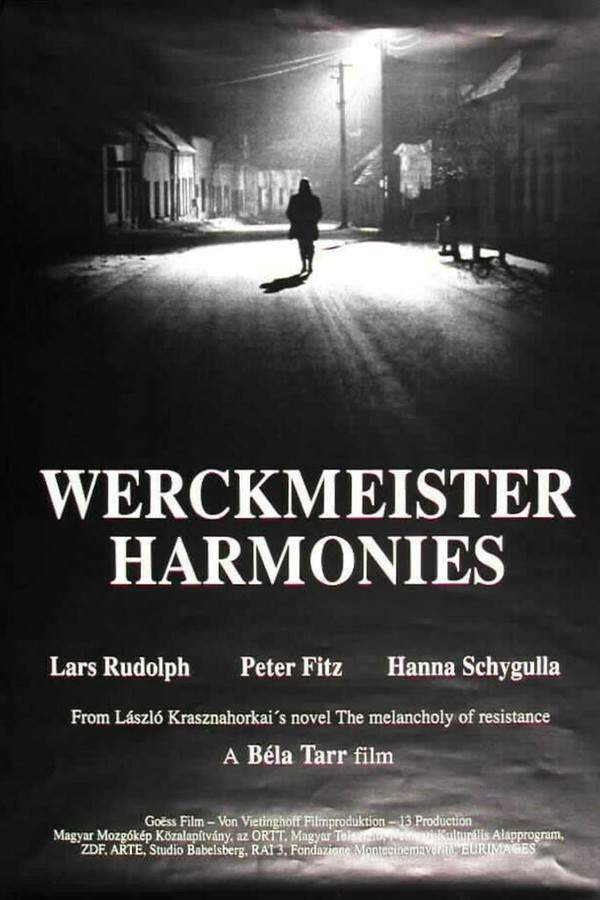
In a stark, snow‑cloaked Hungarian village, the ordinary rhythms of daily life are suddenly punctuated by the arrival of a travelling circus that seems to have drifted in from another world. Its most striking feature—a massive, preserved whale displayed in the town square—casts an eerie shadow, while whispers about a reclusive performer known only as “the Prince” drift through the streets. The atmosphere is thick with anticipation and a quiet dread, as the strange spectacle awakens the unspoken longings and anxieties that linger beneath the surface of the community.
At the heart of this fragile setting is János Valuska, a young newspaper delivery man whose restless curiosity makes him an unlikely observer of the town’s shifting mood. He is closely tied to his mentor‑like uncle, György Eszter, a composer and musicologist obsessively studying the imperfections of the musical scale. Their relationship is a blend of paternal warmth and intellectual sparring, grounded in György’s quiet belief that harmony—whether in music or society—can be retuned. Around them, figures such as György’s estranged wife Tünde and the local police chief hint at the complex web of personal and civic obligations that bind the villagers together.
The film moves with a languid, almost painterly pace, allowing the stark winter landscape and the circus’s surreal fixtures to soak into the viewer’s senses. Light and shadow play across cracked façades, and the muted sounds of daily labor are punctuated by the distant hum of the circus, creating a palpable tension between the ordinary and the uncanny. The villagers, each harboring hidden hopes and fears, begin to sense that the arrival of the whale and the enigmatic Prince may be more than mere entertainment—it feels like a catalyst that could unravel the fragile equilibrium of their world.
As the circus settles into the town, the interplay between György’s theoretical musings, János’s quiet observations, and the collective unease of the community sets the stage for a meditation on desire, power, and the fragile nature of order. The mood remains one of solemn beauty tinged with uncertainty, inviting the audience to wonder what will rise from the silence that follows the circus’s enigmatic arrival.
What Happens in Werckmeister Harmonies?
The complete story of Werckmeister Harmonies, from the first scene to the last, in 581 words (about 3 minutes). Spoilers throughout.
Spoilers ahead
In a bleak, unnamed town in Hungary during a harsh winter, János Valuska, a young newspaper delivery man, captivates a group of drunken patrons by performing about a total eclipse of the sun, which momentarily disrupts and then quiets the local animals. This unique act concludes with the much-anticipated return of the warm sunlight.
János shares a close bond with his ‘uncle,’ György Eszter, a composer and musicologist who plays a paternal role in his life. György meticulously documents his thoughts on the imperfections of the musical scale, inspired by Werckmeister’s theories, and suggests revisions to harmonize music more organically.
One day, János visits the post office to collect his newspapers. The employees there express worry about impending troubles as they sense the “circus” is nearing—a traveling show known for leaving tension in its wake. A peculiar circus arrives at night, showcasing a massive, stuffed whale and its elusive star performer, known only as “The Prince.” János contemplates profound ideas about existence while observing the circus’s surreal arrival.
Meanwhile, György’s estranged wife, Tünde, exploits her social standing, pressuring György to spearhead the “Clean Up the Town movement,” backed by the local police chief. She threatens to move back in with him if he refuses, sending her suitcase ahead with János as a messenger. Caught in turmoil, György’s brother, Uncle Lajos, disseminates Tünde’s demands to a disgruntled crowd in the town square, fueling their anger over declining public services. Faced with a thug outside the circus, János begins to feel the oppressive atmosphere tightening around him. Tünde, in an alarming partnership, spends time with the intoxicated police chief.
As tensions mount, the arrival of the whale and “The Prince” incite chaos among the townsfolk. János overhears a panic-stricken circus master struggling to control his mute Prince, now revealing revolutionary sentiments through a translator, igniting the mob’s fervor. The rioting crowd, armed with crude weapons, invades a hospital where they brutalize defenseless patients, only to cease when confronted by the reality of their own despair reflected in an old, vulnerable man.
After the tumult, János discovers a diary belonging to a rioter that conveys their confusion and aimless fury towards their reality. The tragic tale takes a darker turn as it discusses the horrors inflicted upon two young women. On his way home, János witnesses Tünde clandestinely meeting with a military official, leading to their departure aboard a military vehicle, accompanied by armed forces.
János soon learns of Lajos’ death amid the riots and is warned by Lajos’s wife to flee, as he is now a target. He escapes toward the railway tracks but is snatched up by a helicopter. This startling turn of events lands him in a mental institution, a chilling reminder of the era’s political repression. During a visit, György attempts to share the aftermath of the chaos with János, who remains unresponsive, gazing into an empty void. György reveals his struggles—having been forced out of their home while Tünde, now aligned with the authorities, occupies their former residence. He mentions his plan for a simpler life in a shed with János if they are reunited, albeit with a re-tuned piano symbolizing resignation to their plight.
The film reaches its somber conclusion with György silently traversing the town square. He gazes into the haunting sight of the abandoned whale, now a symbol of lost hope, before looking back one last time at the desolate remnants of the circus, enveloped by creeping fog, leaving an indelible impression of sorrow and decay.
Werckmeister Harmonies Timeline: Every Key Event in Order
15 key events in the order they happen, from “The Solar Eclipse Performance” to “A Somber Farewell”. 10 events name a place, across 7 locations.
- 1
The Solar Eclipse Performance
In a stark winter setting, János Valuska, a young newspaper delivery man, captivates a rowdy crowd of drunken patrons. He performs a dramatic act about a total eclipse of the sun, which momentarily disrupts the animals of the town, culminating in a powerful return of sunlight that brings brief warmth to the bleak surroundings.
When:Winter Where:Unnamed Town, Hungary
- 2
Bond with Uncle György
János shares a special bond with György Eszter, his uncle, who assumes a paternal role in his life. György, a thoughtful composer and musicologist, passionately documents his musings on the flaws of the musical scale, drawing upon Werckmeister's theories to suggest more organic ways to harmonize music.
- 3
Whispers of Trouble
During a routine visit to the post office to collect his newspapers, János overhears the worried employees discussing the looming arrival of a traveling circus. They express their fears that the circus's presence often stirs up tension and unrest within the community, foreshadowing the chaos to come.
Where:Post Office
- 4
Arrival of the Circus
That night, the peculiar circus arrives in the town, introducing a massive, lifelike stuffed whale and a mysterious star performer known only as 'The Prince.' János watches the surreal happenings unfold, contemplating deep philosophical questions about existence as the townspeople become increasingly captivated and agitated.
When:Night Where:Circus
- 5
Tünde's Manipulation
György's estranged wife, Tünde, aggressively manipulates her social status to convince him to lead the 'Clean Up the Town' movement. She threatens to move back in with him if he refuses, sending her suitcase ahead with János as a messenger, further complicating the already strained family dynamics.
- 6
The Town Square Outcry
György's brother, Uncle Lajos, takes it upon himself to communicate Tünde’s demands to a growingly agitated crowd in the town square. His efforts inflame their anger over declining public services, setting the stage for the mounting unrest among the townsfolk.
Where:Town Square
- 7
Tension at the Circus
As János experiences the oppressive atmosphere tightening around him, he encounters a thug outside the circus, heightening his sense of danger. Meanwhile, Tünde is seen forging a troubling alliance with the intoxicated police chief, further entwining her fate with the town's turmoil.
Where:Circus
- 8
Riot Breaks Out
The circus's arrival, especially the spectacle of the whale and 'The Prince,' ignites a chaotic riot among the townsfolk. János overhears the panicked circus master struggling to manage the mute Prince, who conveys rebellious ideas through a translator, escalating the crowd’s fervor and sense of mob mentality.
Where:Circus
- 9
Hospital Invasion
Amid the riots, the frenzied crowd breaks into a local hospital, where they brutally attack defenseless patients. The violence halts only when the crowd is confronted by a haunting reminder of their despair—the sight of an old, vulnerable man, forcing them to reckon with the consequences of their actions.
Where:Hospital
- 10
Discovery of the Diary
After the chaos subsides, János finds a diary belonging to one of the rioters, revealing their confusion and unresolved anger towards the bleak reality of their lives. The diary includes tragic accounts of the horrors faced by two young women, deepening the sense of despair pervading the town.
Show the other 5 events of Werckmeister Harmonies Hide the last 5 events
- 11
Tünde's Treachery
János witnesses a secretive encounter between Tünde and a military official, culminating in their departure in a military vehicle along with armed forces. This shocking display highlights Tünde's alignment with authority and her betrayal of György.
- 12
Lajos's Death
János learns of the tragic death of Uncle Lajos amidst the chaos of the riots. He receives a warning from Lajos's wife to flee for his life, affirming his new status as a target in the town’s growing conflict, forced to navigate a perilous situation.
- 13
Abduction by Helicopter
In a shocking twist, János escapes towards the railway tracks but is suddenly snatched up by a helicopter. This unexpected turn leads him into the confines of a mental institution, symbolizing the oppressive nature of the political climate during this period.
Where:Railway Tracks
- 14
György's Visit
During a visit to the mental institution, György attempts to communicate the remnants of the chaos with János. However, János remains unresponsive, staring blankly into the void, highlighting the emotional and psychological toll of their harrowing experiences.
Where:Mental Institution
- 15
A Somber Farewell
The film concludes with György silently walking through the desolate town square, reflecting on the haunting presence of the abandoned whale. As he gazes back at the remnants of the circus shrouded in fog, it serves as a poignant symbol of lost hope and the overwhelming sorrow enveloping their lives.
Where:Town Square
Who Are the Main Characters in Werckmeister Harmonies?
3 characters, among them János Valuska, György Eszter and Tünde: who each one is and the part they play in the story. 1 of them link to the actor’s page.
- JV
János Valuska
János is a young newspaper delivery man with a deep sense of wonder and curiosity. He has a close bond with his 'uncle' György, whom he admires for his intellectual pursuits. Throughout the film, János navigates the despair around him, ultimately finding himself ensnared in the societal unrest that plagues his town.
- 📰 Delivery
- 🤔 Philosophical
-
György Eszter
Played by Lars Rudolph
György, a composer and musicologist, plays a paternal role in János's life with complicated emotions towards his estranged wife, Tünde. His intellectual passion for music contrasts the chaos surrounding him, showcasing his struggle for harmony amid profound societal discord. György's journey reflects a yearning for a simpler, more meaningful existence.
- 🎼 Musician
- 📚 Intellectual
- T
Tünde
Tünde embodies social ambition and manipulation, using her influence over György to achieve her desires. Her discontent with their life propels her into dubious alliances, emphasizing the bleakness of their shared reality. Tünde's character exemplifies the erosion of personal relationships in the face of political tumult.
- 👠 Ambitious
- 🔗 Manipulative
Where and When Is Werckmeister Harmonies Set?
Werckmeister Harmonies is set in Unnamed town and Hungary (Harsh winter, unspecified year). Here is why the time and place matter to the story.
When
Harsh winter, unspecified year
The events of the film unfold during a harsh winter, creating a somber and oppressive atmosphere. Though the exact year is not specified, it reflects a time of societal unrest, political repression, and a sense of hopelessness among the characters as they navigate their struggles amidst the chaos.
Where
Unnamed town, Hungary
The movie is set in a bleak, unnamed town in Hungary, characterized by its harsh winter atmosphere. The town serves as a backdrop for a series of events that reveal the underlying tension and despair among its inhabitants. As the circus arrives, it exacerbates the already volatile situation, making the town a pivotal focal point in the narrative.
- 🏙️ Town
- ❄️ Winter
What Are the Themes of Werckmeister Harmonies?
2 ideas the story keeps returning to, among them Existential Anguish and Symbol of Hope.
-
01
Existential Anguish
The film deeply explores existential themes as characters grapple with their sense of self and the absurdities of their reality. János's interactions at the circus and the subsequent riots highlight the struggle to find meaning in a chaotic world. The characters’ quests reveal their inner turmoil as they confront political repression and personal despair.
-
02
Symbol of Hope
The arrival of the stuffed whale represents both awe and despair, acting as a symbol of lost hope for the townspeople. Its presence at the circus ignites chaos, paralleling the internal conflicts of the characters. The haunting image of the abandoned whale at the film's conclusion encapsulates the emotional weight of unfulfilled dreams and the decay of societal ideals.
What Kind of Film Is Werckmeister Harmonies?
Bleak in tone, with slow pacing and a very complex story, going by the plot summary.
- Tone
- Bleak
- Pacing
- Slow
- Story
- Very complex
- Intensity
- High
- Ending
- Bleak
A profoundly bleak and slow-burning allegory that immerses the viewer in a dreamlike yet oppressive atmosphere, where intellectual and philosophical musings are shattered by the brutal reality of a mob's senseless violence.
- oppressive
- melancholic
- anxious
- dreamlike
- claustrophobic
- contemplative
- philosophical allegory
- anarchy and mob violence
- existential dread
- political repression
Content notes: mob violence, hospital patient brutality, political repression, mental institution.
Quiz
How well do you remember Werckmeister Harmonies? Test yourself on the story.
Where to Watch Werckmeister Harmonies
Stream it on Klassiki, or rent or buy it from Amazon Video and Apple TV Store. US availability and prices from JustWatch.
Stream 1
 Klassiki




Streaming availability in the US, powered by